
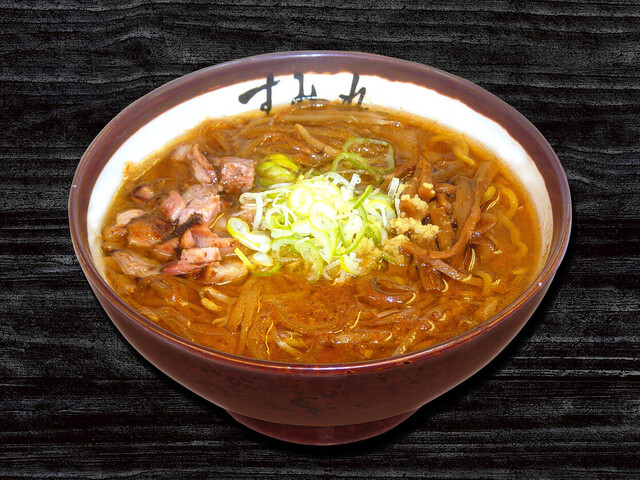
Sapporo ramen culture rewards small rooms, quick turnover, and bowls that justify a wait without ceremony. Kiraito belongs to that practical school: a compact Chuo Ward ramen shop recognised in Tabelog’s Ramen HOKKAIDO 100 in 2024 and 2025, with counter seating, no reservations, and a price tier that keeps the focus on the bowl rather than the occasion.
Pearl is the En Primeur Club membership app — saves, bookings, and concierge access live there. Same editors, same standards.
- Address
- Japan, 〒060-0062 Hokkaido, Sapporo, Chuo Ward, Minami 2 Jonishi, 6 Chome−3−2 岡田ビル
- Phone
- +81 11-242-6070
- Website
- tabelog.com
 Saves & bookings on Pearl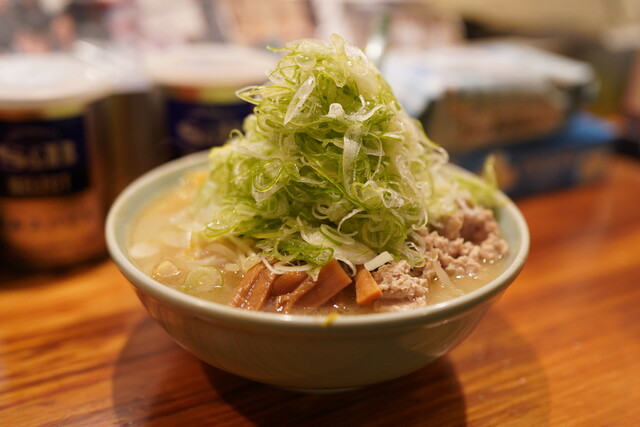
Approaching a serious Sapporo ramen shop, the cues are usually modest: a narrow frontage, a short line forming before lunch, steam slipping from the kitchen, and the clipped rhythm of bowls landing at the counter. Kiraito fits that grammar. The room is small enough for the cooking to set the pace, with counter seats and a handful of tables shaping a service style built for concentration rather than lingering.
That matters in Sapporo, where ramen is not a single lane. The city’s reputation abroad often collapses into miso ramen, butter, corn, and winter appetite, but the local scene is broader and more competitive than that shorthand suggests. Central Sapporo supports late-night noodle rooms, tourist-facing shops, and small specialist addresses where the signal is not décor or ceremony but repeat selection by local diners and Japanese ranking platforms. Kiraito’s inclusion in Tabelog’s Ramen HOKKAIDO 100 for both 2024 and 2025 places it in that latter conversation.
A compact ramen room in a city that takes noodles seriously
Sapporo’s stronger ramen counters tend to be judged by practical tests: how the soup holds heat, how quickly the kitchen resets, whether solo diners can eat without friction, and whether families can fit without turning the room into a production. Kiraito’s 19-seat layout, with seven counter seats plus small tables, puts it between a pure counter shop and a casual neighbourhood ramen room. That mixed format is useful in Chuo Ward, where office workers, solo travellers, and small groups all move through the same central blocks.
The value proposition is unusually direct. A listed average price under JPY 1,000 puts the shop below many of Sapporo’s sit-down dining options and far below the city’s appointment-led sushi tier. For comparison within the provided Sapporo set, Menme sits in a JPY 8,000 to JPY 9,999 bracket, Chinese Momiji in JPY 3,000 to JPY 3,999, and Kirin in JPY 2,000 to JPY 2,999. Ramen at this level is not positioned as a luxury spend; the premium signal is recognition, queue discipline, and the density of local competition.
The useful comparison is not only price. Sapporo dining splits between destination meals and everyday formats refined to a high level. Sushi Ikkou occupies a different ritual economy entirely, while Bem Bera network company belongs to a lower-priced casual bracket. Kiraito sits in the fast, focused noodle category, where a diner’s decision is less about occasion and more about whether the bowl earns a place in a short eating itinerary.
Recognition without the theatre of fine dining
Tabelog’s Hyakumeiten lists are especially relevant for ramen because they reward category depth rather than broad luxury status. A 2025 Ramen HOKKAIDO 100 selection, following a 2024 selection, gives Kiraito a clear trust signal inside Hokkaido’s noodle field. The Tabelog score attached to the listing is 3.66, a meaningful number in a platform where small differences often separate heavily discussed local favourites from ordinary neighbourhood shops.
The absence of a published chef narrative is not a weakness in this category. Ramen shops often communicate through repetition, not biography: broth management, noodle timing, ticket or counter flow, and the ability to satisfy a diner who may spend less than an hour from arrival to departure. The room’s non-smoking policy, counter seating, and family-friendly notation also mark it as accessible rather than clubby. That combination is increasingly valuable in Sapporo, where travellers often try to compress ramen, seafood, soup curry, and izakaya meals into a short stay.
For a broader Sapporo food itinerary, ramen should not be treated as an isolated box to tick. The city’s eating culture is built on specialisation: tantanmen at 175°DENO Tantanmen Sapporo kitaguchi ten, curry at [Curry Senmon Ten] Maruyama Kyoju., bread and pastry craft at Aigues Vives, and the long local appetite for spice at Ajanta Indo Curry Ten and Ajanta Sohonke. Readers mapping a full trip can cross-reference Our full Sapporo restaurants guide, Our full Sapporo hotels guide, Our full Sapporo bars guide, Our full Sapporo wineries guide, and Our full Sapporo experiences guide.
How to place it in a Sapporo eating day
Kiraito works better as a focused ramen stop than as a long meal. The shop is close to the central Sapporo flow around Odori, Susukino, and Shiseikan Shogakko Mae, which makes it easy to fold into a day built around shopping, bars, or a second meal elsewhere. Reservations are not part of the format, so timing carries more weight than planning weeks ahead. In ramen terms, that is normal: the diner gives up certainty and gains immediacy.
The listed schedule runs from late morning into the evening on most days, with Thursday as the regular closure, but ramen shops that depend on soup production can end service early when supply runs out. That single operational detail is more useful than any romantic language about scarcity. Arrive earlier if the meal matters, carry cash because card, electronic money, and QR payments are not accepted, and do not expect private rooms or a dress-code restaurant experience.
For travellers continuing through Japan or comparing regional casual formats, the contrast is instructive. A sukiyaki specialist such as -Grilled beef Sukiyaki- KAMAKURA TANUKIAN 鎌倉 たぬき庵 in Kamakura, a Tokyo seafood-and-grill address like. 鮪と炭火焼き うお炭 秋葉原店 in Tokyo, or casual urban rooms such as.cafe in Osaka.know in Kumamoto, (Shoku) Vietnam in Kawasaki, and [ki:] in Kyoto all operate with different expectations around duration, spend, and menu breadth. Outside Japan, Jōdo Saké Bar in Los Angeles and Onigiri Time in Pasadena show how Japanese formats translate abroad, often with more explanation and less of the brisk compression that defines a Sapporo ramen counter.
The editorial case for Kiraito is therefore specific rather than grand. It offers a compact, recognised ramen experience in central Sapporo, priced for everyday eating but validated by repeat category recognition. In a city where noodles can be either tourist shorthand or local obsession, that combination gives the shop its weight.
Snapshot
Comparable venues in the metro at similar price points.
| Venue | Cuisine | Price | Notes |
|---|---|---|---|
| KiraitoThis venue — the venue you are viewing | Classic Sapporo ramen shop | $ | Not listed |
| Keyaki Susukino honten | Sapporo miso ramen shop | $ | Chūō |
| Wadashi Ramen Umekichi | Japanese dashi-based ramen | $ | Chūō |
| Kokumin Shokudo | Japanese Ramen | $ | Kita |
| Menya Nanabee Honten | Ramen | $ | Shiroishi |
| Ramen Shingetsu | Traditional Sapporo Ramen Shop | $ | Chūō |
Recognition history
Dated appearances from independent guides and award organizations, with the underlying list record or original source where available.
Tabelog 100 #66 · No. 66
Tabelog · Tabelog 100 - Ramen - HOKKAIDO - 2025
At a Glance
- Cozy
- Lively
- Classic
- Well Known
- Solo
- Family
- Casual Hangout
- Late Night
- Standalone
Current opening hours
- Monday
- 11:40 AM–8 PM
- Tuesday
- 11:40 AM–8 PM
- Wednesday
- 11:40 AM–8 PM
- Thursday
- Closed
- Friday
- 11:40 AM–8 PM
- Saturday
- 11:40 AM–8 PM
- Sunday
- 11:40 AM–8 PM
Hours can change for holidays and private events. Last verified .
A small, old-school Sapporo ramen-ya with counter and simple tables, bright but compact and often packed, creating a bustling, no-frills atmosphere focused entirely on steaming bowls of ramen.