
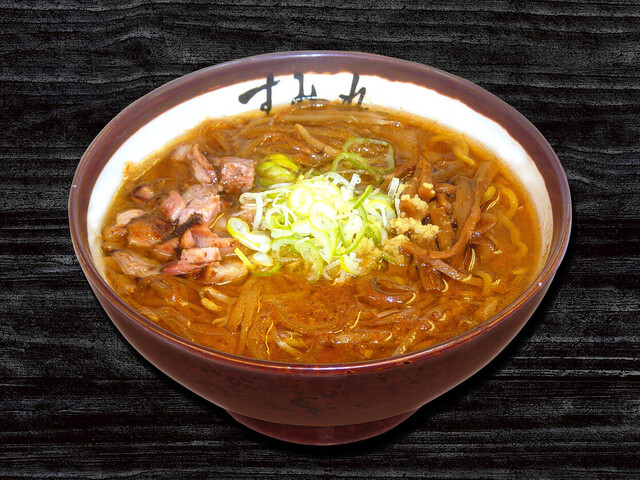
An eight-seat counter in Susukino frames Sapporo ramen as a fast, urban ritual rather than a long-form tasting-room exercise. Keyaki Susukino honten has Tabelog Ramen HOKKAIDO 100 selections for 2024 and 2025, placing it in the city’s recognized ramen tier while keeping the format compact, casual, and counter-led.
Pearl is the En Primeur Club membership app — saves, bookings, and concierge access live there. Same editors, same standards.
- Address
- Japan, 〒064-0806 Hokkaido, Sapporo, Chuo Ward, Minami 6 Jonishi, 3 Chome 陸ビル 1F
- Phone
- +81 11-552-4601
- Website
- sapporo-keyaki.jp
 Saves & bookings on Pearl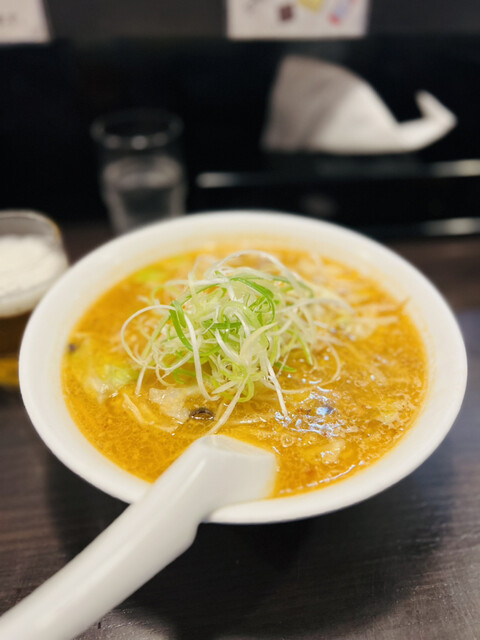
Susukino changes character by the hour: lunch traffic moves with office rhythm, while late evening belongs to drinkers, shift workers, and visitors treating ramen as the city’s final course. Inside the small counter format, Sapporo ramen becomes less about ceremony than timing. The draw is speed, heat, and concentration, a bowl built for a district where meals often happen between obligations rather than around them.
Keyaki Susukino honten belongs to that specific Sapporo grammar. The room is counter-only and compact, which matters more than décor in this category: ramen here is consumed at close range, with turnover and focus shaping the experience. Its inclusion in Tabelog Ramen HOKKAIDO 100 for both 2024 and 2025 gives it a clear trust signal in a city where ramen shops compete on local loyalty as much as tourist attention.
Lunch reads efficient; evening reads like Susukino after dark
The lunch-versus-dinner divide in Sapporo ramen is not simply about appetite. Daytime ramen in Susukino functions as a working meal: quick, contained, and relatively low-commitment. Evening ramen carries a different role. In the entertainment district, it often follows beer, whisky, karaoke, or a long walk through winter streets. That shift changes the value of the same counter. At lunch, the appeal is precision and pace. At night, the appeal is availability, warmth, and the fact that ramen can absorb the city’s more unruly hours without asking for a formal booking rhythm.
This is where the format earns its keep. Eight counter seats create a compressed dining room, not a destination built for lingering. For travelers comparing Sapporo categories, the contrast is useful: Gyoza Suguruya sits in a casual sharing lane, Teppanyaki Urushi moves toward a higher-spend grill format, Omaru Shoten occupies a different dinner economy, and Dosan Youniku Kappou Lamb Pirika points toward Sapporo’s premium lamb-kappo side. Ramen at Keyaki Susukino honten is a narrower proposition: shorter, cheaper, and more tied to the city’s daily pulse than to a full evening itinerary.
Sapporo’s ramen identity is often flattened into a single regional shorthand, but the local scene is more layered than that. Central shops trade on accessibility and late movement; neighborhood specialists can feel more deliberate; station-area counters serve commuters and arrivals. A place selected for the Hokkaido ramen list has to be read inside that ecosystem, not as a stand-alone trophy. The recognition signals consistency within a crowded local field, while the Susukino location explains why lunch and late service carry such different atmospheres.
The counter is the point, not a compromise
In larger cities, ramen has sometimes been repackaged as collectible dining: limited seats, long queues, social-media bowls, and chef mythology. Sapporo’s stronger ramen counters tend to be more direct. The counter is not minimalist theater; it is the operating system. It shortens the distance between kitchen and diner, keeps service practical, and makes the bowl the only real subject. That suits Susukino, where the district’s density rewards places that can serve solo diners, pairs, and small groups without turning a meal into an event.
Keyaki Susukino honten also sits in a useful middle ground for visitors building a Sapporo food map. It is not the city’s only ramen language, and it should not be treated as a substitute for curry, bread, izakaya cooking, or seafood-led meals. Nearby and citywide, 175°DENO Tantanmen Sapporo kitaguchi ten points toward spicy noodle specialization, while [Curry Senmon Ten] Maruyama Kyoju., Ajanta Indo Curry Ten, and Ajanta Sohonke show how seriously Sapporo treats curry. Aigues Vives belongs to a different craft-food conversation altogether. The point is not to crown one category; it is to understand how Sapporo rewards specialization across tight formats.
For a premium traveler, the decision is less about luxury than calibration. This is not the table to choose for a slow celebratory dinner, a wine-led meal, or a private-room conversation. It is the right kind of address when the evening needs a precise ramen stop, when lunch must stay efficient, or when a visitor wants to understand why Sapporo’s casual counters carry more cultural weight than their footprint suggests. The children-welcome note also matters in a country where small counters can feel ambiguous for families; the format remains compact, but the positioning is not adults-only.
How to place it in a Sapporo itinerary
Susukino is the natural setting for ramen that works across the day-night divide. Travelers staying near the center can fold it into a restaurant-heavy itinerary without surrendering a full meal slot, while those mapping a broader Sapporo trip should treat it as one piece of a larger dining pattern. The smart sequence is category-led: ramen for speed and local identity, curry for spice and depth, izakaya or grill formats for evening length, and hotel bars or cocktail rooms when the night needs a quieter finish.
Use Our full Sapporo restaurants guide for that wider food map, then pair it with Our full Sapporo hotels guide, Our full Sapporo bars guide, Our full Sapporo wineries guide, and Our full Sapporo experiences guide when building the rest of the trip. For contrast beyond Hokkaido, compare how regional Japanese dining shifts at -Grilled beef Sukiyaki- KAMAKURA TANUKIAN 鎌倉 たぬき庵 in Kamakura. 鮪と炭火焼き うお炭 秋葉原店 in Tokyo.cafe in Osaka.know in Kumamoto, (Shoku) Vietnam in Kawasaki, and [ki:] in Kyoto. Japanese food culture abroad tells another story again, from Jōdo Saké Bar in Los Angeles to Onigiri Time in Pasadena.
The critical read is simple: the restaurant is valuable because it compresses Sapporo ramen into its working form. The recognition is useful, the counter format is decisive, and the lunch-to-late-night swing is the real story. In a city where cold weather, nightlife, and noodle culture intersect with unusual force, that combination carries more meaning than a long menu ever could.
Reputation First
Comparable venues by category and price.
| Venue | Cuisine | Price | Notes |
|---|---|---|---|
| Keyaki Susukino hontenThis venue — the venue you are viewing | Sapporo miso ramen shop | $ | Not listed |
| Ramen Sapporo Akahoshi | Sapporo Ramen Shop | $ | Chūō |
| boulangerie coron Honten | Japanese Bakery | $ | Chūō |
| Marutaka Ramen | Sapporo ramen & pork rice bowls | $ | Kita |
| ZORA | Sapporo soup curry & Japanese curry house | $ | Chūō |
| Spice Pot Kikusui honten | Sapporo soup curry & stone-oven roasted chicken | $ | Shiroishi |
Recognition history
Dated appearances from independent guides and award organizations, with the underlying list record or original source where available.
Tabelog 100 #85 · No. 85
Tabelog · Tabelog 100 - Ramen - HOKKAIDO - 2025
At a Glance
- Cozy
- Lively
- Well Known
- Intimate
- Solo
- Late Night
- Casual Hangout
- Standalone
Current opening hours
- Monday
- 10:30 AM–3 AM
- Tuesday
- 10:30 AM–3 AM
- Wednesday
- 10:30 AM–3 AM
- Thursday
- 10:30 AM–3 AM
- Friday
- 10:30 AM–3 AM
- Saturday
- 10:30 AM–3 AM
- Sunday
- 10:30 AM–2 AM
Hours can change for holidays and private events. Last verified .
A narrow, counter-only ramen bar with a cozy, slightly cramped feel; warm and bustling with the sound of slurping noodles and the aroma of miso, garlic, and stir-fried vegetables, typical of a classic Susukino late-night spot.