
Kintoki no Amataro Yaki belongs to Narita’s older snack-shop rhythm rather than its airport-facing dining circuit: a take-out counter for taiyaki and obanyaki, recognized in Tabelog’s Japanese traditional sweets and sweets cafe EAST 100 selection for 2023. Its appeal is narrow and specific: griddled wagashi, low-friction service, and a place in the city’s everyday sweet-to-go culture.
Pearl is the En Primeur Club membership app — saves, bookings, and concierge access live there. Same editors, same standards.
- Address
- 525 Hanazakicho, Narita, Chiba 286-0033, Japan
- Phone
- +81 476-22-0823
- Website
- nrtk.jp
 Saves & bookings on Pearl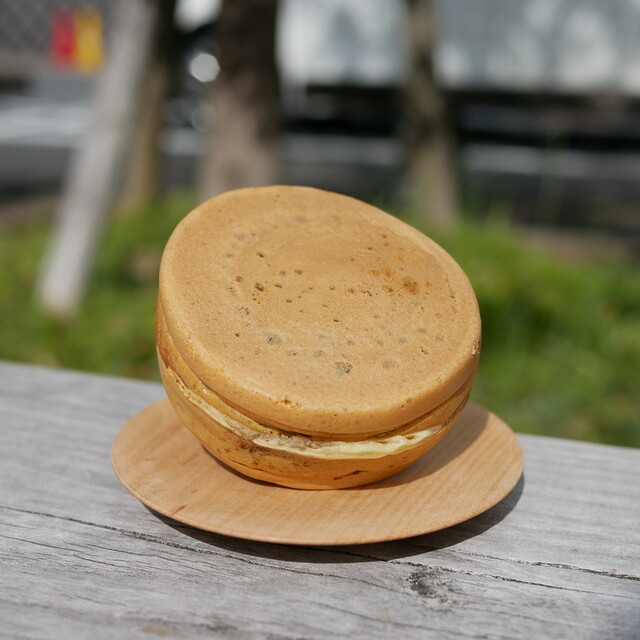
Approaching the counter, the cue is not a dining room but a working sweet shop: griddles, takeaway pacing, and the compact efficiency that defines much of Japan’s street-level wagashi culture. In Narita, where temple-town foot traffic, airport stopovers, and local errands overlap, sweets shops perform a different role from restaurants. They are not built around lingering. They are built around timing, heat, batter, filling, and a purchase that fits into the walk.
That matters because taiyaki and obanyaki sit in a category where sourcing is less theatrical than in luxury dining, yet ingredient discipline remains the whole point. The form is simple: a cooked batter shell around a sweet filling, commonly associated with red bean paste in the broader Japanese tradition. The margin for error is small. Texture, sweetness, and carry-out durability decide whether a shop functions as a daily stop or a tourist-only novelty.
Griddled wagashi in a city better known for transit and pilgrimage
Narita’s dining scene is often read through convenience: pre-flight ramen, unagi near the temple approach, and casual meals calibrated for travelers moving between train platforms and airport terminals. That reading misses the city’s smaller food grammar. Traditional sweets, especially portable ones, sit closer to local routine than destination dining. Kintoki no Amataro Yaki fits that grammar as a take-out specialist rather than a seated cafe.
The category itself has an old urban logic. Taiyaki and obanyaki reward repetition, not reinvention. Shops compete through batter handling, bean filling, griddle management, and the ability to serve a warm snack without stretching the transaction into a full meal. This is why recognition in Tabelog’s Japanese traditional sweets and sweets cafe EAST 100 selection for 2023 carries useful weight. It places a modest Narita counter inside a regional sweets conversation that extends well beyond the airport corridor.
Within Narita, that positioning is distinct from sit-down meals at higher spend levels. Tekoteko, Pizzeria Positano, Menya Fukuichi, Torihan Uohan, and Surugaya occupy restaurant occasions, with budgets ranging from casual noodle pricing to fuller dinner territory. A sweets counter belongs to another pattern: shorter dwell time, lower commitment, and a sharper focus on one category. For travelers comparing where to eat around the city, Our full Narita restaurants guide gives the broader map, while Our full Narita hotels guide, Our full Narita bars guide, Our full Narita wineries guide, and Our full Narita experiences guide show how short food stops fit into a wider Narita stay.
Why a single-category counter can say more than a long menu
Japanese sweets shops often reveal their seriousness through constraint. A long menu can dilute attention; a narrow griddle format puts technique in public view. Kintoki no Amataro Yaki is listed for taiyaki and obanyaki, two forms that depend on the same essential bargain: crisp-edged batter, controlled sweetness, and filling that reads clearly without turning heavy. The ingredient story is therefore not about rare produce or chef mythology. It is about staple materials handled with enough consistency to earn repeat custom.
That restraint also explains the price logic. In a city where airport-adjacent eating can drift toward convenience premiums, a sub-¥1,000 sweets stop keeps the decision low-risk. The better comparison is not a full lunch but the small Japanese habit of buying something warm, portable, and specific. For a traveler who has already planned ramen at Ippudo (一風堂), airport noodles at Ginza Kagari (銀座 篝), a heavier bowl at Japanese Ramen Tomita (日本の中華そば富田), or unagi at Kikukawa (うなぎ四代目菊川), this is a different slot in the day rather than a substitute meal.
The absence of a chef narrative is part of the point. Wagashi counters like this are judged through craft repetition and local usefulness, not biography. Tabelog’s 3.63 score and the 2023 sweets selection provide the trust signal; the format provides the editorial interest. It is a small shop in a category where smallness can be an advantage, because the product is made for immediate turnover and simple judgment.
How to place it in a Narita food day
The strongest use case is as a snack between larger commitments: before a train, after a temple-area walk, or as a sweet stop when a full cafe would slow the day down. Narita is unusually good for this kind of eating because it compresses multiple travel modes into one city. There are visitors killing time before flights, residents buying everyday food, and pilgrims moving through streets where old snack forms still make practical sense.
For a broader itinerary, the contrast is useful. South Asian comfort at Halal Dosa Biryani answers a different need from a Japanese sweets counter; so do destination-style meals elsewhere in Japan, from -Grilled beef Sukiyaki- KAMAKURA TANUKIAN 鎌倉 たぬき庵 in Kamakura to. 鮪と炭火焼き うお炭 秋葉原店 in Tokyo. The point is not to rank them against one another. It is to recognize format. A taiyaki and obanyaki shop is closer to Onigiri Time in Pasadena in its single-purpose logic than to a long-form restaurant meal.
That single-purpose logic travels well. In Osaka.cafe in Osaka frames a cafe stop differently; in Kumamoto.know in Kumamoto belongs to another local circuit; in Kawasaki, (Shoku) Vietnam in Kawasaki reflects immigrant cooking in a commuter city; in Sapporo, [Curry Senmon Ten] Maruyama Kyoju. in Sapporo shows how specialization can define a meal. Even overseas, Jōdo Saké Bar in Los Angeles demonstrates how Japanese food culture is often clearest when the format is disciplined.
Kintoki no Amataro Yaki is worth reading through that lens: not as a grand detour, but as a precise Narita stop for traditional sweets in take-out form. Its appeal comes from category focus, recognized regional standing, and the way a small griddled snack can anchor a city’s everyday food culture more honestly than another airport meal.
How It Stacks Up
Comparable venues by cuisine and price in the same metro.
| Venue | Cuisine | Price | Notes |
|---|---|---|---|
| Kintoki no Amataro YakiThis venue — the venue you are viewing | Traditional Japanese Obanyaki / Manju Sweet Shop | $ | Not listed |
| Saboten (新宿さぼてん) | Tonkatsu (Japanese Pork Cutlet) | $$ | Narita Airport |
| Mitsumoto Tei (三本亭) | Yoshoku (Japanese Western Cuisine) | $$ | Narita Airport |
| Ippudo (一風堂) | Tonkotsu Ramen | $ | Narita International Airport |
| Menya Fukuichi | Ramen shop specializing in rich chicken ramen | $ | Hanazakicho |
| Pizzeria Positano | Italian Pizza | $$ | Hanazakicho |
Recognition history
Dated appearances from independent guides and award organizations, with the underlying list record or original source where available.
Tabelog 100 #99 · No. 99
Tabelog · Tabelog 100 - Japanese traditional sweets / Japanese sweets cafe - EAST - 2023
Continue exploring
More in Narita
At a Glance
- Well Known
- Classic
- Lively
- Cozy
- Solo
- Casual Hangout
- Family
- After Work
- Historic Building
- Standalone
- Local Sourcing
- Street Scene
Current opening hours
- Monday
- 9 AM–5:30 PM
- Tuesday
- 9 AM–5:30 PM
- Wednesday
- 9 AM–5:30 PM
- Thursday
- 9 AM–5:30 PM
- Friday
- 9 AM–5:30 PM
- Saturday
- 9 AM–5:30 PM
- Sunday
- 9 AM–5:30 PM
Hours can change for holidays and private events. Last verified .
A small, nostalgic takeout-only sweet shop on the approach to Naritasan, with the aroma of freshly grilled batter and beans, a constant flow of customers, and a friendly owner who even chats with foreign visitors in simple English.