
Akasaka Ajiichi gives Funabashi’s ramen scene a low-cost, old-school anchor: a Chuka soba specialist recognized in Tabelog’s Ramen EAST 100 in 2024 and 2025. The draw is not luxury framing but ingredient discipline, regional commuter-city character, and a format built for solo bowls as much as small groups.
Pearl is the En Primeur Club membership app — saves, bookings, and concierge access live there. Same editors, same standards.
- Address
- 2 Chome-2-19 Minatocho, Funabashi, Chiba 273-0011, Japan
- Phone
- +81 47-434-4104
- Website
- x.com
- Directions
- Get directions
 Saves & bookings on Pearl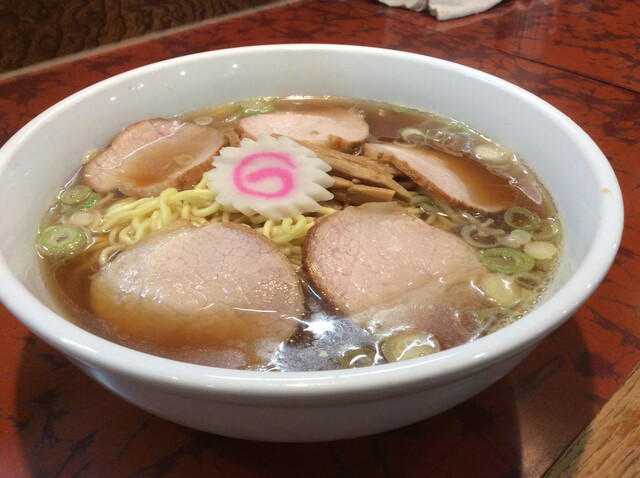
Approaching Funabashi’s Minatocho side, the ramen mood changes from station-front convenience to the older rhythm of a neighbourhood lunch room. The appeal here is plain before the bowl arrives: counter seats, table seating, no private-room theatre, and a room designed around quick turnover without turning the meal into fast food. In a city where Tokyo commuters, Chiba families, and port-side workers overlap, ramen houses like Akasaka Ajiichi matter because they preserve a civic style of eating that is inexpensive, direct, and ingredient-led.
Funabashi is often read through its rail access to Tokyo, but its better casual restaurants show a separate pattern: compact menus, low lunch budgets, and cooking that does not need a hotel dining room to earn attention. Compared with local Thai at Ayutthaya, Nepalese cooking at BHOYE CHHEN, bakery culture at Boulangerie Queue, local seafood at Funakko, and curry at Gandhi, this ramen address sits in the city’s most efficient dining lane: a short menu, a modest spend, and a bowl that has to justify itself through stock, tare, noodles, and toppings rather than design language.
Funabashi ramen with an ingredient-first test
Ramen in eastern Japan is often judged by proportion before novelty. A bowl of Chuka soba can expose weak sourcing quickly: thin broth has nowhere to hide, noodles must carry texture without excess fat, and toppings function as balance rather than ornament. Akasaka Ajiichi’s listed menu points to that older grammar, with Chuka Soba, Menma Ramen, Chashu Ramen, and Chashu Menma Ramen forming the core rather than a scatter of seasonal experiments. That structure tells experienced ramen travellers what the kitchen wants assessed: soup base, noodle handling, bamboo shoot texture, and pork garnish.
The pricing also matters editorially. In Japan’s ramen capitals, the category has moved in two directions at once: specialist bowls with rising costs in central districts, and durable neighbourhood shops where the entry point remains sharply accessible. Akasaka Ajiichi belongs to the second camp while carrying the external signal of selection for Tabelog’s Ramen EAST 100 in both 2024 and 2025. That combination is why it draws attention beyond Funabashi locals. Recognition has not turned the format into a tasting-menu proposition; it remains closer to the everyday Chiba ramen tradition, where value and repetition are part of the craft.
For ingredient sourcing, the useful point is not a named farm or proprietary supplier. The publicly visible menu gives a clearer reading: this is a shop built around established ramen components rather than luxury add-ons. Menma and chashu are not side notes in that framework; they are the variables that change the bowl’s weight, salt impression, and chew. Ordering across those versions is the practical way to understand the kitchen’s range without inventing a signature dish narrative.
The room belongs to lunch culture, not destination dining theatre
The 33-seat layout, including counter seating and tables, places the restaurant in a democratic middle ground. Solo diners can treat it as a counter meal; pairs and small groups are not forced into a bar-only format. That is a meaningful distinction in Funabashi, where many strong casual addresses are built for daily use rather than celebratory scheduling. Reservations are unavailable, so the experience is governed by arrival timing and patience rather than concierge access.
The no-smoking policy and cash-only payment setup reinforce the old-school ramen-house equation: simple room, direct transaction, low ceremony. Private rooms and private use are unavailable, which keeps the format public and functional. Parking is not provided, though paid lots operate nearby, so the easiest rhythm is to treat the meal as part of a Funabashi station-area plan rather than a long-form restaurant evening. The location near Keisei Funabashi places it within a walkable dining circuit, useful for travellers comparing the city’s casual range through Our full Funabashi restaurants guide.
Award signal should be read carefully. Tabelog’s Ramen EAST 100 is a category recognition, not a luxury ranking. Its relevance lies in filtering a crowded ramen field across eastern Japan, where small shops compete on consistency and local loyalty as much as spectacle. For a visitor, that makes the restaurant a sharper Funabashi choice than a generic station bowl, but it does not require the expectations one might bring to formal Tokyo dining.
How to place it in a wider Japan eating map
Funabashi’s dining identity benefits from contrast. A ramen lunch here can sit beside broader city planning: bars, hotels, wineries, and experiences are mapped separately in Our full Funabashi bars guide, Our full Funabashi hotels guide, Our full Funabashi wineries guide, and Our full Funabashi experiences guide. That separation matters because the city’s strongest casual food does not always align with a late-night drinking itinerary or a luxury hotel base.
Across Japan, the more useful comparison is not prestige but format. Kamakura’s beef sukiyaki specialists, Tokyo charcoal seafood rooms, Osaka cafés, Kumamoto dining rooms, Kawasaki Vietnamese counters, and Sapporo curry shops each reveal how Japanese cities absorb outside and regional influences into tight local formats. For that broader map, see -Grilled beef Sukiyaki- KAMAKURA TANUKIAN 鎌倉 たぬき庵 in Kamakura. 鮪と炭火焼き うお炭 秋葉原店 in Tokyo.cafe in Osaka.know in Kumamoto, (Shoku) Vietnam in Kawasaki, and [Curry Senmon Ten] Maruyama Kyoju. in Sapporo. Outside Japan, the same ingredient-format question appears differently at Jōdo Saké Bar in Los Angeles and Onigiri Time in Pasadena, where Japanese food culture is translated through American service expectations.
The editorial verdict is compact: this is a Funabashi ramen address for readers who care about the fundamentals of a bowl more than restaurant theatre. The case rests on format, value, repeat Tabelog Ramen EAST 100 recognition, and a menu narrow enough to make ingredient balance visible. In a commuter city with broad casual dining, that is a serious position.
Fast Comparison
Comparable venues by cuisine and price in the same metro.
| Venue | Cuisine | Price | Notes |
|---|---|---|---|
| Akasaka Ajiichi | Classic niboshi ramen shop | $ | / Funabashi |
| Motsuyaki Doppo Honmachi ten | Standing bar for grilled offal (motsuyaki) | $ | Honmachi, Funabashi |
| Tomonomoto | Ramen shop | $$ | Higashi Kaijin |
| Sakuma Ice Cream Kobo | Ice Cream & Gelato | $ | Takifudo |
| Ramen Jiro Keisei ookubo ten | Jiro-style ramen and tsukemen | $ | Funabashi |
| Shogetsu En | Traditional Yakiniku (Japanese BBQ) | $$ | Keisei Nishifuna |
Recognition history
Dated appearances from independent guides and award organizations, with the underlying list record or original source where available.
Tabelog 100 #60 · No. 60
Tabelog · Tabelog 100 - Ramen - EAST - 2025
Continue exploring
More in Funabashi
Restaurants in Funabashi
Browse all →



Bars in Funabashi
Browse all →





At a Glance
- Classic
- Solo
- Casual Hangout
- After Work
- Group Dining
- Standalone
- Beer Program
Current opening hours
- Monday
- 11 AM–4 PM
- Tuesday
- 11 AM–4 PM
- Wednesday
- 11 AM–4 PM
- Thursday
- 11 AM–4 PM
- Friday
- 11 AM–4 PM
- Saturday
- 11 AM–4 PM
- Sunday
- Closed
Hours can change for holidays and private events. Last verified .
Typical old-school neighborhood ramen-ya with a simple, no-frills interior, counter-focused seating, and a bustling, fast-turnover atmosphere centered on quick solo and casual meals.