Kim Soya
Our verdict
Kim Soya occupies a place in Kuala Lumpur's broader conversation about soy-based cooking and Malaysian Chinese culinary heritage. The kitchen works within a tradition that treats soy in its many forms as a serious ingredient rather than a background note. For travellers moving through KL's increasingly layered dining scene, it represents a counter-point to the city's tasting-menu circuit.

Pearl is the En Primeur Club membership app — saves, bookings, and concierge access live there. Same editors, same standards.
- Address
- Kuala Lumpur, Malaysia
- Directions
- Get directions
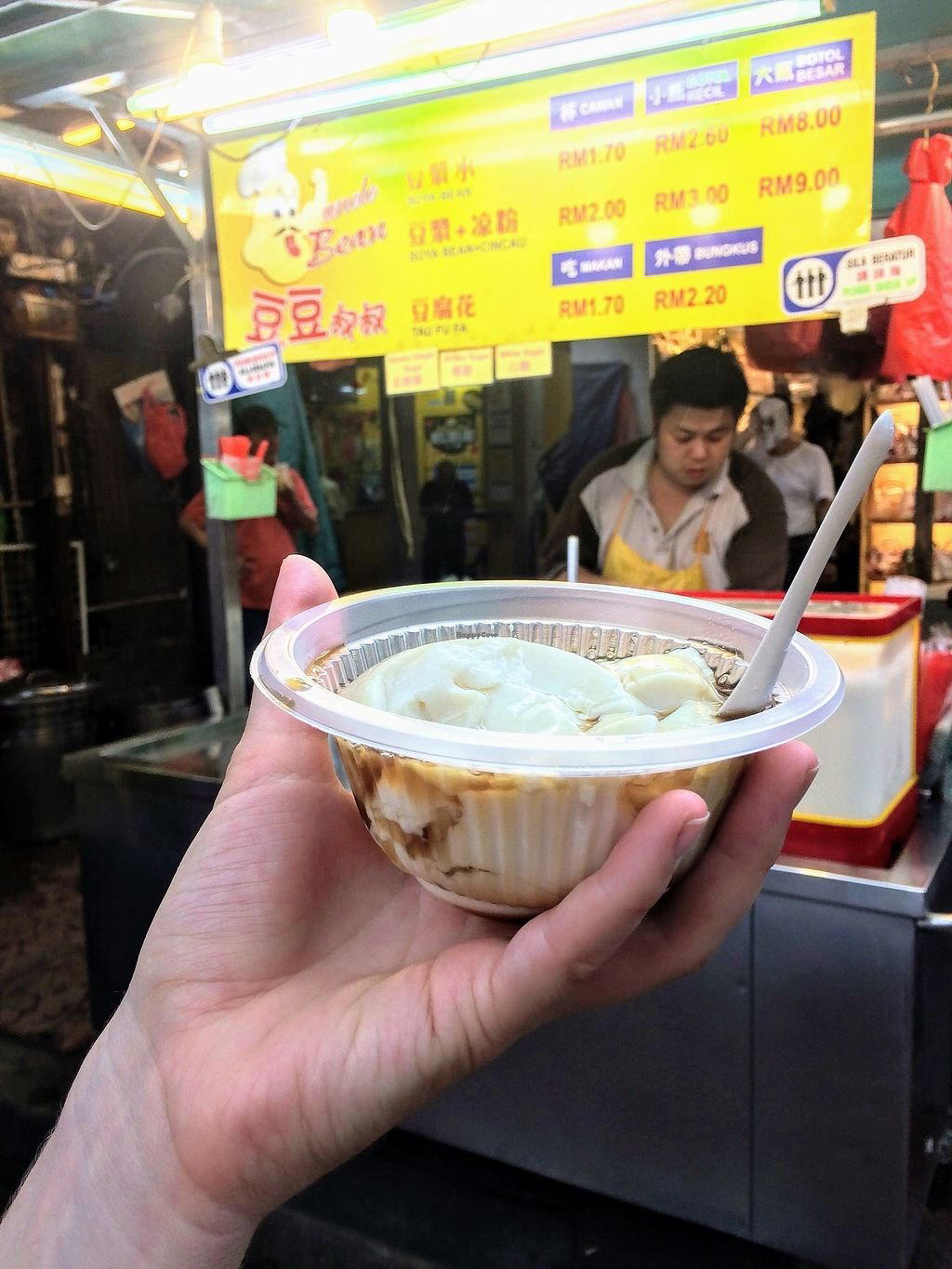
The menu
What to order
- Tau fu fah
- Soya bean milk with ginger syrup
- Soya bean milk with jelly grass
Soy as Culinary Anchor: What Kim Soya Says About KL's Chinese Hawker Tradition
Kuala Lumpur's dining reputation has shifted considerably over the past decade. The city now sustains a tier of ambitious tasting-menu restaurants, among them Dewakan at the $$$$ end of Malaysian cuisine and Beta at $$$, both of which treat indigenous and local ingredients as primary subjects. But alongside that fine-dining ascent, a parallel and older conversation continues in KL's shophouse kitchens and hawker-adjacent spaces, where the craft lies not in theatrical presentation but in the depth of a single ingredient category. Soy, in its fermented, cured, and fresh forms, occupies a central position in that tradition. Kim Soya belongs to this second conversation.
Soy-based cooking within Malaysian Chinese cuisine draws on Hokkien, Hakka, and Cantonese lines that arrived with nineteenth and twentieth century migration and adapted to the ingredients and tastes of the peninsula. The result is a culinary register that treats tau kwa (firm tofu), tau pok (fried tofu puffs), tempeh, and various fermented soy pastes not as accompaniments but as structural elements of a meal. At its most considered, this is cooking that rewards attention to texture and fermentation depth rather than spectacle.
Where Kim Soya Sits in KL's Dining Map
The city's restaurant offerings span a wide price range. At the upper end, venues like DC. by Darren Chin and Molina both price at $$$$ and operate with the produce sourcing, tasting-menu formats, and international reference points typical of that tier. At the other end, single-dish hawker specialists work at price points that make them accessible to a daily-meal frequency rather than an occasion-dining logic. Kim Soya operates closer to the latter register, in a city where soy-forward Malaysian Chinese cooking has deep roots and a loyal local following that predates the fine-dining boom.
That positioning matters for how you approach the experience. The comparison set is not Ling Long or the city's progressive kitchens. It is the broader ecosystem of KL's Chinese-heritage cooking, where longevity and consistency function as the primary trust signals rather than awards or chef credentials publicised in the international press.
The Cultural Weight of Soy in Malaysian Chinese Cooking
To understand why a restaurant centred on soy occupies cultural ground in KL, it helps to consider what soy-based cooking represents in the region's food history. Tofu production in Malaysia has local roots stretching back generations, with certain neighbourhoods historically known for their tofu makers in the same way that Penang is associated with its char koay teow specialists or George Town with its Nyonya kitchens. Auntie Gaik Lean's Old School Eatery in George Town represents how that kind of place-specific culinary heritage can carry genuine weight, and a similar logic applies to KL's soy tradition.
Fermented soy products in particular carry significant complexity. Miso and doenjang are better known internationally, but Malaysian-Chinese applications of taucheo (salted fermented soy beans) and dark soy sauces are equally technique-sensitive and region-specific. The difference between a well-made and a perfunctory taucheo-braised dish is substantial, and kitchens that treat these distinctions seriously occupy a different category from those that treat soy merely as a seasoning afterthought.
This tradition extends across Malaysia in different forms. In Penang, venues like Air Itam Asam Laksa, Chong Char Koay Teow, and 888 Hokkien Mee anchor a hawker culture where single-dish mastery is the standard. In Taiping, Jia Yi Dao Vegetarian Restaurant represents how plant-forward cooking, much of it soy-dependent, has found a committed audience beyond urban centres. Bak kut teh, which often incorporates tofu puffs as a textural element alongside pork ribs, spans the country, with practitioners like Da De Bah Kut Teh in Borneo showing how that dish category travels across Malaysian geography.
Reading the Broader KL Scene
For visitors building a KL itinerary, the city's dining logic rewards some deliberate sequencing. The fine-dining circuit and the heritage hawker circuit speak different languages and serve different purposes, and the traveller who moves between both gets closer to understanding what makes the city's food culture function. Hot-pot chains like Haidilao in Malacca and Haidilao in Perai reflect one strand of how Chinese cooking has been standardised for mass-market formats across the region. Smaller specialists operating in narrower culinary registers are where differentiation actually lives.
Indian Muslim cooking, represented in the Klang Valley at places like India Gate Restaurant in Klang, and the cafe culture extending from KL toward Sabah, exemplified by Kopi Ping Cafe in Tuaran, are part of the same diverse fabric. KL is a city where multiple culinary lineages operate simultaneously at different price points, and soy-centred Chinese cooking is one of the older, more persistent threads in that pattern.
Internationally, the shift toward ingredient-focused cooking with deep cultural roots has been documented in contexts from New York's Atomix, which treats Korean culinary heritage as serious subject matter at the fine-dining tier, to Le Bernardin, where a single protein category, fish, has been the organising principle for decades. The argument that a single ingredient category can anchor a serious kitchen is well-established. Kim Soya makes that argument within KL's Malaysian Chinese register.
Planning Your Visit
Specific booking details, hours, and pricing for Kim Soya are not published in formats that allow reliable confirmation, so checking directly before visiting is the practical approach. The venue sits within KL's broader dining scene, and our full Kuala Lumpur restaurants guide provides context for how it fits alongside the city's other dining options. For visitors comparing options in the Sepang corridor, DIN by Din Tai Fung in Sepang and CRC Restaurant in Georgetown represent different points on the Malaysian Chinese spectrum. For a restaurant focused on soy and its derivatives, arrive with some familiarity with the ingredient's range: the difference between a silken and a firm preparation, or between a light and a dark soy application, is the kind of distinction the kitchen is working within.
Frequently asked questions
How does Kim Soya fit into Kuala Lumpur's broader Chinese food scene?
Kuala Lumpur sustains one of Southeast Asia's most layered Chinese food scenes, spanning Cantonese, Hokkien, Hakka, and Teochew traditions, and soy-focused cooking threads through several of those lineages. Kim Soya's positioning around soy as a central ingredient gives it a more defined culinary identity within that wider field, rather than covering multiple Chinese regional styles under one roof.
What dish is Kim Soya famous for?
Kim Soya's identity is built around soy as a primary cooking ingredient, situating it within Kuala Lumpur's Malaysian Chinese hawker tradition where soy-based preparations, from bean curd to braised soy dishes, form the backbone of the menu. Specific dish details are best confirmed directly with the venue before visiting, as formats change.
What's the best way to book Kim Soya?
Published booking channels for Kim Soya in Kuala Lumpur are not consistently listed across platforms, which is common for hawker-rooted venues in the city operating on walk-in or informal reservation models. Checking directly with the restaurant before your visit is the most reliable approach.
What's the signature at Kim Soya?
The venue's defining commitment is to soy as a culinary anchor, placing it in the tradition of Malaysian Chinese cooking where soy features across braised, fermented, and fresh preparations. That focus on a single ingredient category gives Kim Soya a clearer identity than most generalist Chinese restaurants in Kuala Lumpur.
Can Kim Soya adjust for dietary needs?
A soy-centred menu in the Malaysian Chinese hawker tradition will naturally suit plant-forward diners, as bean curd and soy-based dishes frequently anchor the offering. Confirming specific allergen or dietary accommodations directly with Kim Soya in Kuala Lumpur before visiting is advisable, as kitchen flexibility varies by venue.
Budget and Context
| Venue | Cuisine | Price | Awards | Notes |
|---|---|---|---|---|
| Kim SoyaThis venue — the venue you are viewing | Traditional Chinese Soya Bean Speciality | $1–10 | Not listed | Not listed |
| Dewakan | Modern Malaysian Fine Dining | $150–200 | 2 Michelin Stars · World's 50 Best #62 | Malaysian |
| Beta | Modern Malaysian Fine Dining | $100–150 | 1 Michelin Star · La Liste Top Restaurants | Malaysian |
| DC. by Darren Chin | French Contemporary Fine Dining | Not listed | 1 Michelin Star · La Liste Top Restaurants | French Contemporary |
| Molina | Avant-Garde European Fine Dining | $150–200 | 1 Michelin Star | Innovative |
| Ah Hei Bak Kut Teh | Traditional Herbal Bak Kut Teh | $10–20 | Michelin Bib Gourmand | Not listed |
Continue exploring
More in Kuala Lumpur
Restaurants in Kuala Lumpur
Browse all →
Bars in Kuala Lumpur
Browse all →


Details
- Well Known
- Classic
- Casual Hangout
- Solo
- After Work
- Street Scene
- Soya Milk
- Herbal Beverages
- Vegetarian Friendly
- Vegan Options
Bustling street-level stall with brisk foot traffic and casual, energetic atmosphere typical of Chinatown's food scene.