Ah Fook Yong Tau Fu Cheong Fun
Yong tau fu and cheong fun occupy a distinct corner of Kuala Lumpur's hawker tradition, where the quality of filling ingredients and rice noodle texture define everything. Ah Fook Yong Tau Fu Cheong Fun represents that genre at its most focused, drawing locals who understand that these are dishes built on sourcing and daily repetition rather than spectacle. A reference point in a city that takes its hawker heritage seriously.

Pearl is the En Primeur Club membership app — saves, bookings, and concierge access live there. Same editors, same standards.
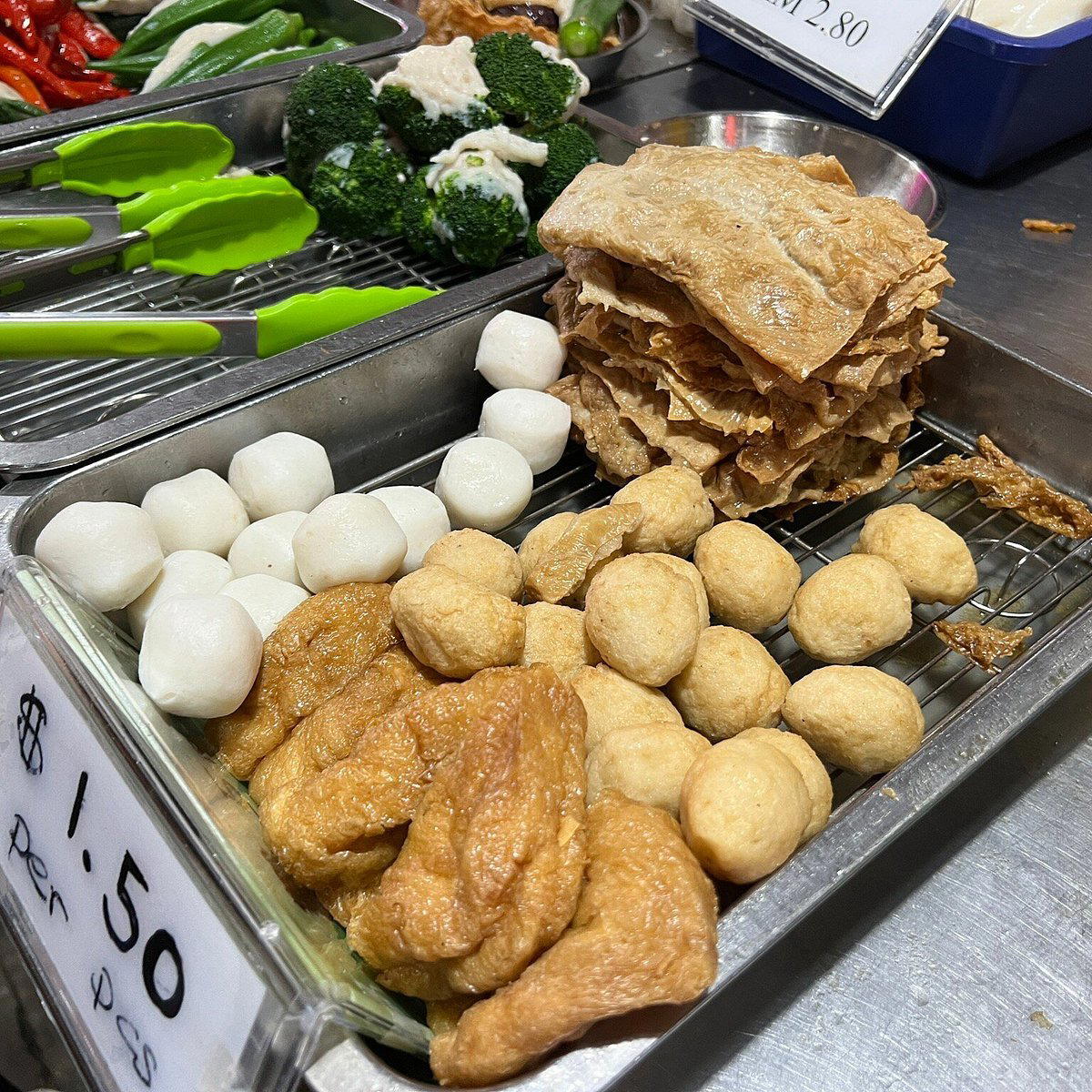
Where Hawker Discipline Meets Daily Craft
Kuala Lumpur's hawker scene operates on a logic that fine dining cities rarely replicate: authority is earned through repetition, not reinvention. The stalls and shophouses that attract loyal morning queues are not places experimenting with technique. They are places that have made the same thing, the same way, for long enough that the thing itself becomes the credential. Yong tau fu, tofu and vegetables stuffed with fish or meat paste, belongs to this category. So does cheong fun, the silky steamed rice noodle roll that demands precise batter ratios and exact steaming time to achieve the translucency that distinguishes a good version from a mediocre one. Ah Fook Yong Tau Fu Cheong Fun is a Kuala Lumpur restaurant serving Malaysian Chee Cheong Fun & Yong Tau Foo at a price point around US$5, in a city where knowing which stall to queue at is itself a form of cultural fluency.
The Sourcing Logic Behind Yong Tau Fu
The ingredient sourcing question is central to yong tau fu in a way it is not always central to other hawker formats. The fish paste filling, the element that defines quality across every variation, is only as good as the fish used to make it. In the Hakka tradition, which anchors most yong tau fu served in the Klang Valley, that paste is meant to have a clean, fresh sweetness and a firm but yielding bite. Achieving that requires fish bought at the right time of day, processed quickly, and used without the kind of additives that prop up texture in lower-cost versions. The vegetables and tofu that carry the paste matter too: bitter melon holds a different paste-to-skin ratio than eggplant, and the balance of those ratios across a selection is what separates a considered spread from a generic one.
Cheong fun introduces a parallel sourcing consideration: the quality of rice flour. The batter used to steam rice noodle rolls requires a specific blend of rice flour and starch to produce the characteristic thin, smooth sheet that rolls without tearing and holds its texture as it cools. Hawker operations that maintain consistent cheong fun quality typically source their flour from established suppliers and control the steaming process closely rather than scaling for speed. In KL's competitive hawker environment, where diners compare versions across multiple stalls, these distinctions are visible on the plate and detectable immediately in texture.
Kuala Lumpur's Hawker Geography
Understanding where Ah Fook sits requires understanding how KL's hawker culture is geographically distributed. The city does not concentrate its serious hawker operations in a single district the way Penang does around Gurney Drive or the heritage streets of George Town. Instead, KL's best-regarded hawker names are scattered across residential precincts, old shophouse rows, and morning market clusters in areas like Chow Kit, Kepong, Imbi, and Pudu. This dispersal means that local knowledge is the primary navigation tool. A visitor following a hotel concierge's restaurant list will rarely land at the same addresses a KL resident would name. The gap between the tourist-facing version of KL's food scene and the local version remains significant, which gives operations like Ah Fook a reputation that travels primarily by word of mouth and repeat custom rather than through formal recognition channels.
For context, KL's fine dining tier, represented by places like Dewakan and Beta, both working with Malaysian ingredients at a different price and ambition level, draws international attention in a way hawker operations typically do not. At the other end of the spectrum, the city's street-level food culture operates almost entirely outside that formal recognition system. That does not make the hawker tier less serious. It makes it differently serious, governed by local consensus rather than critics' guides. Venues like DC. by Darren Chin and Molina or Ling Long occupy entirely different registers of the city's dining culture, but they share with the hawker tier the same underlying expectation: that the food justifies the visit on its own terms.
The Hakka Heritage Context
Yong tau fu is a Hakka dish, brought to the Malay Peninsula by Chinese migrants and adapted over generations to local ingredient availability and local palates. The original Hakka version used minced pork paste stuffed into tofu. The Malaysian adaptation, particularly in the Cantonese-influenced communities of the Klang Valley, shifted heavily toward fish paste and expanded the range of vessels: long beans, okra, chili, red tofu skin, and various types of beancurd joined the original tofu formats. This evolution reflects the ingredient availability and community preferences of the region rather than any single chef's decision, which is what gives the dish its deep local specificity. Eating yong tau fu in KL is not the same as eating it in Singapore, Hong Kong, or in its original Hakka heartland, because the ingredient set and the accompanying broth or sauce traditions have all diverged. Comparable regional specificity shapes the hawker traditions in Penang, see the contrast in formats at places like Auntie Gaik Lean's Old School Eatery in George Town or the noodle culture documented at Air Itam Asam Laksa, Chong Char Koay Teow, and 888 Hokkien Mee in Penang.
Planning a Visit
Hawker operations in KL that draw morning trade typically open early and close when the food runs out, a pattern that applies broadly across the category rather than being specific to any single venue. For yong tau fu stalls, the practical implication is that arriving later in the morning often means a reduced selection, because particularly popular stuffed items sell first. The cheong fun component tends to hold better through service, since it is steamed to order, but the yong tau fu selection narrows as the queue moves. Given that no booking infrastructure exists at this tier of KL's food scene, timing the visit for early in the operating window is one reliable strategy. The broader hawker culture in Malaysia, including operations tracked across other parts of the country at venues like Jia Yi Dao Vegetarian Restaurant in Taiping and Da De Bah Kut Teh in Borneo, operates on similar timing assumptions.
Comparable Venues
Comparable venues nearby, for context on price, style, and recognition.
| Venue | Cuisine | Price | Notes |
|---|---|---|---|
| Ah Fook Yong Tau Fu Cheong FunThis venue — the venue you are viewing | Malaysian Chee Cheong Fun & Yong Tau Foo | $ | Not listed |
| Kim Soya | Traditional Chinese Soya Bean Speciality | $ | Chinatown |
| Din Tai Fung (Din Tai Fung (鼎泰豐)) | Taiwanese Dim Sum | $$ | Bukit Bintang |
| Fook Heong Bak Kut Teh 福香肉骨茶 | Traditional Bak Kut Teh | $$ | Taman Shamelin Perkasa |
| Sisters Crispy Popiah | Crispy Malaysian Popiah | $ | Mid Valley Megamall |
| Penrose | Modern Cocktail Bar | $$ | City Centre |
Continue exploring
More in Kuala Lumpur
Restaurants in Kuala Lumpur
Browse all →

Bars in Kuala Lumpur
Browse all →




At a Glance
- Classic
- Solo
- Casual Hangout
- Brunch
- Standalone
Casual hawker-market setting with a morning-breakfast feel; guests describe the food as fresh, simple, and focused on texture and sauce rather than spectacle.