Restoran Wong Ah Wah (W.A.W) (Restoran Wong Ah Wah (W.A.W) 黄亚华烧鸡翅)
On Jalan Alor, Kuala Lumpur's most concentrated strip of open-air Chinese hawker eating, Restoran Wong Ah Wah has spent decades as the street's reference point for grilled chicken wings and dai chow cooking. The restaurant occupies a position that few street-level operations hold: old enough to carry genuine neighbourhood authority, yet adapted enough to keep pace with a dining street that never stands still.
Pearl is the En Primeur Club membership app — saves, bookings, and concierge access live there. Same editors, same standards.
- Address
- 1, Jln Alor, Bukit Bintang, 50200 Kuala Lumpur, Federal Territory of Kuala Lumpur, Malaysia
- Phone
- +60 3-2144 2463
- Directions
- Get directions
 Saves & bookings on Pearl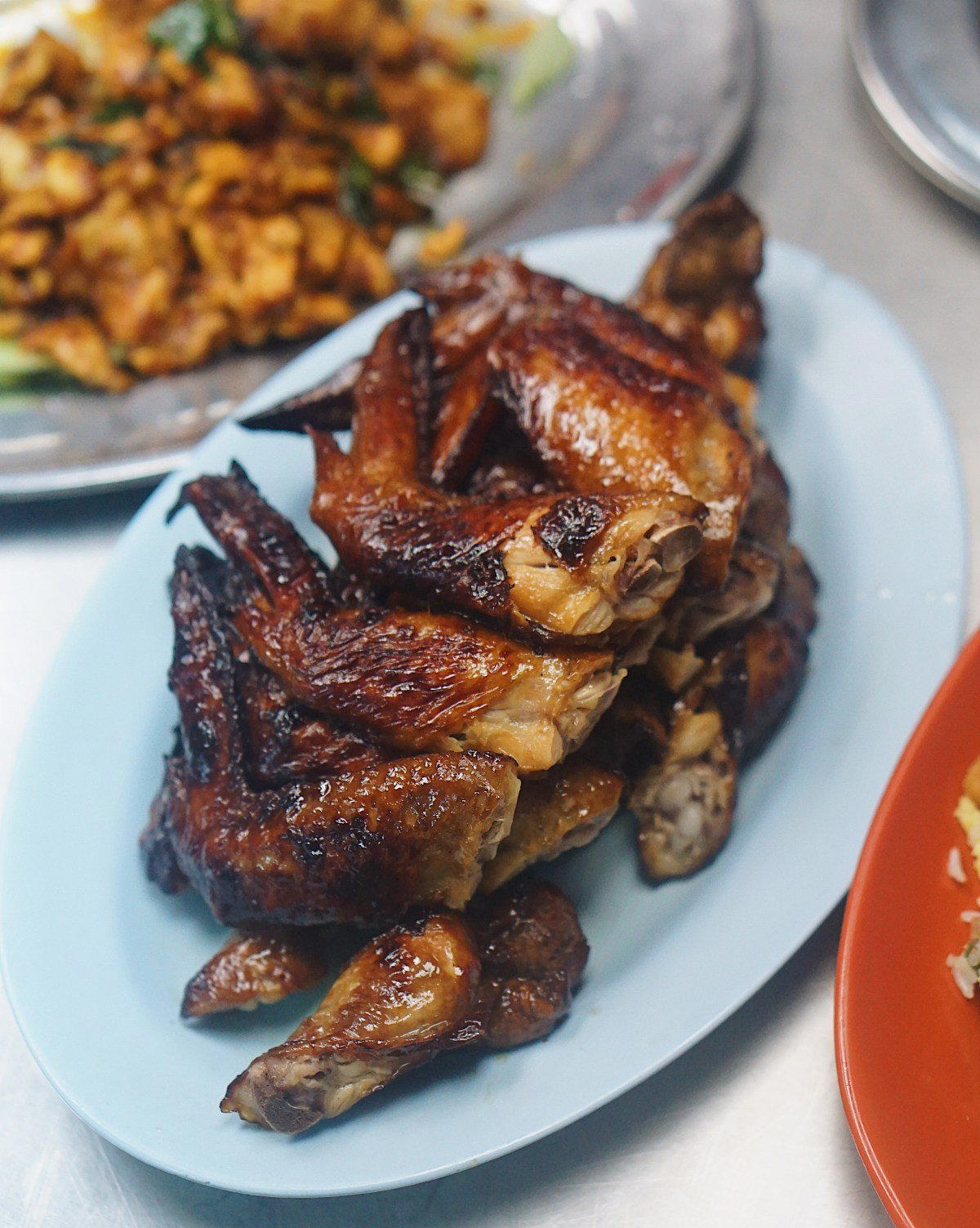
Jalan Alor After Dark: The Street That Defines the Meal
By the time the sun drops behind the Bukit Bintang towers, Jalan Alor undergoes a shift that no daytime photograph prepares you for. Folding tables colonise the pavement. Smoke from charcoal grills thickens the air. The narrow one-way street compresses foot traffic, cooking smells, and competing restaurant touts into something that functions less like a dining address and more like a collective event. In this context, the individual restaurant matters less than the strip itself, and yet, within the strip, some operators carry more weight than others. Restoran Wong Ah Wah (W.A.W) is a casual Chinese BBQ chicken wings restaurant in Kuala Lumpur, with a Google rating of 3.3 and an average price of about US$10 per person.
Understanding what W.A.W represents requires understanding what Jalan Alor is and what it has become. The street has long operated as Kuala Lumpur's most compressed demonstration of Chinese-Malaysian hawker eating: dai chow (大炒, loosely translated as big fry) dishes cooked to order, shared plates, cold beer, and the particular energy that comes from eating outdoors in tropical heat. That model existed long before mass tourism arrived, and it will outlast the tourists who now fill the pavement tables alongside local families and late-night office workers. W.A.W grew within that tradition, not against it.
A Kitchen That Evolved With the Street
The editorial angle that matters most at W.A.W is not a single dish or a chef biography, it is the question of how a street-level Chinese restaurant survives and adapts across decades on one of Southeast Asia's most competitive eating strips. Jalan Alor has lost and gained operators constantly. Rental pressure from Bukit Bintang's commercial sprawl, shifting tourist demographics, and the slow formalisation of food safety standards have each reshaped which restaurants hold ground and which disappear. W.A.W's continued presence on the strip is itself an indicator of operational durability that most newcomers on the street cannot claim.
The evolution here tracks the broader arc of Chinese-Malaysian dai chow cooking. In its earlier form, this style of restaurant cooking prioritised speed, volume, and flavour intensity over presentation or narrative. Woks ran at temperatures that most domestic kitchens cannot reach, and the menu was a broad list rather than a curated selection. That core remains, but the surrounding context has changed considerably. Jalan Alor now draws visitors from across Southeast Asia and beyond, which means the same kitchen must satisfy regulars who know exactly what they want and first-timers who are ordering by instinct or by what they see at the next table. Restaurants that navigate this successfully tend to anchor their identity on one or two preparations that travel across both audiences, in W.A.W's case, the grilled chicken wings that appear in the restaurant's name and in the shorthand that visitors use when recommending it.
That focus on a signature item is a pattern visible across the region's most durable street-level operators. Auntie Gaik Lean's Old School Eatery in George Town anchors its identity on Nyonya tradition; Air Itam Asam Laksa, Chong Char Koay Teow, and 888 Hokkien Mee in Penang do the same with dish-specific specialisation. The model is consistent: clarity of identity outlasts novelty on streets where competition is permanent and attention is short.
Where W.A.W Sits in Kuala Lumpur's Wider Dining Frame
Kuala Lumpur's restaurant market has stratified considerably over the past decade. At the upper end, operators like Dewakan and Beta have built internationally recognised cases for Malaysian ingredients and technique working at fine-dining scale. DC. by Darren Chin, Molina, and Ling Long occupy a similar tier with different culinary orientations. That segment of the market attracts global critical attention and the bookings that come with it.
W.A.W operates in a completely different register, not beneath these restaurants in culinary seriousness, but alongside a parallel tradition that runs on different terms. The value proposition is not a tasting menu or a wine list; it is the reliability of a charcoal grill, the pace of a shared table, and the social logic of eating on a street that has fed the neighbourhood for decades. These two ends of Kuala Lumpur's dining spectrum are not in competition. They serve different occasions, different decisions, and different modes of eating. Both are worth understanding on their own terms.
Malaysia's hawker and street-food culture has a geographic spread that extends well beyond the capital. Da De Bah Kut Teh in Borneo and CRC Restaurant in Georgetown represent the same tradition of Chinese-Malaysian cooking operating at street level and in mid-market formats across different cities. The cuisine is not monolithic, Cantonese, Hokkien, and Hainanese influences have produced distinct regional expressions, but the social architecture of the meal is recognisably consistent: shared plates, high-volume wok cooking, and the expectation that no single dish owns the table.
Planning Your Visit
Jalan Alor is most active from early evening through midnight, and the street operates at peak density on weekends when Bukit Bintang draws the broadest mix of visitors and locals. The practical reality of eating at W.A.W, as with most operators on the strip, is that tables fill quickly once the evening crowd arrives, and one efficient approach is to arrive early in the dinner window rather than later. The address at 1, Jalan Alor places it at the accessible end of the street from the Bukit Bintang commercial corridor. The outdoor setting means that weather is a variable, covered sections exist, but open-air eating on a tropical street carries conditions that cannot always be managed.
For vegetarian visitors, dai chow menus at Chinese-Malaysian restaurants of this type typically include vegetable-forward dishes alongside the meat and seafood that anchor most tables. However, given the kitchen's focus on grilled chicken and wok-based shared dishes, confirming specific dietary requirements directly with the restaurant before visiting is the sensible approach. Cross-contamination in a high-volume open kitchen is a practical reality rather than an edge case.
Reputation First
Comparable venues nearby, for context on price, style, and recognition.
| Venue | Cuisine | Price | Notes |
|---|---|---|---|
| Restoran Wong Ah Wah (W.A.W) (Restoran Wong Ah Wah (W.A.W) 黄亚华烧鸡翅)This venue — the venue you are viewing | Chinese BBQ Chicken Wings | $ | Not listed |
| Loke Yun Chicken Rice | Hainanese Chicken Rice | $ | Ampang |
| Souper Tang 汤师父 | Chinese Herbal Soup | $$ | Mid Valley |
| Soo Kee | Classic Cantonese | $$ | Ampang |
| Din Tai Fung (Din Tai Fung (鼎泰豐)) | Taiwanese Dim Sum | $$ | Bukit Bintang |
| Restoran Seetharam Family Curry House | Indian Curry House | $ | Brickfields |
Continue exploring
More in Kuala Lumpur
Restaurants in Kuala Lumpur
Browse all →
Bars in Kuala Lumpur
Browse all →


At a Glance
- Lively
- Well Known
- Casual Hangout
- Late Night
- Group Dining
- Open Kitchen
- Street Scene
Current opening hours
- Monday
- Closed
- Tuesday
- 4 PM–2 AM
- Wednesday
- 4 PM–2 AM
- Thursday
- 4 PM–2 AM
- Friday
- 4 PM–2 AM
- Saturday
- 4 PM–2 AM
- Sunday
- 4 PM–2 AM
Hours can change for holidays and private events. Last verified .
Bustling street-side atmosphere with lively night market energy, open-air seating, and the sizzle of grills under bright lights.