Kien
Kien occupies a residential corner of Amsterdam's Oud-West, where the Dutch tradition of neighbourhood dining meets a kitchen that takes its cultural framing seriously. The address on Witte de Withplein places it away from the canal-tourist circuit, in a district where locals tend to set the tone. For readers cross-referencing Amsterdam's broader fine and upper-casual dining scene, Kien sits in a tier worth understanding on its own terms.
- Address
- Witte de Withplein 43, 1057 ZM Amsterdam, Netherlands
- Phone
- +31207370093
- Website
- restaurantkien.nl
- Directions
- Get directions
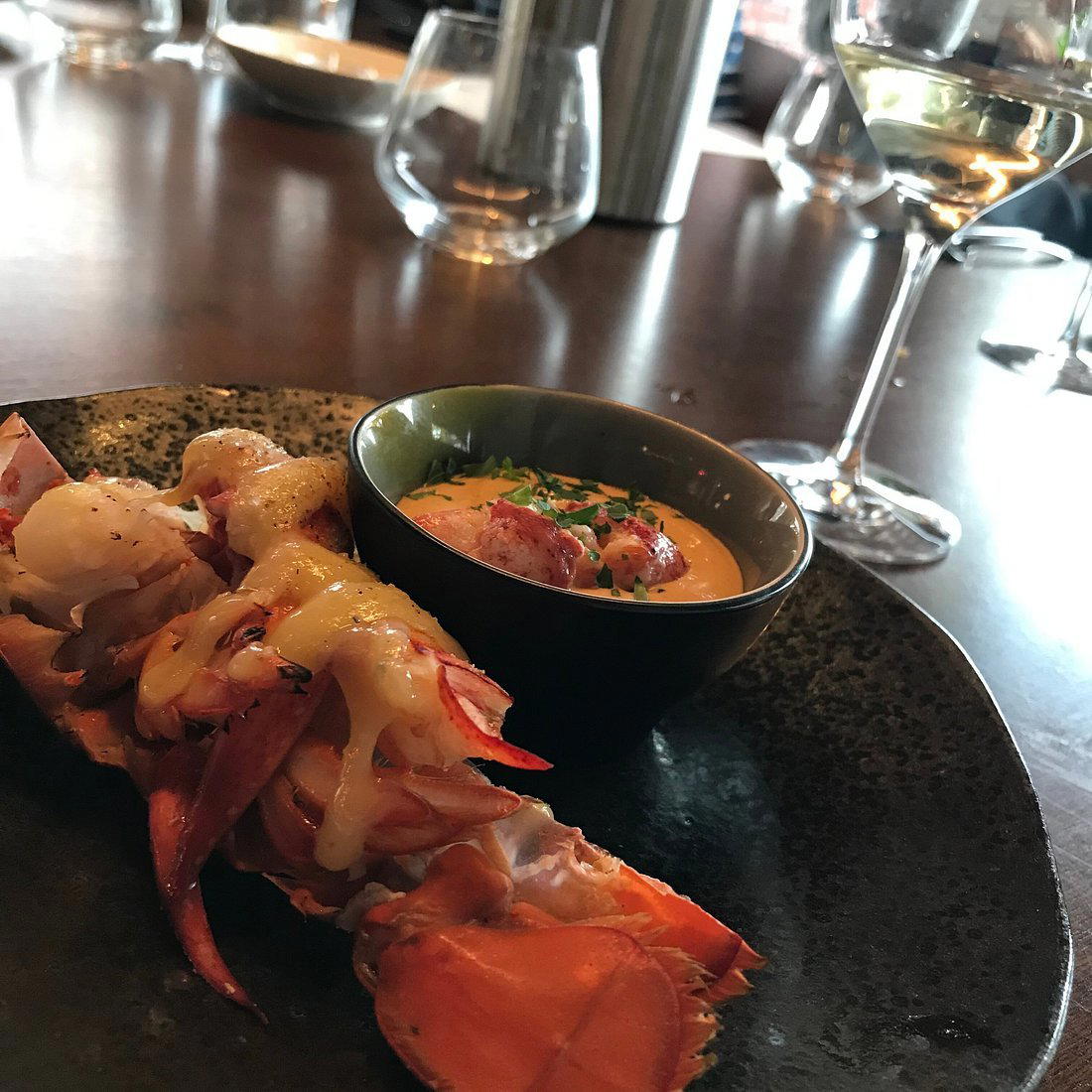
A Corner of Oud-West That Earns Its Own Attention
Amsterdam's Oud-West has always operated slightly apart from the city's more photographed dining corridors. The Jordaan and the canal belt pull the tourist-facing reservation traffic; Oud-West pulls the residents. Witte de Withplein, where Kien is addressed at number 43, is a square that functions as a genuine neighbourhood pivot point rather than a destination set-piece. Approaching it, you read the area before you read the restaurant: residential facades, a human-scaled square, the ordinary rhythms of a city going about its week. That physical context is not incidental. It sets the register for what happens inside.
This matters because Amsterdam's dining scene has split into increasingly legible tiers over the past decade. At the leading, addresses like Ciel Bleu, Flore, Spectrum, and Vinkeles compete within the €€€€ bracket and Michelin's upper recognition bands. Below them, a mid-tier of serious but more approachable rooms has grown to serve a city whose residents eat out frequently and with genuine expectations. Kien's Oud-West positioning places it within that second tier's geography, though the precise calibration of its ambition is something the room itself communicates more clearly than any price tier label can.
The Cultural Frame: What Dutch Neighbourhood Dining Means in Practice
The Netherlands has a specific tradition of the buurtrestaurant, the neighbourhood restaurant that operates as a civic institution as much as a commercial one. These are not bistros in the French sense, nor are they gastropubs in the British mode. They occupy a distinct cultural space: familiar enough to visit weekly, careful enough to reward the visit. Strong examples among them hold a local loyalty that Michelin-decorated rooms rarely achieve, because they are woven into daily life rather than positioned above it.
Amsterdam's version of this tradition has deepened considerably since the mid-2010s, when a generation of cooks trained in technically serious kitchens began opening smaller, less formally structured rooms in residential districts. The movement produced venues like BAK in Van Diemenstraat, with its farm-to-table orientation, and De Kas in the Frankendael greenhouse, with its organic sourcing logic. Kien on Witte de Withplein belongs to this broader current: a kitchen that takes the neighbourhood seriously as an audience, rather than as a fallback for diners who couldn't get into somewhere more famous.
For readers who want to situate Amsterdam's neighbourhood dining within a national context, the comparison points extend well beyond the city. De Librije in Zwolle and 't Nonnetje in Harderwijk demonstrate that the Netherlands' most serious cooking often happens at remove from the capital entirely. Closer to Amsterdam, Aan de Poel in Amstelveen has built a regional reputation on precision and locality. The lesson across all of these is that Dutch fine and upper-casual dining increasingly draws its authority from place and product rather than from metropolitan density.
The Cuisine Context: Reading the Menu Through Its Roots
What can be said with confidence is structural: kitchens at this address and in this neighbourhood tier in Amsterdam typically work within a format that foregrounds Dutch seasonal produce, keeps the menu short enough to turn daily, and prices at a level that allows repeat visits rather than demanding them as an occasion. The Bistro de la Mer model, anchored in classic cuisine at the €€€ level, offers one reference point for what serious but non-ceremonial Amsterdam cooking looks and feels like. Kien's Oud-West address suggests a similar intent: cooking that rewards attention without requiring a special occasion to justify the visit.
The broader culinary tradition worth understanding here is the Dutch relationship with ingredient-led cooking. Unlike France, where technique has historically been the organizing principle, or Japan, where the treatment of a single ingredient can define an entire counter's identity, Dutch cooking's contemporary identity has been built around sourcing transparency and seasonal honesty. Venues like De Nieuwe Winkel in Nijmegen and Brut172 in Reijmerstok have taken this in a more radical direction, but the underlying logic runs through the whole spectrum. Even at the neighbourhood level, Amsterdam diners have come to expect kitchens to be able to account for where things come from.
That expectation has international reference points too. The conversation between ingredient-led European cooking and the discipline of, say, Le Bernardin in New York City or the fermentation and Korean-rooted precision of Atomix is one that serious cooks across Amsterdam engage with even when their room seats thirty people on a residential square. Scale does not preclude seriousness.
Placing Kien in the Amsterdam Dining Map
The Oud-West neighbourhood sits west of the Singelgracht, bounded roughly by Overtoom to the south and Kinkerstraat to the east. It is a district that has attracted a younger, food-literate resident base over the past fifteen years, and the dining infrastructure has followed. The square at Witte de Withplein is walkable from both the Vondelpark and the Ten Katemarkt, Amsterdam's most characterful street market, which means the local food culture is embedded at a granular level that most tourist-facing neighbourhoods can't replicate.
Oud-West appears there as an area where the ratio of serious-to-tourist restaurants runs higher than the canal belt's more mixed offer. Kien's address on Witte de Withplein sits inside that more concentrated zone.
For Netherlands dining beyond Amsterdam, the pattern of serious kitchens in unexpected locations continues. De Bokkedoorns in Overveen, De Groene Lantaarn in Staphorst, De Lindehof in Nuenen, De Lindenhof in Giethoorn, and De Treeswijkhoeve in Waalre all reinforce that the Netherlands does not concentrate its culinary ambition in one city the way France does in Paris or the UK does in London.
Planning Your Visit
Kien is located at Witte de Withplein 43 in Amsterdam's Oud-West district, reachable by tram from Centraal Station via lines that serve the Kinkerstraat corridor. Phone and website details are not listed in the record. One reliable booking approach is to check current contact details directly. Arriving with flexibility on timing is advisable: Oud-West restaurants of this profile fill from mid-evening and the square's atmosphere shifts noticeably once the neighbourhood settles in for the night.
In Context: Similar Options
Comparable venues nearby, for context on price, style, and recognition.
| Venue | Cuisine | Price | Notes |
|---|---|---|---|
| KienThis venue — the venue you are viewing | Modern French-European | $$$ | Not listed |
| Hemelse Modder | Contemporary Dutch-French Cuisine | $$$ | Scheepvaarthuisbuurt |
| Restaurant De Belhamel | Traditional French with Italian and Dutch influences | $$$ | Haarlemerbuurt |
| Singel 101 | Contemporary French-European Fine Dining | $$ | Langestraat e.o. |
| Vertigo | Classic French Bistro | $$ | Vondelparkbuurt Oost |
| Le Bouchon du centre | Authentic Lyonnaise Bouchon | $$ | Spuistraat Zuid |
Continue exploring
More in Amsterdam
Restaurants in Amsterdam
Browse all →
Bars in Amsterdam
Browse all →
Hotels in Amsterdam
Browse all →
Wineries in Amsterdam
Browse all →
At a Glance
- Elegant
- Sophisticated
- Romantic
- Modern
- Date Night
- Special Occasion
- Business Dinner
- Terrace
- Standalone
- Extensive Wine List
- Craft Cocktails
- Sommelier Led
- Farm To Table
- Local Sourcing
Refined and welcoming atmosphere with fine wines and carefully presented dishes; intimate yet lively dining experience.