Michelin Plate
Our verdict
On Gumpendorfer Strasse in Vienna's sixth district, KIAS occupies a stretch of the city where neighbourhood restaurants do quiet, serious work rather than compete for tourist-facing visibility. The address places it within walking distance of the Naschmarkt corridor, in a district that has developed a consistent identity for considered dining away from the first-district showcase circuit.

Pearl is the En Primeur Club membership app, where members save venues, book tables and use the concierge.
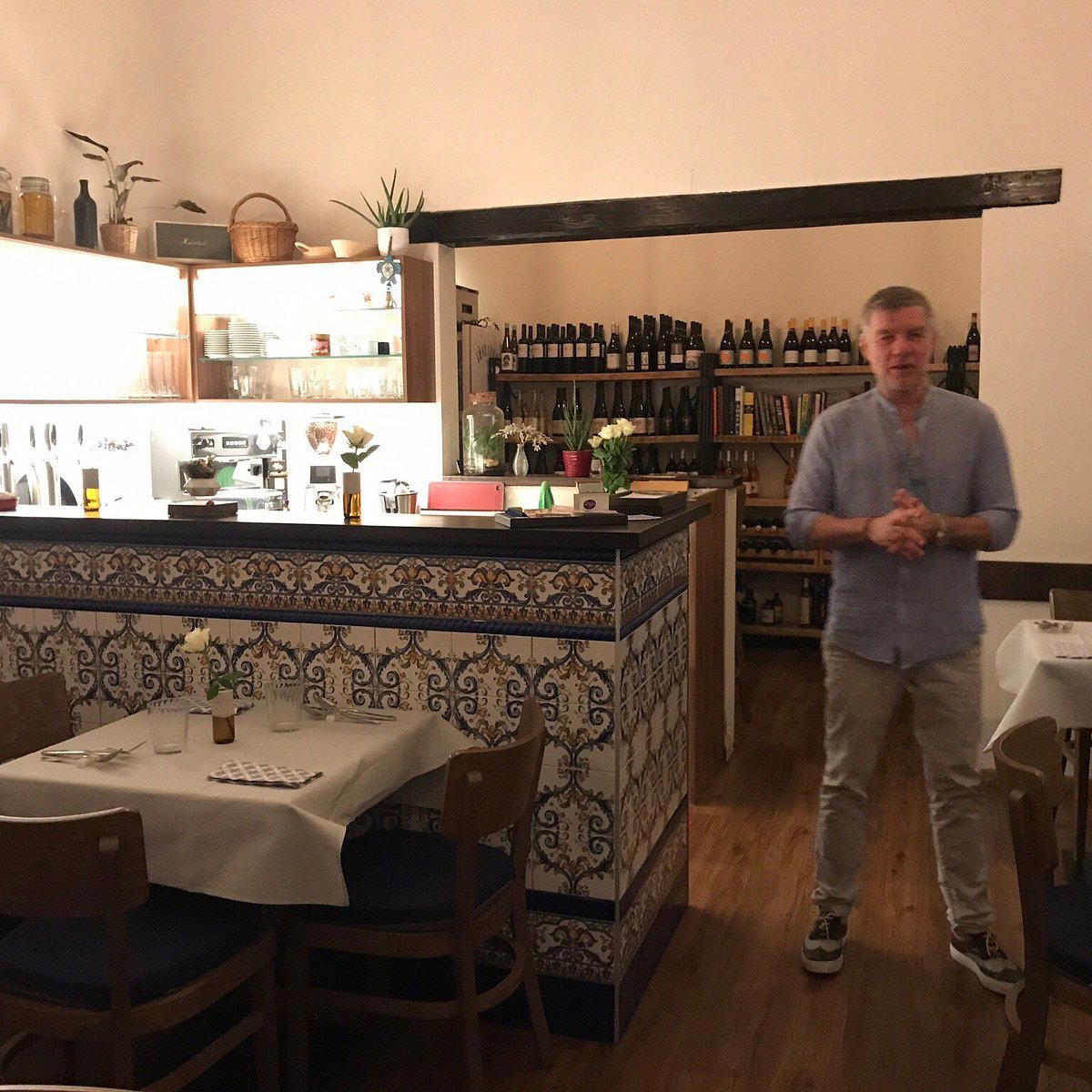
Sixth District Seriousness: What KIAS Tells Us About Vienna's Distributed Dining Scene
Gumpendorfer Strasse runs through Mariahilf, Vienna's sixth district, in a way that resists easy categorisation. It is neither a dedicated restaurant row nor a purely residential street, but something more layered: a working neighbourhood artery where a hardware shop sits beside a wine bar, and where a restaurant can build a local following without relying on proximity to the Innere Stadt's established prestige circuit. KIAS occupies this address at number 37, and its position in Mariahilf says something worth noting about how Vienna's serious dining has redistributed itself over the past decade.
Vienna has long had a centrifugal tendency in its restaurant culture. The first district carries the weight of the city's formal dining reputation, with institutions like Steirereck im Stadtpark and the tasting-menu heavyweights clustered around the Ring and its approaches. But the more interesting development in recent years has been the migration of serious cooking into the outer districts, where lower overhead allows kitchens to take risks that the showcase economy of central Vienna makes harder to justify. Mariahilf, along with the fourth and seventh districts, has absorbed a disproportionate share of this shift.
Reading the Menu Architecture
In Vienna's mid-to-upper tier, menu structure has become one of the clearest signals of a kitchen's ambitions and its relationship with its guests. The city's leading end, represented by operations like Amador and Mraz & Sohn, has largely committed to fixed tasting formats where the kitchen controls sequencing entirely. A step below that, in the tier where restaurants like Doubek and Konstantin Filippou operate, there is more negotiation between structured menus and à la carte options, reflecting a different relationship between kitchen ambition and guest comfort.
What a restaurant's menu architecture reveals, beyond the dishes themselves, is how the kitchen thinks about control, hospitality, and commercial reality. A fully fixed tasting menu signals a kitchen that has enough demand to set the terms. A hybrid format, offering both a shorter set menu and à la carte choices, suggests a kitchen that wants to express a point of view without alienating the neighbourhood regulars who might want a single course and a glass of wine on a Tuesday.
This structural decision matters for the guest more than it might initially appear. In cities like New York, where operations such as Atomix have built entire identities around the rigidity of their tasting format, or where Le Bernardin uses menu architecture to signal the primacy of the product over the occasion, the format is itself a statement of values. In Vienna, a city with a strong culture of the Beisl and the neighbourhood Gasthof alongside its fine-dining tradition, that statement is read differently. Flexibility is not a concession; it is often a form of intelligence about the room.
Mariahilf in Context
The sixth district's dining character has been shaped by proximity to the Naschmarkt, which functions less as a tourist destination and more as a genuine supply chain for the neighbourhood's kitchens. Chefs in this part of the city have historically had access to a broader range of produce and supplier relationships than their counterparts in more central or more residential districts. That access has made the sixth, fifth, and fourth districts a productive zone for kitchens that prioritise ingredient sourcing as an organising principle rather than as a marketing point.
Across Austria more broadly, the same sourcing discipline shows up in very different contexts: Döllerer in Golling an der Salzach has built an identity around alpine produce and regional supply chains, while Landhaus Bacher in Mautern an der Donau works within the Wachau's specific agricultural and viticultural character. In Vienna itself, the constraint is different: the city's chefs are working in an urban context, and their relationship with regional produce is mediated by markets and suppliers rather than direct proximity to farms. The Naschmarkt corridor gives Mariahilf kitchens a structural advantage in that mediation.
Other serious Austrian kitchens that have made sourcing a central part of their identity include Obauer in Werfen, Ikarus in Salzburg, and Kräuterreich by Vitus Winkler in Sankt Veit im Pongau, each operating within distinct regional frameworks. The Tyrolean end of this spectrum is represented by restaurants like Gourmetrestaurant Tannenhof in Sankt Anton am Arlberg, Griggeler Stuba in Lech, Schwarzer Adler in Hall in Tirol, and Restaurant 141 by Joachim Jaud in Mieming. Vienna kitchens in Mariahilf compete in a different register, but the underlying question, of how a kitchen defines its sourcing radius and what that means for the menu, is consistent across all of them.
For those building a broader picture of Austrian serious dining beyond Vienna, Ois in Neufelden represents the Upper Austrian end of this conversation, working within a different regional identity entirely.
Planning Your Visit
KIAS is located at Gumpendorfer Str. 37, 1060 Wien, in Vienna's sixth district, within walking distance of the Naschmarkt and accessible by U4 (Kettenbrückengasse) or tram lines running along Mariahilfer Strasse. For a broader orientation to Vienna's restaurant scene, including the venues well suited to different formats and price points, the EP Club Vienna restaurants guide provides a mapped overview of where serious cooking is happening across the city's districts.
Questions About KIAS
- What should I eat at KIAS?
- For a point of comparison in terms of cuisine approach and ambition, Konstantin Filippou and Mraz & Sohn represent the best of Vienna's creative cooking range.
- Can I walk in to KIAS?
- Vienna's sixth district restaurants that have developed a local following tend to fill on weekday evenings and are often full on Fridays and Saturdays without a reservation. Given KIAS's Mariahilf address, walk-in availability is more plausible at lunch or early weekday evenings than on weekend nights.
- What's the standout thing about KIAS?
- Its location in Mariahilf places it within a district that has developed a genuine identity for serious neighbourhood dining, distinct from the first-district prestige circuit. That address carries its own logic: lower visibility relative to central Vienna's showcase restaurants, but a more direct relationship with a local guest base. For comparison at the top of Vienna's creative spectrum, Amador and Steirereck im Stadtpark operate in a different tier and format.
- Do they accommodate allergies at KIAS?
- Allergy and dietary accommodation policies are not held on record for KIAS. This is standard practice across Vienna's restaurant tier, and most kitchens in this segment of the market are accustomed to the conversation. The Vienna guide includes venues with publicly documented dietary policies where available.
- Is KIAS overpriced or worth every penny?
- Without current pricing data on record, a direct comparison is not possible. Vienna's sixth district tends to price below the first-district premium tier: a restaurant in Mariahilf with serious kitchen ambitions will typically sit below the €€€€ ceiling occupied by Mraz & Sohn or Konstantin Filippou, though not always. Confirm current pricing directly with the venue.
- How does KIAS fit into Vienna's broader sixth-district dining scene, and is it worth combining with other nearby restaurants?
- Gumpendorfer Strasse and the surrounding Mariahilf streets form a coherent dining zone that rewards a longer visit rather than a single-restaurant trip. The sixth district's proximity to the fourth (Wieden) and fifth (Margareten) means that an afternoon at the Naschmarkt followed by an evening at a Mariahilf restaurant is a practical and well-established pattern among Vienna regulars. For a fuller map of where serious cooking is distributed across the city, the EP Club Vienna restaurants guide covers the full spread of districts and formats.
Frequently asked questions
What's the address for KIAS?
KIAS is located at Gumpendorfer Str. 37, 1060 Wien, Austria, Vienna.
How does KIAS fit into Vienna's sixth district dining scene compared to the Naschmarkt area?
KIAS sits on Gumpendorfer Strasse in Mariahilf, within walking distance of the Naschmarkt, which functions in Vienna less as a tourist market and more as a working supplier hub for serious kitchens. That proximity places KIAS inside a network of ingredient-led restaurants that draw on the market's daily supply rather than operating in isolation from it. The sixth district's dining character, shaped by that supply chain and by a local rather than tourist-facing clientele, gives restaurants here a different set of pressures and possibilities than venues closer to the Innere Stadt.
What should I eat at KIAS?
The venue data on hand does not specify individual dishes, and generating menu details without a source would be unreliable. What the body content does establish is that KIAS sits in Vienna's mid-to-upper dining tier, where menu architecture tends to signal kitchen ambition clearly. Your safest move is to check directly at Gumpendorfer Str. 37, 1060 Wien, or follow the restaurant's own channels for current offerings.
Can I walk in to KIAS?
Restaurants in Vienna's Mariahilf district at this tier typically require a reservation, particularly for evening sittings given limited covers. Contacting the venue at Gumpendorfer Str. 37 in advance is the practical approach.
What's the standout thing about KIAS?
Location and context do a lot of work here. Gumpendorfer Strasse runs through Vienna's sixth district in a way that resists easy categorisation, and KIAS operates within that productive ambiguity: close to the Naschmarkt's genuine supplier culture, removed from the first-district tourist circuit. The body content flags menu structure as a key signal of kitchen ambition at this address.
Do they accommodate allergies at KIAS?
No allergy policy is documented in available venue records for KIAS. Austrian restaurants at the mid-to-upper tier in Vienna are legally required to disclose major allergens under EU food information regulations, so that baseline applies. For specific dietary needs, contacting the venue directly at Gumpendorfer Str. 37, 1060 Wien before visiting is the responsible step.
Is KIAS overpriced or worth every penny?
The editorial context places it in Vienna's mid-to-upper tier, a bracket where the Naschmarkt proximity tends to support ingredient quality without the first-district rent premium. That structural advantage usually shows up on the plate before it shows up on the bill.
Comparable Spots, Quickly
Comparable venues nearby, for context on price, style, and recognition.
| Venue | Cuisine | Price | Awards | Notes |
|---|---|---|---|---|
| KIASThis venue (the venue you are viewing) | Modern Brazilian | $50–100 | Michelin Plate | Not listed |
| DOOR NO. 8 | Modern International Steakhouse | $50–100 | Not listed | Mariahilf |
| Café Central | Traditional Viennese Café | $30–50 | Not listed | Stephansdom |
| Livingstone | Steakhouse Grill | $50–100 | Not listed | Inner City |
| Al Borgo | Contemporary Northern Italian | $50–100 | Not listed | Staatsoper |
| Konoba Pescaria | Authentic Croatian Seafood | $30–50 | Not listed | Neubau |
Recognition history
Dated appearances from independent guides and award organizations, with the underlying list record or original source where available.
Michelin Plate
Michelin