
Kenchan Ramen Yamagata belongs to Yamagata’s serious noodle culture rather than the spectacle-driven ramen circuit. Its Tabelog Ramen EAST 100 selections in 2024 and 2025 point to a shop valued for regional identity, handmade-noodle character, and the practical appeal of a focused ramen-and-tsukemen format.
Pearl is the En Primeur Club membership app — saves, bookings, and concierge access live there. Same editors, same standards.
- Address
- 2 Chome-1-17 Nishita, Yamagata, 990-0831, Japan
- Phone
- +81 23-647-0086
- Website
- 81sta.jp
 Saves & bookings on Pearl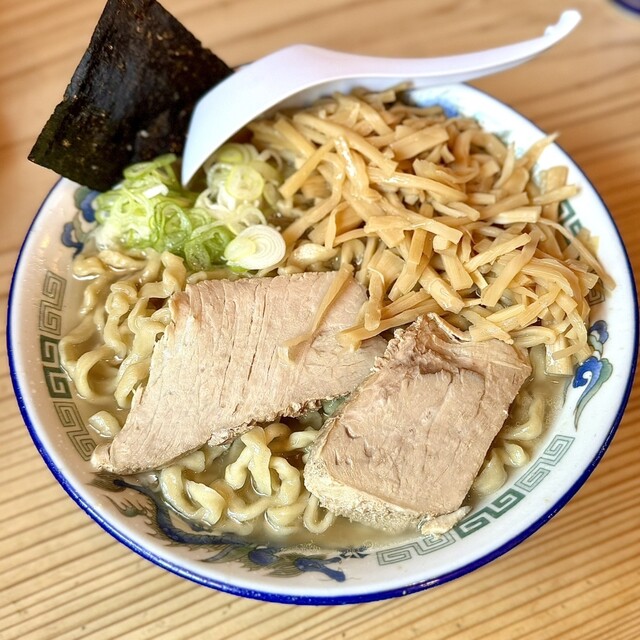
The approach to a house-style ramen shop in Yamagata changes the tempo before the bowl arrives. This is not the neon, late-night ramen theatre of Tokyo or Fukuoka; the signal is quieter, more local, and more tied to the rhythms of a city where noodles are treated as everyday infrastructure rather than a novelty. In that setting, Kenchan Ramen Yamagata reads as part of a regional argument: Yamagata ramen matters because it turns local appetite, wheat texture, broth preference, and family dining into a coherent food culture.
Yamagata is a serious ramen prefecture, and its noodle identity is broader than a single style. Cold ramen has its own local history, soba culture shapes expectations around chew and grain, and ordinary lunch shops carry more weight here than their modest rooms suggest. Within that context, a ramen-and-tsukemen specialist selected for Tabelog Ramen EAST 100 in both 2024 and 2025 is not being rewarded for ceremony. The recognition points to consistency in a category where repeat local custom matters as much as destination dining.
Handmade noodles put Yamagata's wheat-and-broth logic first
The useful way to read this bowl is through texture. Yamagata ramen often asks more from noodles than from visual polish, and the appeal sits in the way handmade, thick, curly strands carry broth and resist the bite. That matters in a prefecture where noodle shops compete not only on stock but on physical satisfaction: slurp, chew, and broth adherence are part of the regional grammar. The shop’s stated focus on thick curly handmade noodles with seafood-and-meat broth places it firmly in that tradition.
Ingredient sourcing, in this case, is less about farm-name display and more about the logic of local noodle culture. Wheat becomes structure; seafood and meat build a broth with enough weight to cling; tsukemen sits beside ramen because dipping noodles make texture the main event. That combination explains why the format travels poorly as mere description. A menu category reading “ramen, tsukemen” tells only half the story. In Yamagata, the measure is how the noodle behaves after it leaves the kitchen.
This is also where the city’s ramen culture differs from the luxury-language often attached to Japanese dining abroad. The price tier for local ramen is accessible, the rooms are practical, and the meal is built around turnover rather than lingering. Yet the standards can be severe. A Tabelog score of 3.70 in Japan’s ramen category, paired with consecutive Ramen EAST 100 selections, places the shop in a competitive band where regulars and travelling noodle obsessives are judging small differences in noodle thickness, broth cling, and balance.
A compact room, a local rhythm, and no need for ceremony
The room format says as much as the award. Counter seating and tatami space create the split personality common to strong regional ramen shops: quick solo meals on one side, family use on the other. That is not a contradiction. In smaller Japanese cities, serious ramen is often woven into everyday life rather than separated into a destination-only ritual. Children are welcome here, and that matters because it keeps the food anchored to local habits instead of turning it into a collector’s exercise.
Kenchan Ramen Yamagata also sits in a wider Yamagata dining picture that rewards specialization. A visitor can build a sharper read of the city by moving between ramen, sweets, izakaya cooking, and formal local dining rather than chasing a single grand meal. For that broader map, see Chuka Soba Dokoro Konpiraso, Eigyoku Do, Goryouriya Ito, Izakaya Denshichi, and JAY. The contrast is instructive: ramen here is not a lesser stop before dinner, but one of the clearest ways to understand how the city eats.
Compared with Yamagata’s higher-spend yakiniku and izakaya options, the ramen counter occupies a different role. Soneta Yakitoriya and Tachinomi En sit closer to casual drinking culture; Yakiniku Meisho Yamagyu Yamagata ten and Izakaya Denshichi belong to a more evening-led spend pattern. Ramen, by contrast, compresses the city’s food values into a shorter meal: regional identity, efficient service, and a bowl that must justify itself without the support of sake, courses, or atmosphere.
How to place it in a Yamagata itinerary
The smart Yamagata itinerary does not treat ramen as a checkbox. It uses the category as a lens for the prefecture’s relationship with noodles, climate, and appetite. Cold winters, strong soba habits, and a long-running local ramen culture all help explain why a shop built around thick handmade noodles can carry genuine editorial weight. The appeal is not scarcity theatre. It is the chance to see a city’s everyday food seriousness at close range.
For broader planning, our full Yamagata restaurants guide gives the dining context, while our full Yamagata hotels guide, our full Yamagata bars guide, our full Yamagata wineries guide, and our full Yamagata experiences guide help frame the city beyond the bowl. Travellers extending a Japan food route can compare regional specialization with -Grilled beef Sukiyaki- KAMAKURA TANUKIAN 鎌倉 たぬき庵 in Kamakura,. 鮪と炭火焼き うお炭 秋葉原店 in Tokyo,.cafe in Osaka,.know in Kumamoto, (Shoku) Vietnam in Kawasaki, and [Curry Senmon Ten] Maruyama Kyoju. in Sapporo. For a trans-Pacific contrast in Japanese casual formats, Jōdo Saké Bar in Los Angeles and Onigiri Time in Pasadena show how tightly focused Japanese food ideas change when they leave their home context.
The editorial case is clear: Kenchan Ramen Yamagata is strongest as a study in place. Its value lies in the way the bowl connects noodle texture, seafood-and-meat broth, counter pragmatism, and Yamagata’s unusually deep ramen culture. For travellers who read regional Japan through everyday meals, that makes it a sharper stop than many restaurants with more elaborate service rituals.
At-a-Glance Comparison
Comparable venues by cuisine and price in the same metro.
| Venue | Cuisine | Price | Awards | Notes |
|---|---|---|---|---|
| Kenchan Ramen YamagataThis venue — the venue you are viewing | Kenchan-style niboshi ramen with hand-cut extra-thick noodles | $ | , | |
| Yamada Ya | Japanese traditional sweets | $ | , | Honcho |
| Eigyoku Do | Traditional Japanese wagashi & dorayaki cafe | $ | , | Yamagata |
| Teuchi Soba Umesoba | Traditional Hand‑made Soba | $ | , | / Yamagata Station area |
| レストラン横倉 | Western-Japanese Ski Resort Fare | $$ | , | Zao Onsen |
| Izakaya Denshichi | Traditional Japanese Izakaya | $$$ | , | near Yamagata Station (east exit) |
Continue exploring
More in Yamagata
Restaurants in Yamagata
Browse all →

Hotels in Yamagata
Browse all →
Wineries in Yamagata
Browse all →
At a Glance
- Lively
- Classic
- Hidden Gem
- Solo
- Casual Hangout
- Family
- Group Dining
- After Work
- Standalone
- Local Sourcing
A no-frills, classic local ramen shop with counter and tatami seating, lively daytime crowds, and a focus on the bowl rather than décor.