
Tabelog 100 #75
Our verdict
Kyoto’s sweets culture is not confined to temple-side wagashi counters; its western-style cake shops form a serious parallel circuit. Kashi Shokunin belongs to that circuit, with Tabelog 100 Sweets WEST 2023 recognition, a cake-led format, take-out service, and a low-spend bracket that makes the lunch-versus-evening decision more about timing and selection than ceremony.

Pearl is the En Primeur Club membership app — saves, bookings, and concierge access live there. Same editors, same standards.
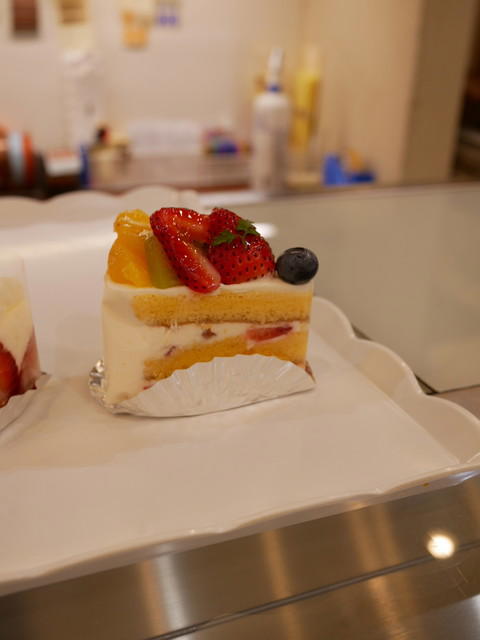
The menu
What to order
- Seasonal cakes
- Whole cakes
- Macarons
- Cookies
- Chocolate
Approaching a Kyoto cake shop is a different kind of city reading from entering a formal dining room. The cues are quieter: a retail counter, boxes moving across the register, families choosing for later rather than diners settling in for a long sitting. In Kyoto, Kashi Shokunin sits in that practical city rhythm, where sweets are bought for home, gifts, train rides, and afternoon tables rather than treated only as plated restaurant finales.
That matters because Kyoto’s dessert culture is often reduced, from the outside, to a single traditional image. The city has that tradition in depth, but it also has a disciplined cake-shop scene: display cases, boxed sweets, and confectionery counters that compete on texture, finish, portability, and seasonal regularity. Kashi Shokunin’s 2023 Tabelog Hyakumeiten recognition places it inside that broader Kansai conversation rather than in the tourist-dessert category. The format is cake-led, which changes the way to judge it: not as a dining room performance, but as a test of consistency across display-case sweets.
Kyoto cake culture, away from the temple corridor
Kyoto gives this kind of shop a different audience from the city’s most visitor-heavy dining routes. The setting tends to reward repeat buying over spectacle. A cake shop here has to make sense for errands, children, small celebrations, and office-bound gifting, not only for travellers chasing a named dessert stop.
The lunch-versus-dinner divide is therefore less formal than it would be at Kyoto’s reservation restaurants. Daytime is the natural window for choice: cakes and sweets are most useful when they can be carried onward, eaten later, or folded into an afternoon plan. Evening shifts the purpose. It becomes a stop for taking something home or adding dessert to a private meal, with selection naturally more dependent on the day’s flow. The editorial call is simple: treat this as a daytime sweets address if variety matters, and an evening convenience if the point is a box for later.
This is also where Kyoto’s price hierarchy becomes interesting. At one end, the city has restaurants where dinner pricing signals ceremony and length of service; Nishino, for example, sits in a different spend bracket. At the casual end, ramen and curry counters such as Ramen Tsurumusha, Menya Sanda, and Taiyo Curry show how Kyoto supports serious low-cost specialism. Kashi Shokunin belongs closer to that second logic: focused category, accessible spend, and a format built around repeatable craft rather than a long meal.
Why the recognition matters for a sweets counter
Tabelog’s Hyakumeiten sweets lists are useful because they separate confectionery specialists from general restaurant fame. A sweets-list selection is not the same signal as a Michelin star, and it should not be read that way. It does, however, indicate that the shop is being judged within a regional sweets field, against other cake and confectionery addresses. For travellers, that distinction is helpful. It places Kashi Shokunin in a category where execution, range, and everyday reliability carry more weight than dining-room drama.
Kyoto visitors often over-plan meals and under-plan sweets. That is a mistake in a city where confectionery has its own map. Kashi Shokunin sits on the cake-shop side of that ledger, while other Kyoto sweets traditions operate in different rhythms. The useful itinerary is not choosing one Kyoto dessert identity over another, but seeing how multiple formats work: some tied to ritual and place, others to a modern retail rhythm. For broader food planning, Our full Kyoto restaurants guide gives the city-wide frame, while nearby dining contrasts can be mapped through other Kyoto dining rooms and casual specialists.
The shop’s practical appeal is also clear for flexible itineraries. The category is easy to fold into a day without committing to a seated meal. That makes it more adaptable than Kyoto’s stricter counters, particularly for travellers balancing temples, rail connections, and meals at different price tiers. Its everyday usefulness underlines its local-use character, though the sweets themselves remain the reason to divert from the central corridor.
How to use it in a Kyoto day
The strongest way to use Kashi Shokunin is as a punctuation mark rather than the anchor of the day. Pair it with a Kyoto route, a transit connection, or a meal that leaves dessert open. Lunch hours favor choice and freshness of decision; evening works when the objective is a takeaway-style box. That split is the point: the same counter serves different needs depending on when it enters the itinerary.
For readers building a wider Kyoto trip, the city rewards category discipline. Restaurants, bars, hotels, wineries, and experiences each follow their own geography and booking logic, so it helps to separate them rather than force everything into one food map. Use Our full Kyoto hotels guide, Our full Kyoto bars guide, Our full Kyoto wineries guide, and Our full Kyoto experiences guide for that wider structure.
Across Japan, the same lesson holds: small-format specialists often carry more useful travel intelligence than grand dining rooms. Focused categories can say a great deal about how a city eats, especially when the format is narrow and repeatable rather than ceremonial. Kashi Shokunin fits that useful pattern: narrow focus, credible recognition, and a format that rewards travelers who know when a city’s sweets counter says as much as its dinner reservation.
Frequently asked questions
What's the address for Kashi Shokunin?
Kyoto.
What price level is Kashi Shokunin?
Pricing at Kashi Shokunin is listed as JPY 1,000 - JPY 1,999 - JPY 999 View spending breakdown.
When is Kashi Shokunin open?
Published opening hours are not provided here. Check the venue's official channels for the latest details.
What has Kashi Shokunin built its reputation on?
Kashi Shokunin’s clearest credential is its 2023 recognition from Tabelog’s Hyakumeiten sweets list. It is a Kyoto cake shop with a listed budget of Dinner: JPY 1,000 - JPY 1,999; Lunch: -.
Is Kashi Shokunin allergy-friendly?
Those details are not published. For a cake shop in Kyoto, the safest approach is to contact the shop directly at +81-75-311-4606 before ordering. Check the venue's official channels for the latest details.
Recognition, Side-by-Side
Comparable venues in the metro at similar price points.
| Venue | Cuisine | Price | Awards | Notes |
|---|---|---|---|---|
| Kashi ShokuninThis venue (the venue you are viewing) | Japanese Cake Shop / Patisserie | Not listed | Tabelog 100 #75 | Not listed |
| coneruya | Artisanal Japanese Bakery & Cafe | $1–10 | Tabelog 100 #44 | Nakagyō |
| FLEUR DE FARINE | Artisanal bakery & sandwich shop | $1–10 | Tabelog 100 #97 | Nakagyō |
| Warder | Kyoto artisan bakery & sandwich shop | $1–10 | Tabelog 100 #26 | Nakagyō |
| ELEPHANT FACTORY COFFEE | Specialty Coffee & Cafe | $10–20 | Tabelog 100 #50 | Nakagyō |
| OHAYO biscuit | Japanese-style bakery cafe / sweets shop | $10–20 | Tabelog 100 #23 | Kamigyō |
Recognition history
Dated appearances from independent guides and award organizations, with the underlying list record or original source where available.
Tabelog 100 #75 · No. 75
Tabelog · Tabelog 100 - Sweets - WEST - 2023
Continue exploring
More in Kyoto
Restaurants in Kyoto
All restaurants in Kyoto →

Bars in Kyoto
All bars in Kyoto →

Hotels in Kyoto
All hotels in Kyoto →

Wineries in Kyoto
Browse all →
Details
- Classic
- Cozy
- Family
- Celebration
- Casual Hangout
- Standalone
- A La Carte
Current opening hours
- Monday
- 10 AM–7 PM
- Tuesday
- 10 AM–7 PM
- Wednesday
- 10 AM–7 PM
- Thursday
- 10 AM–7 PM
- Friday
- 10 AM–7 PM
- Saturday
- 10 AM–7 PM
- Sunday
- 10 AM–7 PM
Hours can change for holidays and private events. Last verified .
A practical, neighborhood bakery atmosphere focused on takeaway desserts and celebratory cake orders rather than dine-in theatrics.