Our verdict
At the Northern Edge of Japan's Food Chain Wakkanai sits at the northernmost tip of Hokkaido, closer to Sakhalin than to Sapporo, and the city's relationship with the sea defines nearly everything that ends up on a plate here. The waters of the...

Pearl is the En Primeur Club membership app, where members save venues, book tables and use the concierge.
The menu
What to order
- Raw Sea Urchin Sanshoku-don
At the Northern Edge of Japan's Food Chain
Wakkanai sits at the northernmost tip of Hokkaido, closer to Sakhalin than to Sapporo, and the city's relationship with the sea defines nearly everything that ends up on a plate here. The waters of the Soya Strait and the Sea of Japan converge in this corner of the country, producing cold-water marine life that the rest of Japan's restaurant industry spends considerable money having shipped south. In Wakkanai, that same product arrives with no distance penalty. The logic of eating well here is geographic before it is gastronomic: the supply chain is shorter than almost anywhere else in the country.
Karafuto Shokudō takes its name from the old Japanese name for Sakhalin, the Russian island visible on clear days from Wakkanai's northern shore. That naming choice is not incidental. It signals a restaurant oriented toward the frontier character of this part of Hokkaido rather than toward the refined kaiseki tradition that dominates Japan's southern culinary conversation. Where restaurants like Gion Sasaki in Kyoto represent the deep-rooted formalism of Japanese cuisine, Wakkanai's dining culture operates on rawer, more direct terms: what came out of the water today, and how do you treat it honestly.
Why Ingredient Sourcing Defines This Address
The sourcing question matters more acutely in Wakkanai than in most Japanese cities because the ingredients themselves are the primary argument for making the journey. Hokkaido is already Japan's dominant seafood prefecture, responsible for the lion's share of the country's sea urchin, scallop, and king crab output. Wakkanai's position within Hokkaido places it at the top of that hierarchy in terms of proximity to source. Hairy crab from the Soya Strait, sea urchin from the kelp beds along the cape, and Sakhalin surf clams are regional products that carry a different character when eaten within hours of harvest rather than after a transit to Tokyo's Tsukiji or Toyosu markets.
This is the operating context for Karafuto Shokudō. A restaurant in this city that takes its local geography seriously is working with an ingredient base that counters in Tokyo's premium omakase tier, places like Harutaka in Tokyo, actively seek out and price accordingly. The difference is that in Wakkanai, the distance between ocean and kitchen is measured in kilometers rather than overnight logistics chains.
The broader pattern here mirrors what happens in other cold-water fishing cultures globally: communities adjacent to exceptional marine resources develop a dining culture built on directness and volume rather than on elaboration. The northern Japanese approach to seafood has more in common with the leading fish restaurants of coastal Norway or the raw bar culture at Le Bernardin in New York City in terms of its philosophical commitment to product integrity, even where the formats diverge considerably.
Wakkanai's Dining Scene and Where Karafuto Shokudō Sits Within It
Wakkanai is not a city with a large or well-documented restaurant scene by Hokkaido standards. Sapporo draws the critical attention, the Michelin coverage, and the food tourism infrastructure. Restaurants like 夕付山乃 in Sapporo operate in a city with established food-media visibility. Wakkanai's restaurants, including Mamiyado, function largely off that radar, which means they remain oriented toward local regulars and the small number of travelers who make the four-to-five-hour journey north from Sapporo by rail or road.
That insularity is not a weakness. It means that restaurants here are not calibrated to perform for critics or to chase award metrics. They are calibrated to the expectations of people who eat from this sea regularly and who know what good local product tastes like. That is a different and in some ways more demanding audience. Our full Hokkaido (Wakkanai) restaurants guide provides a broader map of what the city's dining offers across categories and price points.
For context on Japan's wider premium dining range, restaurants like HAJIME in Osaka, akordu in Nara, and Goh in Fukuoka represent the elaborate, technique-forward end of Japanese dining. Karafuto Shokudō operates at a different register entirely: the value proposition here is not refinement but rawness in the leading sense, proximity to source and the confidence to let that do most of the work.
Planning a Visit
Reaching Wakkanai from Sapporo takes roughly five hours by the JR Soya Line, making it a genuine commitment as a dining destination rather than a casual detour. The practical case for combining Karafuto Shokudō with a broader Wakkanai itinerary is direct: the city's ferry connections to Rishiri and Rebun Islands, both known for their own seafood and landscape character, make the journey north worthwhile across several days rather than a single meal. The leading seasonal window for Hokkaido seafood tourism broadly runs from late spring through early autumn, when hairy crab and sea urchin seasons overlap and cold-water species are at peak availability. Winter travel to Wakkanai is possible but demands preparation for severe conditions; the city sits in one of Japan's snowiest and windiest corridors.
This is consistent advice for any small regional restaurant in Japan operating outside major city infrastructure, where hours and seasonal availability can shift without wide online documentation. Travelers who have navigated similar verification steps for places like 一本木 石川製 in Nanao or 湖畔荘厵 in Takashima will recognize the pattern: smaller cities in Japan sometimes require ground-level confirmation that larger restaurant markets make unnecessary.
Frequently asked questions
What does the name Karafuto Shokudō tell you about the restaurant's identity?
Karafuto is the historical Japanese name for Sakhalin, the Russian island visible from Wakkanai on clear days, and using it as a restaurant name places the venue explicitly within a northern frontier identity rather than generic Hokkaido branding. Shokudō means 'dining hall' or 'canteen,' indicating a straightforward, neighbourhood-format eatery rather than a destination restaurant with a tasting menu format. Together, the name signals a kitchen rooted in the specific geography and maritime culture of Japan's northernmost city.
What do people recommend at Karafuto Shokudō?
Wakkanai's fishing economy centres on species like sea urchin, crab, and cold-water fish pulled from the Soya Strait and Sea of Okhotsk, and a shokudō in this city will typically reflect that supply directly on its menu. The name 'Karafuto' references the Japanese term for Sakhalin, signalling a kitchen identity tied to the northern maritime tradition rather than to Sapporo-style Hokkaido branding. Specific dish recommendations are best gathered locally on arrival, as menus in small northern shokudō tend to follow seasonal availability closely.
How far ahead should I plan for Karafuto Shokudō?
Wakkanai is roughly five hours from Sapporo by the JR Soya Line, so the journey itself requires planning well before thinking about a table. Reservations policies are not formally documented, but small shokudō in low-footfall northern cities rarely operate online booking systems, arriving early or calling ahead on the day is the standard approach. Factor in accommodation and transport well in advance, particularly during the summer tourist window when Wakkanai sees its highest visitor numbers.
What's the standout thing about Karafuto Shokudō?
Location is the defining credential: Wakkanai is Japan's northernmost city, which means the seafood sourced here arrives from waters that most Hokkaido restaurants on the tourist circuit cannot access as directly. A shokudō in this context functions as a neighbourhood eating house built around what the local port produces, rather than a menu engineered for visitors. That distinction separates it from the Sapporo establishments that draw Hokkaido's Michelin coverage.
Can Karafuto Shokudō accommodate dietary restrictions?
Shokudō in small northern Japanese cities are typically built around a core of seafood and dashi-based cooking, which makes strict vegetarian, vegan, or shellfish-free meals difficult without advance communication.
Is Karafuto Shokudō worth the price?
No price range is formally documented. In general terms, shokudō in regional Japanese cities occupy the affordable end of the dining spectrum, typically delivering set meals in the ¥800–¥1,500 range rather than the ¥10,000-plus territory of Sapporo's higher-end Hokkaido seafood counters. The value calculation for Wakkanai as a whole depends on whether the five-hour rail commitment from Sapporo fits the broader itinerary.
When is the best time to go to Karafuto Shokudō?
Wakkanai's seafood calendar follows cold-water seasonality: sea urchin (uni) peaks in summer, while crab and certain fish are more prominent in autumn and winter. Summer also brings the longest daylight hours and most reliable ferry access to nearby Rishiri and Rebun islands, making it the period when Wakkanai sees the most visitors. Winter visits are possible but require preparation for extreme cold and reduced transport frequency on the JR Soya Line.
Comparable Spots, Quickly
| Venue | Cuisine | Price | Awards | Notes |
|---|---|---|---|---|
| Karafuto ShokudōThis venue (the venue you are viewing) | Fresh Hokkaido Seafood Bowls | $20–30 | Not listed | Not listed |
| HAJIME | Avant-Garde Japanese Fine Dining | $300–500 | 3 Michelin Stars · World's 50 Best #83 | French, Innovative |
| Harutaka | Edo-Style Omakase Sushi | $200–300 | 3 Michelin Stars · World's 50 Best #76 | Sushi |
| L'Effervescence | Modern French with Japanese Influences | $200–300 | 3 Michelin Stars · World's 50 Best #69 | French |
| RyuGin | Modern Kaiseki | $500+ | 3 Michelin Stars · World's 50 Best #41 | Kaiseki, Japanese |
| Crony | Modern French with Japanese Influences | $150–200 | 2 Michelin Stars · World's 50 Best #34 | Innovative, French |
Continue exploring
More in Wakkanai
Restaurants in Wakkanai
Browse all →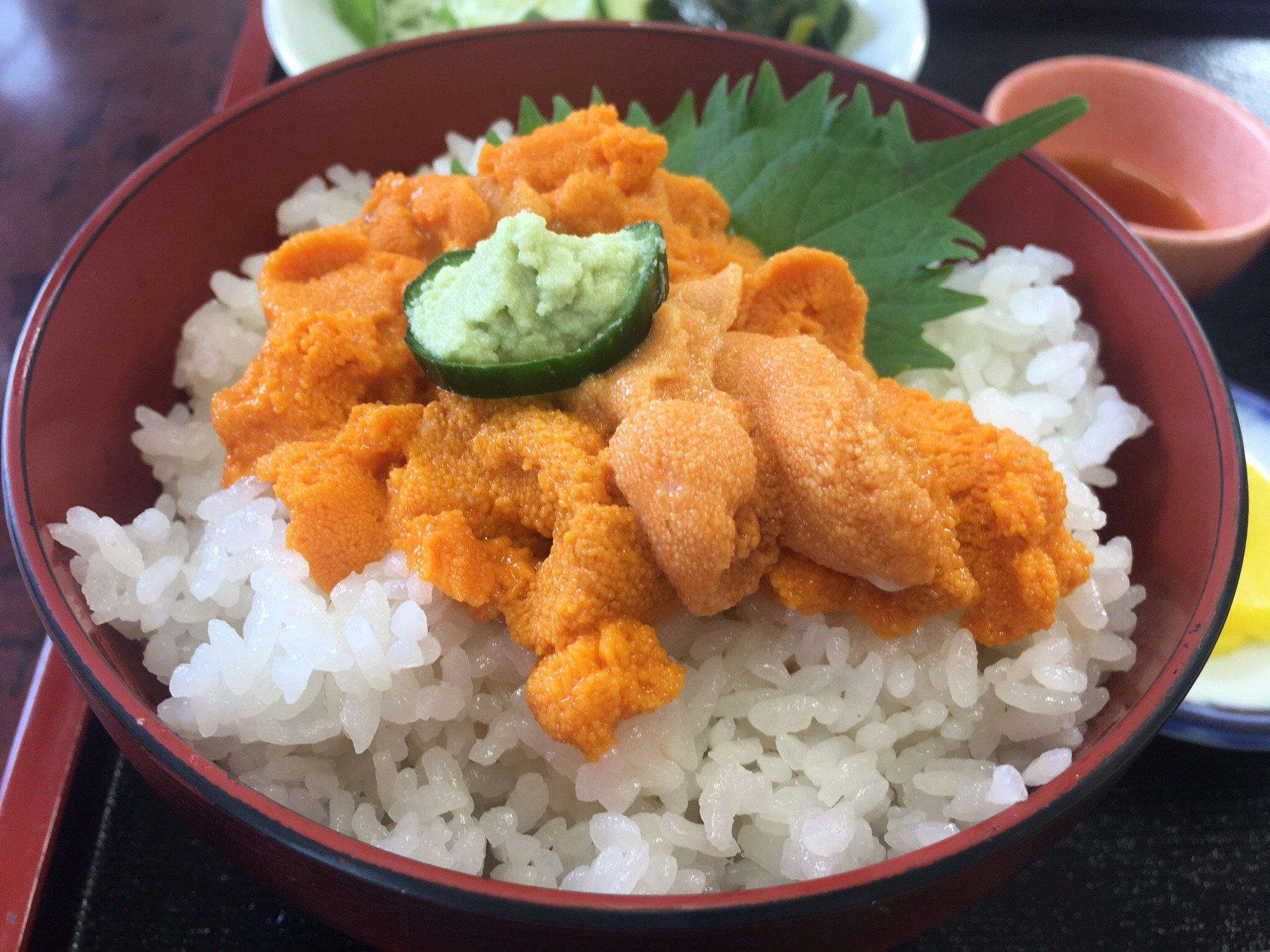
Details
- Rustic
- Cozy
- Casual Hangout
- Solo
- Standalone
- Sake Program
- Local Sourcing
- A La Carte
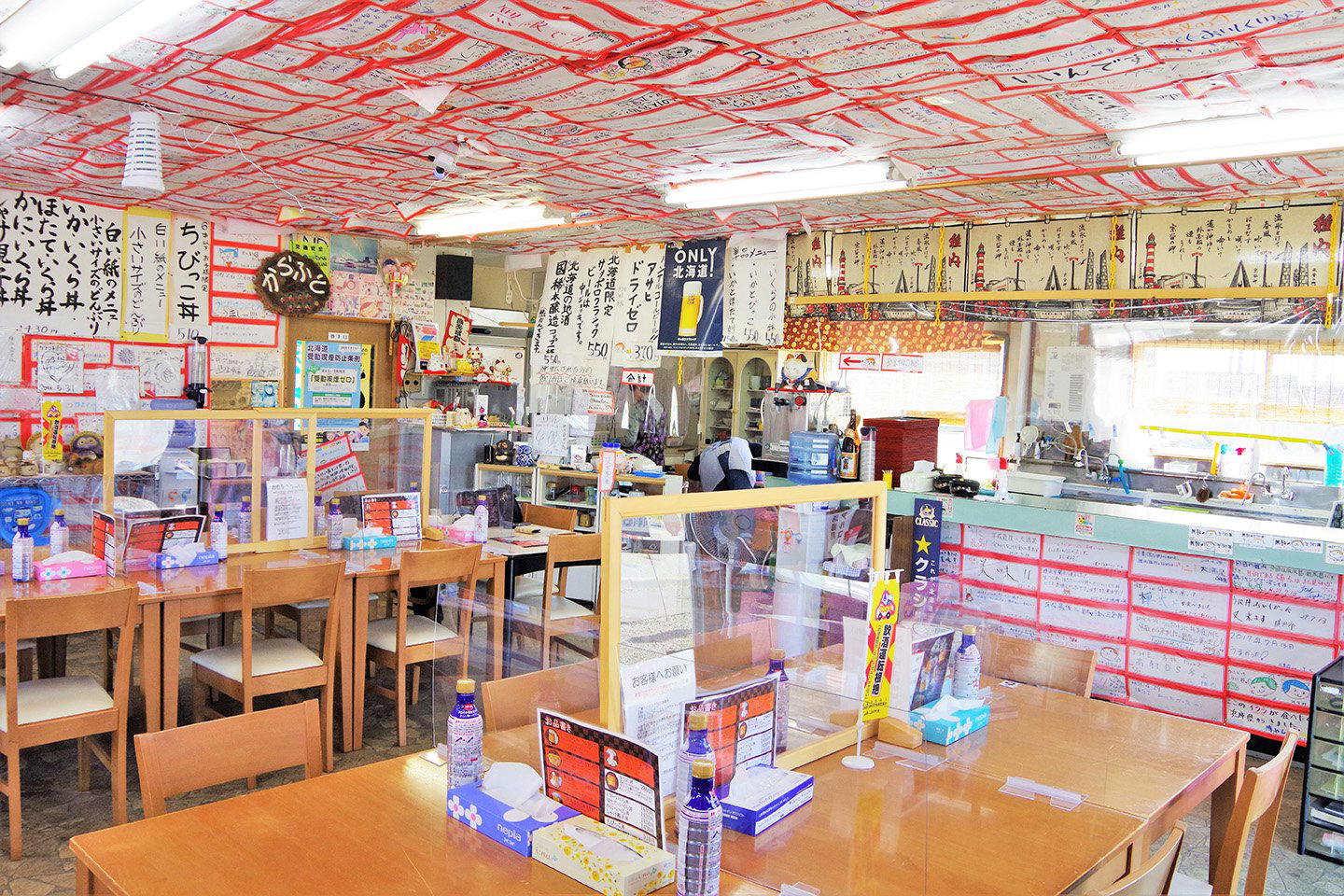
Simple Japanese dining room with walls adorned by traveler messages, offering a cozy, rustic atmosphere.