Skip to Main Content
Seasonal Vegetable Kappo
← Collection
Tokyo, Japan

Kappo Yuichi

CuisineJapanese
Price¥¥¥
Dress CodeSmart Casual
ServiceUpscale Casual
NoiseQuiet
CapacityIntimate
Michelin

A Michelin Plate counter in Ogikubo's residential backstreets, Kappo Yuichi sits at a different price point and postcode from Tokyo's central kappo circuit, but its vegetable-centred menu speaks directly to the same seasonal logic. Chef Kotaro Tachibana structures the progression around takiawase and composed appetiser platters, building a case for vegetables as the sharpest lens through which to read Japanese culinary tradition.

Pearl is the En Primeur Club membership app — saves, bookings, and concierge access live there. Same editors, same standards.

Plan your visit on PearlPlan Your Visit
Address
1-6-10 Kamiogi, Suginami-ku, Tokyo, 167-0043, Japan
Phone
+81 3-3392-4578
Kappo Yuichi restaurant in Tokyo, Japan
About

A Counter in the Margins

Suginami-ku is not where most visitors to Tokyo's restaurant scene start looking. The ward sits west of Shinjuku along the Chuo line, its streets built around commuter rhythms and covered shopping arcades rather than the concentrated dining circuits of Ginza, Nishi-Azabu, or Kagurazaka. The north exit of Ogikubo Station opens onto a roundabout flanked by the kind of low-rise mix, a dry cleaner, a pharmacy, a ramen shop, that defines the functional residential Tokyo most foreign visitors never reach. Kappo Yuichi occupies a corner of that roundabout, its presence announced quietly, without the architectural theatrics that mark the more destination-conscious addresses closer to the centre.

That physical context is worth registering before you sit down, because it shapes the terms of the meal. Kappo dining in Tokyo's inner wards tends to carry a premium for postcode as much as technique. The counter at Kappo Yuichi strips that away. The price point lands at ¥¥¥, positioning it clearly below the ¥¥¥¥ tier occupied by venues like RyuGin and Harutaka, and in the same band as Den, though the comparison ends at pricing, since the menus operate from very different premises. What you are paying for here is proximity to a specific culinary argument: that vegetables, handled with the same seasonal attention kappo usually reserves for fish and protein, can carry a full progression.

The Menu as Argument

Kappo as a format emerged as a looser, more conversational alternative to kaiseki, the chef works in front of guests, the sequence is responsive rather than fixed, and the counter itself becomes part of the experience. Many kappo counters in Tokyo still anchor their menus in dashi-forward stocks, seasonal fish, and the kind of precision cutting that signals classical training. Kappo Yuichi arrives at the same formal logic from a different starting point: The kitchen uses vegetables as the organising principle of the menu rather than its supporting cast.

The menu structure reflects this directly. Takiawase, vegetables and other ingredients simmered separately in seasoned dashi and then composed together, appears as a recurring format, and the Michelin recognition notes it explicitly as a highlight. In standard kappo progression, takiawase functions as a transitional dish, sitting between the initial small plates and the more substantial courses that follow. At Kappo Yuichi, it becomes a statement: the simmer times, the choice of cut, the pairing of textures and temperatures within a single bowl all communicate what the kitchen thinks seasonal produce requires, rather than what it can support.

The appetiser platters reinforce the same logic. Salad dressed with mashed tofu, seasoned boiled greens, and vegetables in sesame sauce are not unusual elements in kappo cooking, but their grouping here signals a kitchen that treats composed vegetable plates as a primary form rather than an overture. The flavour orientation is savoury and restrained, the Michelin notation uses the phrase "calm the soul," which maps accurately to the cooking's register. This is not a menu that announces itself loudly. It accumulates.

Seasonal Precision Over Seasonal Decoration

Distinction between using seasonal ingredients and building a menu around seasonal logic is one the broader Tokyo dining scene does not always observe cleanly. Some counters treat seasonality as a sourcing exercise, the fish changes, the garnish changes, but the structural approach to the dish stays fixed. The vegetable focus at Kappo Yuichi forces a different discipline, because vegetables are more visibly indexed to time of year than almost any other ingredient category. A cooled summer preparation and a warming winter arrangement are not just aesthetic variations; they require different techniques, different stocks, different service temperatures.

Michelin write-up frames this in terms of the menu "showcasing the depth of Japanese cuisine" through a vegetable lens. That framing carries weight when considered alongside the broader kappo and kaiseki circuit. Counters like Kagurazaka Ishikawa and Azabu Kadowaki operate at higher price tiers and with broader ingredient repertoires, but the seasonal attentiveness at Kappo Yuichi is working within the same tradition even if the format and scale differ. Similarly, Ginza Fukuju and Jingumae Higuchi bring their own approaches to seasonal Japanese cooking within Tokyo's wider circuit, the city offers multiple entry points into this logic at different price thresholds.

For visitors exploring Japanese seasonal cooking across cities, the same formal concern appears in different registers at Gion Sasaki in Kyoto and Isshisoden Nakamura, or in Osaka at Kashiwaya Osaka Senriyama and HAJIME. akordu in Nara, Goh in Fukuoka, 1000 in Yokohama, and 6 in Okinawa extend the picture further if you are building an itinerary around how Japan's different regions handle produce-led cooking.

Where It Sits in the Tokyo Counter Scene

Kappo Yuichi sits within a modest but consistent audience, reflecting the neighbourhood context as much as anything else, this is not a counter that draws from the international reservation circuit the way addresses in Ginza or Roppongi do. Michelin Plate recognitions in 2024 and 2025 sit below the star tiers but mark the kitchen's consistency. In a city where Michelin entries number in the hundreds, the Plate distinction at a neighbourhood kappo counter in Suginami is meaningful context rather than a ceiling.

The relevant comparison is less with the starred counters closer to central Tokyo and more with a tier of serious neighbourhood restaurants that operate outside the reservation-bottleneck economy. Counters like Myojaku illustrate how Tokyo rewards exploration beyond the obvious dining districts. Ogikubo specifically has historically been associated with antique shops and jazz cafes rather than destination dining, which means the counter at Kappo Yuichi occupies a relatively clear field locally while drawing from a city-wide audience that has learned to look past the central wards.

Planning Your Visit

Kappo Yuichi is located at 1-6-10 Kamiogi, Suginami-ku, a short walk from Ogikubo Station's north exit on the JR Chuo line. The Chuo line runs directly from Shinjuku, making the journey from central Tokyo direct. The ¥¥¥ price range places the meal in the mid-high tier for Tokyo restaurant spending, comfortably below the ¥¥¥¥ counters of the inner wards. Booking is advisable given the counter format, which typically means limited seats.

Quick reference: Kappo Yuichi, 1-6-10 Kamiogi, Suginami-ku, Tokyo, counter-format kappo, ¥¥¥, Michelin Plate 2024 and 2025, north exit Ogikubo Station (JR Chuo line).

Signature Dishes
clam souphand-made soba
Frequently asked questions

At a Glance

Comparable venues nearby, for context on price, style, and recognition.

At a Glance
Vibe
  • Cozy
  • Elegant
  • Intimate
  • Sophisticated
Best For
  • Special Occasion
  • Date Night
Experience
  • Chefs Counter
  • Open Kitchen
Drink Program
  • Sake Program
Dress CodeSmart Casual
Noise LevelQuiet
CapacityIntimate
Service StyleUpscale Casual
Meal PacingLeisurely

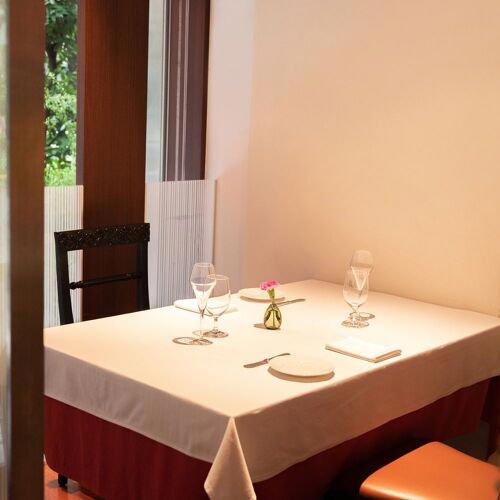
Cozy and relaxing atmosphere with warm lighting and a focus on seasonal, vegetable-forward Japanese cuisine.

Signature Dishes
clam souphand-made soba