Kanyakumari


Michelin Plate
Our verdict
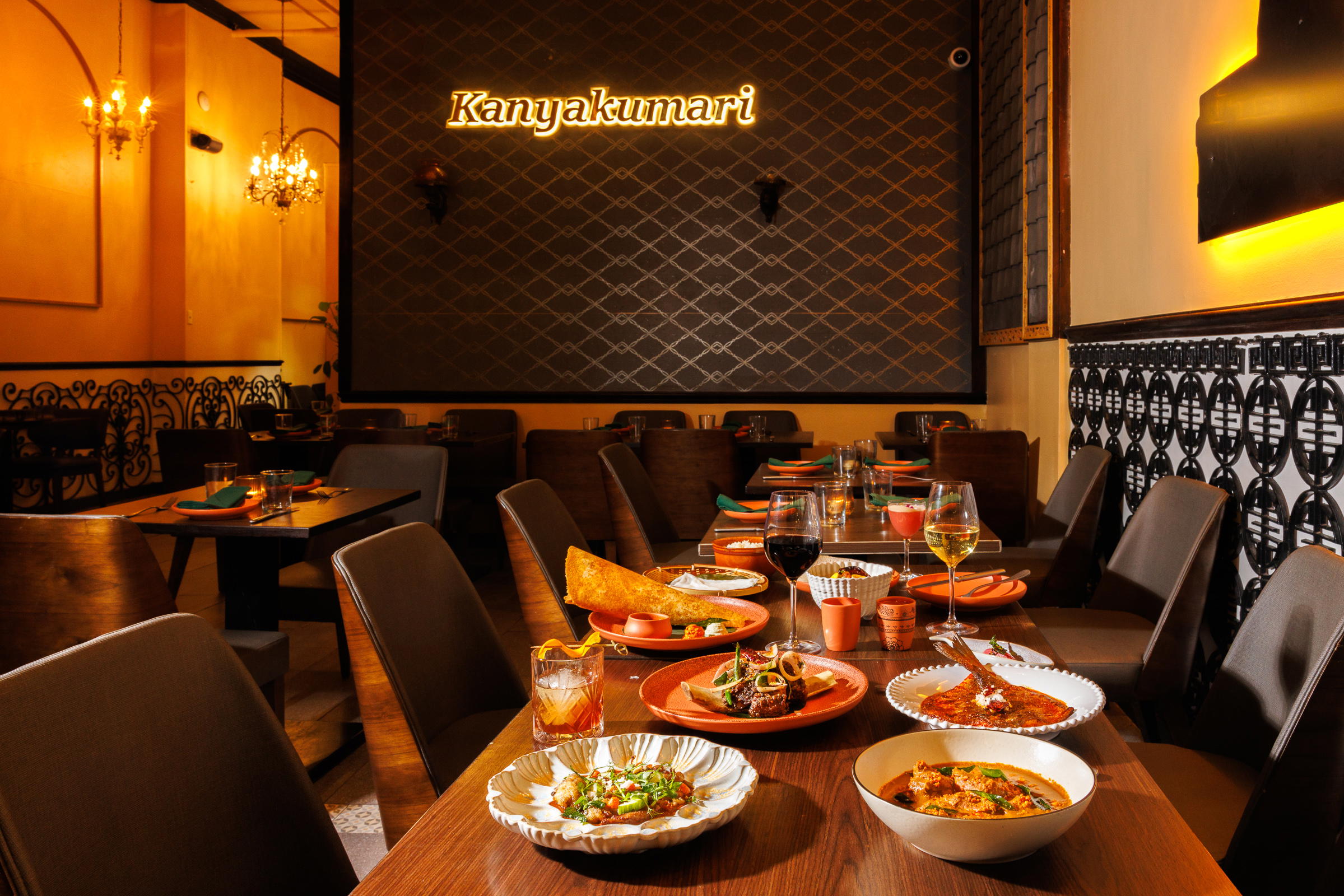
Named for the city at India's southernmost tip, Kanyakumari brings South Indian coastal cooking to Flatiron with a menu that centres seafood and bold regional spice. The kitchen adapts familiar preparations, Mussels Koliwada, slow-cooked beef short rib dressed with Madras onion rings, without losing the depth that defines the tradition. New York Magazine placed it among the 43 Best Restaurants in New York for 2025.

Pearl is the En Primeur Club membership app, where members save venues, book tables and use the concierge.
The menu
What to order
- Mussels Koliwada
- Black Gold Beef
- Guruprasad Dosa
- Amma Mess Fish Curry
South India at the Flatiron Edge
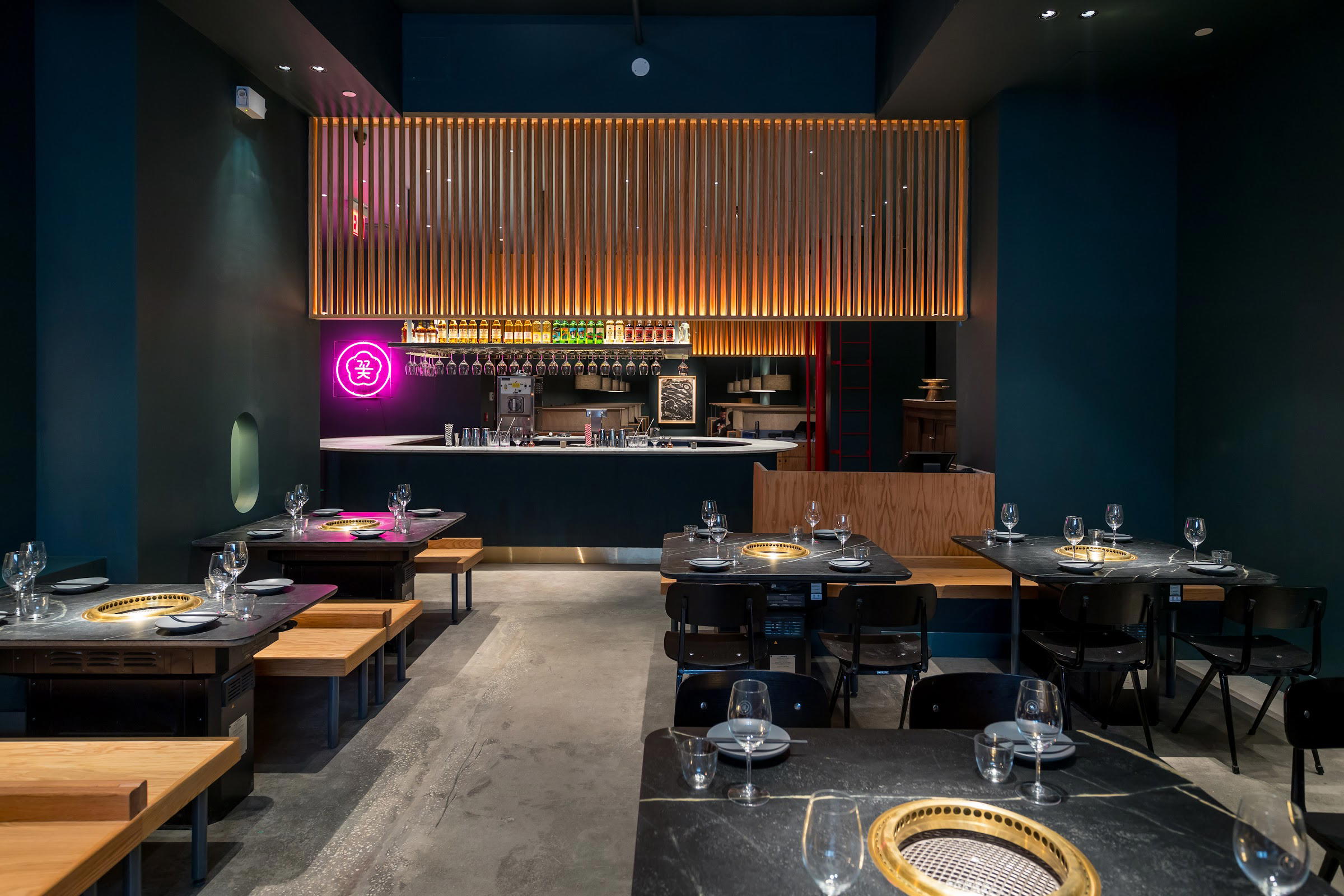
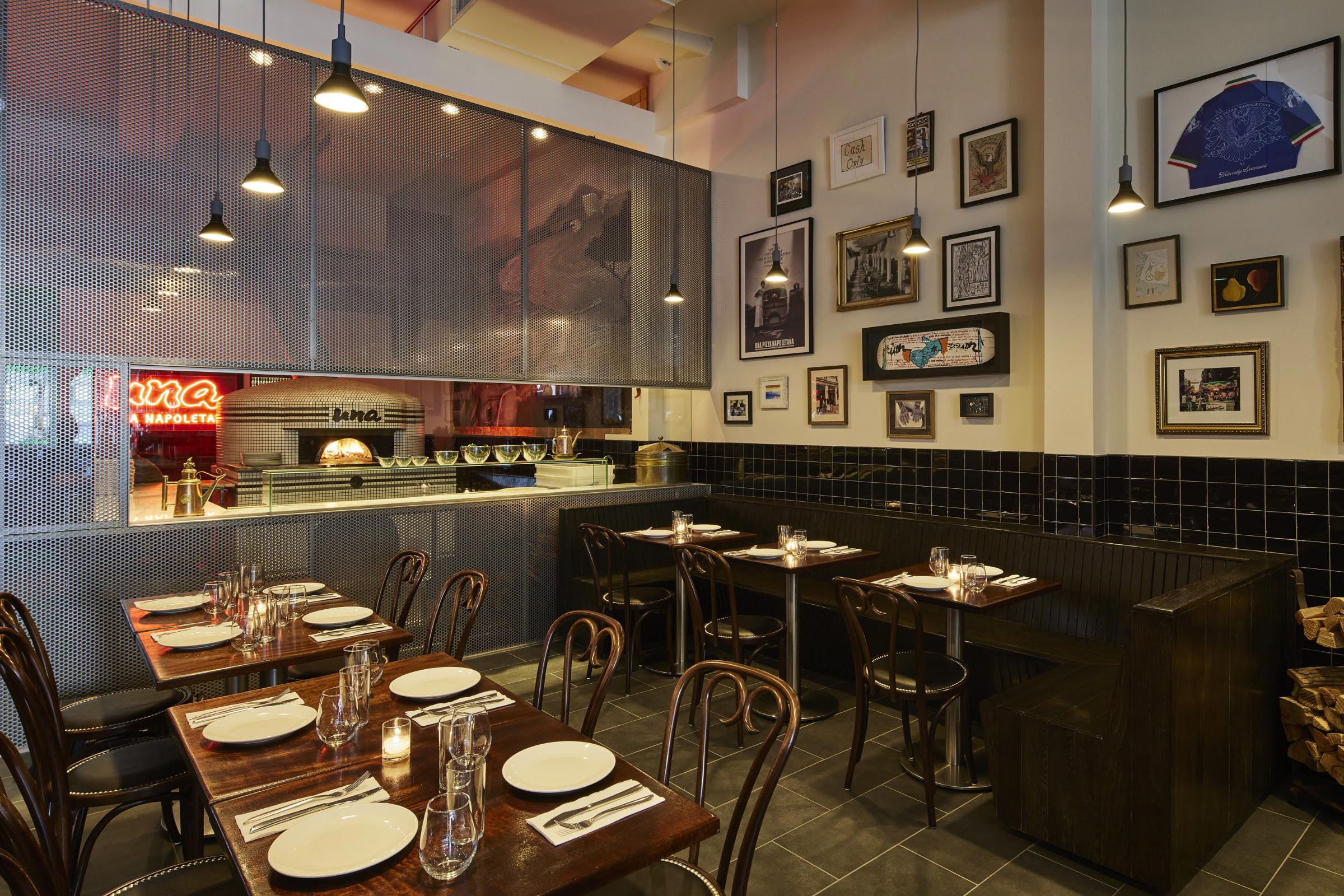
The stretch of East 17th Street between Union Square and the Flatiron district has become one of Manhattan's more quietly confident dining corridors, where neighbourhood density and lunch-hour foot traffic support restaurants that would struggle in higher-rent addresses. Kanyakumari sits in this context as a compact, contemporary room with a charged atmosphere, the kind of place that fills quickly on a weekday and where conversation carries across the room. The name itself sets an expectation: Kanyakumari is the city at India's southernmost tip, where the Arabian Sea, Bay of Bengal, and Indian Ocean converge, and the kitchen leans into that geographic identity by centring South Indian regional cooking, particularly the seafood traditions of the coastal belt.
South Indian cuisine occupies a distinct position in New York's Indian restaurant scene. Where the city's older generation of Indian dining rooms often defaulted to North Indian standards, the tandoor, the creamy curry, the butter-forward idiom, a newer cohort has pushed the South into focus. Restaurants like Bungalow and aRoqa have helped shift the conversation toward regional specificity, and Kanyakumari fits inside that broader reorientation. At the $$$ price range, it also occupies a middle tier, accessible enough for regulars, serious enough to warrant a reservation, that separates it from the lunch-counter end of the South Indian market without reaching toward the tasting-menu pricing of peers like Trèsind Studio or Opheem.
The Cooking: Regional Spine, Contemporary Execution
The menu's focus on seafood is not incidental. The coastal communities of Tamil Nadu, Kerala, and Karnataka have built some of the subcontinent's most developed fish and shellfish traditions, shaped by access to three bodies of water and centuries of trade with Arab, Portuguese, and Dutch merchants who introduced new ingredients and techniques. That layered history shows up in a cooking style that is spice-forward without being one-dimensional, and in preparations that draw on both the deep south's rice and coconut base and the fermented, tamarind-acidic profiles of Tamil coastal kitchens.
The kitchen at Kanyakumari works within that tradition while adapting it for a New York dining room. The Mussels Koliwada is a useful illustration: the Koliwada preparation is classically associated with fish, particularly in the Mumbai fishing community of the same name, but here the kitchen substitutes mussels, coating them in a spiced, red-tinted rice flour batter before frying and serving alongside a chili dipping sauce. The substitution is not a shortcut. It reflects an understanding of the batter's function as a spice vehicle and a willingness to apply South Indian technique to ingredients that suit the venue's seafood emphasis. New York Magazine, which named Kanyakumari among its 43 Best Restaurants in New York for 2025, singled out the dish as evidence of a kitchen that puts its own mark on established forms.
Slow-cooked Black Gold beef short rib operates in a different register. The cut is cooked to a point of near-collapse, then dressed with Madras onion rings, crispy curry leaves, and small green chilies. Curry leaves are one of the most underused aromatics in Indian cooking outside the subcontinent, they lose potency quickly once dried and are rarely used in North Indian-leaning kitchens, so their presence in a crisped form here signals a kitchen that understands the South Indian pantry at a technical level. If the server recommends it, follow the advice.
A fish curry anchors the menu's more traditional register, served with ghee rice. Ghee rice, a staple in Kerala and Tamil Nadu, involves cooking long-grain rice in clarified butter with whole spices; the result is aromatic and slightly rich without the heaviness of pilaf-style preparations. It is the kind of dish that reads simply but rewards attention to execution.
The Biryani Tradition and Where Kanyakumari Fits
Any serious engagement with South Indian cooking eventually arrives at biryani, and the version most closely associated with the Kanyakumari region belongs to the Thalassery tradition of northern Kerala, a style that uses short-grain Khyma rice rather than basmati, incorporates a higher ratio of whole spices, and typically layers fried onions and cashews through the finished dish. The dum method, sealing the pot and finishing over low heat so the rice cooks in the steam of the meat and spice below, is common across the South Indian biryani canon, producing a dish where the grain absorbs cooking liquid evenly without losing its individual texture. This stands apart from Hyderabadi-style biryani, which is represented elsewhere in the New York market by venues like Hyderabadi Zaiqa, and from the Mughal-derived biryanis that anchor the menus at restaurants like Chola. Kanyakumari's cooking philosophy, regional specificity over generic familiarity, places it in conversation with these traditions without replicating them.
For the broader context of rice-based South Indian technique, Cardamom provides another reference point in the city's current Indian dining moment, though its approach to the regional canon differs in format and price positioning.
Where It Sits in the New York Scene
New York's premium dining tier is dominated by European-lineage kitchens. The Michelin three-star bracket runs through French technique at restaurants like The French Laundry and Alinea, and the city's own top tier includes Le Bernardin, Per Se, and Eleven Madison Park. Indian cooking in that city-wide context occupies a smaller space, though one that has grown measurably over the past decade. What Kanyakumari offers is not a challenge to that hierarchy but a different value proposition: regional specificity, accessible price point, and consistent critical recognition. Its placement in New York Magazine's 2025 list of the city's leading restaurants, among a field that includes venues across every cuisine and price tier, reflects a version of quality that does not depend on tasting-menu format or Michelin apparatus to be legible.
Restaurants at comparable ambition levels in other cities, Providence in Los Angeles for seafood focus, Lazy Bear in San Francisco for format-driven dining, Emeril's in New Orleans for regional cooking at scale, share the characteristic of anchoring their identity in a specific culinary tradition rather than genre-blending for its own sake.
For further reading on where Kanyakumari fits in the city's broader dining picture, see our full New York City restaurants guide. For planning the rest of a visit, the New York City hotels guide, bars guide, wineries guide, and experiences guide cover the adjacent ground.
At a glance: Kanyakumari, 20 E 17th St, New York, NY 10003. Price range: $$$. Named among New York Magazine's 43 Best Restaurants in New York, 2025.
Frequently asked questions
What part of town is Kanyakumari in?
Kanyakumari is located at 20 E 17th St, New York, NY 10003, New York City.
What's Kanyakumari known for in terms of accolades?
Kanyakumari has received recognition including: Compact but contemporary with a buzzy vibe, this restaurant is named for the city at the southernmost tip of India, and appropriately, spotlights the regional fare of south India with a focus on seafood. The cooking is as bold as you’d expe….
What's the must-try dish at Kanyakumari?
The slow-cooked Black Gold beef short rib is the one to order when the server recommends it, impossibly tender, dressed with Madras onion rings, crispy curry leaves, and tiny green chilies. The Mussels Koliwada also signals the kitchen's approach: a riff on a traditionally fish-based preparation, swapping in mussels coated in spiced rice flour batter, fried and served with chili dipping sauce.
What cuisine category does Kanyakumari fall under?
What should I budget for a meal at Kanyakumari?
Pricing at Kanyakumari is listed as $$$.
Is Kanyakumari reservation-only?
Given its inclusion in New York Magazine's 43 Best Restaurants in New York for 2025, walk-in availability on weekends is unlikely to be generous.
A Credentials Check
| Venue | Cuisine | Price | Awards | Notes |
|---|---|---|---|---|
| KanyakumariThis venue (the venue you are viewing) | Coastal South Indian | $100–150 | Michelin Plate | Not listed |
| Le Bernardin | French Seafood Fine Dining | $300–500 | 3 Michelin Stars · World's 50 Best #13 | French, Seafood |
| Atomix | Modern Korean Tasting Menu | $300–500 | 2 Michelin Stars · World's 50 Best #7 | Modern Korean, Korean |
| Masa | Seasonal Hokkaido Tempura Omakase | $150–200 | Tabelog 100 #34 | Sushi, Japanese |
| Per Se | French Fine Dining Tasting Menu | $300–500 | 3 Michelin Stars · World's 50 Best #40 | French, Contemporary |
| Eleven Madison Park | Contemporary Plant-Based Fine Dining | $300–500 | 3 Michelin Stars · World's 50 Best #4 | French, Vegan |
Recognition history
Dated appearances from independent guides and award organizations, with the underlying list record or original source where available.
Michelin Plate
Michelin
New York Magazine The 43 Best Restaurants in New York
New York Magazine