Michelin Plate
Our verdict
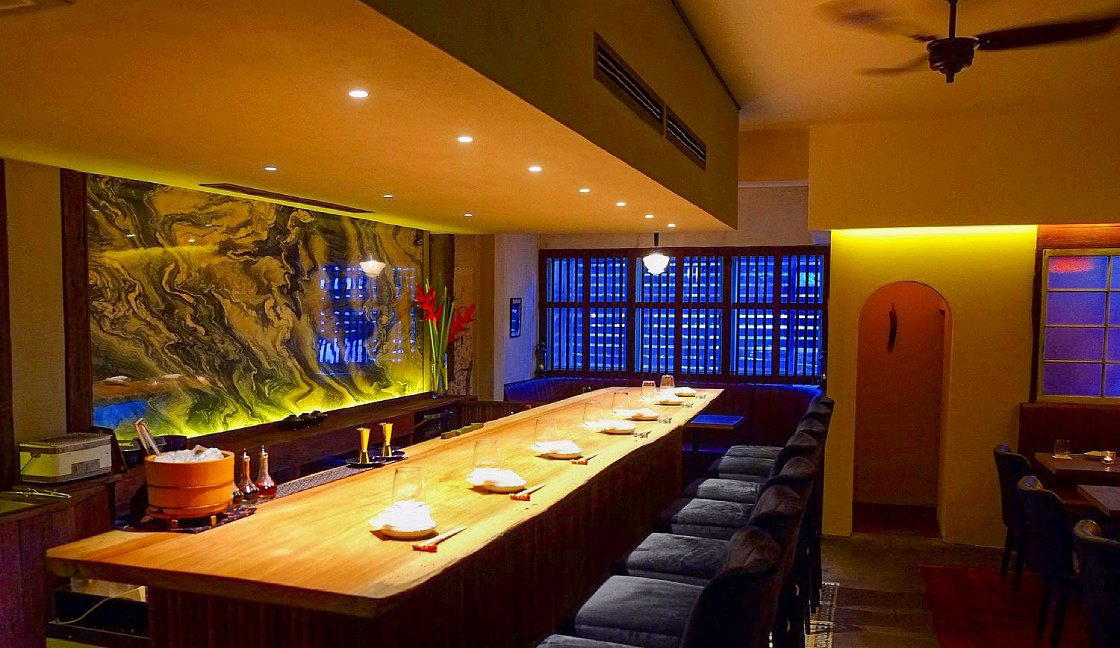
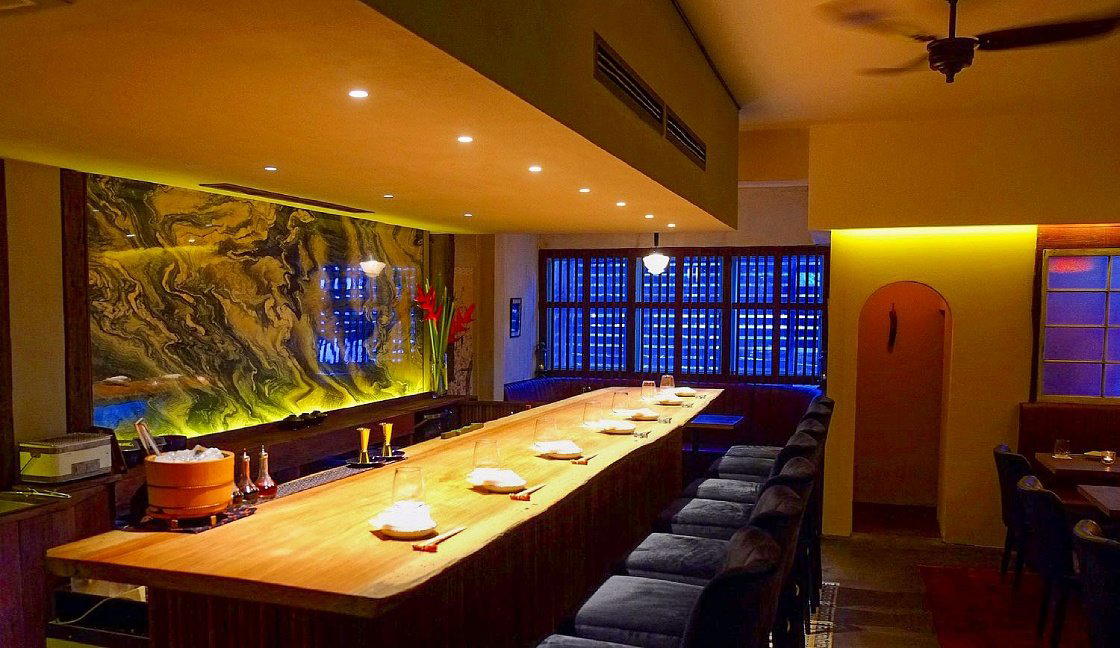
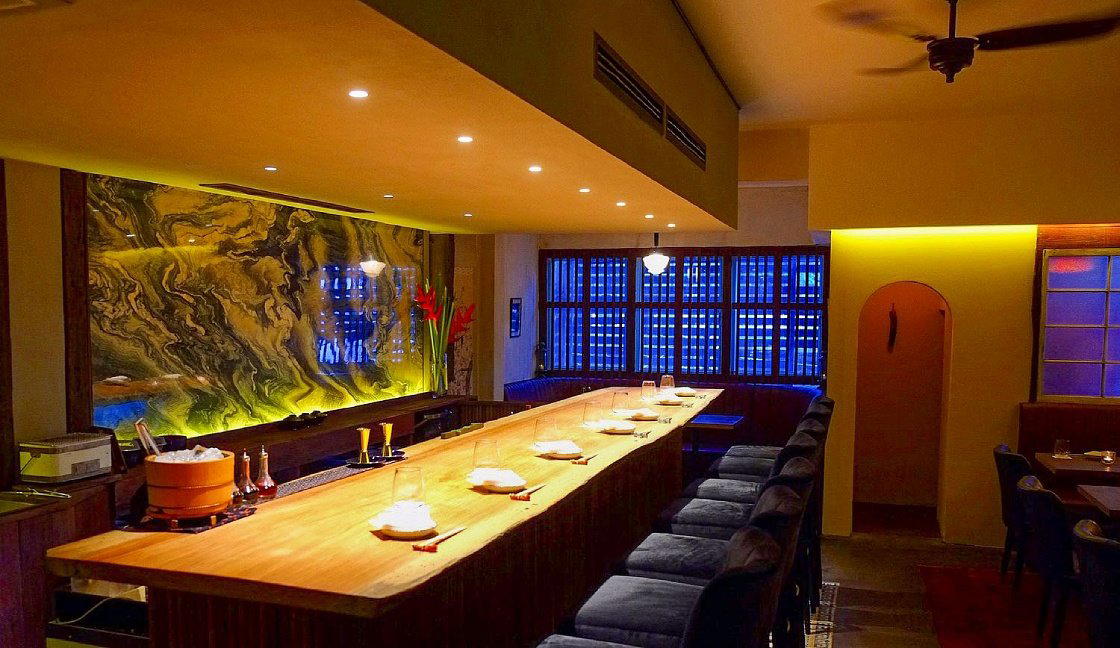
Kanshi brings a focused Japanese sensibility to Tainan's East District, earning a Michelin Plate in 2024 within a city better known for its Taiwanese street food heritage. Sitting at the $$$$ price tier, it represents a quieter strand of the city's dining scene — one where precision and restraint matter as much as the bowl in front of you. Bookings are advised well in advance.

Pearl is the En Primeur Club membership app — saves, bookings, and concierge access live there. Same editors, same standards.
- Address
- No. 58號, Chongren St, East District, Tainan City, Taiwan 701
- Phone
- +886 6 267 8818
- Hours
- Mon ClosedTue–Sun 6–11 PM
- Website
- pse.is
- Directions
- Get directions
The menu
See the current menu on pse.is →Japanese Restraint in a City Built on Broth
Tainan is the kind of city that makes you reconsider what comfort food means. Its older lanes produce beef soup at dawn, congee by mid-morning, and rice cakes that have followed the same recipe for generations. The culinary instinct here runs toward simplicity made rigorous — a tradition that makes it, perhaps unexpectedly, a natural setting for serious Japanese cooking. At Kanshi, on Chongren Street in the East District, the two sensibilities meet without collision.
Japanese cuisine at this price tier in a secondary Taiwanese city is a specific proposition. Tainan has never been short of Japanese restaurants — the island's historical ties to Japan run deep, and ramen shops, izakayas, and sushi counters appear across every district. But a $$$$ Japanese address that earns a Michelin Plate (2024) sits in a different register from that everyday presence. It is the kind of place the Michelin inspectors tend to notice when a kitchen shows consistent command over technique rather than volume or novelty.
The Logic of the Bowl
There is a reason broth-based Japanese cooking, ramen, udon, soba, and their more refined relatives, remains among the most technically demanding in the canon. The simplicity is a trap. A bowl with three visible components has nowhere to hide an imbalanced dashi, a noodle that has sat thirty seconds too long, or a garnish added without reason. The leading practitioners understand that stripping a dish to its essentials is not reduction but intensification: every element must carry the full argument.
This is the editorial angle that matters when reading Kanshi's position in the Tainan dining scene. The restaurant's Japanese focus, combined with its $$$$ pricing and Michelin recognition, suggests a kitchen operating at the disciplined end of the spectrum, the end where a clear, clean broth is a harder achievement than a complicated sauce. Tainan's own soup culture, visible in places like A Cun Beef Soup on Baoan Road and the warm, slow bowls at A Hsing Congee, means the local palate is already calibrated for this kind of honesty. A technically weak bowl would be noticed.
Where Kanshi Sits in Tainan's Dining Tiers
Tainan's restaurant scene operates across a wide price spread, and understanding the tiers helps locate Kanshi accurately. The city's celebrated small-eats circuit, A Hai Taiwanese Oden, A Wen Rice Cake, and A Ming Zhu Xing on Baoan Road, occupies the single-dollar tier, priced for daily use. The mid-range covers Taiwanese bistros and casual noodle shops. Kanshi's $$$$ bracket is sparse in Tainan, shared only by a handful of addresses, which makes the Michelin Plate here a meaningful signal: it marks a kitchen that has earned its positioning rather than simply priced into a gap.
Across Taiwan, Michelin-recognised Japanese restaurants tend to cluster in Taipei and Taichung. JL Studio in Taichung and logy in Taipei represent the island's upper tier for precision-driven tasting formats, while GEN in Kaohsiung and Akame in Wutai Township show that southern Taiwan has its own credentialed dining presence. Kanshi's 2024 Michelin Plate adds Tainan to that southern map in a Japanese register, a distinction worth noting for anyone building an itinerary around the island's recognised kitchens.
Internationally, the standard for this kind of Japanese cooking is set in Tokyo and Kyoto. Restaurants like Myojaku and Azabu Kadowaki in Tokyo, or Isshisoden Nakamura in Kyoto, represent the benchmark for technique and sourcing at the highest level. Kanshi operates in a different city context and at a different scale of recognition, but the Michelin Plate signals that its kitchen is working from the same set of principles: discipline, restraint, and an understanding that less, done correctly, is harder than more.
The East District Setting
Chongren Street sits within Tainan's East District, an area that holds a different character from the compressed historic lanes of the West Central District. The East District is more residential in texture, with a pace that suits a dinner focused on attention rather than spectacle. Japanese restaurants in Taiwan often perform better in exactly this kind of setting, removed from the density of tourist circuits, where the room can be quiet enough for a bowl to carry the conversation.
For visitors building a Tainan stay around food, the East District adds a useful counterpoint to the city's heritage eating areas. The small-eats circuit in the older districts rewards early mornings and willingness to stand. An evening at Kanshi asks for something different: a slower cadence and a higher floor for the meal's overall spend. Both are worth doing; they are simply doing different things. Our full Tainan hotels guide can help with finding accommodation that works for both ends of the day.
Planning a Visit
Kanshi is located at No. 58, Chongren Street, East District, Tainan City. Given its position at the top of the city's Japanese dining tier and its Michelin recognition, booking ahead is the sensible approach; walk-in availability at this level in Taiwan is rarely reliable, particularly on weekends.
For a fuller picture of where Kanshi sits within Tainan's broader food and drink scene, see our full Tainan restaurants guide. For those extending their visit, our Tainan bars guide, wineries guide, and experiences guide cover the city's wider offer. The Volando Urai Spring Spa and Resort in Wulai District is also worth considering for those combining Tainan with a northern Taiwan itinerary.
FAQ: What's the must-try dish at Kanshi?
Given Kanshi's Japanese focus, its Michelin Plate recognition, and the editorial angle of comfort-food mastery, the broth-based preparations are the most credentialed reason to visit. Japanese cuisine at this discipline level treats the bowl as the centrepiece, whether ramen, udon, or a dashi-driven course, where stock clarity, noodle texture, and garnish restraint are the measures of a kitchen's ability. The Michelin Plate signals that the kitchen is meeting those measures with consistency. As specific menu details are not available, the strongest recommendation is to follow what the kitchen emphasises on the day, which at a restaurant of this type is rarely a mistake.
Frequently asked questions
What's the address for Kanshi?
Kanshi is located at No. 58號, Chongren St, East District, Tainan City, Taiwan 701, Tainan.
Is Kanshi award-winning?
Kanshi has received recognition including: Michelin Plate (2024).
What's the must-try dish at Kanshi?
Kanshi holds a 2024 Michelin Plate for Japanese cooking in a city whose culinary identity is built on broth, which points clearly toward the kitchen's broth-based preparations as the reference point. Ramen, udon, or their more refined relatives are where technique at this price tier ($$$$ in Tainan) tends to concentrate.
What's the cuisine at Kanshi?
Is Kanshi expensive?
Pricing at Kanshi is listed as $$$$.
Side-by-Side Snapshot
Comparable venues nearby, for context on price, style, and recognition.
| Venue | Cuisine | Price | Awards | Notes |
|---|---|---|---|---|
| KanshiThis venue — the venue you are viewing | Japanese Omakase | $50–100 | Michelin Plate | Not listed |
| Pankoko | Premium Japanese Yakiniku | $150–200 | Michelin Plate | West Central District |
| Hara Peko | French-influenced Japanese | $50–100 | Michelin Plate | Snail Alley |
| Wenpapa Goose | Taiwanese Roasted Goose | $10–20 | Michelin Plate | North District |
| Tan Zuo Ma Li Tainan Zhonghua Branch | Japanese Yakiniku Grill | $20–30 | Not listed | Yongkang District |
| Di Yi Ding | Taiwanese Seafood Omakase | $100–150 | Michelin Plate · Star Wine List | East District |
Recognition history
Dated appearances from independent guides and award organizations, with the underlying list record or original source where available.
Michelin Plate
Michelin