
KAMAYOSHI brings Tokyo’s everyday udon culture into a compact Kanda room with counter seating, curry udon, tempura, and a no-reservations rhythm. Its Tabelog 100 Udon EAST 2024 selection and 2020 Tokyo recognition place it in a serious noodle conversation, while the low price band keeps the experience closer to a working-neighbourhood meal than a destination tasting format.
Pearl is the En Primeur Club membership app — saves, bookings, and concierge access live there. Same editors, same standards.
- Address
- 東京都千代田区神田司町2-14-15 高梨ビル 1F
- Phone
- +81355775308
- Website
- instagram.com
 Saves & bookings on Pearl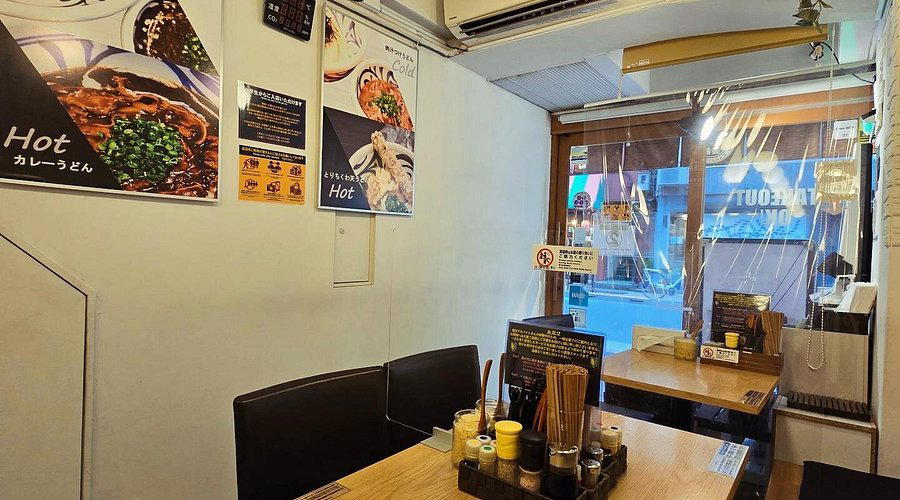
Approaching a small udon counter in Kanda is a different Tokyo ritual from entering a Ginza sushi room or Marunouchi hotel dining room. The cues are practical: compact room, counter seating, quick-turn lunch pulse, and a menu built around wheat noodles rather than ceremony. KAMAYOSHI fits the Tokyo category where craft is concentrated in the bowl, not a long sequence of courses.
That matters because Tokyo udon is not one style. The city absorbs regional noodle traditions and turns them into commuter food, family lunch, and obsessive specialist dining. Sanuki udon brings chew and structure; Hakata associations point toward Fukuoka’s softer noodle culture and southern Japan’s stock traditions. KAMAYOSHI’s public positioning links Sanuki and Hakata influences, a useful lens for why Tokyo’s noodle scene rewards texture as much as broth.
Sanuki chew, Hakata influence, and the Tokyo udon middle ground
Tokyo’s noodle hierarchy can look ramen-heavy to visitors, but udon has its own demanding audience. Ramen often foregrounds fat, tare, and shop identity; udon asks whether the noodle has spring, whether dipping or soup format suits the flour, and whether tempura or curry supports rather than overwhelms the bowl. KAMAYOSHI’s listed categories, udon, curry udon, and tempura, sit in that everyday-specialist lane.
The ingredient question begins with wheat. Udon is not blank starch: flour choice, hydration, salt, kneading, resting, and cutting determine whether the noodle eats firm, silky, elastic, or soft. Sanuki-leaning udon is prized for resilient bite, while Hakata-linked noodle traditions are often discussed for suppleness and ease. A Tokyo shop joining those references is not chasing luxury ingredients. It is extracting character from flour, water, salt, heat, and timing.
Curry udon adds another judgment. In lesser hands, curry camouflages. In serious udon shops, it must cling without smothering texture and justify itself against simpler hot or cold preparations. Tempura is the same test: not decorative edge, but structural contrast. This is why a low-priced udon counter can attract Tokyo diners who also book tasting menus. The technical margin is narrow, and repeat customers know when it is met.
KAMAYOSHI’s Tabelog 100 Udon EAST 2024 selection, alongside earlier Tokyo recognition in 2020, gives that craft an external marker. Tabelog’s Hyakumeiten lists are not luxury awards; they map depth in categories where local diners argue over small differences. For udon, the recognition points less to spectacle than to consistency in a field crowded with inexpensive, high-volume competitors.
Kanda is the right district for a serious everyday bowl
Kanda and the Awajicho-Ogawamachi pocket reward restaurants that serve office workers, students, and destination diners without changing format. This is not long hotel-lunch Tokyo. A meal must make sense on a weekday, and noodle shops survive by balancing speed with enough distinction to pull people off their usual route. A 14-seat udon room has clear logic: limited capacity, focused output, little room for drift.
The Tokyo comparison set clarifies the category. Curry Notoriko and Gin Cock occupy the affordable curry-and-rice orbit, Fukuo Shoten operates in the under-JPY 999 bracket, and Tonkatsu Yamaichi sits in a higher fried-pork price tier. KAMAYOSHI is closer to the first group in accessibility, but its udon recognition places it in specialist noodle territory rather than a generic cheap-eats file. SONG KEE JEE FAN, with a higher dinner band, shows another Tokyo casual direction: informal, but priced and paced differently.
Tokyo value dining can be more interesting than luxury dining. At the high end, price buys privacy, imported ingredients, and extended service. In udon, value is harsher: a shop must repeatedly produce convincing noodles, often under lunch pressure, with a menu customers understand without explanation. KAMAYOSHI’s appeal sits in that discipline. Multilingual, photo, and digital menus also improve access for non-Japanese speakers without turning the room into a tourist format.
For a wider Tokyo itinerary, the contrast helps. A seafood-and-charcoal stop such as . 鮪と炭火焼き うお炭 秋葉原店, a Shinjuku counter like 12/10 Shinjuku ten, and a yakitori address such as 124. KAGURAZAKA (Yakitori) answer different appetites. KAMAYOSHI is the noodle corrective: concise, flour-led, and better understood as daily eating culture than set-piece dinner.
How to place it in a Tokyo food itinerary
Use a shop like this to anchor a Kanda day, not force it into a trophy route. Nearby business districts, bookshops, old commercial streets, and transit links pair easily with Akihabara, Jimbocho, or Marunouchi. The meal belongs to efficient Tokyo dining, so the surrounding plan should respect that tempo.
Travellers comparing Tokyo casual formats should think by category, not fame. Café culture around 2D Cafe, curry specialist dining at 3 Chome no Curry Ya San, and regional Japanese formats outside the capital, from -Grilled beef Sukiyaki- KAMAKURA TANUKIAN 鎌倉 たぬき庵 in Kamakura to [ki:] in Kyoto, show how everyday dining becomes highly specific when a kitchen narrows focus. International Japanese-adjacent references such as Jōdo Saké Bar in Los Angeles and Onigiri Time in Pasadena make the same point abroad: simple formats travel, but detail decides whether they matter.
For broader planning, use Our full Tokyo restaurants guide to place Kanda alongside Shinjuku, Kagurazaka, Ginza, and the eastern wards. Hotel choice affects the rhythm of this kind of meal, so Our full Tokyo hotels guide helps if short transit windows matter. Drinks-led evenings can be built from Our full Tokyo bars guide, while Our full Tokyo wineries guide and Our full Tokyo experiences guide separate food stops from the rest of the day.
The wider Japan map matters too. A diner who understands curry in Sapporo through [Curry Senmon Ten] Maruyama Kyoju. in Sapporo, café culture via.cafe in Osaka, Kumamoto’s contemporary dining at.know in Kumamoto, or Vietnamese cooking in Kanagawa at (Shoku) Vietnam in Kawasaki will read KAMAYOSHI more accurately. This is not a grand statement restaurant. It is a Tokyo udon specialist with recognized category credibility, tight capacity, and a format built around the hard work of making wheat noodles worth crossing town for.
Awards and Standing
Comparable venues at the same tier for side-by-side context.
| Venue | Cuisine | Price | Notes |
|---|---|---|---|
| KAMAYOSHIThis venue — the venue you are viewing | Japanese Udon | $ | Not listed |
| Gyokueido Hikokuro | Traditional Japanese Wagashi & Dorayaki | $ | Chūō |
| 福田家 | Japanese Conveyor Belt Sushi | $ | Chiyoda |
| Mitsuru Akebonobashi honten | Japanese neighborhood bakery | $ | Shinjuku |
| Higashi Shinjuku Sanrasa | Japanese Curry | $ | Shinjuku |
| CURRY UP | Japanese curry house by NIGO in Harajuku | $ | Shibuya |
Recognition history
Dated appearances from independent guides and award organizations, with the underlying list record or original source where available.
Tabelog 100 #79 · No. 79
Tabelog · Tabelog 100 - Udon - EAST - 2024






At a Glance
- Cozy
- Casual
- Solo
- Casual Hangout
- Group Dining
- Standalone
- Beer Program
Casual, compact udon shop atmosphere focused on quick turnover at lunch and a more leisurely visit at dinner or Saturdays.