
Tabelog 100 #4
Our verdict
A Jiyugaoka izakaya with 85 seats, counter and tatami-room formats, and repeated Tabelog 100 Izakaya recognition in 2021, 2022, 2024, and 2025. Kaneda belongs to Tokyo’s serious neighborhood tavern tradition: fish-led cooking, sake and shochu, cash-only payment, and a reputation built outside the luxury tasting-menu circuit.

Pearl is the En Primeur Club membership app, where members save venues, book tables and use the concierge.
The menu
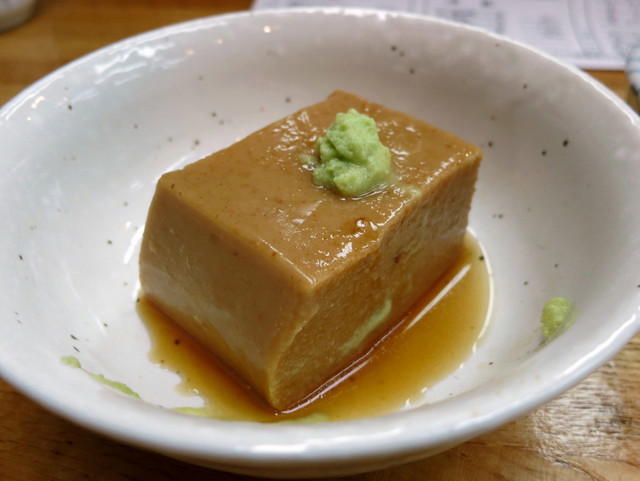
What to order
- Shoyu ramen with Setouchi dried sardine broth
- Tsukemen with flat extra-wide noodles
- A5 wagyu beef rice bowl
- Hirauchi soba (flat noodle tsukemen)
Tokyo’s dining streets can shift quickly from station traffic to practical, everyday dining, the kind of setting where an izakaya can be judged less by spectacle than by repeat usefulness. Kaneda sits in that category: a Tokyo restaurant whose public classification is izakaya, a Japanese-style tavern, and whose appeal is best understood through category fit rather than theatrical luxury. In a city where attention often tilts toward omakase counters and chef-led tasting menus, this is a different form of seriousness.
The critical signal is not decorative. Selection for Tabelog Hyakumeiten in 2025 places the restaurant inside a recognized group for its category. Tabelog’s lists tend to reward consistency, category fluency, and public reputation rather than luxury framing alone. That matters here because the listed dinner budget remains in everyday-dinner territory by Tokyo standards, not destination-menu territory.
The older Tokyo izakaya contract
Tokyo izakaya culture is broad enough to include many kinds of tavern-style rooms, but the stronger examples share a clear contract: food and drink must make sense together, not merely coexist. Kaneda’s public category is izakaya, which puts it closer to the classic Japanese-style tavern model than to the modern small-plates bar built for design attention.
The format also explains why its reputation reads differently from a luxury counter or a formal dining room. Rather than turning the evening into a ceremony, an izakaya can support a looser rhythm built around conversation and ordering. That practical scale is part of the appeal: serious enough to earn list recognition, casual enough to remain an izakaya in practice.
Tokyo gives the format useful context. The city’s dining mix includes cafés, small restaurants, and specialized rooms competing for local attention as much as visitor demand. Comparison venues in the broader local conversation can include Cafe Enseigne Dangle Jiyuugaoka ten, El Pescador, and L’Atelier Plus, each representing a different style of everyday dining. Against that mix, Kaneda’s JPY 4,000 to JPY 4,999 dinner price reads as a controlled spend for a recognized tavern.
Recognition without the tasting-menu script
The current Tokyo conversation often treats awards as shorthand for reservation pressure, fixed courses, and chef biography. Izakaya recognition works better when read as a durability signal. Kaneda’s 2025 Tabelog Hyakumeiten recognition suggests a room that has earned category trust within Japan’s user-review ecosystem. The distinction is useful for travelers: this is not a Michelin-style luxury cue, but it is still a meaningful marker.
That matters because izakaya excellence is harder to summarize than sushi or tempura excellence. The measure is cumulative: a workable room, a drink-friendly format, pacing that fits conversation, and pricing that encourages a relaxed dinner rather than a single trophy order. Kaneda’s izakaya identity points toward a disciplined tavern format, with the emphasis on shared restaurant energy rather than closed-door spectacle.
The practical logic is also different from a tightly scripted tasting counter. In an izakaya, planning is less about securing a ceremonial seat and more about understanding the room’s tempo, budget, and category. Diners should treat Kaneda as a Tokyo tavern with recognized standing, not as a fixed-course restaurant whose value depends on a chef narrative.
How to place it in a Tokyo eating itinerary
Kaneda makes more sense as a Tokyo dinner than as a trophy booking. It suits travelers who already understand that the city’s dining hierarchy is not limited to luxury counters. The practical strength is the combination of moderate pricing, 2025 Tabelog Hyakumeiten recognition, and an izakaya format that reads as social rather than hushed.
It also pairs well with a wider Tokyo plan that separates categories instead of chasing one kind of acclaim. For other dining in Tokyo, compare the mood with unnamed seafood, charcoal, café, curry, and specialized counter formats across the city. Kaneda’s place in that itinerary is clearer when treated as a recognized tavern rather than as a substitute for every other Tokyo dining style.
For city-level planning, use Our full Tokyo restaurants guide alongside Our full Tokyo hotels guide, Our full Tokyo bars guide, Our full Tokyo wineries guide, and Our full Tokyo experiences guide. For broader Japan dining context, compare regional formats through unnamed restaurants and cafés in other cities, keeping Kaneda’s category distinct: a Tokyo izakaya with a defined price band and 2025 Tabelog Hyakumeiten recognition.
The editorial read is simple: Kaneda is valuable because it keeps award-listed izakaya dining in the realm of a regular evening. The Tokyo setting, the JPY 4,000 to JPY 4,999 dinner band, and the izakaya category all point to a tavern built for use, not display. In Tokyo, that can be the sharper reservation than another polished room designed for visitors first.
Frequently asked questions
What price level is Kaneda?
Pricing at Kaneda is listed as JPY 4,000 - JPY 4,999.
What are Kaneda's hours?
Specific hours are not provided here; check directly with Kaneda before visiting.
What's Kaneda's location?
Tokyo.
What's the defining dish or idea at Kaneda?
Kaneda is listed as an izakaya, a Japanese-style tavern. Its 2025 Tabelog Hyakumeiten recognition and JPY 4,000 - JPY 4,999 dinner band frame it as a recognized Tokyo tavern rather than a fixed-course luxury format.
Is Kaneda allergy-friendly?
Specific allergy accommodations are not provided here. Allergy questions should be checked in advance by phone at +81-3-3717-7352.
Reputation First
Comparable venues to calibrate price, style, and recognition.
| Venue | Cuisine | Price | Awards | Notes |
|---|---|---|---|---|
| KanedaThis venue (the venue you are viewing) | Modern Japanese Ramen | $10–20 | Tabelog 100 #4 | Not listed |
| Umemura | Japanese Soul Food | Not listed | Tabelog 100 #44 | Koto |
| E-chan Shokudo | Early-morning Tokyo ramen counter | $10–20 | Tabelog 100 #63 | Meguro |
| Sakurajosui Funakoshi | Modern shio ramen | $10–20 | Tabelog 100 #4 | Suginami |
| Toranomon Okanoeisen | Traditional Japanese Wagashi & Daifuku | $1–10 | Tabelog 100 #76 | Minato |
| Whole Spice Curry Seiran | Whole-spice Japanese curry | $10–20 | Tabelog 100 #20 | Suginami |
Recognition history
Dated appearances from independent guides and award organizations, with the underlying list record or original source where available.
Tabelog 100 #4 · No. 4
Tabelog · Tabelog 100 - Izakaya - EAST - 2025
Continue exploring
More in Tokyo
Restaurants in Tokyo
All restaurants in Tokyo →


Bars in Tokyo
All bars in Tokyo →





Details
- Modern
- Cozy
- Trendy
- Solo
- Casual Hangout
- After Work
- Late Night
- Standalone
- Sake Program
- A La Carte
- Counter Dining
- Sake
- Beer
- Soft Drinks
Current opening hours
- Monday
- 5–10 PM
- Tuesday
- 5–10 PM
- Wednesday
- 5–10 PM
- Thursday
- 5–10 PM
- Friday
- 5–10 PM
- Saturday
- 5–9:30 PM
- Sunday
- Closed
Hours can change for holidays and private events. Hours as of .
Bright, clean ramen bar with light wood interiors, a modern Japanese aesthetic, and a casual, bustling atmosphere typical of a busy station-area shop.