Kanal-Caféen
Kanal-Caféen occupies a canal-facing address at Frederiksholms Kanal 18, placing it within walking distance of Copenhagen's most storied public spaces. As a neighbourhood fixture in the city's historic core, it sits in a different register from the New Nordic tasting-menu circuit, offering a more grounded point of entry into Copenhagen's dining life. Its evolution reflects how the city's everyday restaurant culture has shifted alongside its fine-dining reputation.
Pearl is the En Primeur Club membership app — saves, bookings, and concierge access live there. Same editors, same standards.
- Address
- Frederiksholms Kanal 18, 1220 København, Denmark
- Phone
- +45 33 11 57 70
- Website
- kanalcafeen.dk
- Directions
- Get directions
 Saves & bookings on Pearl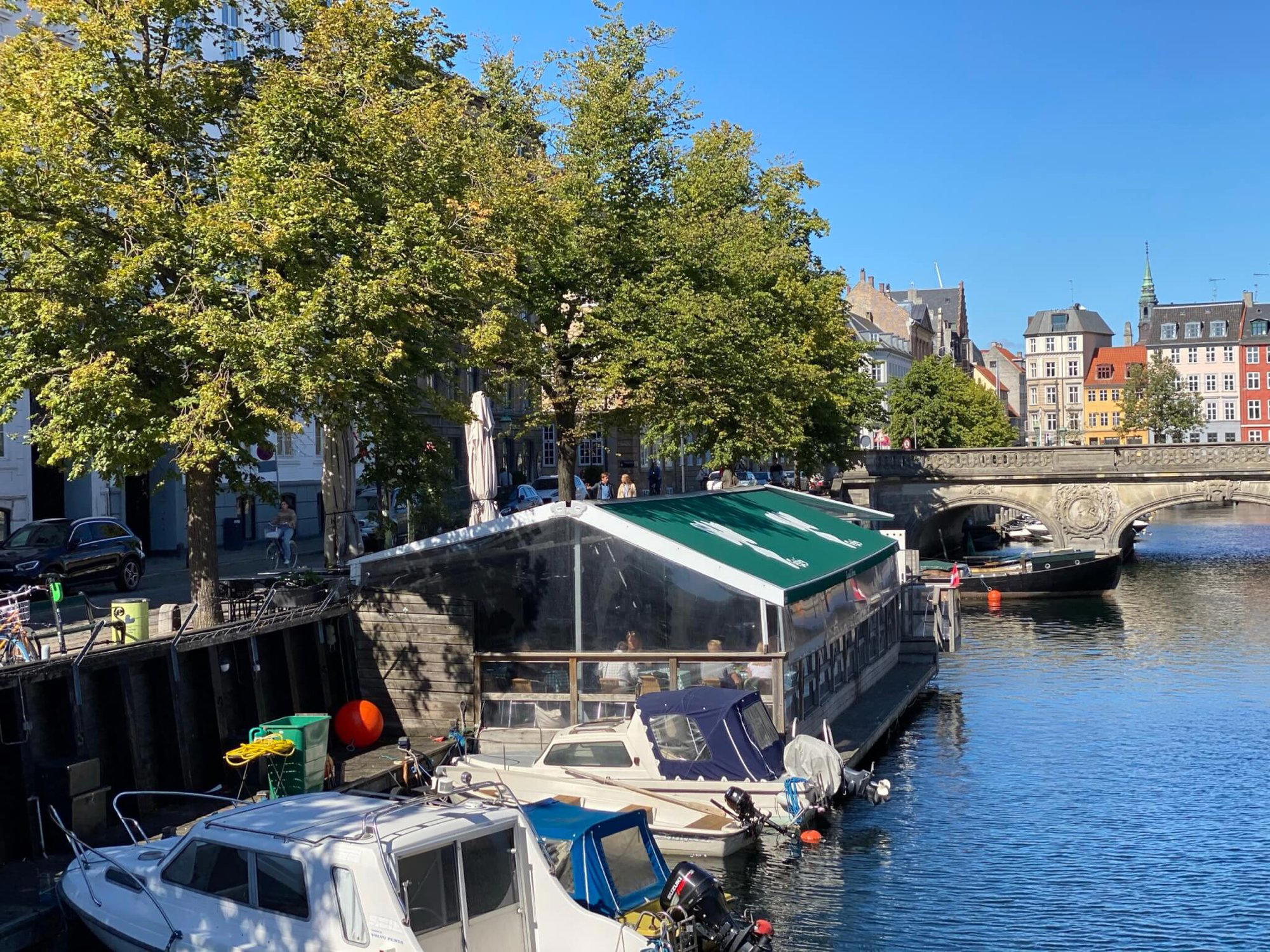
Where the Canal Sets the Terms
The stretch of Frederiksholms Kanal that runs past number 18 is one of the quieter waterfront addresses in central Copenhagen. The Christiansborg Palace complex sits nearby, the canal itself mirrors the muted tones of Danish autumn for most of the year, and the foot traffic here is a different density from the Nørrebro or Vesterbro crowds. In a city where restaurant positioning is increasingly tied to neighbourhood identity, this address carries its own signal: you are in the historic governmental quarter, and the dining around it has historically served a more local, less tourist-dependent clientele than the waterfront zones further north.
That context matters when reading Kanal-Caféen's place in Copenhagen's dining fabric. The city's international reputation has been built on a handful of headline addresses — Geranium, Noma, Alchemist — but those venues exist at a price point and ambition level that represents a fraction of where most Copenhageners actually eat. The everyday restaurant culture of the city is quieter, less photographed, and often more telling about how Danish food habits actually work. Canal-side cafés in the old city belong to that register.
The Longer Arc: How Copenhagen's Everyday Dining Has Shifted
To understand a place like Kanal-Caféen, it helps to track what happened to mid-register Copenhagen dining across the past two decades. When Noma opened in 2003 and began its ascent, the effect on the broader city dining culture was gradual but significant. The techniques and sourcing philosophies that defined New Nordic at the high end began filtering into less formal settings. Smørrebrød counters sharpened their sourcing. Lunch cafés that had operated on a conservative Danish comfort food model started integrating seasonal produce more deliberately. The question for any longstanding neighbourhood café in this city is how much of that shift has touched it, and in what form.
For canal-side establishments in the governmental quarter, the pressures have been different from those facing restaurants in the gentrifying districts. The clientele base, anchored in office workers, civil servants, and a steady trickle of visitors to Christiansborg and the National Museum just across the water, has remained relatively stable in composition even as expectations around food quality have risen city-wide. That creates a specific kind of evolution: not reinvention, but a gradual recalibration of standards within a consistent format.
This pattern appears across Danish cities at different scales. In Aarhus, Frederikshøj operates at the ambitious end of that city's dining spectrum. In smaller towns, places like Henne Kirkeby Kro in Henne and Frederiksminde in Præstø have carved out identities rooted in regional produce and deliberate pacing. Even further afield, Tri in Agger and Ti Trin Ned in Fredericia show how Danish dining ambition has dispersed well beyond the capital. Kanal-Caféen operates in a different register from all of these, but the broader trend they reflect, a Danish dining culture that has taken its food more seriously at every level, provides the backdrop against which it should be read.
The Canal Address as Practical Context
Frederiksholms Kanal 18 places Kanal-Caféen within easy walking range of several of Copenhagen's major civic and cultural draws. The National Museum is effectively adjacent, Christiansborg Palace is a few minutes on foot, and the Gammel Strand fish market site sits nearby. For visitors spending time in this part of the city rather than routing between Torvehallerne and the meatpacking district, the address is genuinely convenient rather than a detour.
Copenhagen's dining geography has expanded considerably, with serious kitchens now distributed across neighbourhoods that were afterthoughts a decade ago. Koan and Kadeau draw destination diners to specific postcodes. Jordnær in Gentofte pulls visitors north of the city centre. But the historic core retains its own dining logic, and canal-facing addresses in particular carry a specific atmospheric quality that is harder to replicate in newer developments: water, stone, and a built environment that has not changed its bones since the seventeenth century.
For those building a Copenhagen itinerary around the tasting-menu circuit, the planning calculus is familiar: Geranium requires significant advance booking, Alchemist operates on a ticket system, and the handful of seats at places like Koan fill quickly. A canal-side café in the governmental quarter operates on a different booking logic entirely, which is itself part of its appeal for visitors who want flexibility around the anchored reservation points in their schedule. Our full Copenhagen restaurants guide covers the range across price points and formats.
Situating Kanal-Caféen in a Wider Frame
The broader category that Kanal-Caféen represents in Copenhagen, the established neighbourhood café with a canal or waterfront address in the historic centre, is a format under quiet pressure across Northern European cities. Rising costs, changing lunch habits, and the gravitational pull of the delivery economy have reshaped how these places operate. Those that have survived and maintained a local clientele base have generally done so by holding their format rather than chasing trend cycles.
Internationally, the contrast is instructive. Le Bernardin in New York City and Lazy Bear in San Francisco represent the kind of high-conviction, single-format restaurants that have built durable identities by not pivoting. The lesson applies differently at every price tier, but the principle holds: clarity of format and consistency of execution are what allow neighbourhood restaurants to accumulate the kind of local trust that sustains them across economic cycles. The canal-side cafés of Copenhagen's old city have their own version of that equation.
For visitors planning time in the governmental quarter, venues like LYST in Vejle, Syttende in Sønderborg, Pearl by Paul Proffitt in Kruså, and Dragsholm Slot Gourmet in Hørve illustrate how destination dining has distributed across Denmark, context that sharpens appreciation for what Copenhagen's historic-core venues offer in proximity and convenience that no rural destination can replicate.
Planning Your Visit
Kanal-Caféen is located at Frederiksholms Kanal 18, 1220 Copenhagen, in the city's historic governmental quarter. The address is walkable from the main city-centre hotels and from the major civic sites along the canal. For current hours, reservation options, and menu details, direct contact with the venue is recommended, as these details are subject to seasonal adjustment. Visitors planning a broader Copenhagen dining trip should consult our full Copenhagen restaurants guide for current availability across the city's tasting-menu and casual dining tiers.
Credentials Lens
| Venue | Cuisine | Price | Awards |
|---|---|---|---|
| Kanal-CaféenThis venue — the venue you are viewing | Not listed | Not listed | This venue |
| Geranium | New Nordic, Creative | €€€€ | Michelin 3 Star |
| Noma | Creative | €€€€ | Michelin 3 Star |
| Alchemist | Progressive, Creative | €€€€ | Michelin 2 Star |
| Koan | New Nordic, Kaiseki, Creative | €€€€ | Michelin 2 Star |
| a|o|c | New Nordic, Mediterranean Small Plates, Creative | €€€€ | Michelin 2 Star |
Continue exploring
More in Copenhagen
Restaurants in Copenhagen
Browse all →
Bars in Copenhagen
Browse all →
Hotels in Copenhagen
Browse all →

At a Glance
- Classic
- Cozy
- Casual Hangout
- Waterfront
- Historic Building
- Beer Program
- Waterfront
- Street Scene
Current opening hours
- Monday
- 11:30 AM–5 PM
- Tuesday
- 11:30 AM–5 PM
- Wednesday
- 11:30 AM–5 PM
- Thursday
- 11:30 AM–5 PM
- Friday
- 11:30 AM–5 PM
- Saturday
- 11:30 AM–4 PM
- Sunday
- Closed
Hours can change for holidays and private events. Last verified .
Cozy time-capsule atmosphere with red-clothed tables, sepia maritime photos, and jovial waitstaff.
Know Before You Go
- Getting there
- Frederiksholms Kanal 18, 1220 København, Denmark