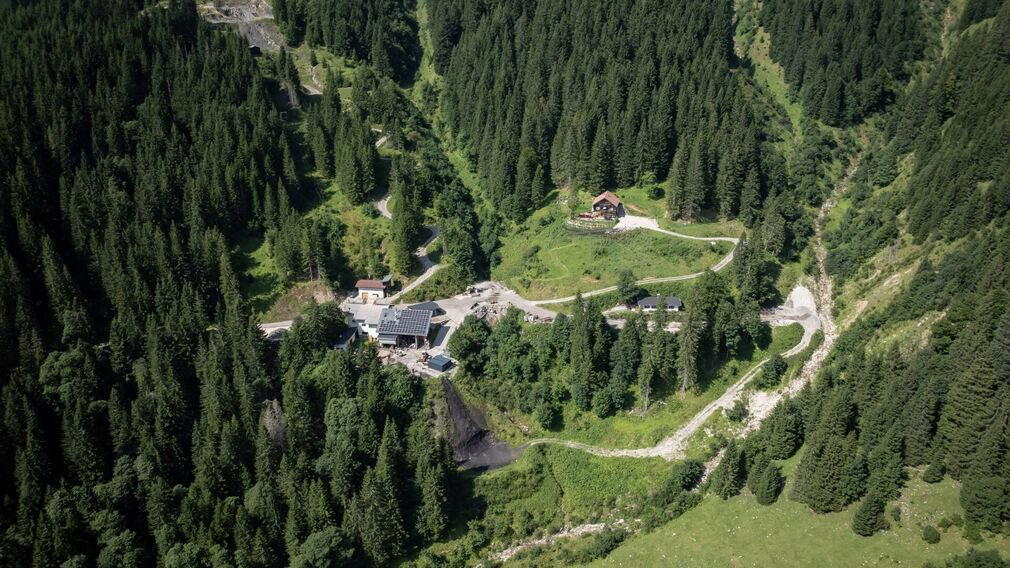
Where the Tyrolean Alps Define What Ends Up on the Table The approach to Kala Alm sets expectations before you arrive at the door. Thiersee sits in a compact Alpine valley in the Kufstein district of Tyrol, where the terrain is steep enough that...
Pearl is the En Primeur Club membership app — saves, bookings, and concierge access live there. Same editors, same standards.
- Address
- Kala-Alm 1, 6335 Thiersee, Austria
- Phone
- +43 664 2055358
- Website
- kala-alm.at
- Directions
- Get directions
 Saves & bookings on Pearl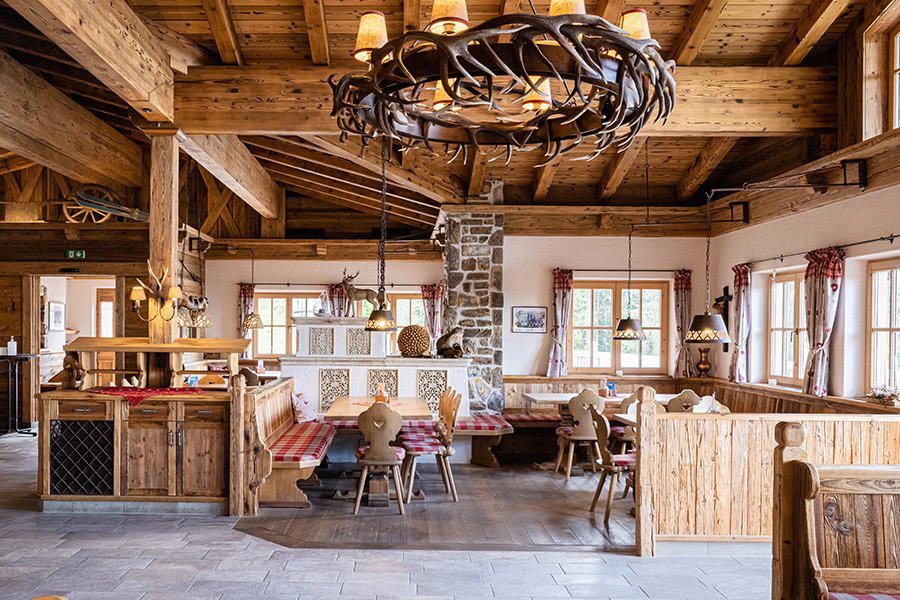
Where the Tyrolean Alps Define What Ends Up on the Table
The approach to Kala Alm sets expectations before you arrive at the door. Thiersee sits in a compact Alpine valley in the Kufstein district of Tyrol, where the terrain is steep enough that the surrounding pastures, forests, and waterways function as a natural pantry boundary. Alm culture in this part of Austria has always been anchored to place: the summer pasture hut was historically a working farm structure, and the food that came out of it reflected what the mountain provided rather than what a supply chain could deliver. Kala Alm operates inside that tradition, and the geography does most of the editorial work.
In Austrian Alpine dining more broadly, there is a meaningful divide between restaurants that invoke mountain provenance as aesthetic shorthand and those where the sourcing relationship is structural. The former hang antlers on the wall and call it local. The latter build their menu around what is actually growing, grazing, or fermenting within a short radius of the kitchen. Kala Alm belongs to the Thiersee valley's smaller, place-specific tier, where the constraint of geography is also the creative framework.
The Ingredient Logic of Alpine Alm Cooking
The Alm as a format matters here. Traditional Austrian Alm cooking developed not as a cuisine of refinement but as a cuisine of proximity: what the herd produced, what the forest offered, what could be preserved through winter. Dairy was central because cattle were present; game appeared because the forests were close; bread and dumplings absorbed surplus grain. In contemporary Alm settings that take the format seriously, this logic reappears not as nostalgia but as operational discipline.
Tyrol is one of the regions where that discipline is most legible. The Kufstein area sits between the Inn Valley floor and the Kaisergebirge and Thierseertal ridgelines, and the altitude shifts across that range produce distinct growing conditions. Herbs at higher elevation carry more concentrated flavour than their lowland counterparts, a fact that herb-forward regional kitchens have documented for generations. The same applies to dairy: mountain milk from cattle grazing varied-altitude pasture has a fat composition and flavour profile that differs measurably from intensive flatland dairy. These are not marketing claims; they are documented characteristics of Alpine agronomy.
Kala Alm, addressed at Kala-Alm 1 in 6335 Thiersee, sits within this production environment. The valley's relative seclusion from the main Inn Valley tourist corridor means it has not experienced the same commercialisation pressure as more accessible Alpine destinations. That has consequences for ingredient sourcing: the supply relationships in quieter valleys tend to be shorter and less intermediated than in high-traffic resort areas.
Thiersee in the Context of Austrian Alpine Dining
To understand where the restaurant sits, it helps to map the broader Austrian dining spectrum. At the summit of the formal register, restaurants like Steirereck im Stadtpark in Vienna and Döllerer in Golling an der Salzach operate with serious tasting menu programs and international recognition, where Alpine and Austrian ingredients appear in technically ambitious frameworks. Further along the range, properties like Gourmetrestaurant Tannenhof in Sankt Anton am Arlberg and Griggeler Stuba in Lech serve a luxury ski-resort clientele that expects polish alongside regionality. Ikarus in Salzburg takes a rotating international guest-chef model that places it in a different category entirely.
Below that formal tier sits a large and varied category of Alpine Gasthäuser, Almhütten, and valley restaurants where the standard of cooking varies considerably but the ingredient proximity can be notable. This is the category the restaurant occupies, and within it, the quality ceiling is higher than casual visitors typically expect. Comparable smaller-format regional operations across Austria, including Kräuterreich by Vitus Winkler in Sankt Veit im Pongau and Ois in Neufelden, demonstrate that serious ingredient commitment at this scale is possible and increasingly documented.
For travellers whose reference points are urban fine dining, the contrast can be instructive. Places like Le Bernardin in New York City or Atomix in New York City represent ingredient sourcing as a global logistics exercise. The Tyrolean Alm model inverts that: constraint is the methodology, and the kitchen's range is defined by what the surrounding valley can supply within a season.
The Atmosphere of a Working Alpine Setting
Alm dining in Austria at its most authentic is not a designed experience in the hospitality-sector sense. The setting is the structure itself: timber construction, south-facing terraces where the afternoon light is available, interiors that retain warmth from a combination of architecture and fire. Thiersee's relative quiet compared to the busier resort valleys gives the restaurant the kind of atmosphere that is harder to find in high-traffic areas. The lake itself, the Thiersee, sits close by and contributes to the environmental character of the visit, a fact that affects the experience even before food arrives.
For comparison, look at the trajectory of Taubenkobel in Schützen am Gebirge or Landhaus Bacher in Mautern an der Donau, both Austrian regional operations that have built sustained reputations by committing to their specific geography. The Alm format has the same potential when the setting is genuine rather than simulated.
Planning Your Visit
Thiersee is reachable from Kufstein, which sits on the main Innsbruck-Munich rail corridor. From Kufstein, the valley is a short drive south, making it accessible as a day excursion from either Innsbruck or the Bavarian side of the border. The summer season, from late May through September, is when Alm properties in Tyrol operate at full capacity, with outdoor terraces and the full range of pasture-sourced produce available. The valley is also visited in winter, though the Alm format tends to be most representative in the warmer months when the agricultural connection is at its most direct. Other Tyrolean options worth cross-referencing include Schwarzer Adler in Hall in Tirol and Stüva in Ischgl for a sense of how the region's more formal dining tier operates. Further afield, Restaurant 141 by Joachim Jaud in Mieming, Obauer in Werfen, Artis in Graz, and Atelier Fischer in Sankt Gilgen provide useful reference points across Austria's regional dining spectrum.
Comparable Spots, Quickly
Comparable venues nearby, for context on price, style, and recognition.
| Venue | Cuisine | Price | Notes |
|---|---|---|---|
| Kala AlmThis venue — the venue you are viewing | Traditional Austrian Mountain Hut | $$ | Not listed |
| NESTER | Traditional Austrian | $$ | Dorf |
| Wildalpgatterl | Traditional Tyrolean Mountain Cuisine | $$ | Fieberbrunn |
| Sporthotel IGLS | Traditional Tyrolean & Austrian | $$ | Igls |
| Neurauter | Traditional Tyrolean Austrian | $$ | Hatting |
| Landgasthaus Windinggut | Traditional Austrian Country-Style | $$ | Voggenberg |
Continue exploring
More in Thiersee
Restaurants in Thiersee
Browse all →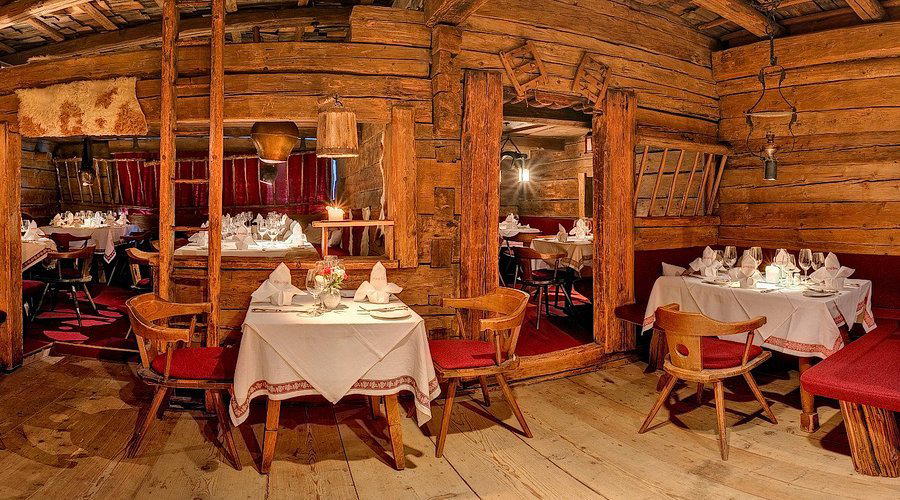
Bars in Thiersee
Browse all →
Hotels in Thiersee
Browse all →

At a Glance
- Cozy
- Rustic
- Scenic
- Family
- Casual Hangout
- Terrace
- Panoramic View
- Local Sourcing
- Mountain
Cozy wooden interior with Tyrolean style and a sunny terrace overlooking mountains.