Joël Robuchon
Joël Robuchon at Landmark Atrium brings one of France's most decorated kitchen lineages to the heart of Central. The Hong Kong outpost operates within the global network bearing the late chef's name, where formal French technique meets precise front-of-house choreography. Situated at 15 Queen's Road Central, it occupies territory at the upper end of Hong Kong's fine-dining tier.
 Discover on Pearl
Pearl is the En Primeur Club membership app — saves, bookings, and concierge access live there. Same editors, same standards.
- Address
- Shop 401, Landmark Atrium, 15 Queen's Road Central, Central, Hong Kong
- Phone
- +85221669000
- Website
- robuchon.hk
Central's Fine-Dining Tier and Where This Room Sits
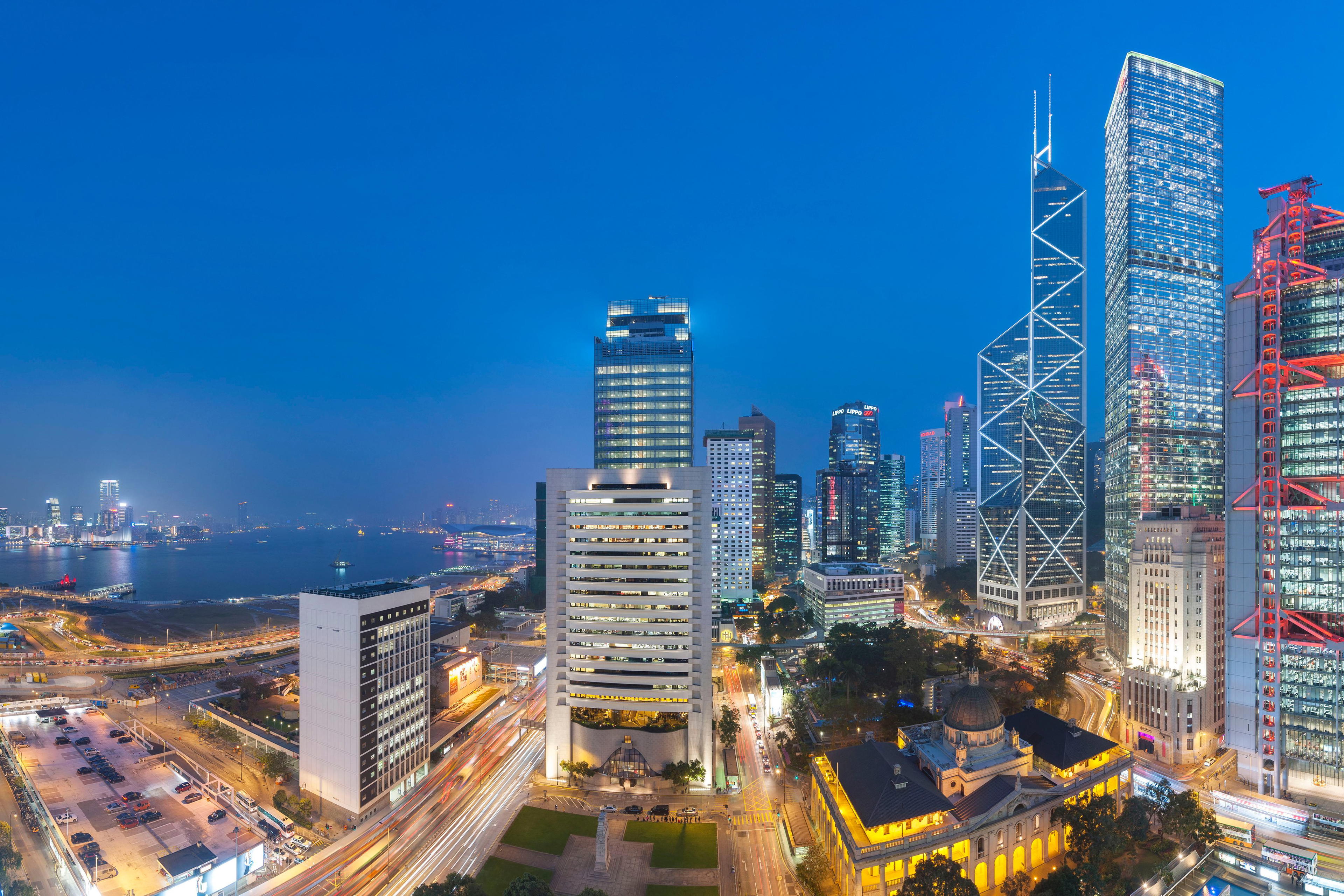
Hong Kong's Central district has long operated as one of Asia's most compressed fine-dining corridors, a few city blocks where Michelin stars cluster at a density that rivals Paris's 8th arrondissement. The Landmark Atrium complex on Queen's Road Central has become a particular concentration point: a building where the elevator options include multiple restaurants that price against London and New York rather than the broader Hong Kong market. Joël Robuchon occupies Shop 401 within that building, which tells you something immediate about positioning. This is not a restaurant making an argument for itself against the neighborhood izakaya or the hotel all-day dining room. It competes within a very specific bracket, alongside addresses like 8½ Otto e Mezzo BOMBANA and a small cohort of kitchens where the reference point is always international rather than local.
The global Robuchon operation, built on the late Joël Robuchon's record of accumulating more Michelin stars than any chef in history across his lifetime, runs its rooms with a consistency that functions almost like a franchise of precision. That is both its strength and the lens through which it should be read. When you book here, you are booking into a system that has been refined across decades and multiple continents, from the original L'Atelier format in Paris and Tokyo to the full-service rooms in Las Vegas and Macau. Hong Kong's version inherits that infrastructure. Whether that reads as reassurance or limitation depends entirely on what you want from a dinner in Central. For context on how this address compares across Hong Kong's broader restaurant geography, see our full Central And Western restaurants guide.
The Architecture of Service: Front-of-House as the Story
In most fine-dining rooms, the kitchen gets the narrative. The chef's biography appears in the press materials, the tasting menu carries the chef's name across the best of the card, and the story told at the table traces back to a single creative intelligence. At a Robuchon property, the editorial angle shifts. The brigade model here, in which kitchen, sommelier program, and floor team operate as interlocking departments rather than a chef-led hierarchy, produces a particular kind of dining experience that rewards attention to the whole rather than fixation on any single element.
This matters in Hong Kong specifically because Central's dining room culture has historically placed enormous weight on service theater. The city's leading tables have always competed partly on floor choreography, the timing of covers, the management of language across Cantonese, English, and Mandarin, the handling of a room where business entertainment and personal celebration share the same Tuesday evening. A Robuchon room is engineered for exactly that environment. The front-of-house protocols are detailed enough to handle the table of bankers negotiating wine pairings and the anniversary couple who arrived not quite knowing what they ordered. The sommelier program, trained to pair across a menu that runs classical French technique through modern plating sensibilities, functions as its own department, present enough to guide, restrained enough not to perform.
For comparison on how other serious kitchens in the neighborhood approach the same challenge, Aaharn in Central applies a similar rigor to Thai fine dining, and AMMO operates a more casual but still considered version of the same service discipline. Both illustrate how Central's dining culture has moved toward expecting technical precision at multiple price points, not just at the top tier.
What the Room Communicates Before a Dish Arrives
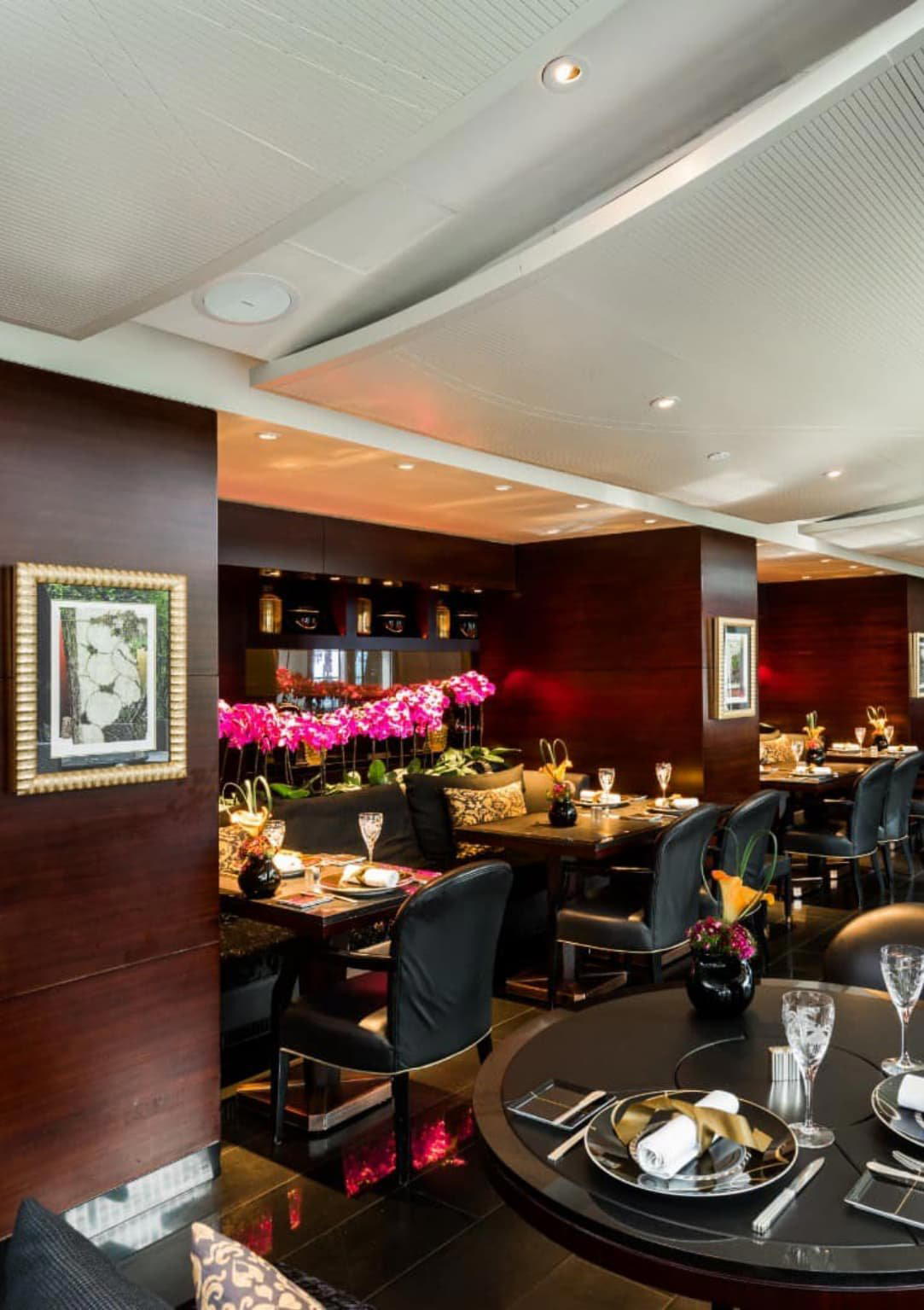
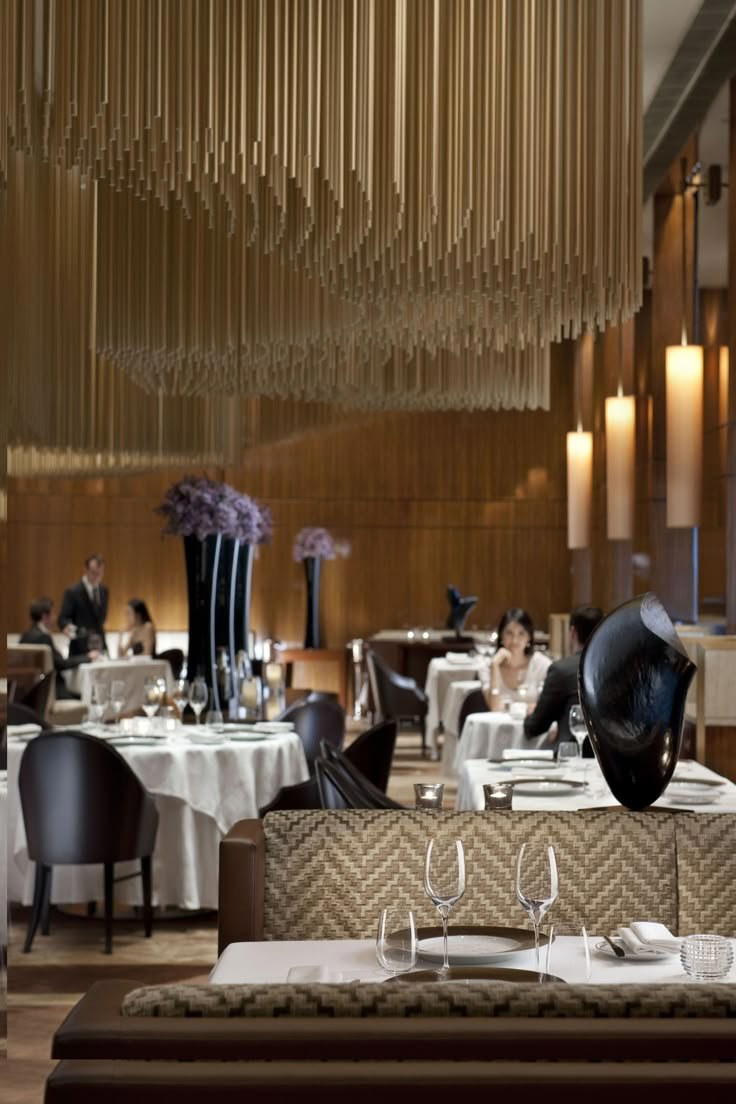
Landmark Atrium is a mall, technically, but calling it that undersells the specific design register the Robuchon room achieves within its Shop 401 footprint. Fine dining inside luxury retail complexes has become a normalized format across Hong Kong, Tokyo, and Singapore; the question is always whether the interior establishes its own atmosphere or surrenders to the building's mall adjacency. Robuchon's Hong Kong room invests in enclosure: the design creates enough separation from the Atrium's retail energy that the transition from escalator to dining room functions as an arrival rather than simply a turn.
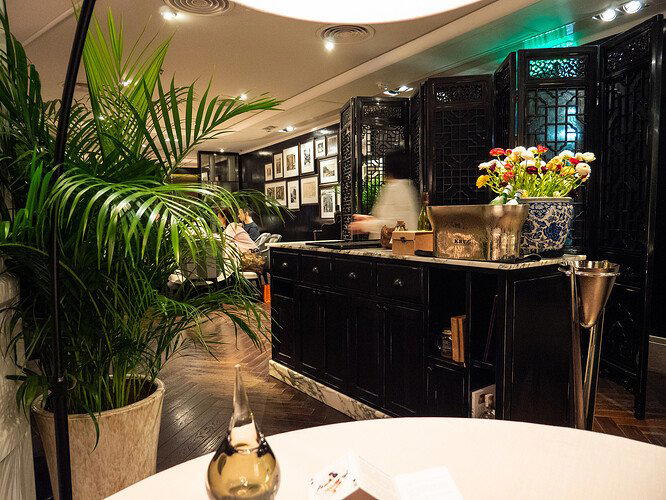
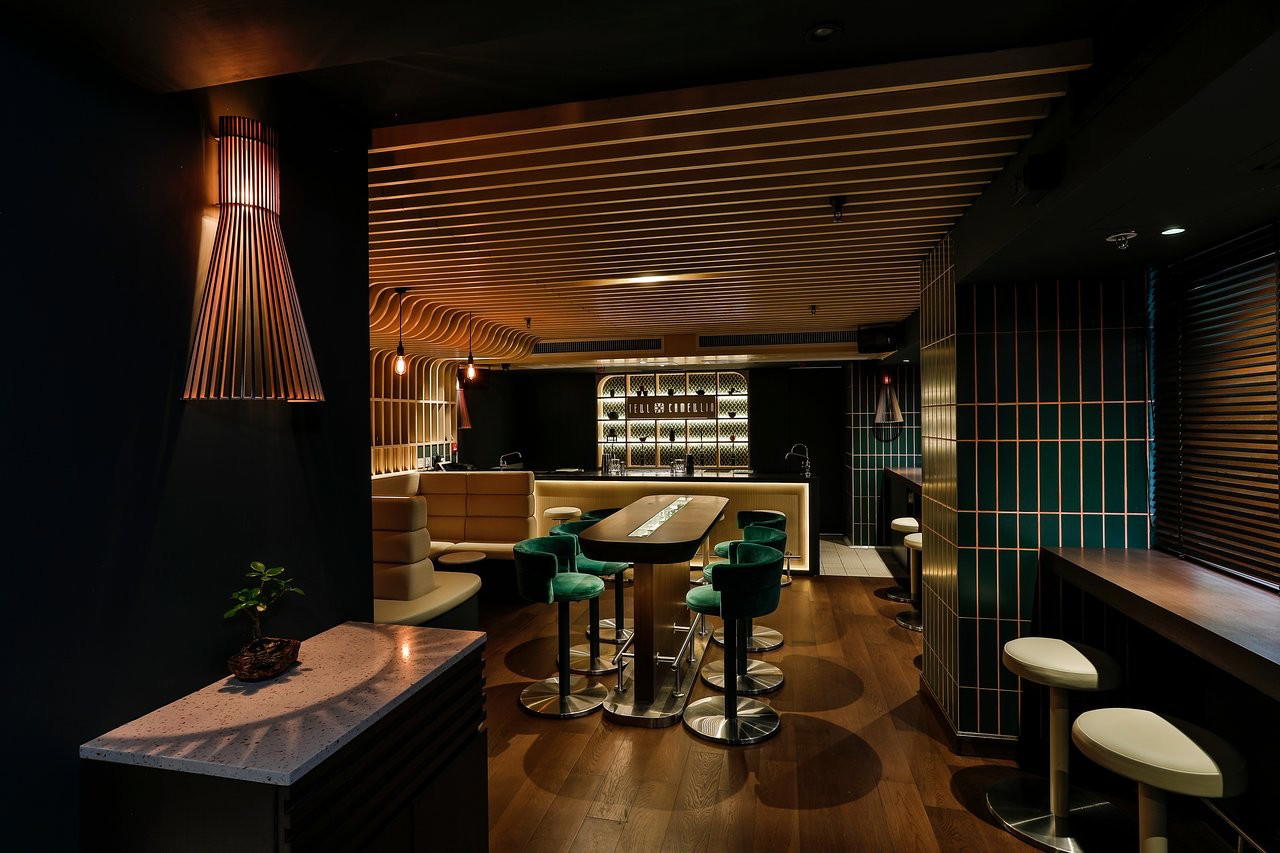
The room's palette and material language align with the global Robuchon design vocabulary, dark surfaces, controlled lighting, a density of detail that signals formality without tipping into the kind of stiffness that once defined French restaurant interiors. This is worth noting because the format has evolved considerably from the white-tablecloth severity of Robuchon's earlier era. The Atelier concept, which runs across multiple cities, stripped that back toward counter dining and an open kitchen visible to diners. The Hong Kong full-service room sits in a different register: more private, more suited to extended business entertainment, less about watching the kitchen and more about the managed distance that formal service implies.
Situating This in the Wider Hong Kong Fine-Dining Picture
Hong Kong has a recurring structural reality for any restaurant at the leading price tier: the comparable set is genuinely global. Diners who book Robuchon in Central often hold context from Paris, Monte Carlo, or New York, they know the reference points, they understand the price-to-plate calibration, and they arrive with benchmarks. This is a different clientele pressure than what a rising independent faces, and it shapes how the room operates. Consistency across visits matters more than surprise. The wine list needs to perform against memory, not just against other Hong Kong lists.
That context also places Robuchon in an interesting position relative to what has emerged around it. The recent decade in Hong Kong has produced serious competition from kitchens working outside the French classical tradition: Japanese fine dining at the level of 8 1/2 Otto e Mezzo Bombana, Cantonese restaurants operating with the same technical ambition, and a new generation of chef-led independents. French haute cuisine no longer holds the automatic prestige position it once did in Asia's premium dining market. Robuchon's answer to that shift is the same one it has deployed globally: consistency, brand depth, and a service model that treats reliability as a value proposition rather than a limitation. For those curious how similar bets play out at the highest level elsewhere, Le Bernardin in New York City and Atomix in New York City represent the same premium-tier conversation on the other side of the Pacific.
Planning a Visit
The Landmark Atrium address, Shop 401, 15 Queen's Road Central, is directly accessible from the Central MTR station via the Landmark mall connection, making arrival direct regardless of weather, which is a practical consideration worth taking seriously in Hong Kong's summer months. At a room of this tier and brand weight, reservations are advisable well in advance, particularly for Friday and Saturday evenings or for tables of more than two. Dress expectations align with what the room communicates: formal or smart-formal, consistent with what Central's business and entertainment dining culture expects at this price bracket. For a sense of the broader neighborhood before or after dinner, Bayi and cafe TOO both operate nearby and offer different registers of the same Central dining geography.
Price and Recognition
Comparable venues nearby, for context on price, style, and recognition.
| Venue | Cuisine | Price | Awards | Notes |
|---|---|---|---|---|
| Joël RobuchonThis venue — the venue you are viewing | $$$$ | , | ||
| Frantzen's Kitchen | $$$$ | , | Sheung Wan, Modern New Nordic with Asian Influences | |
| Cristal Room by Anne-Sophie Pic | $$$$ | , | Central, Modern French with Asian Influences | |
| Aaharn | Central, Modern Thai Fine Dining | $$$$ | , | |
| Sushi Haré | $$$$ | , | Sheung Wan, Traditional Edomae-style Omakase | |
| Jing Alley | $$$$ | , | Sheung Wan, Modern Sichuan with Cantonese Touch |
Continue exploring
More in Central And Western
Restaurants in Central And Western
Browse all →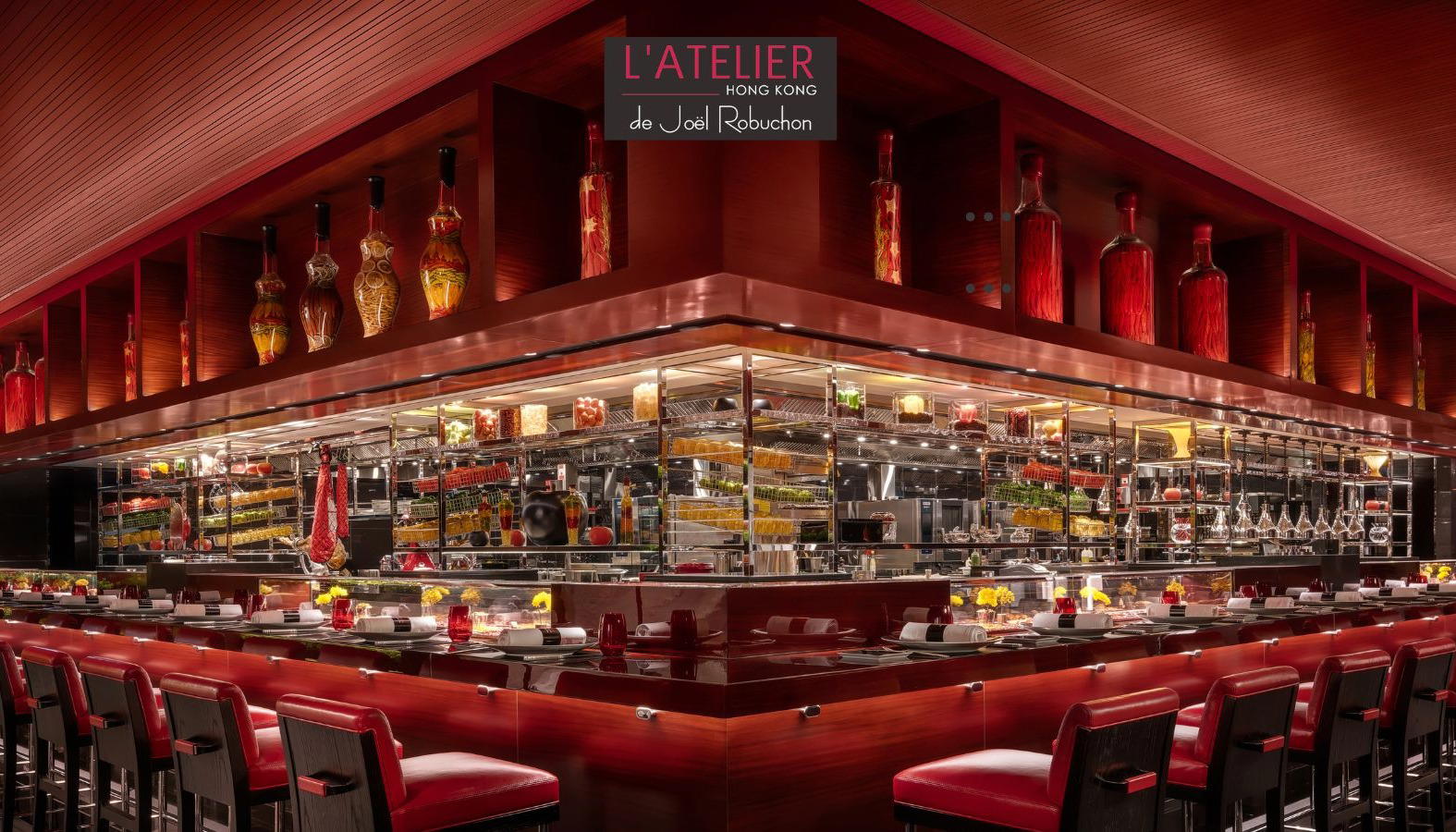
Bars in Central And Western
Browse all →
At a Glance
- Elegant
- Sophisticated
- Modern
- Intimate
- Special Occasion
- Date Night
- Business Dinner
- Open Kitchen
- Hotel Restaurant
- Extensive Wine List
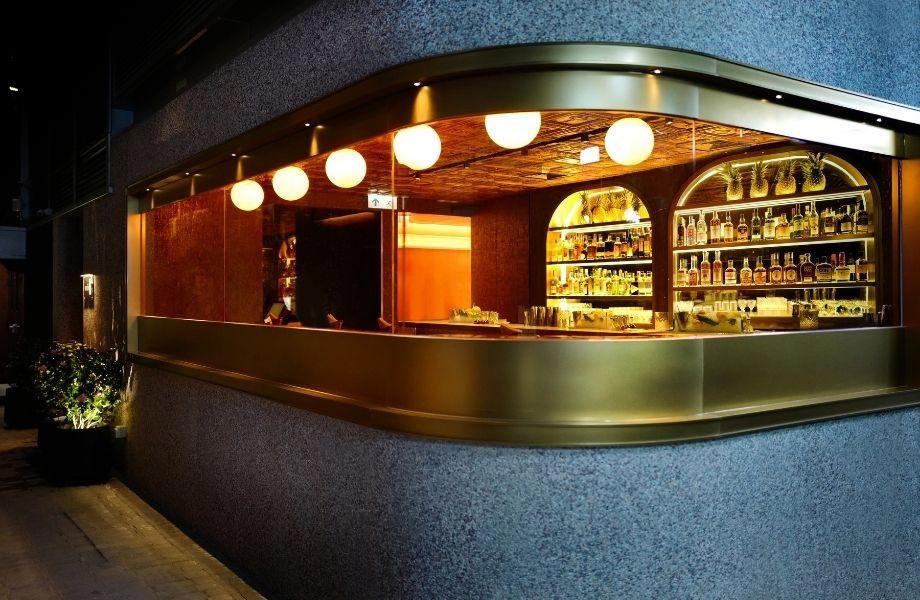
Intimate dim-lit ambiance with signature glossy blacks, heady reds, and dramatic red-and-black interiors.