
Tabelog 100 #47
Our verdict
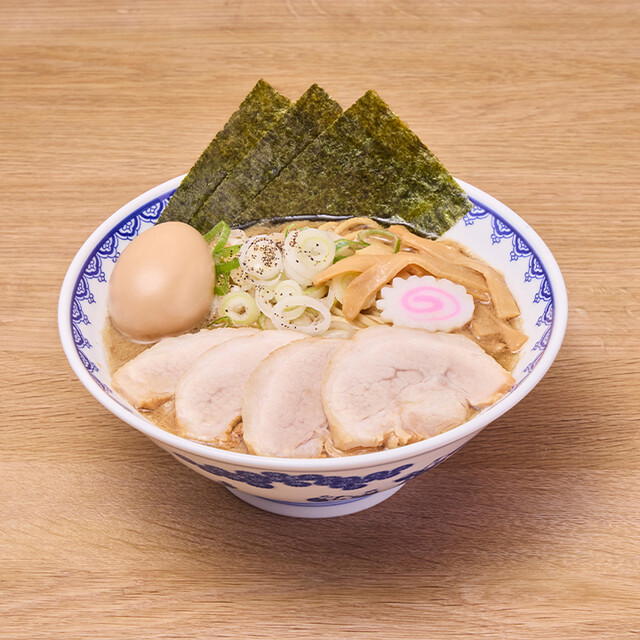
Jinenjo puts Konosu into the serious ramen conversation through tsukemen and ramen built around thick house-made noodles, domestic wheat and whole-grain flour. Its repeated selection for Tabelog Ramen EAST “Tabelog 100” from 2019 through 2025 makes it a useful reference point for Saitama ramen outside Tokyo’s usual orbit.

Pearl is the En Primeur Club membership app, where members save venues, book tables and use the concierge.
The menu
What to order
- Tsukemen (dipping noodles)
- Tonkotsu-gyokai tsukemen
Approaching a ramen shop in suburban Saitama is a different proposition from stepping into a Tokyo station counter. The tempo is less theatrical, the audience more local, and the measure of ambition often sits in the bowl rather than the room. Jinenjo belongs to that category: a restaurant in Konosu where the point is not spectacle, but the discipline of noodles, broth and repeatable craft.
Konosu is not usually the first city invoked in English-language ramen itineraries, which is precisely why the city matters. Saitama’s ramen culture has long rewarded shops that can pull regulars by train, car and local habit, not only by tourist traffic. In that setting, recognition through Tabelog Hyakumeiten in 2025 carries weight because it places a suburban tsukemen and ramen shop inside a broader field rather than a purely neighbourhood one.
Noodles put the bowl’s structure at the centre
The clearest editorial signal here is the noodle format. Jinenjo is listed for tsukemen, or dipping noodles, as well as ramen, and that matters because tsukemen exposes the noodle more directly than a standard soup bowl. Served for dipping, the noodles have to carry their part of the meal without simply disappearing into broth. In this format, the noodle is not a background detail; it is central to the structure of the meal.
Tsukemen, at its better suburban addresses, is a test of proportion. Broth can be concentrated, but the noodles decide whether the bowl feels heavy or coherent. Jinenjo’s category listing covers both tsukemen and ramen, which places it between two expectations: dipping noodles for diners who want texture and concentration, ramen for those who want a complete bowl. That dual format is familiar in the region, but it asks more from the kitchen than a single-style shop because noodle, soup strength and pacing have to make sense across different orders.
Within the nearby competitive set, that puts the restaurant in a modest-price but high-scrutiny bracket. Teuchi Udon Matsuya and Teuchi Udon Ishizuka point to the same Saitama appetite for wheat-driven cooking, while Chuka Soba Fukamidori, Chuka Soba Yoshikawa Ageo ten and Ryu no Ko sit closer to the ramen side of the conversation. The useful comparison is not genre alone, but ingredient emphasis: shops in this tier succeed when flour, stock and format feel intentional rather than interchangeable.
The 2025 Tabelog Hyakumeiten recognition, together with a listed score of 3.76, suggests clear local and regional attention. Tabelog’s Hyakumeiten lists are not the same as Michelin stars, and they should not be treated as luxury shorthand. They are more useful as a signal of sustained attention in everyday genres where price remains low and repeat visits drive reputation.
A suburban ramen room built for regular use, not ceremony
The room should be understood through the lens of the format. This is a casual ramen and tsukemen address rather than a formal dining room, with the emphasis falling on the food rather than on ceremony. That kind of setting is common in suburban ramen, but it changes the experience: the restaurant can make sense for a straightforward noodle stop without pretending to be a tasting-menu counter.
There is also a quiet value argument here. Japanese ramen at this level often complicates the idea that critical recognition must come with formal service or high spend. A shop can sit on a respected list, keep a casual service model and remain part of daily eating culture. That is why the Konosu setting is not incidental. Outside central Tokyo, the strongest noodle shops often depend on accessibility, local habits and repeat custom as much as destination dining.
For travellers building a wider food day, Jinenjo works better as a focused ramen stop than as a long lunch anchor. Konosu is more rewarding when treated as part of a regional Saitama route rather than an isolated detour.
How to place it in a Japan noodle itinerary
The stronger case for Jinenjo is not that it replaces Tokyo’s ramen counters, but that it shows how high-attention noodle culture operates outside the capital’s tourist corridors. In Japan, ramen excellence is often hyperlocal: a station area, a suburb, a shopping street, a car-oriented stop. The country’s noodle map is deeper than central-city rankings, and Konosu adds a useful Saitama chapter for travellers who care about wheat, texture and everyday formats.
That perspective also helps avoid a common mistake: treating every recognised ramen shop as a luxury restaurant in miniature. The better reading is more grounded. This is a casual ramen and tsukemen address with a strong regional signal, a noodle-focused identity and enough format flexibility to serve regular diners as well as visitors. Its appeal sits in the tension between ordinary setting and serious execution.
For readers comparing across Japan, the contrast is instructive. More formal meals ask for a different kind of pacing, while seafood counters, cafes and other urban dining rooms frame the experience around very different rhythms. Casual formats across Japan underline how specialised everyday dining can carry as much editorial interest as formal restaurants. Outside Japan, Japanese formats take on still other meanings, but the Konosu lesson is simpler: when the noodles are the argument, the room does not need to perform.
Frequently asked questions
Is Jinenjo suitable for children?
Jinenjo is a casual ramen and tsukemen restaurant in Konosu. For family suitability or seating details, confirm directly with the restaurant before visiting.
What should I expect atmosphere-wise at Jinenjo?
Expect a practical ramen and tsukemen restaurant in Konosu rather than a formal dining room. The Tabelog Hyakumeiten 2025 recognition gives it clear local and regional credibility.
What price level is Jinenjo?
Pricing at Jinenjo is listed as - JPY 999 - JPY 999, with budget guidance of Dinner: - JPY 999; Lunch: - JPY 999.
What are the operating hours at Jinenjo?
Operating hours for Jinenjo should be confirmed directly with the restaurant before visiting.
How do I find Jinenjo?
Jinenjo is located in Konosu.
Comparable Spots, Quickly
Comparable venues by cuisine and price in the same metro.
| Venue | Cuisine | Price | Awards | Notes |
|---|---|---|---|---|
| JinenjoThis venue (the venue you are viewing) | Tsukemen & ramen shop | $10–20 | Tabelog 100 #47 | Not listed |
| Umemura | Japanese Soul Food | Not listed | Tabelog 100 #44 | Koto |
| うらしま | Traditional Wakayama Ramen Shop | $1–10 | Tabelog 100 #75 | 花野 |
| Hon Teuchi Udon Shoji | Traditional Musashino Udon | $10–20 | Tabelog 100 #8 | Kawajima-machi |
| Miyazato Soba (宮里そば) | Okinawan Soba | Not listed | Not listed | Miyazato |
| Numazu Gyoza Nomiseko Taguchitei | Numazu Gyoza Standing Bar | $10–20 | Not listed | Numazu Station area |
Recognition history
Dated appearances from independent guides and award organizations, with the underlying list record or original source where available.
Tabelog 100 #47 · No. 47
Tabelog · Tabelog 100 - Ramen - EAST - 2025
Continue exploring
More in Konosu
Restaurants in Konosu
All restaurants in Konosu →


Bars in Konosu
Browse all →
Hotels in Konosu
Browse all →
Wineries in Konosu
Browse all →
Details
- Lively
- Solo
- Casual Hangout
- After Work
- Family
- Standalone
- Local Sourcing
- A La Carte
- Counter Dining
Current opening hours
- Monday
- 11 AM–3:30 PM, 6–9 PM
- Tuesday
- 11 AM–3:30 PM, 6–9 PM
- Wednesday
- 11 AM–3:30 PM, 6–9 PM
- Thursday
- 11 AM–3:30 PM, 6–9 PM
- Friday
- 11 AM–3:30 PM, 6–9 PM
- Saturday
- 11 AM–9 PM
- Sunday
- 11 AM–9 PM
Hours can change for holidays and private events. Hours as of .
Casual, bustling ramen-ya atmosphere focused on efficient counter-style dining, with a functional interior that prioritizes quick service over décor.