

Set within the ENOWA YUFUIN hotel complex in Oita's mountain-ringed Yufuin valley, Jimgu is an innovative Japanese restaurant that earned Tabelog Award Bronze in 2026 and a place in the Tabelog Innovative/Creative Cuisine 100 for 2025. The kitchen places seasonal vegetables at the centre of a dinner-only format priced between JPY 20,000 and JPY 29,999, with a sommelier-led beverage program and private rooms available.
 Discover on Pearl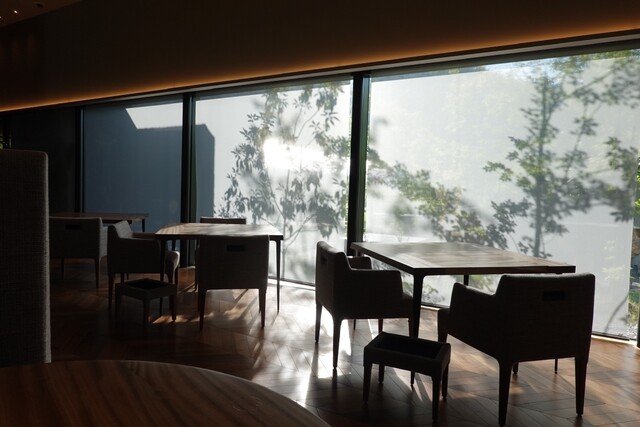
Where Yufuin's Hot-Spring Town Meets a New Kind of Table
Yufuin occupies a different register from the rest of Oita Prefecture. Where Beppu trades on the spectacle of its geothermal vents, Yufuin has built its reputation on quieter pleasures: ryokan hospitality, mountain air, and a food culture that leans into the agricultural richness of the surrounding highlands. The drive from Yufuin IC takes roughly eight minutes; from Yufuin Station, a five-minute taxi covers the same ground. That short distance separates the town's main street from the ENOWA YUFUIN complex, where Jimgu opened on 8 June 2023 and has moved quickly through the Tabelog recognition system, collecting the 2026 Bronze award and a spot in the platform's Innovative/Creative Cuisine 100 for 2025 within its first two full years of operation.
The hotel setting shapes expectations before you sit down. ENOWA YUFUIN positions itself in the design-led, limited-key tier of Japanese mountain hospitality, and Jimgu inherits that context: you arrive already calibrated for something considered and deliberate. The dress code reinforces the register — no indoor wear in the hotel — and the seating configuration gives the room some architectural flexibility. Thirty-eight seats spread across sofa seating, table seating, and a six-seat private room; the private rooms carry a usage fee of ¥33,000 per session. For groups wanting to eat in relative seclusion against the Yufuin hills, that option exists, though it costs more than the per-head dinner spend.
The shortlist, unlocked.
Hard-to-book tables, cellar releases, and concierge-planned trips.
Get Exclusive Access →The Ingredient Logic Behind the Menu
Japan's innovative restaurant category has been shaped, in large part, by a particular premise: that the country's agricultural and marine diversity is specific enough to do more than support tradition. Oita Prefecture sits on that argument convincingly. Its vegetables, mountain herbs, and coastal produce carry a provenance specificity that the leading kitchens in the region have learned to read as a distinct palette rather than a generic seasonal rotation.
Jimgu's Tabelog categorisation as Innovative rather than kaiseki or washoku signals a deliberate departure from the structured progression of classical Japanese haute cuisine. Where kaiseki imposes a choreography of named courses with centuries of precedent, the innovative format allows a kitchen to reorganise hierarchy around ingredient primacy , vegetable as protagonist, protein as supporting element, dashi and fermented components as the tonal infrastructure. Tabelog's own description references the kitchen's focus on vegetables specifically, and that emphasis places the restaurant in a growing cohort of Japanese fine-dining kitchens that foreground plant material at a price point typically associated with fish and meat-led tasting menus.
That shift is not cosmetically vegetarian. In the broader context of Japan's innovative dining tier , which includes kitchens like HAJIME in Osaka, with its well-documented commitment to ingredient sourcing, or Goh in Fukuoka working through Kyushu's own agricultural character , the move to centre vegetables is a position statement about the quality ceiling those ingredients can reach when handled with the same technical seriousness as a piece of aged fish. The listed vegetarian options at Jimgu suggest the menu can function across a spectrum of dietary parameters, though the kitchen's focus appears to be less about accommodation and more about a conviction that Oita's produce warrants the spotlight.
Beverage Program and the Sommelier Role
A dedicated sommelier is listed as part of the service offering, which matters at a dinner spend of JPY 20,000 to JPY 29,999 per head on the listed rate , and closer to JPY 30,000 to JPY 39,999 when beverage spend is factored in, per reviewer-reported data. The drinks list spans sake, shochu, wine, and cocktails, with wine given particular emphasis. Oita Prefecture is not a wine-producing region, so the sommelier's role is curatorial: pairing against a vegetable-forward menu requires a different selection logic than matching to protein. Sake and shochu carry obvious regional authority, and Kyushu's shochu culture provides a natural axis for pairing with umami-dense, fermented, or earthier preparations. Credit cards , Visa, Mastercard, and Amex , are accepted; electronic money and QR code payments are not.
How Jimgu Sits in Oita's Wider Dining Scene
Oita's fine-dining circuit is small but increasingly specific. Beppu Hirokado and Aji Arai represent the prefecture's Japanese cuisine presence at the more classical end, while Ito operates in its own register. Jimgu's innovative categorisation and hotel positioning make it a distinct data point in that circuit: it is asking Oita's serious diners, and visitors arriving from Fukuoka, to assess the prefecture's agricultural identity through a contemporary lens rather than through the ceremonial framework of traditional kaiseki.
The Tabelog score of 3.87 , generated within roughly two years of opening , places Jimgu well inside the upper tier of the platform's national innovative category. The Bronze award at that stage of operation is a fast-tracked recognition compared to most peers; restaurants at comparable Tabelog levels in other Japanese cities, including akordu in Nara, Mitsuyasu in Kyoto, or Harutaka in Tokyo, typically accumulate that recognition over a longer arc. The additional Relais & Châteaux affiliation (2025) signals that the hotel and its restaurant are being read by international hospitality evaluators as belonging to a tier of property that prioritises craft and setting over scale.
For visitors routing through Kyushu, Jimgu sits at roughly 90 minutes from Fukuoka by car, or 50 minutes from Oita Airport , distances that make it a viable anchor for a broader Kyushu itinerary rather than a detour. 1000 in Yokohama, 6 in Okinawa, Abon in Ashiya, and Cocoro in Auckland each represent the broader geography of Japanese cuisine working at this level of seriousness outside the major urban centres , the comparison points to a pattern where the most interesting ingredient-driven cooking is increasingly happening away from Tokyo and Osaka. Gion Sasaki in Kyoto remains the benchmark for how classical Kyoto cooking can be pushed into contemporaneity without losing its seasonal logic; Jimgu appears to be pursuing a parallel argument from a very different geographical base.
Planning a Visit
Dinner seatings run at 17:30, 18:00, and 18:30 across all days of the week, with no fixed closing day listed. That staggered seating structure is typical of hotel restaurants managing kitchen output with precision; arriving at the 17:30 slot in the warmer months means eating the early courses in natural light against the mountain backdrop. Tabelog currently lists reservations as unavailable through the platform, which suggests the booking process runs directly through ENOWA YUFUIN's own channels at enowa-yufuin.jp. Hotel parking is available on-site, which matters for those arriving by car from Fukuoka or Oita Airport. Private room hire at ¥33,000 per session should be factored into group budgets separately from per-head food costs. The full dining and hospitality picture across the prefecture is covered in our full Oita restaurants guide, alongside our full Oita hotels guide, our full Oita bars guide, our full Oita wineries guide, and our full Oita experiences guide.
The shortlist, unlocked.
Hard-to-book tables, cellar releases, and concierge-planned trips.
Get Exclusive Access →Frequently Asked Questions
The Essentials
A quick look at comparable venues, using the data we have on file.
| Venue | Notes | Price |
|---|---|---|
| Jimgu | This venue | |
| Beppu Hirokado | Japanese Cuisine | |
| Aji Arai | ||
| Ito |
Need a table?
Our members enjoy priority alerts and concierge-led booking support for the world's most difficult tables.
Get Exclusive AccessThe shortlist, unlocked.
Hard-to-book tables, cellar releases, and concierge-planned trips.
Get Exclusive Access →