Jimbo Restaurant
Our verdict
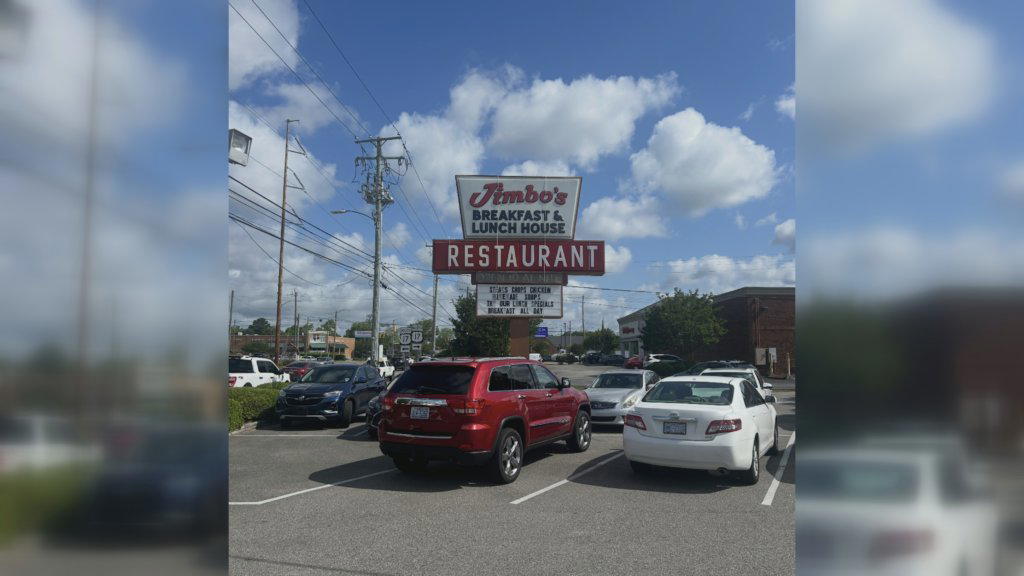
On South King Street in Honolulu's Moiliili neighbourhood, Jimbo Restaurant occupies a modest strip-mall address that has drawn loyal regulars for years. The draw is consistency in a city where Japanese comfort food runs the gamut from tourist-facing to genuinely local. For those tracking Honolulu's quieter dining corridors, this is a reference point worth knowing.
- Address
- 1936 S King St #103, Honolulu, HI 96826
- Phone
- (808) 947-2211
- Directions
- Get directions
The menu
What to order
- Salad Udon
- Hot Udon
- Cold Udon
- Yaki Udon
South King Street and the Quiet Middle of Honolulu Dining
Honolulu's dining conversation tends to orbit two poles: the resort-adjacent rooms along Kalakaua and the destination-dining tier represented by places like 53 By The Sea and Fête (New American). Between those poles sits a denser, less-discussed band of neighbourhood restaurants that serve Honolulu residents rather than visitors. South King Street, running through Moiliili, is one of the clearest expressions of that middle ground. The strip has long attracted Japanese food businesses serving the area's established Japanese-American community, and Jimbo Restaurant at 1936 S King St sits inside that tradition.
Strip-mall positioning in Honolulu carries none of the stigma it might elsewhere. Some of the city's most credible local eating happens behind modest facades on arterial roads, a pattern that separates Honolulu from mainland cities where fine-dining architecture and dining quality tend to correlate more tightly. The expectation here is set by the neighbourhood, not by a hotel group or a PR campaign.
The Lunch and Dinner Divide on South King Street
For neighbourhood restaurants in Moiliili, the difference between lunch and dinner service is not merely one of timing. It reflects two distinct relationships between the kitchen and the customer.
Lunch on South King Street tends to be a transactional affair in the leading sense: efficient, value-oriented, and anchored by working regulars who know exactly what they want. In the Japanese comfort-food register that defines much of this corridor, that typically means noodle-forward plates, set meals with defined components, and faster table turns. The room reads differently at midday — quieter, more purposeful, with less of the social accumulation that builds in the evening. For visitors unfamiliar with the neighbourhood, lunch is often the lower-friction entry point: shorter waits in smaller operations, and pricing that reflects the weekday-regular assumption rather than the weekend-destination one.
Evening service on this stretch shifts the mood incrementally. The same physical space holds a different social contract after dark. Groups stay longer, orders tend to run wider across the menu, and the room accumulates the particular warmth of a place that has become habitual for its regulars. Honolulu's Japanese restaurant culture, influenced by decades of community dining norms, does not perform evening service the way a destination room might. There is no theatrical shift in lighting or a prix-fixe structure that enforces a certain pace. The dinner proposition is an extension of the lunch one, unhurried and familiar in character, which is either exactly what you want or a signal to look elsewhere for occasion dining.
For context on what occasion dining looks like in Honolulu, the city offers a range that extends from local favourites like 3660 On the Rise to luau-format experiences like Ahaaina Luau. Jimbo occupies a different tier entirely.
Japanese Comfort Food in a City with Deep Japanese Roots
Hawaii's Japanese culinary presence is not a trend. It is the product of immigration patterns stretching back to the plantation era of the late 19th century, and it has shaped Honolulu's food culture in ways that are structural rather than superficial. The city has Japanese ramen shops, izakaya-style rooms, and udon specialists that are judged against the standards of a community with genuine reference points. This is a different competitive environment from, say, a mainland city where Japanese comfort food carries an inherent novelty premium.
That context matters when placing a restaurant like Jimbo. On the American mainland, udon or Japanese set-meal formats in a neighbourhood setting might read as niche. In Honolulu's Moiliili, they read as baseline. The standard is set by residents who grew up eating this food. That raises the floor but also provides a more honest signal of quality: a restaurant that has maintained its regulars in this environment over time is doing something right, whether or not it carries formal recognition.
Across the broader American dining tier, the venues that attract the most critical attention — Le Bernardin in New York City, The French Laundry in Napa, Alinea in Chicago, Providence in Los Angeles, operate in an entirely different register. So do West Coast peers like Lazy Bear in San Francisco, Single Thread Farm in Healdsburg, Addison in San Diego, and Blue Hill at Stone Barns in Tarrytown. Internationally, the comparison set shifts further toward rooms like Atomix in New York City and 8 1/2 Otto e Mezzo Bombana in Hong Kong. Jimbo is not in conversation with those venues. It is in conversation with the Moiliili block it occupies, and that is the correct frame for assessing it.
Honolulu's Japanese restaurant scene has several reference points worth cross-referencing: Ginza Bairin and Fujiyama Texas represent different slices of the Japanese dining spectrum, as does the cocktail-omakase hybrid format at Bar Maze. Each positions differently against the neighbourhood-comfort category that Jimbo represents. See our full Honolulu restaurants guide for a mapped view of how these venues sit relative to each other.
For those interested in the broader New American context that occupies a different tier of Honolulu dining, venues like 855-ALOHA provide a useful contrast point. And for destination dining that invests in setting as much as food, Emeril's in New Orleans or The Inn at Little Washington illustrate what that tier looks like at full expression.
Know Before You Go
- Address: 1936 S King St #103, Honolulu, HI 96826
- Neighbourhood: Moiliili, South King Street corridor
- Cuisine context: Japanese comfort food in a community-facing neighbourhood setting
- Booking: Contact details not currently listed, walk-in is the most reliable approach for this type of South King Street operation
- Service format: Neighbourhood restaurant; lunch and dinner service with no confirmed prix-fixe or tasting menu structure
Frequently asked questions
Is Jimbo Restaurant okay with children?
Nothing about Jimbo's positioning as a neighbourhood Japanese restaurant on South King Street in Honolulu suggests it would be an awkward setting for families. Moiliili's mid-range dining corridor has historically served the local community, which includes households of all configurations. A standard meal format, without elaborate tasting menus or formal service protocols, generally keeps the experience accessible to younger guests.
Is Jimbo Restaurant better for a quiet night or a lively one?
South King Street in Moiliili is not Honolulu's nightlife corridor, and Jimbo fits that register accordingly. The address at 1936 S King St suits a low-key dinner rather than a high-energy evening with cocktails and a late crowd. If the goal is a relaxed meal in a neighbourhood that has served Japanese-American residents for generations, the setting delivers.
How does Jimbo Restaurant fit into Honolulu's broader Japanese-American dining history?
Moiliili's South King Street has functioned as a Japanese-American commercial and dining corridor for decades, a direct result of immigration patterns dating to Hawaii's plantation era in the late 19th century. Jimbo, at 1936 S King St, operates within that established community context rather than as a standalone destination. That lineage gives restaurants along this stretch a cultural grounding that resort-adjacent dining rooms in Honolulu rarely share.
What's the signature dish at Jimbo Restaurant?
What South King Street Japanese restaurants of this type in Honolulu have historically centred on is Japanese comfort cooking shaped by Hawaii's plantation-era culinary inheritance — think udon, soba, and donburi formats rather than izakaya or omakase. Anything beyond that framing would require on-the-ground verification.
How do I find Jimbo Restaurant?
Jimbo Restaurant is located at î1936 S King St #103, Honolulu, HI 96826, Honolulu.
Should I book Jimbo Restaurant in advance?
No reservation details are confirmed for Jimbo, and for neighbourhood Japanese restaurants at this price tier in Honolulu, walk-in tends to be the standard expectation. If you are visiting during a peak dinner window on a weekend, arriving early is a practical measure. Checking directly with the restaurant before a time-sensitive visit is advisable given the absence of published booking information.
City Peers
A quick peer list to put this venue’s basics in context.
| Venue | Cuisine | Price | Awards | Notes |
|---|---|---|---|---|
| Jimbo RestaurantThis venue — the venue you are viewing | Traditional Japanese Udon | Not listed | Not listed | Not listed |
| Fête | Modern American Farm-to-Table | $50–100 | Not listed | New American |
| Arancino at The Kahala | Modern Italian | $50–100 | Wine Spectator Award of Excellence | Italian |
| Bar Maze | Modern Japanese Omakase with Cocktail Pairings | $200–300 | James Beard Award Semi Finalist | Cocktail Bar-Omakase |
| Fujiyama Texas | Japanese Kushi-Katsu Izakaya | $30–50 | Not listed | Japanese |
| Ginza Bairin | Authentic Japanese Tonkatsu & Yoshoku Bistro | $30–50 | Not listed | Japanese |
Details
- Casual
- Classic
- Casual Hangout
- Solo
- Standalone
- A La Carte
- Counter Dining
- Vegetarian Friendly
- Pescatarian Friendly