JIA YEN
.png)
Housed on the third floor of the Caesar Park Hotel in Banqiao District, JIA YEN brings together two distinct Chinese culinary traditions under one roof: the refined, delicate register of Jiangzhe and Cantonese cooking alongside the bolder, wheat-forward flavours of Shaanxi. The hand-rolled noodles and 48-hour marinated Silkie chicken are the clearest expression of what the kitchen does well.
 Discover on Pearl
Pearl is the En Primeur Club membership app — saves, bookings, and concierge access live there. Same editors, same standards.
- Address
- 3F, Caesar Park Hotel, 8, Section 2, Xianmin Boulevard, Banqiao District
- Phone
- +886 2 8964 3952
- Website
- banqiao.caesarpark.com.tw
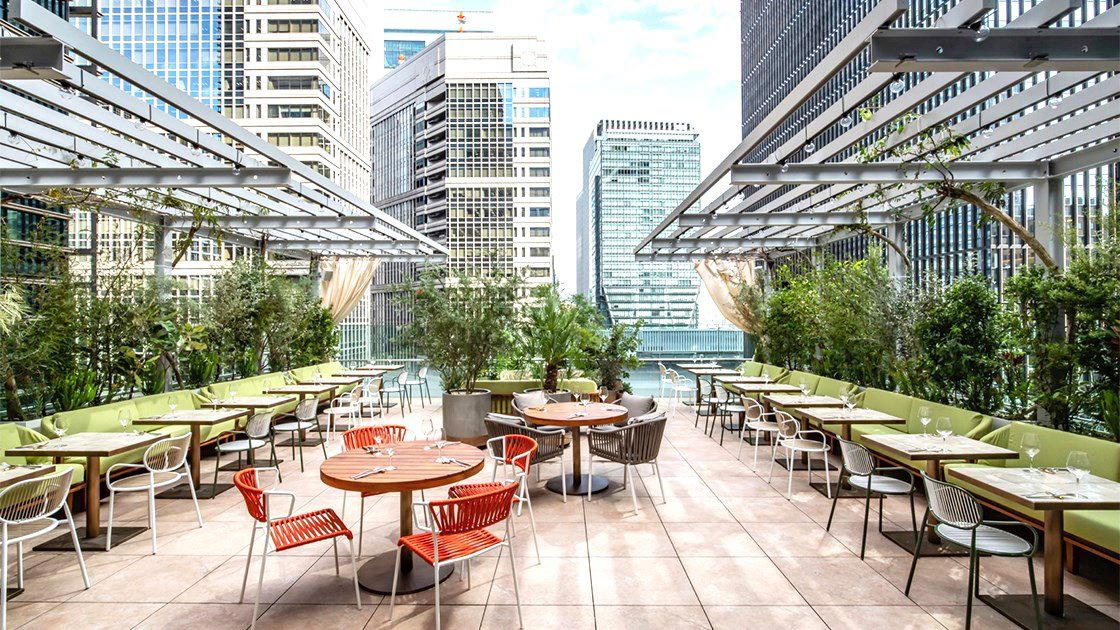
Where Wheat and Silk Meet: Dining at the Cross-Section of China's Regional Traditions
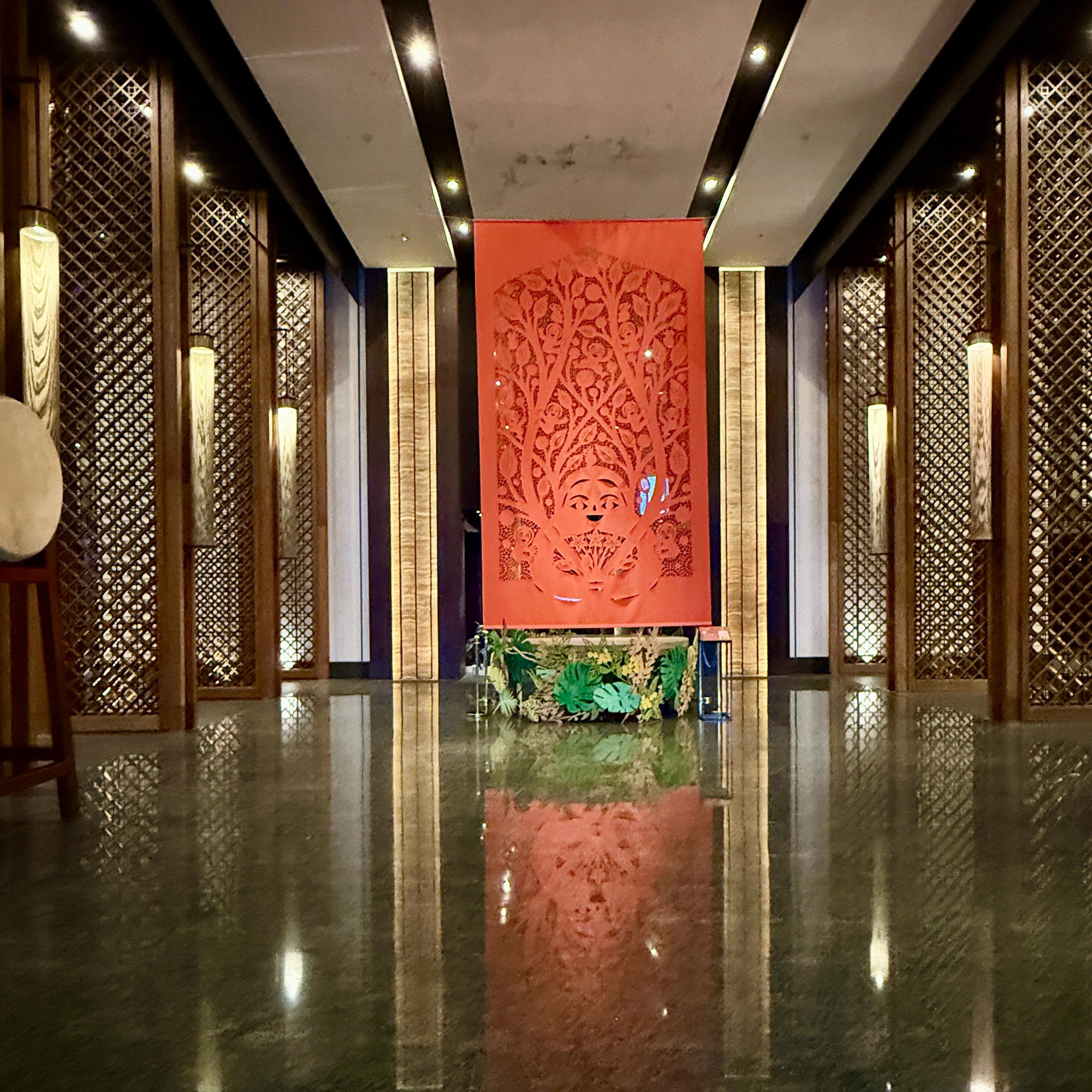
The third floor of a business-district hotel in Banqiao is not where most diners expect a serious Chinese kitchen, but that assumption reflects a wider pattern in greater Taipei's dining scene: the most considered regional Chinese cooking often operates inside hotel dining rooms rather than the independent-venue circuit that attracts most critical attention. At JIA YEN, inside the Caesar Park Hotel on Section 2 of Xianmin Boulevard, the room announces its intent through wooden screens and butterfly mobiles that introduce a considered contrast of weight and lightness, an aesthetic that turns out to be a reasonable preview of the menu itself.
Banqiao sits at the commercial core of New Taipei's administrative district, a zone that draws a working professional lunch crowd as readily as hotel guests. That context shapes the kind of Chinese restaurant JIA YEN has become: formal enough for a business dinner, grounded enough in regional specificity to reward repeat visits from anyone paying attention to what the kitchen is actually doing. For a broader picture of where this fits within the city's dining options, our full New Taipei restaurants guide maps the range from street-level snacks to hotel dining.
Two Kitchens, One Menu: The Logic Behind the Dual-Chef Structure
What distinguishes JIA YEN from most Chinese restaurants of its tier is the explicit pairing of two head chefs with complementary but non-overlapping expertise. One works in the Jiangzhe and Cantonese tradition, the coastal, refinement-oriented school that prizes light seasoning, precise texture, and presentation restraint. The other specialises in noodles and Shaanxi fare, a cuisine rooted in the wheat belt of northern China, where hand-worked dough, bold aromatics, and substantial portions define the register.
This structure matters because Jiangzhe-Cantonese and Shaanxi cooking occupy genuinely different positions within Chinese culinary geography. The first draws on centuries of literati dining culture and Guangdong's access to seafood and fresh produce; the second reflects an inland, agrarian tradition where wheat has always been the dominant staple. Placing both on a single menu risks incoherence, but when the kitchen keeps each tradition honest rather than blending them into a generic pan-Chinese approach, the result is a menu that covers more culinary ground than most Chinese hotel restaurants attempt. Taiwan's broader dining scene has shown similar ambition at venues like JL Studio in Taichung and logy in Taipei, where disciplined technique applied to specific traditions produces more interesting results than fusion diffusion. JIA YEN's approach is different in kind, it is pluralist rather than hybrid, but the underlying discipline is comparable.
The Silkie Chicken and the Case for Process-Driven Cooking
The clearest expression of JIA YEN's kitchen logic is the garlicky crispy skin Silkie chicken. The preparation follows a sequence that prioritises texture development at each stage: a 48-hour marinade, then blanching, then air-drying, then deep-frying. Each step addresses a different structural problem. The extended marinade drives flavour into a breed of bird that has less subcutaneous fat than standard chicken and therefore less natural richness. The blanching sets the proteins. The air-drying removes surface moisture, which is the technical prerequisite for the deep-frying to produce a skin that cracks rather than steams. The result is a bird that arrives crisp where it should be crisp and yielding beneath.
This kind of multi-stage prep is common in Cantonese roast-poultry cooking, and the Silkie chicken treatment at JIA YEN belongs to that tradition. What makes it worth noting in an editorial context is that the process discipline required, 48 hours of preparation for a single dish, represents a kitchen willing to operate on a timeline that most casual dining operations cannot sustain. In that respect, the chicken functions as a signal about kitchen standards across the menu, not just a single dish recommendation. Elsewhere in New Taipei's dining scene, this kind of labour-intensive technique appears at different price points and with different ingredients: venues like Chi Yuan and Amajia each demonstrate the city's wider appetite for considered, process-led cooking.
Hand-Rolled Noodles: The Shaanxi Contribution
The noodle section of JIA YEN's menu represents the northern Chinese kitchen's contribution to the pairing. The noodles are hand-rolled to order, a commitment that stands in deliberate contrast to the pre-made or machine-extruded product that dominates most Chinese restaurant operations at this price point. The texture is described in the venue's own documentation as having bouncy texture and wheaty nuttiness, characteristics that depend entirely on the quality of the flour and the technique applied to it, not on saucing or accompaniment.
Shaanxi noodle culture encompasses a spectrum from the thick, belt-like biang biang noodles to thinner hand-pulled varieties, and the specific format at JIA YEN is not detailed in available information. What is clear is that à la minute preparation is the defining operational choice here. The kitchen's choice to roll to order is the correct technical decision for achieving that result.
For visitors exploring New Taipei's street food traditions around wheat-based preparations, the contrast with vendors like A Gan Yi Taro Balls and A-ba's Taro Ball, both operating in the city's root-starch register, illustrates how New Taipei's carbohydrate culture spans from the informal to the hotel-dining tier. BAK KUT PAN offers another point of comparison for the city's Chinese culinary range.
The Room and What It Signals
The wooden screens and butterfly mobiles noted in JIA YEN's documentation do specific work. The screens function architecturally to create partial enclosure within what might otherwise read as a generic hotel dining floor, producing a sense of compartmentalisation that supports private conversation. The butterfly mobiles introduce movement and a degree of visual lightness that prevents the heavy-timber aesthetic from reading as oppressive. The overall effect, dynamic yet serene, as the venue's own materials describe it, is not accidental, and it places JIA YEN in a different tier from the banquet-hall model that still dominates hotel Chinese dining in many Taiwanese business districts.
Those planning broader Taiwan itineraries around serious Chinese and indigenous cooking can draw comparisons from across the island: GEN in Kaohsiung, Zhu Xin Ju in Tainan, and Akame in Wutai Township each represent different points on the spectrum of Taiwan's Chinese and indigenous culinary traditions. For a resort-adjacent dining context, Volando Urai Spring Spa & Resort in Wulai District offers a comparable hotel-anchored experience. Further afield, hotel-anchored fine dining at this standard of regional specificity appears globally at venues like Le Bernardin in New York City and Emeril's in New Orleans, though the tradition each operates within differs substantially from JIA YEN's Chinese regional focus.
Planning Your Visit
JIA YEN is located on the third floor of the Caesar Park Hotel at 8, Section 2, Xianmin Boulevard, Banqiao District, New Taipei. Banqiao is well connected by the MRT Blue Line, with Banqiao Station a short walk from the hotel. For current hours, pricing, and reservation availability, contacting the Caesar Park Hotel directly is the most reliable approach, as specific booking and operational details are not available through a dedicated venue website. Those assembling a fuller picture of New Taipei's hospitality options can consult our guides to New Taipei hotels, bars, wineries, and experiences.
- Garlicky Crispy Skin Silkie Chicken
- Hand-Rolled Noodles
- Boiled Grouper with Pickled Cabbage and Peppers
- Steamed Shumai with Truffle
- Fresh Shrimp Dumplings
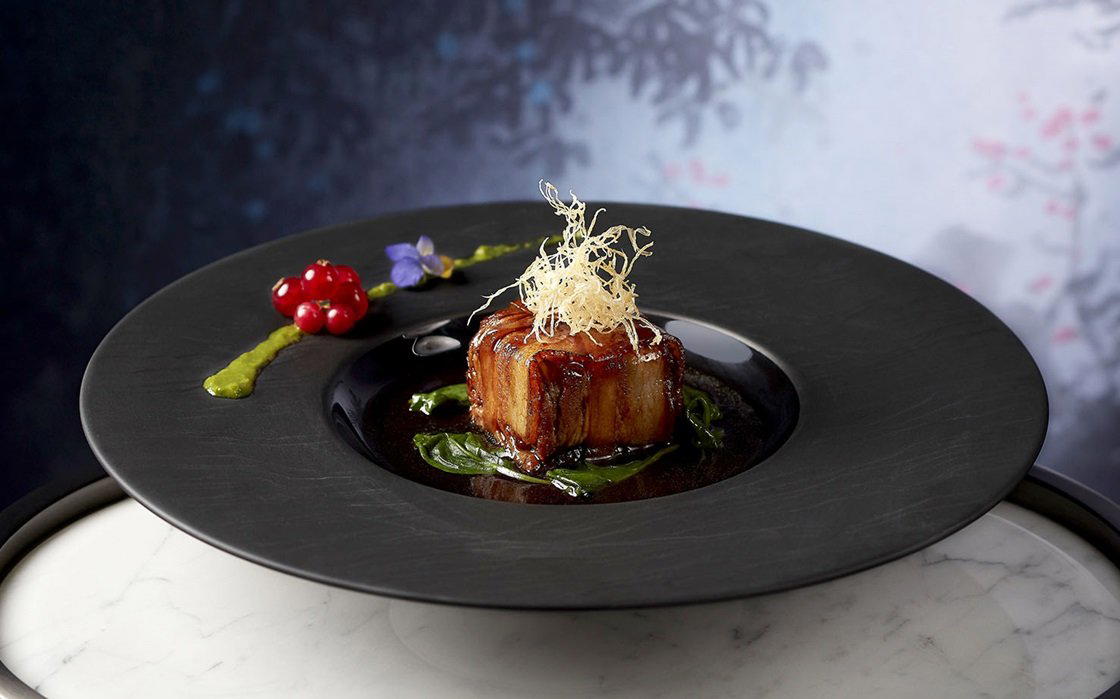
- Chef's Special Braised Pork
- Deep-Fried Crispy Pork Knuckle with Sauerkraut
Fast Comparison
Comparable venues nearby, for context on price, style, and recognition.
| Venue | Cuisine | Price | Awards | Notes |
|---|---|---|---|---|
| JIA YENThis venue — the venue you are viewing | Greater Chinese: Cantonese-Shanghai-Sichuan-Zhejiang-Shaanxi Fusion | $$$ | Michelin Plate | |
| Shi Yang | Contemporary Taiwanese Kaiseki | $$$ | Michelin Plate | Xizhi District |
| QING YA | Cantonese Chinese | $$$ | Michelin Plate | Banqiao District |
| Dark Palace Taiwanese Gourmet | Taiwanese Gourmet | $$ | Michelin Plate | Tamsui |
| GARDEN h | Hakka with Jiangzhe influences | $$ | Bib Gourmand | Yonghe |
| San Fen Su Chi | Jiangzhe Cuisine | $$ | Michelin Plate | Yonghe District |
Continue exploring
More in New Taipei
Restaurants in New Taipei
Browse all →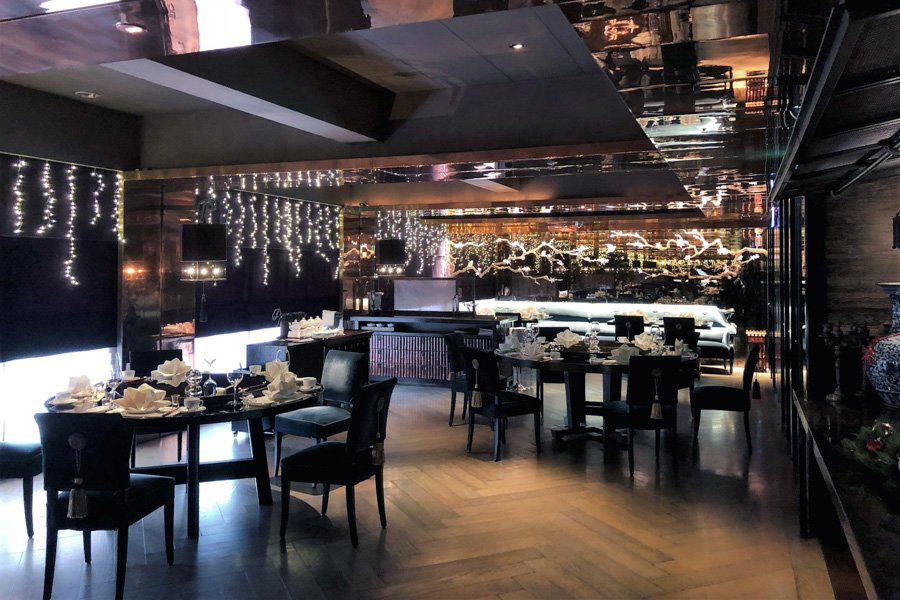
Bars in New Taipei
Browse all →
Hotels in New Taipei
Browse all →

Wineries in New Taipei
Browse all →
At a Glance
- Elegant
- Sophisticated
- Modern
- Group Dining
- Business Dinner
- Family
- Celebration
- Private Dining
- Hotel Restaurant
- Corkage Allowed
- Local Sourcing
Dynamic yet serene space with wooden screens and butterfly mobiles creating a refined, contemporary atmosphere.
- Garlicky Crispy Skin Silkie Chicken
- Hand-Rolled Noodles
- Boiled Grouper with Pickled Cabbage and Peppers
- Steamed Shumai with Truffle
- Fresh Shrimp Dumplings
- Chef's Special Braised Pork
- Deep-Fried Crispy Pork Knuckle with Sauerkraut