Skip to Main Content
← Collection
New Taipei, Taiwan

A-ba's Taro Ball

LocationNew Taipei, Taiwan
Michelin

<h2>Taro as Tradition: What Yonghe's Dessert Counters Reveal About Taiwanese Sweet Culture</h2><p>In the older residential districts of New Taipei, dessert shops operate less like restaurants and more like neighbourhood institutions. They open early, close when the product runs out, and build their reputations not through press cycles but through decades of repeat custom. Yonghe District, a densely settled area that sits just across the Xindian River from central Taipei, has long been associated with this kind of low-profile, high-conviction food culture. The district gave Taiwan its canonical breakfast export, the Yonghe soy milk shop, and its dessert counters carry that same spirit: modest settings, specific expertise, and lines that form without any marketing.</p><p>A-ba's Taro Ball, on Baoping Road, belongs to that tradition. The address, tucked into a lane off the main road, is the kind of location that filters for sincerity. Visitors arrive because they know to arrive, not because a shopfront drew them in.</p><h2>The Cultural Logic of the Taro Ball</h2><p>Taro has been a staple crop in Taiwan for centuries, and its transformation into dessert is one of the more considered moves in the island's food culture. The root's natural starchiness makes it ideal for chewy preparations, and Hakka communities in particular developed the taro ball, or <em>yu yuan</em>, as a way to extend the ingredient's versatility beyond savory applications. These are not the oversized, gummy spheres that appear in bubble tea chains. Properly made taro balls have a density that gives way cleanly, with enough structural integrity to hold their form in both hot soup and cold shaved ice without turning to paste.</p><p>The shaved ice format adds a second layer of cultural reference. Taiwan's bao bing tradition, which uses a blade to produce fine, almost powder-like ice from compressed blocks, diverges sharply from the coarser crushed-ice preparations common elsewhere in Southeast Asia. The texture is closer to snow than to ice, and the difference matters enormously when the toppings are as varied and textured as those at A-ba's. Shaved sugarcane ice, the base used here, carries a faintly smoky undertone that shifts the overall flavour register in a way plain water ice does not.</p><h2>The Composition at A-ba's</h2><p>The taro preparation at A-ba's functions as a study in textural layering. Creamy mashed taro provides the base note, soft and earthy, while chewy taro balls introduce resistance. Mini mochi add a second, slightly different chew. Molasses pearls bring a dark, almost bitter sweetness that cuts the root vegetable's natural blandness, and Job's tears, a grain used across East and Southeast Asian dessert traditions for its mild flavour and slightly toothsome texture, provide structural variation without competing with the taro's dominance. The entire arrangement sits on a bed of finely shaved sugarcane ice that slowly dissolves through the toppings as you eat, changing the texture at the base from cold and firm to something looser and more integrated.</p><p>This is a construction that requires sequencing to eat well. Those who dig straight through miss the intended progression. The approach reflects a sophistication that is easy to overlook in a setting this unassuming.</p><p>For those who want something warm, the red bean soup represents the other pole of Taiwanese dessert tradition. Red bean, slow-cooked until the skins give way and the liquid thickens, is a comfort preparation found across East Asia, but Taiwan's versions tend toward a less sweetened, more grain-forward result than, say, Japanese anmitsu equivalents. At A-ba's, the red bean soup has built its own following distinct from the taro offering, suggesting a kitchen that treats both preparations seriously rather than positioning one as secondary.</p><h2>Yonghe in the Wider New Taipei Context</h2><p>New Taipei is often discussed as a transit city, the administrative ring around Taipei proper, but that framing undersells its neighbourhood-level food culture. Districts like Yonghe, Zhonghe, and Xindian have developed distinct culinary identities over decades, shaped partly by post-1949 migration patterns that brought cooking traditions from across the Chinese mainland and blended them with existing Taiwanese and Hakka practice. The dessert culture in Yonghe carries traces of all of that.</p><p>Visitors constructing a broader Taiwan dining itinerary will find that the island's serious restaurant culture extends well beyond Taipei's established fine-dining addresses. [JL Studio in Taichung](https://www.enprimeurclub.com/restaurants/jl-studio-taichung-restaurant), [logy in Taipei](https://www.enprimeurclub.com/restaurants/logy-taipei-restaurant), and [GEN in Kaohsiung](https://www.enprimeurclub.com/restaurants/gen-kaohsiung-restaurant) represent one end of that spectrum. [Zhu Xin Ju in Tainan](https://www.enprimeurclub.com/restaurants/zhu-xin-ju-tainan-restaurant) and [Akame in Wutai Township](https://www.enprimeurclub.com/restaurants/akame-wutai-township-restaurant) point toward different regional traditions. A-ba's sits at the opposite end of the formality scale from all of them, but it speaks to the same underlying commitment to ingredient specificity that defines the better end of Taiwanese food culture at every price point.</p><p>For the New Taipei dessert category specifically, [A Gan Yi Taro Balls](https://www.enprimeurclub.com/restaurants/a-gan-yi-taro-balls-new-taipei-restaurant) represents the closest direct comparison, operating in the same format with overlapping menu logic. The differences between the two shops are the kind that become clear only through direct comparison, a worthwhile exercise for anyone seriously interested in the category. [Amajia](https://www.enprimeurclub.com/restaurants/amajia-new-taipei-restaurant) and [BAK KUT PAN](https://www.enprimeurclub.com/restaurants/bak-kut-pan-new-taipei-restaurant) round out the broader New Taipei dining picture for visitors building a multi-stop itinerary across the city's districts.</p><p>Those planning time across the wider region can also reference [Volando Urai Spring Spa & Resort in Wulai District](https://www.enprimeurclub.com/restaurants/volando-urai-spring-spa-resort-wulai-district-restaurant) for a different register of New Taipei dining, and [Ang Gu in Hsinchu County](https://www.enprimeurclub.com/restaurants/ang-gu-hsinchu-county-restaurant) for Hakka dessert traditions that share ancestry with the taro preparations at A-ba's. For international reference points on what genuine specialist focus looks like at the other end of the formality scale, [Le Bernardin in New York City](https://www.enprimeurclub.com/restaurants/le-bernardin), [Emeril's in New Orleans](https://www.enprimeurclub.com/restaurants/emerils-new-orleans-restaurant), and [Lazy Bear in San Francisco](https://www.enprimeurclub.com/restaurants/lazy-bear) each demonstrate, in their own ways, that single-minded focus on a culinary tradition tends to produce more durable reputations than range alone.</p><h2>Planning Your Visit</h2><p>A-ba's Taro Ball is located at 1, Lane 18, Baoping Road in Yonghe District, New Taipei. The lane address means it sits off the main road, and first-time visitors should allow a few extra minutes to locate it. Yonghe is accessible via MRT with a short walk or taxi from the Dingxi or Yongning stations. Given the shop's local following and the queuing patterns typical of this category of dessert counter in Taiwan, arriving outside peak afternoon hours, generally mid-week and before the early-evening rush, will reduce wait times. No booking information is publicly listed, which is consistent with the walk-in counter format standard at this type of operation. Taro preparations at this level of quality and specificity are worth a dedicated visit rather than treating as an afterthought to a Taipei itinerary.</p><p>For a fuller picture of what the city offers across categories, see [our full New Taipei restaurants guide](https://www.enprimeurclub.com/restaurants/new-taipei), [our full New Taipei hotels guide](https://www.enprimeurclub.com/hotels/new-taipei), [our full New Taipei bars guide](https://www.enprimeurclub.com/bars/new-taipei), [our full New Taipei wineries guide](https://www.enprimeurclub.com/wineries/new-taipei), and [our full New Taipei experiences guide](https://www.enprimeurclub.com/experiences/new-taipei).</p><h2>Frequently Asked Questions</h2><h3>What dish is A-ba's Taro Ball famous for?</h3><p>The signature preparation is the taro shaved ice, built from creamy mashed taro, chewy taro balls, mini mochi, molasses pearls, and Job's tears arranged over finely shaved sugarcane ice. The sugarcane base carries a faint smokiness that separates it from plain water-ice versions of the same format. The red bean soup has also developed a dedicated following and is treated as a serious preparation in its own right, not a minor supplement to the main menu.</p><h3>Is A-ba's Taro Ball reservation-only?</h3><p>No reservation system is publicly listed for A-ba's Taro Ball, which is consistent with the walk-in counter format that defines this category of Taiwanese dessert shop. In New Taipei and across Taiwan more broadly, this type of neighbourhood dessert operation typically does not take advance bookings. If you are visiting during peak hours, particularly on weekends or warm-weather afternoons when shaved ice demand increases, a wait in line is the expected experience. The tradeoff is that there is no booking friction, and visits can be slotted into a broader New Taipei itinerary with flexibility.</p>

A-ba's Taro Ball restaurant in New Taipei, Taiwan
About

Taro as Tradition: What Yonghe's Dessert Counters Reveal About Taiwanese Sweet Culture

In the older residential districts of New Taipei, dessert shops operate less like restaurants and more like neighbourhood institutions. They open early, close when the product runs out, and build their reputations not through press cycles but through decades of repeat custom. Yonghe District, a densely settled area that sits just across the Xindian River from central Taipei, has long been associated with this kind of low-profile, high-conviction food culture. The district gave Taiwan its canonical breakfast export, the Yonghe soy milk shop, and its dessert counters carry that same spirit: modest settings, specific expertise, and lines that form without any marketing.

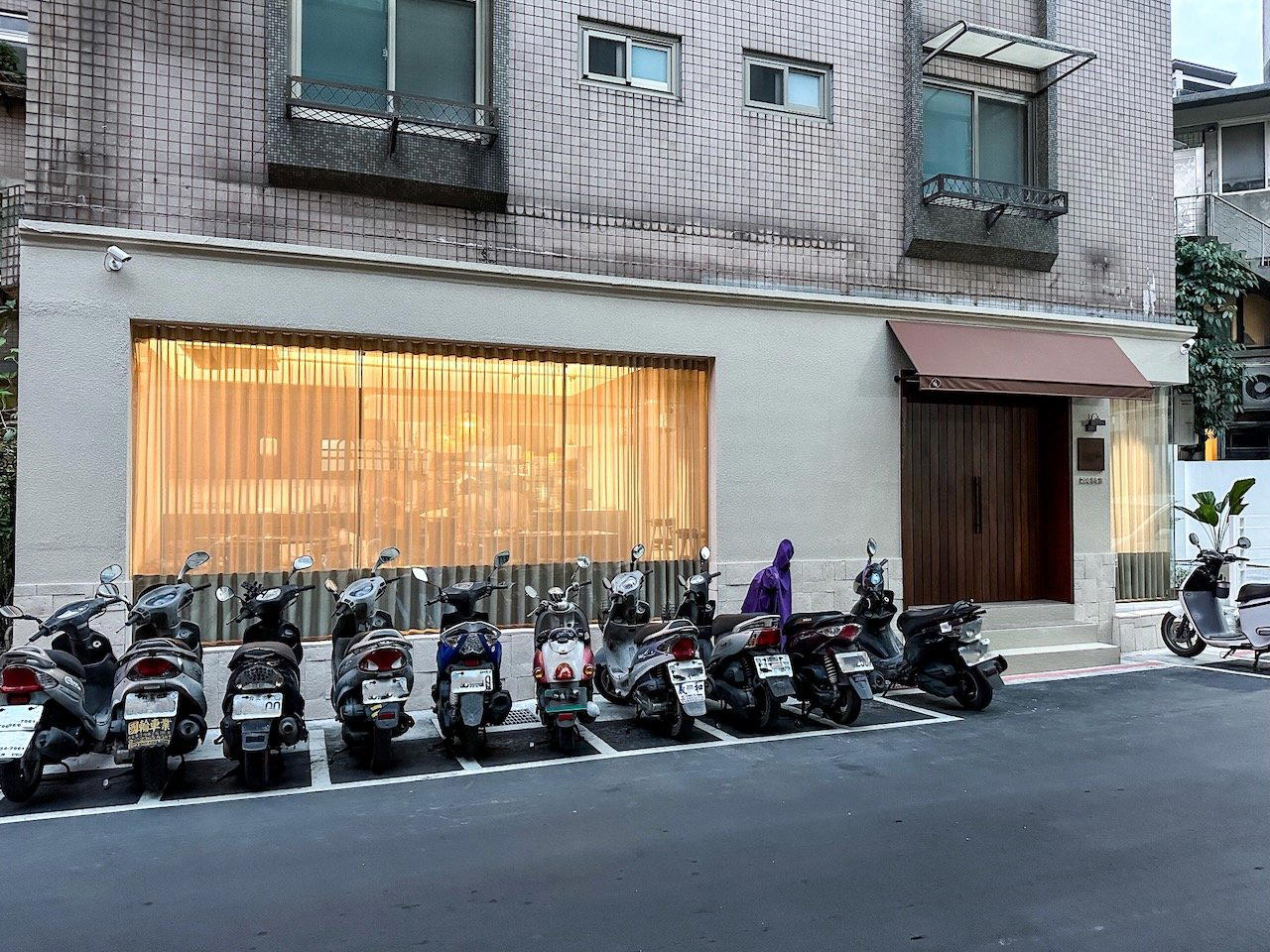
A-ba's Taro Ball, on Baoping Road, belongs to that tradition. The address, tucked into a lane off the main road, is the kind of location that filters for sincerity. Visitors arrive because they know to arrive, not because a shopfront drew them in.

Members Only

The shortlist, unlocked.

Hard-to-book tables, cellar releases, and concierge-planned trips.

Get Exclusive Access →

The Cultural Logic of the Taro Ball

Taro has been a staple crop in Taiwan for centuries, and its transformation into dessert is one of the more considered moves in the island's food culture. The root's natural starchiness makes it ideal for chewy preparations, and Hakka communities in particular developed the taro ball, or yu yuan, as a way to extend the ingredient's versatility beyond savory applications. These are not the oversized, gummy spheres that appear in bubble tea chains. Properly made taro balls have a density that gives way cleanly, with enough structural integrity to hold their form in both hot soup and cold shaved ice without turning to paste.

The shaved ice format adds a second layer of cultural reference. Taiwan's bao bing tradition, which uses a blade to produce fine, almost powder-like ice from compressed blocks, diverges sharply from the coarser crushed-ice preparations common elsewhere in Southeast Asia. The texture is closer to snow than to ice, and the difference matters enormously when the toppings are as varied and textured as those at A-ba's. Shaved sugarcane ice, the base used here, carries a faintly smoky undertone that shifts the overall flavour register in a way plain water ice does not.

The Composition at A-ba's

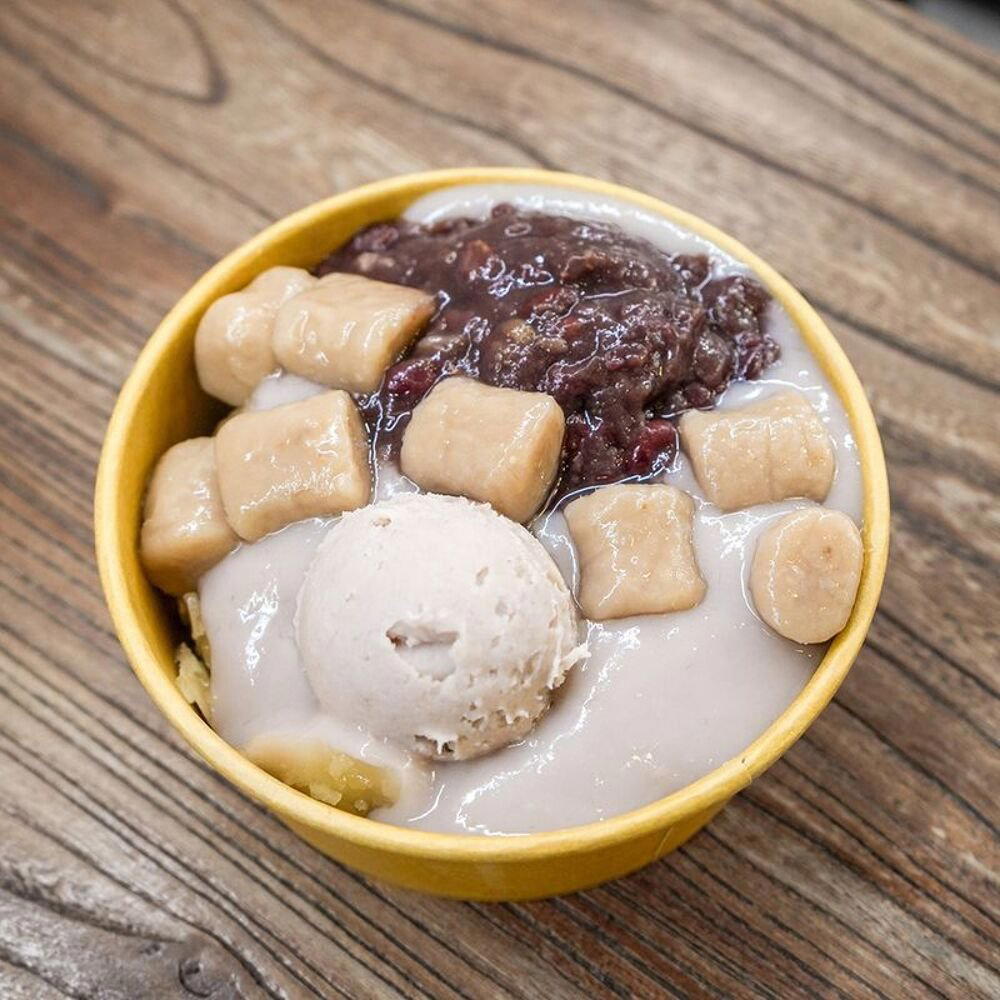
The taro preparation at A-ba's functions as a study in textural layering. Creamy mashed taro provides the base note, soft and earthy, while chewy taro balls introduce resistance. Mini mochi add a second, slightly different chew. Molasses pearls bring a dark, almost bitter sweetness that cuts the root vegetable's natural blandness, and Job's tears, a grain used across East and Southeast Asian dessert traditions for its mild flavour and slightly toothsome texture, provide structural variation without competing with the taro's dominance. The entire arrangement sits on a bed of finely shaved sugarcane ice that slowly dissolves through the toppings as you eat, changing the texture at the base from cold and firm to something looser and more integrated.

This is a construction that requires sequencing to eat well. Those who dig straight through miss the intended progression. The approach reflects a sophistication that is easy to overlook in a setting this unassuming.

For those who want something warm, the red bean soup represents the other pole of Taiwanese dessert tradition. Red bean, slow-cooked until the skins give way and the liquid thickens, is a comfort preparation found across East Asia, but Taiwan's versions tend toward a less sweetened, more grain-forward result than, say, Japanese anmitsu equivalents. At A-ba's, the red bean soup has built its own following distinct from the taro offering, suggesting a kitchen that treats both preparations seriously rather than positioning one as secondary.

Yonghe in the Wider New Taipei Context

New Taipei is often discussed as a transit city, the administrative ring around Taipei proper, but that framing undersells its neighbourhood-level food culture. Districts like Yonghe, Zhonghe, and Xindian have developed distinct culinary identities over decades, shaped partly by post-1949 migration patterns that brought cooking traditions from across the Chinese mainland and blended them with existing Taiwanese and Hakka practice. The dessert culture in Yonghe carries traces of all of that.

Visitors constructing a broader Taiwan dining itinerary will find that the island's serious restaurant culture extends well beyond Taipei's established fine-dining addresses. JL Studio in Taichung, logy in Taipei, and GEN in Kaohsiung represent one end of that spectrum. Zhu Xin Ju in Tainan and Akame in Wutai Township point toward different regional traditions. A-ba's sits at the opposite end of the formality scale from all of them, but it speaks to the same underlying commitment to ingredient specificity that defines the better end of Taiwanese food culture at every price point.

For the New Taipei dessert category specifically, A Gan Yi Taro Balls represents the closest direct comparison, operating in the same format with overlapping menu logic. The differences between the two shops are the kind that become clear only through direct comparison, a worthwhile exercise for anyone seriously interested in the category. Amajia and BAK KUT PAN round out the broader New Taipei dining picture for visitors building a multi-stop itinerary across the city's districts.

Those planning time across the wider region can also reference Volando Urai Spring Spa & Resort in Wulai District for a different register of New Taipei dining, and Ang Gu in Hsinchu County for Hakka dessert traditions that share ancestry with the taro preparations at A-ba's. For international reference points on what genuine specialist focus looks like at the other end of the formality scale, Le Bernardin in New York City, Emeril's in New Orleans, and Lazy Bear in San Francisco each demonstrate, in their own ways, that single-minded focus on a culinary tradition tends to produce more durable reputations than range alone.

Planning Your Visit

A-ba's Taro Ball is located at 1, Lane 18, Baoping Road in Yonghe District, New Taipei. The lane address means it sits off the main road, and first-time visitors should allow a few extra minutes to locate it. Yonghe is accessible via MRT with a short walk or taxi from the Dingxi or Yongning stations. Given the shop's local following and the queuing patterns typical of this category of dessert counter in Taiwan, arriving outside peak afternoon hours, generally mid-week and before the early-evening rush, will reduce wait times. No booking information is publicly listed, which is consistent with the walk-in counter format standard at this type of operation. Taro preparations at this level of quality and specificity are worth a dedicated visit rather than treating as an afterthought to a Taipei itinerary.

For a fuller picture of what the city offers across categories, see our full New Taipei restaurants guide, our full New Taipei hotels guide, our full New Taipei bars guide, our full New Taipei wineries guide, and our full New Taipei experiences guide.

Members Only

The shortlist, unlocked.

Hard-to-book tables, cellar releases, and concierge-planned trips.

Get Exclusive Access →

Frequently Asked Questions

Price Lens

A quick look at comparable venues, using the data we have on file.

Collector Access

Need a table?

Our members enjoy priority alerts and concierge-led booking support for the world's most difficult tables.

Get Exclusive Access
Members Only

The shortlist, unlocked.

Hard-to-book tables, cellar releases, and concierge-planned trips.

Get Exclusive Access →