Jaffa Market sits on Mendelssohnstraße in Frankfurt's Westend, drawing on the Middle Eastern and Levantine market tradition where ingredient sourcing is the organizing principle of the menu. The cooking here speaks to a broader Frankfurt pattern: a city that has absorbed Mediterranean and Near Eastern food cultures deeply enough that they now read as local rather than imported.
- Address
- Mendelssohnstraße 60, 60325 Frankfurt am Main, Germany
- Phone
- +496978078977
- Website
- jaffamarketfrankfurt.de
- Directions
- Get directions
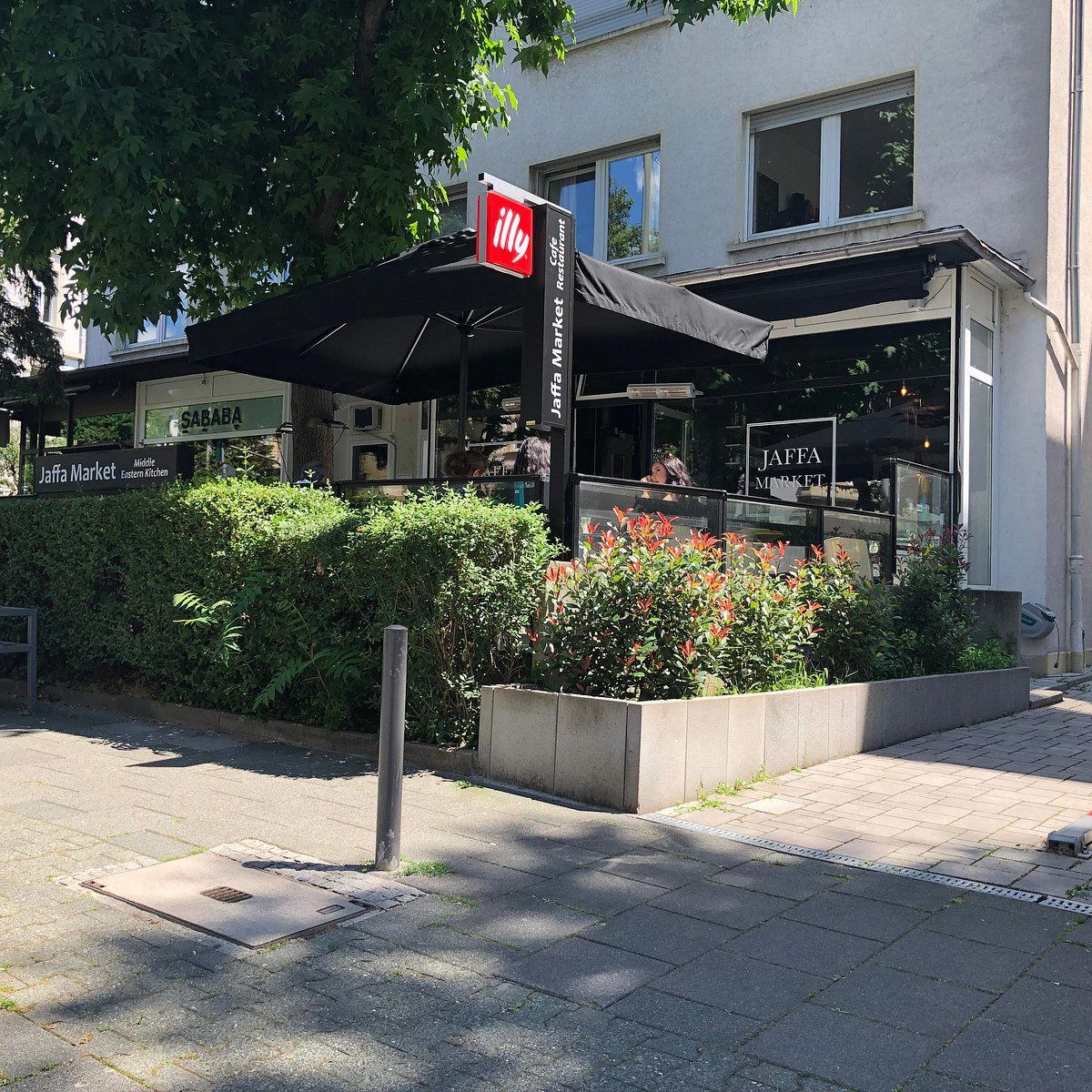
Where Frankfurt's Levantine Thread Runs Deepest
Frankfurt's relationship with Middle Eastern and Mediterranean food cultures has moved well past novelty. Over the past decade, the city's Westend and Bahnhofsviertel quarters have developed a dense concentration of restaurants drawing on Levantine, North African, and Eastern Mediterranean traditions, ranging from fast-casual falafel counters to more considered table-service formats. Jaffa Market, addressed at Mendelssohnstraße 60 in the Westend, belongs to that tradition and positions itself in the part of the market where sourcing discipline and kitchen confidence determine the gap between the good and the merely adequate.
The name itself is a geographic reference: Jaffa, the ancient port city now absorbed into Tel Aviv, has functioned for centuries as one of the great entrepôts of the Eastern Mediterranean, a place where citrus, spices, and produce from across the Levant converged before moving west. Restaurants that invoke that reference are making an implicit claim about how they source and what they prioritize. The logic of the market, rather than the logic of the tasting menu, governs what ends up on the plate.
The Sourcing Argument at the Center of the Menu
In Levantine cooking at its most coherent, the ingredient is the argument. Za'atar sourced from wild-growing thyme in the hills above the Jordan Valley tastes categorically different from the dried blend sold in European supermarkets. Sumac pressed from fresh berries carries an astringency that the powdered version approximates but does not replicate. Tahini made from Ethiopian or Syrian sesame has a depth that supermarket paste lacks entirely. These are not romantic distinctions. They are material ones, and restaurants that understand this invest accordingly in their supply chains.
Frankfurt gives venues like Jaffa Market a meaningful geographic advantage for that kind of sourcing. The city sits at the center of one of Europe's most active import networks, and its international community, with significant populations tracing heritage to Turkey, Lebanon, Iran, and Israel, has sustained specialist wholesale suppliers for decades. That infrastructure makes it possible for a kitchen serious about Levantine sourcing to obtain ingredients that would require genuine compromise elsewhere in Germany. For context, places like ALEJANDRO'S and Allgaiers Restaurant operate in a Frankfurt dining scene that benefits from exactly this kind of deep supplier infrastructure, each in their own culinary register.
The broader German fine dining conversation, anchored at venues like Aqua in Wolfsburg, Schwarzwaldstube in Baiersbronn, and Vendôme in Bergisch Gladbach, has long prioritized regional German sourcing as a signal of kitchen seriousness. Jaffa Market operates in a different register: the sourcing logic here is transnational, tied to the agricultural rhythms of the Eastern Mediterranean rather than to the Rhine Valley or the Allgäu. That is not a lesser ambition, it is a different one, and it places the kitchen in a comparable set that cuts across Frankfurt's neighbourhood-level competition.
The Physical Address and What It Signals
Mendelssohnstraße runs through a part of Westend Frankfurt that skews toward professional and residential rather than high-footfall tourist. Venues that choose addresses here are generally not chasing the casual walk-in crowd. The street sits within reasonable distance of the Alte Oper and the Messe Frankfurt convention complex, which means the dining room draws from business travelers, residents, and the culturally active Frankfurt middle class, the audience that tends to reward ingredient-forward cooking over spectacle-forward formats.
Among Frankfurt's comparable operators, Ambassel and Ariston work adjacent culinary territory, while atm by Deli&Grape occupies a different but comparably considered niche on the city's mid-to-upper dining tier. These venues collectively illustrate a Frankfurt dining scene that has diversified considerably beyond the German classical tradition, creating space for kitchens that draw authority from non-European sourcing networks.
Seasonal Rhythms in a Levantine Kitchen
The Eastern Mediterranean kitchen is more seasonally constrained than its reputation in Europe sometimes suggests. Winter citrus, particularly the rough-skinned varieties that never make it into German supermarkets, arrives between December and February. Spring brings fresh favas and green almonds, both of which have short windows and demand kitchen speed to use well. Summer is the moment for fresh figs, stone fruits, and the intensely flavored tomatoes that dried and preserved versions spend months trying to approximate. Autumn delivers pomegranates, quince, and the fresh walnut crop from which the leading muhammara is made.
A kitchen that sources with seasonal discipline will shift its menu across these windows. A kitchen that treats its pantry as static will not. Visiting in late autumn or winter, when the citrus and pomegranate harvests are fresh and the kitchen has much to work with in terms of acidic brightness, tends to reward the attentive eating. Frankfurt's position as a travel hub makes it accessible year-round, but the Levantine pantry has its own calendar.
For readers building a broader Germany itinerary around serious eating, the country's most decorated restaurants span a wide geographic range: JAN in Munich, CODA Dessert Dining in Berlin, ES:SENZ in Grassau, Victor's Fine Dining by Christian Bau in Perl, Waldhotel Sonnora in Dreis, Restaurant Haerlin in Hamburg, and Schanz in Piesport. Each operates in the European fine dining tradition. The restaurant addresses a different appetite and a different sourcing logic, which is precisely what makes it relevant to readers whose Frankfurt itinerary extends beyond that particular axis. Internationally, kitchens at Le Bernardin in New York City and Atomix in New York City demonstrate how ingredient sourcing discipline, when applied at a high level, can define a restaurant's critical identity entirely independent of its cuisine's geographic origin.
Planning Your Visit
The restaurant is located at Mendelssohnstraße 60, 60325 Frankfurt am Main, in the Westend district. Frankfurt's Westend is well-served by the U-Bahn network, and the address is walkable from the Alte Oper station.
Peers Worth Knowing
Comparable venues nearby, for context on price, style, and recognition.
| Venue | Cuisine | Price | Notes |
|---|---|---|---|
| Jaffa MarketThis venue — the venue you are viewing | Israeli Middle Eastern | $$ | Not listed |
| Babam | Traditional Persian | $$ | Roemerberg |
| Zarathustra | Persian | $$ | Palmengarten |
| Gilgamesch | Persian Middle Eastern | $$ | Palmengarten |
| Coffee bar at the Kunstverein | Italian Café Bistro | $$ | Roemerberg |
| Lijianger | Authentic Guilin and Sichuan Chinese | $$ | Roemerberg |
Continue exploring
More in Frankfurt
Restaurants in Frankfurt
Browse all →
Bars in Frankfurt
Browse all →

Hotels in Frankfurt
Browse all →

At a Glance
- Cozy
- Lively
- Casual Hangout
- Brunch
- Family
- Terrace
- Beer Program
- Street Scene
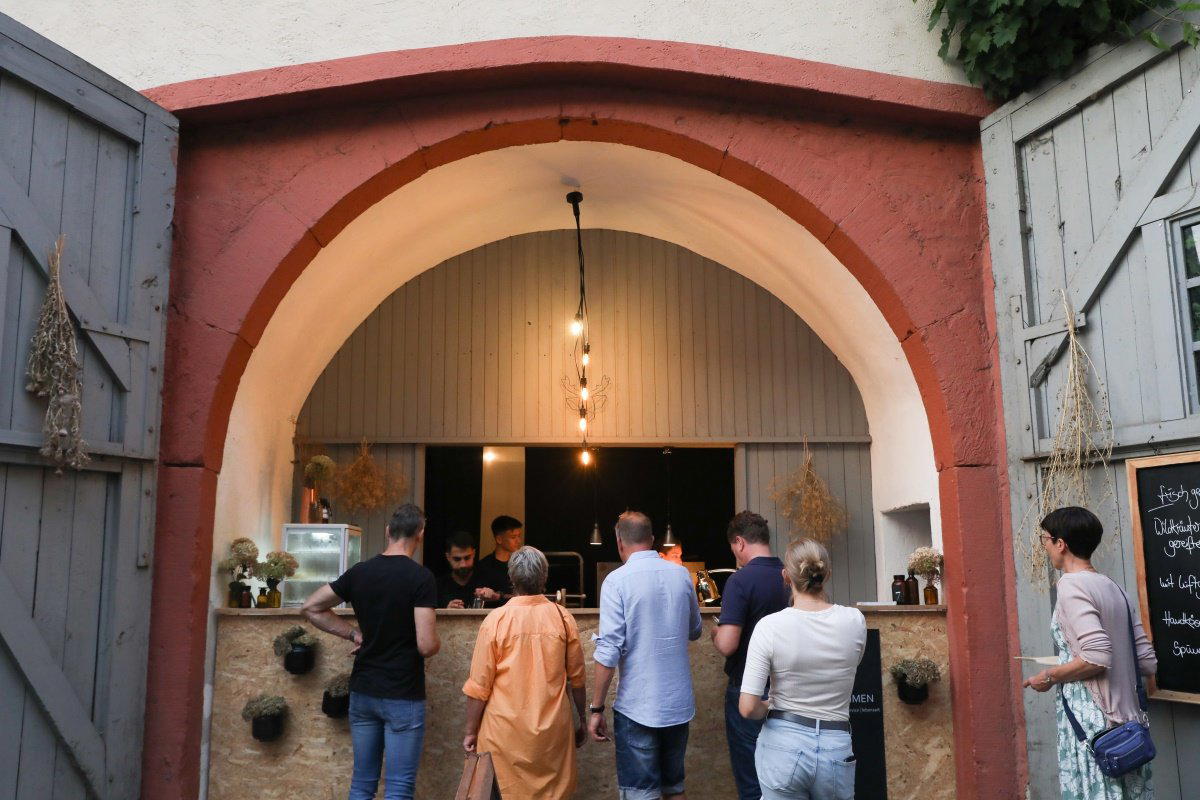
Familiar and simple with Israeli references, quiet terrace seating despite road proximity.