Italo
Italo occupies a quietly residential corner of Bonnington Square in Vauxhall, where the crowd tends to be local and the atmosphere is closer to a neighbourhood trattoria than a destination restaurant. The kind of place that earns loyalty through consistency rather than spectacle, it sits at a telling remove from London's formal Italian dining circuit and rewards those who approach it on its own terms.
Pearl is the En Primeur Club membership app — saves, bookings, and concierge access live there. Same editors, same standards.
- Address
- 13 Bonnington Square, London SW8 1TE, United Kingdom
- Phone
- +442074503773
- Website
- italodeli.co.uk
- Directions
- Get directions
 Saves & bookings on Pearl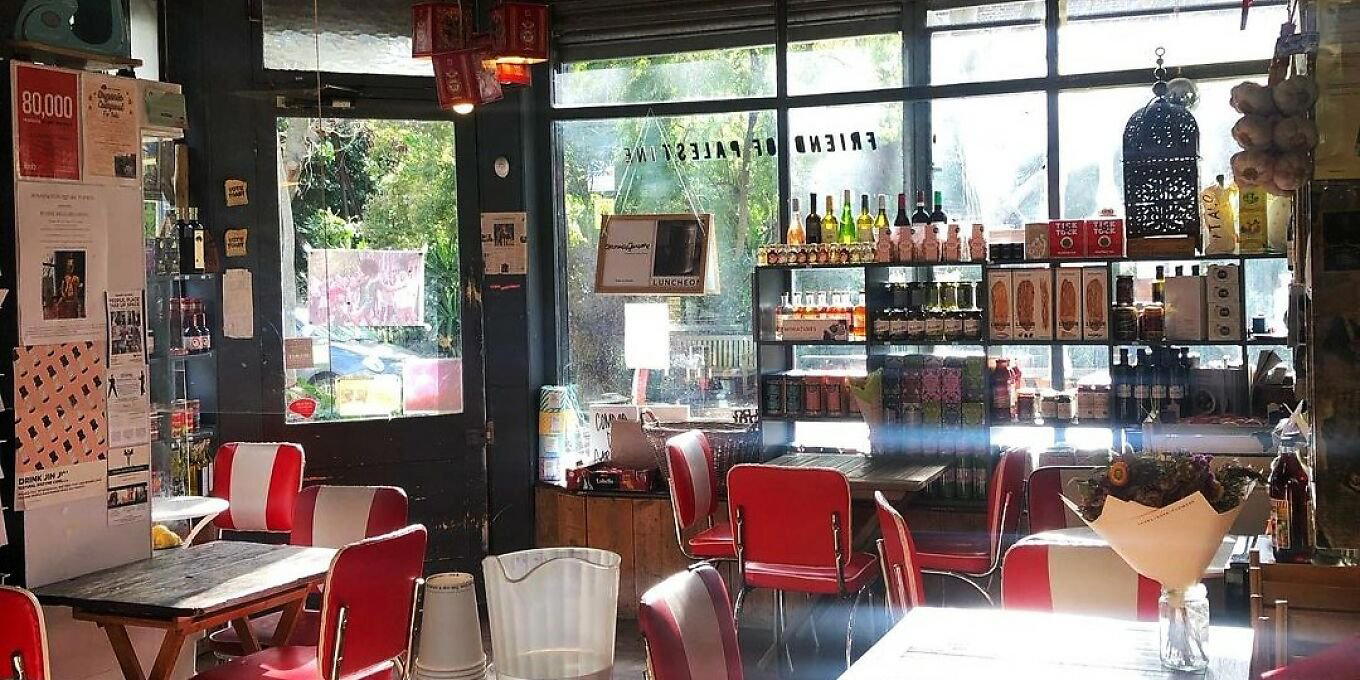
Bonnington Square and the Art of the Local
Vauxhall's Bonnington Square occupies an unusual position in London's inner-south geography. The street is dense with mature trees and community garden plots, and the buildings read as Victorian terraces that have been colonised gradually by artists, long-term renters, and the kind of residents who know each other's names. It does not feel like a destination neighbourhood in the way that Bermondsey or Peckham have been reframed by restaurant openings. That is, partly, what makes it interesting.
Italo, at 13 Bonnington Square, belongs to that texture. The address is SW8, which places it in a part of London that London's dining press has historically underserved. The dining concentration sits north and west: CORE by Clare Smyth in Notting Hill, Restaurant Gordon Ramsay in Chelsea, Sketch's Lecture Room in Mayfair, The Ledbury and Dinner by Heston Blumenthal in Notting Hill and Knightsbridge respectively. Vauxhall operates at a different register, and Italo is calibrated to that register rather than straining against it.
What the Regulars Know
One reliable signal for any neighbourhood restaurant is the composition of its dining room on a Wednesday evening. At places that sustain genuine local loyalty, the crowd skews toward people who live within walking distance, who arrived without a special occasion in mind, and who are greeted with the kind of recognition that does not require a surname. That is the mode Italo operates in. It draws from Bonnington Square itself and from the broader SW8 and SE11 postcodes, where a constituency of residents who want Italian food done without ceremony has quietly grown.
London's Italian dining scene splits into at least three distinct tiers. The first is the formal, white-tablecloth category, where tasting menus and wine lists built on aged Barolo position Italy as a vehicle for luxury. The second is the high-volume trattoria model, replicating a broadly appealing Italian-American register across multiple sites. The third, and hardest to sustain commercially, is the genuinely local Italian, where the menu is short, the sourcing is considered, and the kitchen is not trying to be anything other than what it is. Italo operates somewhere in this third tier, in a city where that kind of place is rarer than it should be.
For the regulars, the return logic is legible without needing to be stated. Consistency is the currency. The same dish, prepared to the same standard, on a Tuesday in February as on a Saturday in October. Neighbourhood restaurants that chase novelty or rotate their identity with each season tend to lose the people who were there first. The ones that last understand that repetition is not failure but reliability, which is what regular customers are actually paying for.
Placing Italo in Its Competitive Context
It is worth being precise about what Italo is not competing with. It is not positioned against the formal Italian rooms in Mayfair and Chelsea, where prix-fixe menus and extended wine ceremonies define the experience. It is also not competing with the destination-casual Italian operators in Shoreditch and Soho, where queuing systems and no-reservation policies have become a form of brand signalling. The Bonnington Square address, the residential setting, and the neighbourhood-first orientation place it in a smaller, more specific peer group: restaurants that serve a defined local catchment and whose reputation travels by word of mouth rather than by press coverage.
That peer dynamic has parallels across the UK's dining geography. Outside London, venues like hide and fox in Saltwood and Midsummer House in Cambridge demonstrate how strong local identity can coexist with broader recognition. Further afield, L'Enclume in Cartmel and Moor Hall in Aughton have built reputations rooted in their specific geographies rather than despite them. The Waterside Inn in Bray, Le Manoir aux Quat'Saisons in Oxford, and Gidleigh Park in Chagford each illustrate how place becomes part of the dining proposition rather than incidental to it. Italo's relationship with Bonnington Square works on the same principle, at a different scale.
Internationally, the Italian neighbourhood restaurant model has found expression in cities where the category is more formally developed. New York's approach to Italian dining, from the red-sauce institutions of the outer boroughs to the technically rigorous newer rooms like Atomix's Korean-inflected tasting format and Le Bernardin's seafood precision, illustrates how a city's dining culture stratifies over time. London's Italian scene is undergoing a similar stratification, and the genuinely local end of that spectrum is where particularly interesting tension currently sits.
How to Approach a Visit
Bonnington Square is most easily reached from Vauxhall station, which is served by the Victoria line and National Rail. The square itself is residential and quiet, which means approaching on foot from Vauxhall provides a useful decompression from the surrounding arterial roads. The neighbourhood does not have the commercial density of Nine Elms to the east or the cultural infrastructure of Brixton to the south, and arriving with that expectation adjusted produces a better experience.
Italo is walk-in friendly, with hours of Mon: 10 AM-3 PM; Tue: 10 AM-3 PM; Wed: 10 AM-3 PM; Thu: 10 AM-3 PM; Fri: 10 AM-3 PM; Sat: 10 AM-4 PM; Sun: 10:30 AM-4 PM.
For a fuller map of where Italo sits within London's wider restaurant offering, the EP Club London restaurants guide covers the city's dining range across price points and neighbourhoods. Venues like Opheem in Birmingham, Restaurant Andrew Fairlie in Auchterarder, and Hand and Flowers in Marlow each demonstrate what regional and neighbourhood specificity looks like when a kitchen commits to a defined identity rather than trying to expand its reach.
At-a-Glance Comparison
Comparable venues nearby, for context on price, style, and recognition.
| Venue | Cuisine | Price | Notes |
|---|---|---|---|
| ItaloThis venue — the venue you are viewing | Seasonal Italian Deli-Café | $$ | Not listed |
| Emilia's Crafted Pasta | Crafted Italian Pasta | $$ | Wapping |
| Mimmo La Bufala | Authentic Neapolitan Pizza & Southern Italian | $$ | Hampstead |
| Mediterraneo | Authentic Italian | $$ | Pentonville |
| Cinquecento | Authentic Neapolitan Pizzeria | $$ | Chelsea |
| Made in Italy | Neapolitan Pizza | $$ | Chelsea |

At a Glance
- Cozy
- Casual Hangout
- Brunch
- Local Sourcing
- Street Scene
Current opening hours
- Monday
- 10 AM–3 PM
- Tuesday
- 10 AM–3 PM
- Wednesday
- 10 AM–3 PM
- Thursday
- 10 AM–3 PM
- Friday
- 10 AM–3 PM
- Saturday
- 10 AM–4 PM
- Sunday
- 10:30 AM–4 PM
Hours can change for holidays and private events. Last verified .
Quaint corner spot with a cozy, nostalgic café atmosphere evoking a '90s film set, featuring classic tunes and a resident cat.