Mediterraneo
On King's Cross Road, Mediterraneo occupies a stretch of north London where the restaurant scene has quietly grown more considered over the past decade. The kitchen draws on Mediterranean traditions while working with the seasonal produce markets this city does well, placing it in a mid-tier of London dining that rewards those who look beyond the Michelin circuit.
Pearl is the En Primeur Club membership app — saves, bookings, and concierge access live there. Same editors, same standards.
- Address
- 112 King's Cross Rd, London WC1X 9DS, United Kingdom
- Phone
- +442078375108
- Website
- medi-terra-neo.co.uk
- Directions
- Get directions
 Saves & bookings on Pearl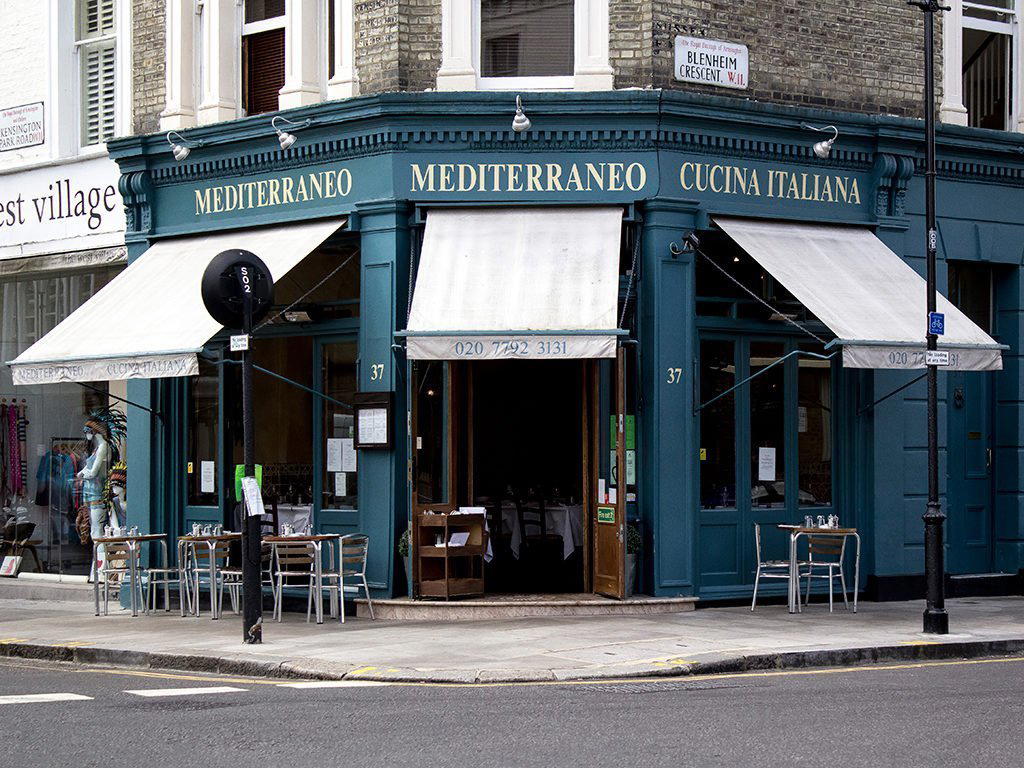
King's Cross and the Quiet Rise of Neighbourhood Mediterranean
King's Cross Road sits at an interesting fault line in London's dining geography. A decade ago, the WC1X postcode was transit territory, a corridor between Bloomsbury's academic institutions and the redeveloped King's Cross station quarter. What has changed is the gradual accumulation of places that take their food seriously without the apparatus of tasting menus and sommelier theatre. Mediterraneo, at number 112, is an authentic Italian restaurant in London's King's Cross district.
Mediterranean food in London has a complicated history. Through the 1990s and 2000s, the label covered enormous ground, from oil-heavy tourist-trap pasta to genuinely skilled Levantine cooking, often without much distinction. What the better operators in the current period share is a willingness to apply technical rigour to ingredients and preparations that the tradition demands be seasonal, regional, and relatively unadorned. The editorial angle that matters here is the intersection of imported method and local supply: what happens when a kitchen rooted in Mediterranean convention sources from British farms, fisheries, and seasonal markets rather than importing everything from the origin countries.
Local Produce, Mediterranean Method
This approach is not peculiar to Mediterraneo. Across London, kitchens working in Italian, Spanish, Greek, and broader southern European registers have progressively shifted toward British sourcing, partly from economic logic and partly because the quality of British seasonal produce, particularly heritage vegetables, coastal fish, and grassland lamb, has improved markedly. What Mediterranean technique offers these ingredients is a cooking grammar built on restraint: acid balance, olive oil as a primary fat, the char of a wood or charcoal grill, and herb profiles that allow the base ingredient to remain the point.
The result, when executed well, is a table that reads as instinctively familiar but tastes more considered than the category suggests. This is a fundamentally different proposition from what London's highest-rated kitchens are doing. At CORE by Clare Smyth, or at The Ledbury, the ambition is to reframe British ingredients through contemporary technique at a price tier well above this neighbourhood. At Dinner by Heston Blumenthal, historical British culinary record is itself the concept. Mediterraneo operates in a different register, one where the cooking tradition is the frame and the sourcing is the variable that either justifies or undermines the kitchen's claims.
Where Mediterraneo Sits in London's Dining Tiers
London's restaurant market in 2024 and into 2025 has bifurcated more sharply than at any point in the past fifteen years. At the leading, a cluster of three-Michelin-star addresses, including Restaurant Gordon Ramsay and Sketch, The Lecture Room and Library, price against international peer counters in Paris, Tokyo, and New York rather than against the broader London market. Below that, a functional mid-tier has thinned as post-pandemic costs pushed many operators out. What remains tends to fall into two camps: aggressively value-focused neighbourhood cooking, and genuinely skilled mid-range restaurants that hold their own without the support structure of a hotel group or celebrity name.
Mediterranean-category restaurants have fared better than some in that mid-tier squeeze, partly because the cuisine's structural simplicity keeps fixed costs lower than elaborate tasting-menu formats. The comparison set for a restaurant like Mediterraneo in WC1X is less the Michelin establishment across town and more the competent neighbourhood Italians and tapas operators in Islington, Clerkenwell, and Fitzrovia. For context on what stronger examples from the UK market looks like outside London, the peer field runs from L'Enclume in Cartmel and Moor Hall in Aughton to Waterside Inn in Bray and Le Manoir aux Quat'Saisons in Oxford. That comparison matters for calibration: it illustrates how much headroom exists between a capable neighbourhood Mediterranean and the country's most decorated tables, and how different the proposition is at each level.
The Technique Question
Where Mediterranean cooking in London most often stumbles is in the gap between sourcing ambition and technical execution. Good seasonal British fish handled without care for temperature, resting time, or acid balance produces a worse result than an imported product cooked correctly. The strongest kitchens in this category understand that Mediterranean method is not a shortcut: it requires mastery of the grill, disciplined seasoning, and confident sauce-making that doesn't overcrowd the plate. Globally, this is a debate playing out in markets as different as Le Bernardin in New York City, where classical French technique applied to fish has defined the house for decades, and Atomix, also in New York, where Korean culinary structure meets imported technical vocabulary at a different end of the spectrum entirely.
The UK's regional scene also offers instructive reference points. Gidleigh Park in Chagford, Midsummer House in Cambridge, and hide and fox in Saltwood each demonstrate what happens when kitchen discipline meets strong regional sourcing. Opheem in Birmingham shows the same principle applied through Indian technique and British seasonal produce. The pattern holds across cuisines: the sourcing story only lands when the technique is sufficiently developed to honour it.
Planning a Visit
Mediterraneo sits at 112 King's Cross Road, accessible from King's Cross St Pancras station (Piccadilly, Victoria, Northern, Circle, Hammersmith and City, and Metropolitan lines, plus National Rail) in under ten minutes on foot. The address places it closer to the WC1 academic belt than to the redeveloped station quarter, which tends to keep the clientele local and the atmosphere lower-key than venues in the immediate King's Cross development zone.
Logistics at a Glance
| Venue | Area | Price Tier | Format |
|---|---|---|---|
| Mediterraneo (112 King's Cross Rd) | WC1X | ££ | Authentic Italian |
| CORE by Clare Smyth | Notting Hill | ££££ | Modern British, tasting menu |
| The Ledbury | Notting Hill | ££££ | Modern European, tasting menu |
| Hand and Flowers, Marlow | Out of London | £££ | Modern British, pub format |
| Restaurant Andrew Fairlie | Scotland | ££££ | Modern French, hotel dining |
Comparable Spots
Comparable venues nearby, for context on price, style, and recognition.
| Venue | Cuisine | Price | Notes |
|---|---|---|---|
| MediterraneoThis venue — the venue you are viewing | Authentic Italian | $$ | Not listed |
| Antica Pizzeria Da Michele | Authentic Neapolitan Pizza | $$ | Soho |
| Archer Street | Regional Italian Trattoria | $$ | Soho |
| Cotto | Authentic Neapolitan Italian | $$ | Waterloo |
| 081 Pizzeria Peckham | Modern Neapolitan Pizza | $$ | Peckham |
| La Pappardella | Authentic Italian Pizzeria and Trattoria | $$ | Earl's Court |
Continue exploring
More in London
Restaurants in London
Browse all →
Bars in London
Browse all →
Hotels in London
Browse all →

At a Glance
- Lively
- Cozy
- Classic
- Family
- Casual Hangout
- Group Dining
- Terrace
- Extensive Wine List
- Street Scene
Current opening hours
- Monday
- 3–10 PM
- Tuesday
- 1–10 PM
- Wednesday
- 1–10 PM
- Thursday
- 1–10 PM
- Friday
- 1–11 PM
- Saturday
- 1–11 PM
- Sunday
- 3–10 PM
Hours can change for holidays and private events. Last verified .
Light-filled corner site with tile-clad walls, wooden rafters, white tablecloths, and a casual gregarious buzz.