
Isuzu is a Kagurazaka wagashi shop recognized in Tabelog’s 2023 Tokyo selection for Japanese traditional sweets and sweets cafés. Its appeal sits in the old Tokyo habit of buying sweets as gifts, seasonal markers, and tea-table staples, with dorayaki and senbei placing it firmly in the city’s everyday confectionery tradition rather than the luxury tasting-menu circuit.
Pearl is the En Primeur Club membership app — saves, bookings, and concierge access live there. Same editors, same standards.
- Address
- 東京都新宿区神楽坂5-34
- Phone
- +81332690081
- Website
- isuzu-wagashi.co.jp
 Saves & bookings on Pearl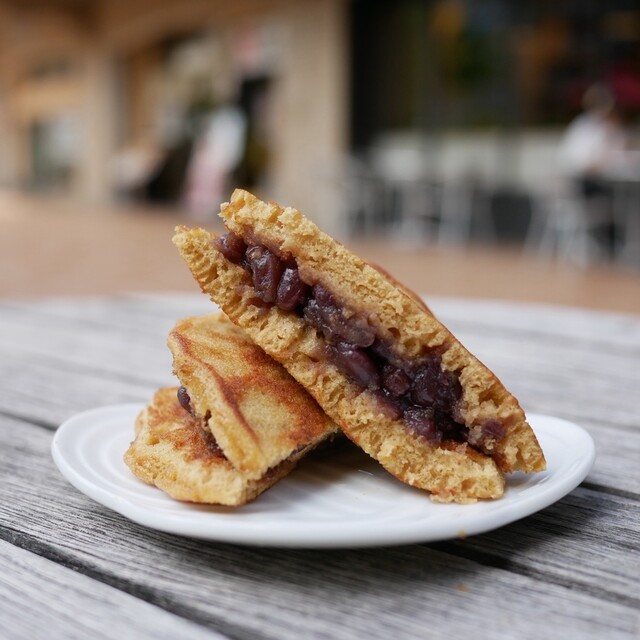
Kagurazaka rewards slow walking. Its side streets quickly narrow from the main slope, shifting from restaurant signs and tiled façades to shops built for regulars rather than spectacle. Here, wagashi reads differently from restaurant dessert: bought, carried, shared, and judged by restraint. Isuzu belongs to that Tokyo grammar of sweets, where the counter is less theatre than calibration, and a small box can express seasonality and social tact as clearly as a long dinner.
Tokyo’s serious food culture is often framed through sushi counters, kappo rooms, and tasting menus, but its sweets shops work with another discipline. Wagashi must survive scrutiny at home, at the office, and at the tea table. Sweetness, texture, packaging, and timing matter because these sweets are often gifts as much as snacks. Recognition in a dedicated Japanese traditional sweets category is meaningful: it places the shop in a field where consistency counts more than novelty.
Kagurazaka's wagashi tradition favors craft over spectacle
Kagurazaka has long balanced old Tokyo formality with a dining scene that changes block by block. Nearby listings range from yakitori to higher-spend restaurants, including 124. KAGURAZAKA (Yakitori) and the dinner-focused price tier of Shirogane Toritama Kagurazaka ten. Against that background, a wagashi counter occupies its own lane. It is not competing for the same evening as a sushi counter such as Jubei or Hatou, nor for the extended meal structure of an innovative restaurant such as NK. It answers another question: where does Tokyo still preserve edible etiquette in a takeaway form?
Isuzu’s categories are telling: Japanese traditional sweets, dorayaki, and senbei. Dorayaki sits in the accessible center of wagashi culture, a filled pancake sweet familiar across Japan, while senbei points to the savory-crisp side of the tradition. Together they signal a shop for daily use as well as gifting. That breadth matters in Tokyo, where many sweets counters specialize narrowly and reputation often rests on repeat local buying rather than destination dining alone.
The useful comparison is not restaurant luxury but confidence under a low price ceiling. Tokyo has many dining rooms where the bill becomes part of the performance; Kagurazaka also has higher evening ranges, including Yoshokudo Budo Kagurazaka and Shirogane Toritama Kagurazaka ten. Wagashi sits outside that calculus. The test is whether a shop can deliver polish in an everyday format, and Tabelog 100 recognition for Tokyo’s Japanese traditional sweets and sweets cafés in 2023 puts Isuzu in that conversation.
Recognition matters more in a category built on repeat custom
Tabelog’s Hyakumeiten lists are not Michelin stars and should not be read that way. Their value is different: they map local consensus across categories formal international guides often under-cover. For wagashi, that is especially useful. The field is dense, old, and highly local; a shop can matter without fitting the restaurant-guide template of chef, course, cellar, and service choreography.
Isuzu’s 2023 selection in the Tokyo Japanese traditional sweets and sweets café category is a strong trust signal for visitors wanting a food stop with cultural weight but not a full meal. It also explains why the shop belongs in a Tokyo itinerary beyond omakase and hotel dining. A serious day can move from a Kagurazaka sweets counter to curry, café culture, or late drinking elsewhere, using Our full Tokyo restaurants guide, Our full Tokyo bars guide, and Our full Tokyo hotels guide to place each stop in the wider city.
That context matters because Tokyo’s food identity is not one ladder from casual to expensive. It is parallel systems. A small sweets purchase can carry as much local specificity as a formal dinner, while 3 Chome no Curry Ya San or 2D Cafe speaks to another everyday format. The city’s strength is the precision of its categories, not a single definition of luxury.
How to place it in a Tokyo food day
The smart use of a Kagurazaka wagashi stop is as a hinge between meals. It works before a neighborhood walk, after lunch, or as a gift-buying stop before seeing friends in the city. The format is take-out, making planning simpler than a counter meal, though reservations are listed as available. Children are welcome, and the family-friendly character fits the category: wagashi is part of domestic Tokyo life, not only special-occasion dining.
For travelers building a wider Japan route, Isuzu shows how regional eating should be organized by format rather than prestige alone. A Kyoto meal such as [ki:] in Kyoto, a Kamakura stop like -Grilled beef Sukiyaki- KAMAKURA TANUKIAN 鎌倉 たぬき庵 in Kamakura, or a Sapporo curry specialist such as [Curry Senmon Ten] Maruyama Kyoju. in Sapporo follows a different local logic. Tokyo’s wagashi shops ask for a lighter commitment but repay attention to neighborhood, season, and gifting culture.
The same format-led thinking applies beyond Japan. A sake bar such as Jōdo Saké Bar in Los Angeles or a rice-ball specialist like Onigiri Time in Pasadena translates parts of Japanese food culture abroad, but Kagurazaka keeps the original social setting intact. For a Tokyo day that also includes Akihabara, Shinjuku, or Iidabashi-adjacent dining, related city entries such as. 鮪と炭火焼き うお炭 秋葉原店 and 12/10 Shinjuku ten frame the contrast between full meals and smaller food rituals.
The editorial value here is proportion, not excess. Isuzu reminds that Tokyo’s precision is visible in small formats, in categories tourists often under-plan and residents use constantly. For broader trip design, Our full Tokyo experiences guide and Our full Tokyo wineries guide sit beside dining coverage because the city works through linked rituals: walking, buying, drinking, gifting, and eating. Further afield, references such as.cafe in Osaka.know in Kumamoto, and (Shoku) Vietnam in Kawasaki underline the same point: the strongest food itineraries are built from specific formats, not generic acclaim.
Price and Recognition
Comparable venues side-by-side for orientation.
| Venue | Cuisine | Price | Notes |
|---|---|---|---|
| IsuzuThis venue — the venue you are viewing | Not listed | $ | Not listed |
| Ichijoryu Ganko Sohonke Bunke Yotsuya Arakicho | Shinjuku, Classic Japanese ramen counter | $ | Not listed |
| Okashi Dokoro Sasama | Not listed | $ | Chiyoda, Traditional Japanese Wagashi Shop |
| KAMAYOSHI | Chiyoda, Japanese Udon | $ | Not listed |
| Caligari Akihabara | Not listed | $ | Chiyoda, Japanese curry house specializing in coconut curry |
| Katei Saien Sasaki | Not listed | $ | Shinjuku, Japanese home-style fish teishoku cafeteria |
Recognition history
Dated appearances from independent guides and award organizations, with the underlying list record or original source where available.
Tabelog 100 #62 · No. 62
Tabelog · Tabelog 100 - Japanese traditional sweets / Japanese sweets cafe - TOKYO - 2023








At a Glance
- Classic
- Cozy
- Quiet
- Solo
- Casual Hangout
- Standalone
Feels like a classic Japanese wagashi shop, with a quiet, understated atmosphere focused on traditional sweets rather than sit-down dining.