Our verdict
A neighbourhood sushi counter in Asakusa's old-Tokyo grid, Isshin has climbed steadily through Opinionated About Dining's Japan rankings, from #404 in 2024 to #458 in 2025 across a broader field. Operating a split lunch and dinner service seven days a week, it sits in a mid-tier recognition bracket that rewards regulars and curious visitors equally, without the booking friction of Tokyo's Ginza heavy-hitters.

Pearl is the En Primeur Club membership app, where members save venues, book tables and use the concierge.
The menu
What to order
- Pork belly
- Tempura
- Sashimi
Asakusa and the Sushi Counter That Earns Its Postcode
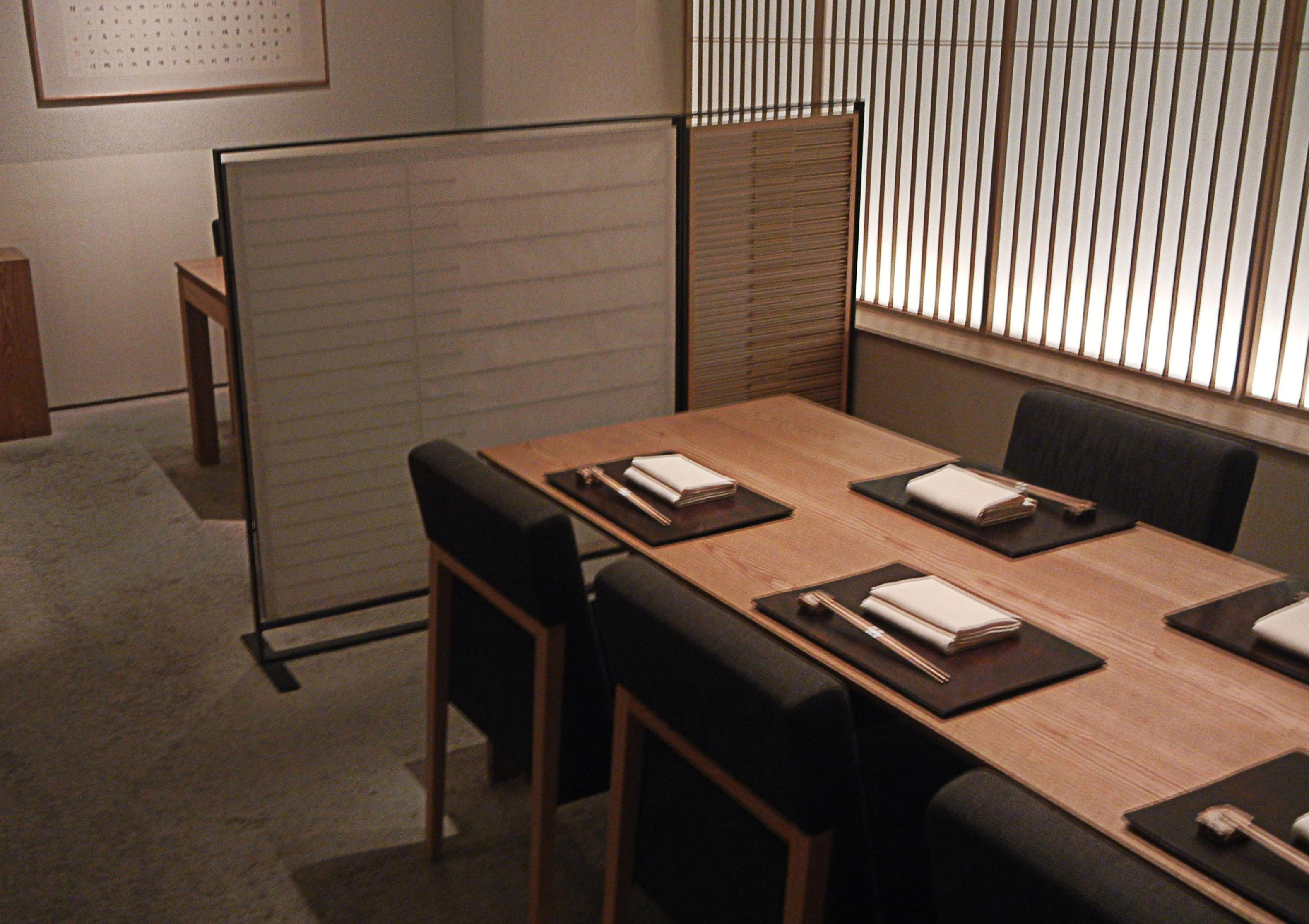
Asakusa does not feel like a sushi destination in the way Ginza does. The neighbourhood carries a different atmosphere: low-rise shopfronts, the persistent smell of incense from Senso-ji, vendors selling ningyo-yaki in the alleys off Nakamise-dori. This is old Tokyo, shitamachi, or "downtown" in the historical sense, and the dining culture here reflects that. Sushi restaurants in Asakusa tend to operate closer to craft workshop than to performance theatre. There is no kaiseki ceremony, no counter lit like a stage set. The register is quieter, and the expectation is that the fish speaks without theatrics.
Isshin sits inside that tradition, at 4 Chome-11-3 in Taito City. Its appearance on Opinionated About Dining's annual Japan rankings, #404 in 2024, moving to #458 in 2025 as the ranked field widened, places it in a tier that matters: recognised by a credentialed peer-nominated survey, but not yet in the small cluster of Ginza counters where reservation windows open months in advance. That gap is, arguably, the point.
Where Isshin Sits in Tokyo's Sushi Hierarchy
Tokyo's sushi scene has fractured into increasingly distinct tiers over the past decade. At the apex, counters such as Harutaka and Sushi Kanesaka command three Michelin stars and price accordingly, attracting an international clientele that books as far out as the counter allows. A step below, Sukiyabashi Jiro Roppongiten and Edomae Sushi Hanabusa represent the serious mid-upper bracket, where Edomae technique is applied with precision and the emphasis is on the fish and rice rather than on spectacle. Further along, Hiroo Ishizaka demonstrates that recognition can come from neighbourhood counters operating outside the central luxury corridor.
Isshin occupies a position in that lower-recognition, high-craft segment: acknowledged by a serious critic-facing platform, operating in a neighbourhood with fewer international competitors, and running a seven-days-a-week schedule that signals volume confidence rather than exclusivity rationing. The OAD ranking movement between 2024 and 2025 reflects a broader expansion in the ranked list rather than a decline in standing, context worth noting for anyone reading raw numbers.
The Edomae Tradition in an Old-Tokyo Setting
Edomae sushi, the style that originated in Edo-period Tokyo, using fish from the waters of Tokyo Bay and preservation techniques developed before refrigeration, carries particular resonance in Asakusa. This is the part of the city that maintained its pre-war urban fabric more than most, and the neighbourhood's continuity with historical Tokyo extends to its food culture. Sushi here is not a recent import from Kyoto kaiseki tradition or a fusion product of the post-bubble era. It is, in principle, the thing itself.
The Edomae approach involves marinating, curing, and seasoning fish rather than serving it raw without intervention. Vinegar-cured kohada, soy-brushed anago, and aged tuna are standard references in this tradition. The rice, shari, is seasoned with red vinegar in many traditional preparations, giving it a slightly darker colour and a sharper profile than the white-vinegar rice common at more contemporary counters.
Drink at a Sushi Counter: What the Category Demands
The editorial angle here connects to something the sushi category handles differently than most fine-dining formats. At a Western tasting-menu restaurant, the sommelier is a distinct presence and the wine list is a standalone document. At a traditional Japanese sushi counter, drink pairings operate through a narrower but often more lens. Premium sake, junmai daiginjo poured cold, or a more textured kimoto-style junmai served at room temperature alongside fattier cuts, is the logical pairing framework. Where counters at Isshin's tier distinguish themselves is in the sourcing rigour: whether the sake selection reflects regional brewery relationships, limited seasonal releases, or simply a standard list of nationally available labels.
For the visitor whose primary interest is in Japanese wine and sake culture, Asakusa has a specific gravity. Several establishments in the neighbourhood have maintained long-term relationships with smaller sake breweries in Niigata, Yamagata, and Akita prefectures. The question to ask at a counter like Isshin is whether the drink programme has been assembled with the same attention as the fish selection. A well-chosen sake list at a sushi counter of this recognition tier typically includes at least three or four labels not commonly available outside the region of production.
For visitors interested in broadening the Japan context, the same critical attention to drink-food integration applies at Gion Sasaki in Kyoto, where a kaiseki format demands a different but equally rigorous pairing logic, and at HAJIME in Osaka, where a French-influenced tasting structure brings European wine back into the equation. Outside Japan, the reference points shift again: Sushi Shikon in Hong Kong and Shoukouwa in Singapore both export the omakase counter format to cities where the sake supply chain operates differently, often with a more international wine component by necessity.
Beyond Tokyo: Reading Isshin in a National Context
OAD's Japan list, which placed Isshin at #404 in 2024, covers the full national range from three-star Michelin kaiseki to small regional specialists. Isshin's Asakusa placement within this national context suggests a counter operating at a creditable level without the infrastructure costs of a Ginza address, which typically translates into more direct value for the guest.
Planning a Visit
Isshin operates a split service across all seven days: Hours: lunch 11:30 am to 2 pm, dinner 5 to 11 pm, Monday through Sunday. The consistent seven-day schedule sets it apart from the more restricted operating patterns common at counters in the Michelin top tier, where rest days and reduced sittings are standard. Reservations: Address: 4 Chome-11-3 Asakusa, Taito City, Tokyo 111-0032; the Asakusa station exits for both the Tokyo Metro Ginza Line and the Toei Asakusa Line place the neighbourhood within reach of most central Tokyo hotels in under 25 minutes. Budget: Dress: no confirmed dress code; smart-casual is conventional for this category at this recognition level.
For a wider view of Tokyo dining, drinking, and accommodation, EP Club maintains comprehensive guides: our full Tokyo restaurants guide, our full Tokyo hotels guide, our full Tokyo bars guide, our full Tokyo wineries guide, and our full Tokyo experiences guide.
What's the must-try dish at Isshin?
What the category and context do confirm: at an Edomae-tradition counter in Asakusa at this recognition tier, the aged tuna preparations and vinegar-cured fish courses are typically where the kitchen's craft is most legible. Ask what is in season at the time of your visit, the answer will reflect the kitchen's sourcing priorities more accurately than any fixed recommendation.
What's Isshin leading at?
OAD's peer-nominated methodology rewards consistent technical execution and repeat visitor loyalty above media visibility. Isshin's two consecutive appearances on the Japan list, including a 2024 ranking of #404, suggest a counter that delivers reliably within its category rather than one performing for critics or tourists. For the visitor coming to Asakusa specifically, the combination of neighbourhood character, craft-focused execution, and accessible scheduling makes it the strongest argument for eating sushi outside the Ginza orbit.
Frequently asked questions
Is Isshin award-winning?
Isshin has received recognition including: Opinionated About Dining Top Restaurants in Japan Ranked #458 (2025); Opinionated About Dining Top Restaurants in Japan Ranked #404 (2024).
What style of cooking does Isshin do?
What's the must-try dish at Isshin?
No specific signature dishes are confirmed from a verified source, so naming one here would be unreliable. What the OAD ranking signals, placing Isshin at #404 in 2024 and #458 in 2025 across the full national list, is consistent technical execution across the Edomae repertoire rather than a single standout item. The format itself is the guide: trust the counter's progression.
What are the opening hours for Isshin?
Hours at Isshin: Hours: Monday 11:30 am–2 pm, 5–11 pm Tuesday 11:30 am–2 pm, 5–11 pm Wednesday 11:30 am–2 pm, 5–11 pm Thursday 11:30 am–2 pm, 5–11 pm Friday 11:30 am–2 pm, 5–11 pm Saturday 11:30 am–2 pm, 5–11 pm Sunday 11:30 am–2 pm, 5–11 pm.
Where do I go for Isshin?
Isshin is located at 4 Chome-11-3 Asakusa, Taito City, Tokyo 111-0032, Japan, Tokyo.
Who is the chef connected to Isshin?
The chef associated with Isshin is Various.
What's Isshin best at?
OAD's peer-nominated methodology weights repeat-visitor loyalty and kitchen consistency above media profile, which makes two consecutive national appearances, #404 in 2024, #458 in 2025, a credible signal of reliable Edomae execution. Isshin holds that standing while operating from Asakusa, a neighbourhood with no concentration of comparable counters, rather than from the Ginza circuit where most OAD-ranked Tokyo sushi sits. That combination of rank and postcode is the clearest indicator of what the kitchen does well.
Cuisine-First Comparison
| Venue | Cuisine | Price | Awards | Notes |
|---|---|---|---|---|
| IsshinThis venue (the venue you are viewing) | Home-Style Japanese Izakaya | $10–20 | Not listed | Not listed |
| Harutaka | Edo-Style Omakase Sushi | $200–300 | 3 Michelin Stars · World's 50 Best #76 | Sushi |
| RyuGin | Modern Kaiseki | $500+ | 3 Michelin Stars · World's 50 Best #41 | Kaiseki, Japanese |
| L'Effervescence | Modern French with Japanese Influences | $200–300 | 3 Michelin Stars · World's 50 Best #69 | French |
| HOMMAGE | Modern French with Japanese Influences | $150–200 | 2 Michelin Stars · World's 50 Best #78 | Innovtive French, French |
| MAZ | Innovative Peruvian-Japanese Fusion | $150–200 | 2 Michelin Stars · World's 50 Best #28 | Innovative |
Recognition history
Dated appearances from independent guides and award organizations, with the underlying list record or original source where available.
Opinionated About Dining Top Restaurants in Japan Recommended
Opinionated About Dining
Full recognition history (3 entries)
Opinionated About Dining Top Restaurants in Japan Ranked #458
Opinionated About Dining
Opinionated About Dining Top Restaurants in Japan Ranked #404
Opinionated About Dining