
Michelin Plate
Our verdict
A Michelin Plate-recognised Japanese restaurant in Taichung's Xinshe District, Inflorescence sits at the quieter, more contemplative end of the city's dining spectrum. The Xinshe address, removed from Taichung's urban core, sets the register before you sit down.

Pearl is the En Primeur Club membership app, where members save venues, book tables and use the concierge.
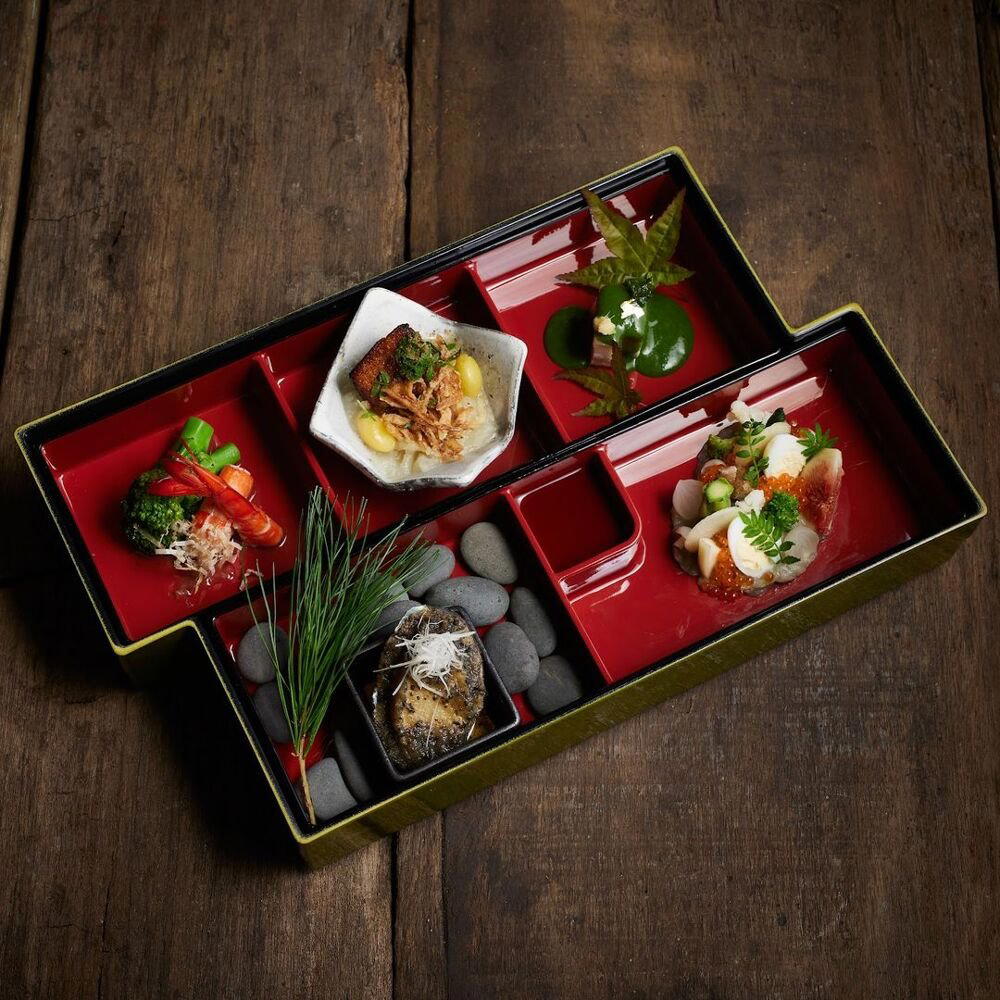
The menu
What to order
- 10-course omakase menu
- Cherry Tea appetizer
- Water Well bowl
- Five Types of Hand-Rolled Sushi
- Black Cod with Japanese Wagyu
- Tuna Broth soup
- Mochi with Almond Tofu
Japanese Precision in the Hills Above Taichung
Taichung's Japanese dining scene divides more sharply by geography than most visitors expect. The city's central districts concentrate the familiar formats: sushi counters aligned with Taipei's Michelin circuit, yakitori houses drawing from the same Tokyo playbook as Torien Yakitori, and omakase rooms where the price tier signals ambition before the first course arrives. Xinshe District operates on a different register entirely. Sitting in the hills northeast of the urban core, it is agricultural Taiwan: fruit orchards, flower farms, and a cooler microclimate that pulls weekend visitors out of the city. Into this setting, Inflorescence places Japanese cooking that reads less as urban restaurant theatre and more as an extension of the landscape around it.
That locational logic matters when reading the Michelin Plate recognition the restaurant received in 2024. The Plate designation, awarded across the Guide's Taiwan edition, signals kitchens producing food at a consistent, recommended standard without reaching starred territory. In Taichung, where JL Studio operates at three stars and peers like L'Atelier par Yao and MINIMAL hold their own recognized positions, a Plate in a district like Xinshe carries a different weight than the same designation in a city centre. The inspectors came this far out, and they rated what they found worth noting.
The Physical Container
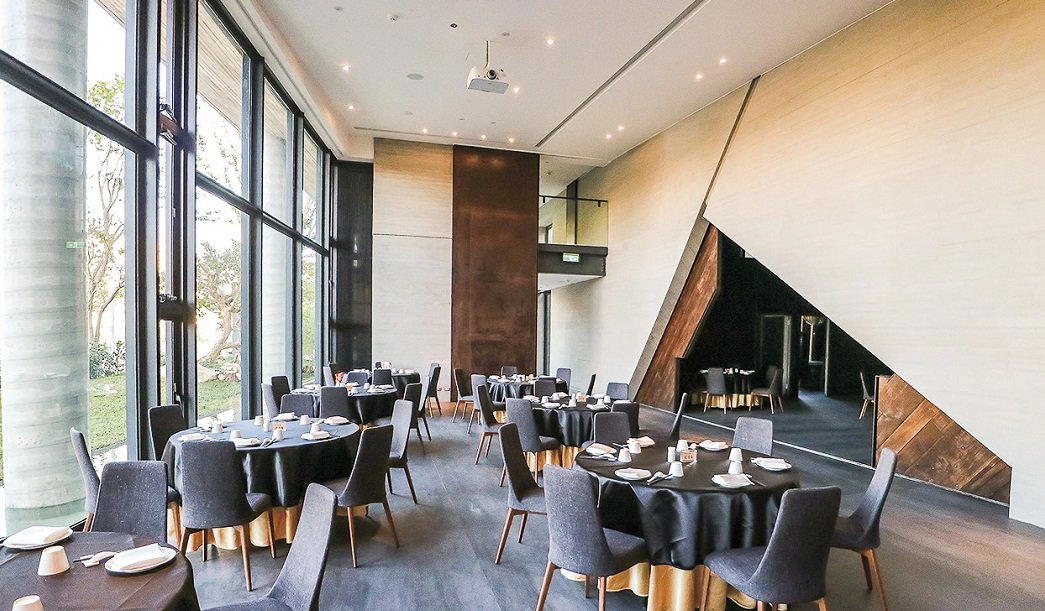
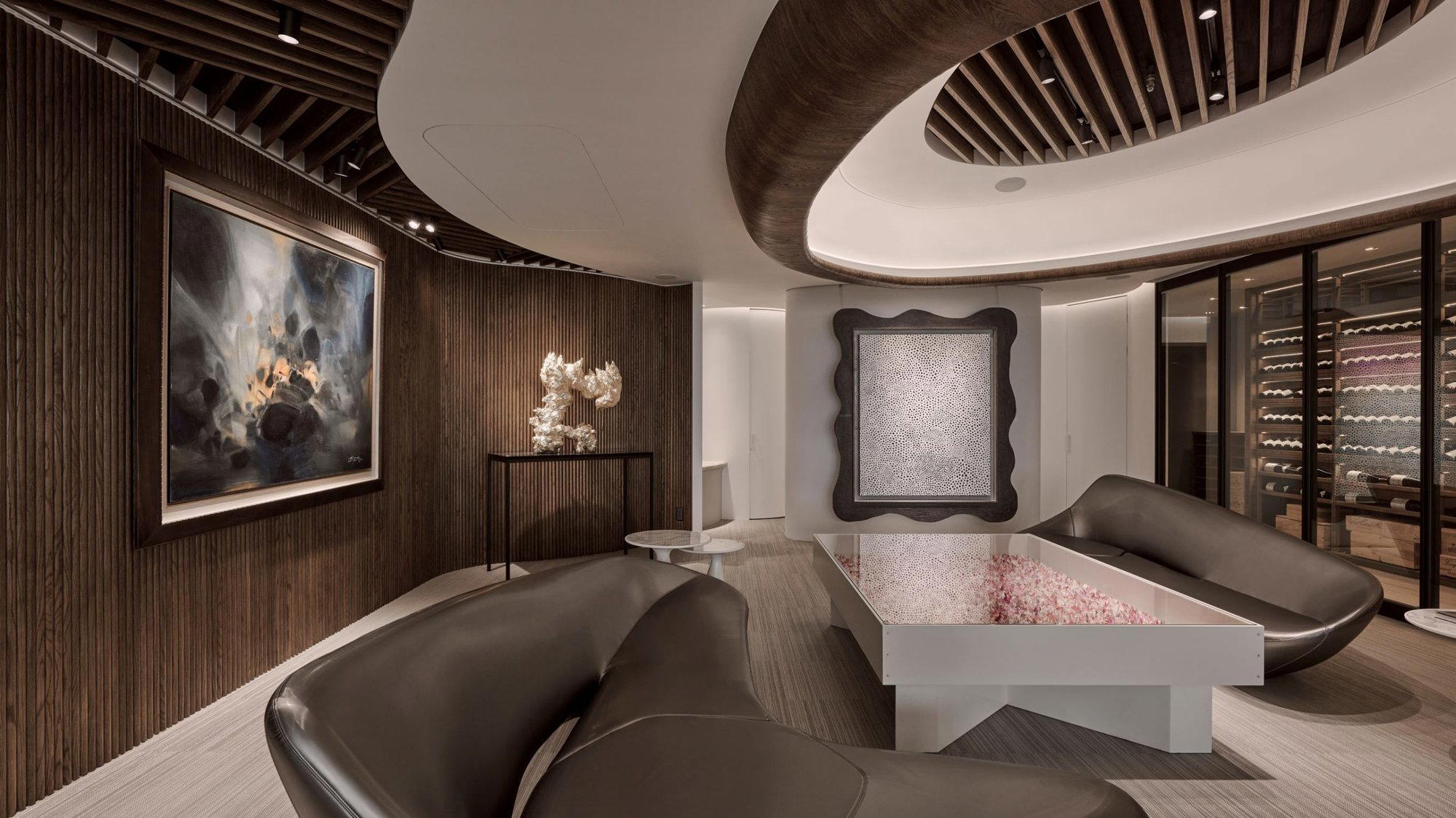
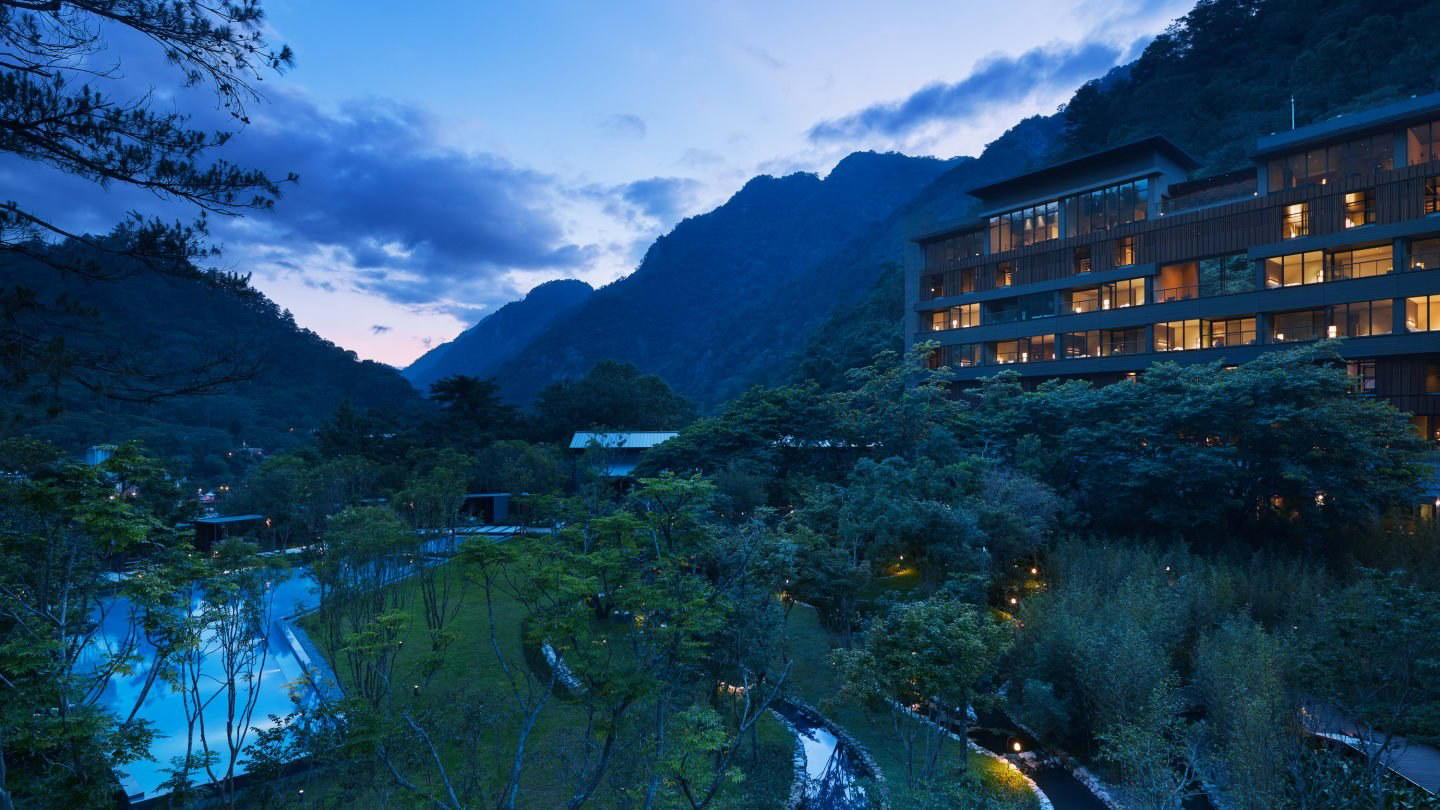
At this price tier in Taiwan's Japanese restaurant circuit, the room is never incidental. The design choices made at the level of materials, light, and seating arrangement communicate directly to the experience of the food, and Inflorescence's Xinshe address gives it an architectural freedom that urban rooms cannot replicate. Japanese restaurants in mountain or rural settings across the island tend to use their surroundings as a design element in themselves: window framing that turns green hillside into a backdrop, natural materials sourced close to the site, and a spatial quietness that urban rooms must work hard to manufacture. The result, when executed with discipline, is a room that reads as site-specific rather than decoratively rustic.
This contrasts with how Tokyo's comparable Japanese restaurants resolve the same tension. Houses like Myojaku and Azabu Kadowaki in Tokyo, and Isshisoden Nakamura in Kyoto, achieve their spatial register through compression and material restraint within tight urban plots. The serenity is produced despite density. In Xinshe, the equation inverts: the surrounding environment does some of the atmospheric work, and the interior can afford to be more open in response. What that means in practical terms for Inflorescence is that the approach to the building, the transition from the road through whatever arrival sequence the property allows, and the relationship between the dining room and the outside light are all load-bearing elements of the experience.
Where This Sits in Taichung's Japanese Tier
Taichung has built a Japanese dining identity that is more varied than Taipei's, partly because it operates slightly below the capital's density of competition and partly because it has attracted formats that suit its more suburban, car-dependent geography. The $$$ price band, where Inflorescence sits, runs across a wide range of ambition in the city: it includes direct izakaya-influenced rooms and more composed tasting formats. At this level, the differentiating variables are kitchen discipline, sourcing commitment, and the relationship between format and space.
Against direct Japanese-format peers in the city, Inflorescence's Xinshe address is the most significant variable. Isagi operates within the urban grid; Inflorescence requires a deliberate journey. That journey filters the clientele and sets expectations before arrival. Taiwan has a number of restaurants built on this logic, where removing the venue from the city is itself part of the hospitality proposition. Akame in Wutai Township is the most discussed example in the southern part of the island. In Taichung, Inflorescence occupies a comparable position in the sense that the distance is part of the offer.
Within Taiwan's broader Japanese dining tradition, it is worth noting how the island has absorbed and redirected Japanese culinary frameworks. Restaurants like logy in Taipei and GEN in Kaohsiung represent the formal, deeply trained end of that conversation. Inflorescence, in its Xinshe positioning, suggests a different register: Japanese cooking used as a framework for engaging with local ingredients and a specific physical environment rather than as a vehicle for credentialing against Japanese culinary hierarchies.
Cuisine and What to Order
The Japanese format in a setting like Xinshe typically draws on seasonal produce as its primary organising principle, and Xinshe's agricultural character gives that logic a tangible local anchor. The district is known across Taiwan for its flower farms and orchards, and a kitchen operating here has direct access to produce that urban restaurants source at a remove. In Japanese cooking tradition, that proximity carries real weight: the relationship between a kitchen and the land immediately around it is not decorative but structural.
At the $$$ price point, the format most consistent with a destination room at this distance from the city centre is a set menu or tasting sequence rather than à la carte. That format allows the kitchen to control the seasonal arc of a meal and to pace dishes against the spatial rhythm of the room. For visitors planning a meal, the operative question is less about individual dishes and more about timing: Xinshe's elevation means seasonal transitions in produce and temperature register distinctly, and the room and menu shift accordingly. A visit in flower-season will read differently than one in the winter months when the hillside quietens.
Planning a Visit
Inflorescence is located at 中興嶺街一段111號, Xinshe District, Taichung, a 40-plus minute drive from the city's Zhongqing Road restaurant corridor depending on traffic. This is not a restaurant that folds into a wider evening itinerary of bar-hopping or hotel check-ins; it functions leading as the primary event of an afternoon or evening, with the drive there and back as part of the experience's frame. For those building a broader Taichung trip, the full Taichung restaurants guide, hotels guide, bars guide, wineries guide, and experiences guide cover the city's wider range. With a Michelin Plate designation in place since 2024, reservations for weekend seatings are worth securing in advance. Visitors making the Xinshe journey alongside other destinations in Taiwan's touring circuit might also consider how it pairs with Tainan's more austere dining tradition, exemplified by counters like A Cun Beef Soup, or the resort-anchored hospitality model represented by Volando Urai Spring Spa & Resort in the north.
Frequently asked questions
Is Inflorescence award-winning?
Inflorescence has received recognition including: Michelin Plate (2024).
What should I eat at Inflorescence?
Current menus are not publicly listed, but the 2024 Michelin Plate recognition points to a kitchen working at a level of consistency that inspectors consider plate-worthy. Xinshe District's agricultural character, the area is known for flower farms and upland produce, makes seasonal vegetables a plausible cornerstone of the Japanese format here. At the $$$ price tier, expect a structured meal rather than à la carte improvisation. Arriving without a fixed agenda and ordering whatever the kitchen emphasises that day is the most reasonable approach at this level.
How much does it cost to eat at Inflorescence?
Pricing at Inflorescence is listed as $$$.
Where is Inflorescence located?
Inflorescence is located at 426, Taiwan, Taichung City, Xinshe District, 中興嶺街一段111號, Taichung.
A Tight Comparison
Comparable venues nearby, for context on price, style, and recognition.
| Venue | Cuisine | Price | Awards | Notes |
|---|---|---|---|---|
| InflorescenceThis venue (the venue you are viewing) | Japanese Kaiseki Omakase | $200–300 | Michelin Plate | Not listed |
| Yu Yue Lou | Modern Cantonese Fine Dining | $50–100 | Michelin Plate | Xinsheng, Modern Cantonese Fine Dining |
| Sushi Suzuki | Traditional Japanese Omakase | $100–150 | Not listed | Gongping, Traditional Japanese Omakase |
| MeatGQ | Contemporary Steakhouse | Not listed | Michelin Plate | Xinsheng, Contemporary Steakhouse |
| Umai Yakiniku Wenxin Branch | Japanese Yakiniku | $30–50 | Not listed | Daye, Japanese Yakiniku |
| 嵐山熟成牛かつ專売-北屯昌平店 | Japanese Aged Beef Cutlet | $10–20 | Not listed | Songzhu, Japanese Aged Beef Cutlet |
Recognition history
Dated appearances from independent guides and award organizations, with the underlying list record or original source where available.
Michelin Plate
Michelin
Full recognition history (2 entries)
Michelin Plate
Michelin
Continue exploring
More in Taichung
Restaurants in Taichung
All restaurants in Taichung →
Bars in Taichung
All bars in Taichung →

Details
- Elegant
- Quiet
- Scenic
- Sophisticated
- Intimate
- Special Occasion
- Celebration
- Date Night
- Group Dining
- Garden
- Panoramic View
- Courtyard
- Design Destination
- Private Dining
- Sommelier Led
- Local Sourcing
- Farm To Table
- Garden
- Mountain
- Omakase
- Tasting Menu
- Wine Pairing
- Tea Tasting
- Vegetarian Friendly
- Allergy Accommodating
Current opening hours
- Monday
- Closed
- Tuesday
- Closed
- Wednesday
- 11:30 AM–2:30 PM, 5:30–9:30 PM
- Thursday
- 11:30 AM–2:30 PM, 5:30–9:30 PM
- Friday
- 11:30 AM–2:30 PM, 5:30–9:30 PM
- Saturday
- 11:30 AM–2:30 PM, 5:30–9:30 PM
- Sunday
- 11:30 AM–2:30 PM, 5:30–9:30 PM
Hours can change for holidays and private events. Hours as of .
Serene and tranquil with warm lighting, Japanese-inspired architecture, meticulously landscaped grounds, floor-to-ceiling windows overlooking valley views, and subtle traditional chimes creating a meditative dining atmosphere.