Our verdict
Sushi Suzuki operates on Huamei Street in Taichung's West District, a neighbourhood that has quietly accumulated some of Taiwan's more serious Japanese dining addresses. The format here follows the omakase tradition common to Japan's mid-tier counter scene, placing it in a different register from the casual sushi conveyor belt culture that dominates elsewhere in the city. For Taichung diners tracking the Japanese counter scene, it belongs on the shortlist.

Pearl is the En Primeur Club membership app, where members save venues, book tables and use the concierge.
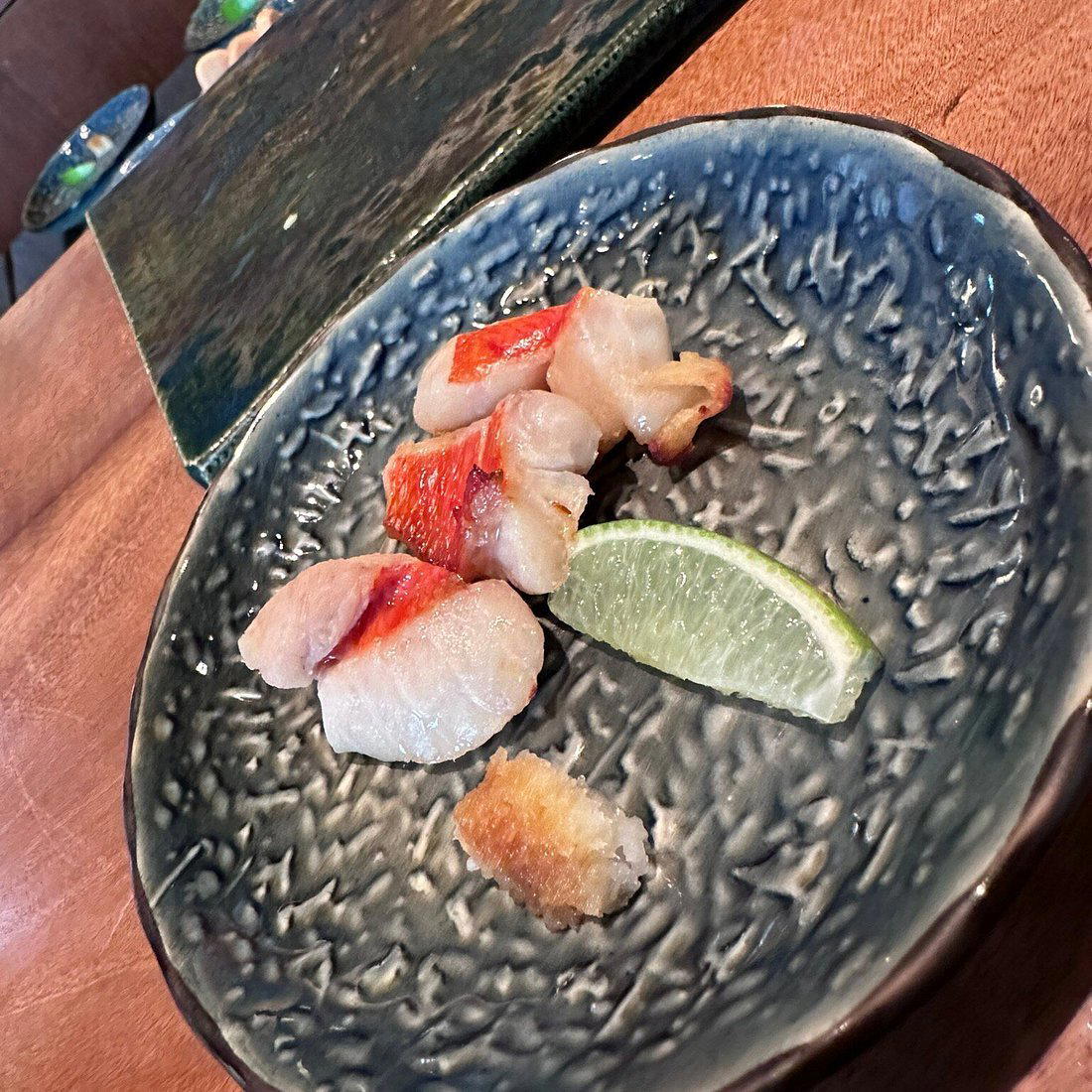
Huamei Street and the Japanese Counter Tradition in Taichung
West District's Huamei Street has developed, over the past decade, into one of Taichung's more concentrated corridors for serious dining. The street sits between the older commercial centre and the newer development pushing toward Xitun, and it functions as a kind of culinary middle ground: not the hypermodern restaurant-as-destination model increasingly common in Taipei, but not the traditional night-market circuit either. Japanese counter restaurants, in particular, have found a foothold here, operating in the register of neighbourhood specialist rather than grand occasion venue. Sushi Suzuki, at No. 392, Huamei Street, fits that pattern precisely.
The broader context matters. Taiwan's relationship with Japanese culinary culture runs deeper than most markets outside Japan. Decades of cultural exchange, combined with a domestic dining culture that values technical precision, have produced a tier of Japanese restaurants in Taiwan's major cities that compete credibly with mid-range counterparts in Tokyo or Osaka. In Taichung specifically, that tier has expanded as the city's economy has grown and its dining population has become more sophisticated. Restaurants like JL Studio in Taichung have demonstrated that the city can sustain ambition at the higher end; the sushi counter scene occupies a quieter but equally serious position below that headline level.
The Lunch and Dinner Split: How the Day Shapes the Experience
In Japanese counter dining, the distinction between lunch and dinner service is rarely cosmetic. It reflects a structural difference in format, price point, and the type of diner each session attracts. This pattern holds across Taichung's Japanese counter scene, and Sushi Suzuki sits inside it.
Lunch at omakase-format counters in this price tier typically offers an abbreviated sequence at a meaningfully lower price point, drawing a clientele that includes office professionals and regulars who know the kitchen well enough to visit frequently rather than saving the counter for a rare occasion. The rhythm is tighter, the conversation between chef and diner less ceremonial. There is a democratising effect to the lunch service: it brings the counter within reach of diners who might balk at an evening commitment, and it rewards those who have already eaten their way through the menu enough times to order with confidence.
Evening service operates on a different logic. The sequence lengthens, the pacing slows, and the expectation shifts toward occasion dining. At counters elsewhere in Taiwan, from logy in Taipei at the fine-dining end to neighbourhood specialists in Tainan (where A Xia in Tainan represents a different but comparable level of culinary seriousness), the evening format carries a weight that lunch does not. The same applies on Huamei Street. For first-time visitors to Sushi Suzuki, dinner is the better frame for understanding what the kitchen can do at full stretch. For those who already know the restaurant, lunch is often the smarter visit: shorter, cheaper, and without the formality that can sometimes flatten the experience into performance.
The Neighbourhood and What Surrounds It
West District's dining scene is diverse enough that sushi counter diners on Huamei Street are rarely choosing between like-for-like alternatives. The area houses noodle specialists like A Kun Mian, yakiniku operations such as Abura Yakiniku, and informal international options including Burger Joint and the cafe format of cafe crotchet. For Chinese dining, DIN YUE RESTAURANT represents a different track entirely. The point is that Huamei Street rewards the kind of diner who enjoys moving between registers, using the sushi counter as an anchor in a neighbourhood that offers real range.
Taichung's West District is also geographically compact enough that pre- or post-dinner movement is easy on foot or by short cab. The neighbourhood does not have Taipei's density, which means the counter experience carries more weight: you are not choosing between fifty alternatives within a ten-minute radius. That relative scarcity positions places like Sushi Suzuki differently than they would sit in a larger city. For a broader view of the city's options, the full Taichung City restaurants guide maps the scene across neighbourhoods and price tiers.
How Taichung Sushi Counters Compare to Taiwan's Broader Scene
Taiwan's Japanese counter dining has developed distinct regional characteristics. Taipei's leading omakase operations, which increasingly reference global recognition frameworks and attract an internationally mobile clientele, have pushed toward price points and formality levels that rival Tokyo. Kaohsiung, where GEN in Kaohsiung occupies a serious position, has its own counter culture shaped by the city's port heritage and seafood access. Taichung sits between these poles: serious enough to sustain genuine counter dining, but without the capital-city premium that inflates Taipei's top-tier prices.
This positioning has practical implications for the diner. A counter meal in Taichung at a comparable technical level to a Taipei equivalent will typically cost less, and the booking competition, while real, is less ferocious than at the city's headline omakase addresses. For reference, mid-tier omakase in Taiwan's major cities has generally settled in a price band that reflects Japan's regional counter scene rather than Tokyo's prestige tier, a contrast with markets like New York where Korean fine dining at Atomix in New York City or seafood at Le Bernardin in New York City command prices that reflect a different cost structure entirely.
Planning Your Visit
Sushi Suzuki is located at No. 392, Huamei Street, West District, Taichung City (postal code 403). The West District is accessible from central Taichung by taxi or ride-hailing app in under fifteen minutes from the main train station. Street-level navigation in this part of the district is direct, and Huamei Street itself is well-trafficked enough that the address is easy to locate. Given that the venue's phone and website details are not publicly listed in current directories, approaching via a local booking platform or arriving in person to enquire about reservations is the most reliable path. Lunch service, where available, is worth treating as a strategic entry point: the format is typically more accessible and the counter more conversational than the evening equivalent. For diners visiting Taiwan more broadly and building an itinerary that takes in multiple cities, pairing a Taichung counter meal with options elsewhere in the country, such as A Xia in Tainan for southern Taiwanese seafood or the innovative approach at logy in Taipei for a different register of precision cooking, builds a useful comparative picture of how Japanese culinary influence has been absorbed and localised across the island.
Frequently asked questions
Where exactly is Sushi Suzuki?
Sushi Suzuki is located at No. 392è, Huamei St, West District, Taichung City, Taiwan 403, Taichung City.
How does Sushi Suzuki compare to Taipei omakase counters for a visitor considering both cities?
Taichung's Japanese counter scene, including Sushi Suzuki at No. 392 Huamei Street in West District, operates at a different register from Taipei's prestige-driven omakase market, where global chef references and Michelin positioning shape pricing and expectation. Taichung counters generally offer a more direct expression of the format without the premium attached to capital-city status. For a visitor covering both cities, the two scenes complement rather than duplicate each other.
What should I eat at Sushi Suzuki?
Sushi Suzuki operates within the omakase tradition, meaning the sequence is chef-directed from start to finish, there is no à la carte selection. The kitchen determines what is served based on that day's sourcing, so arriving with specific requests will generally not fit the format. The practical approach is to treat the meal as a fixed progression and allow the counter to set the pace.
Can I walk in to Sushi Suzuki?
Walk-in availability at an omakase counter on Huamei Street in West District, Taichung, is limited and depends on the day and service. Lunch sittings at this type of counter occasionally carry more flexibility than dinner, when seats tend to be committed further in advance. Contacting the venue directly before arriving is the practical way to assess same-day availability.
What's Sushi Suzuki best at?
Within Taichung's Japanese counter scene, addresses on Huamei Street have built their reputations on sourcing consistency and execution discipline rather than the prestige signalling more common in Taipei's top-tier omakase market. Sushi Suzuki, operating from No. 392 Huamei Street in West District, sits in a corridor that has concentrated serious counter dining over the past decade, which gives it a peer context that rewards repeat visits over one-off comparisons.
Cuisine Lens
Comparable venues nearby, for context on price, style, and recognition.
| Venue | Cuisine | Price | Awards | Notes |
|---|---|---|---|---|
| Sushi SuzukiThis venue (the venue you are viewing) | Traditional Japanese Omakase | $100–150 | Not listed | Not listed |
| Umai Yakiniku Wenxin Branch | Japanese Yakiniku | $30–50 | Not listed | Daye |
| Laojing Gokujo Yakiniku Chongde Branch | Japanese Yakiniku | Not listed | Not listed | Songzhu |
| 滬舍餘味 | Modern Taiwanese Fine Dining | $50–100 | Michelin Bib Gourmand | Sanhe |
| Zonzen Yakiniku Taichung Dadun Branch | Japanese Yakiniku | Not listed | Not listed | Daye |
| 響海鮮 | Fresh Seafood with Live Tank Selection | $50–100 | Michelin Plate | Chaoyang |
Continue exploring
More in Taichung
Restaurants in Taichung
All restaurants in Taichung →
Bars in Taichung
All bars in Taichung →
Details
- Intimate
- Elegant
- Sophisticated
- Date Night
- Special Occasion
- Chefs Counter
- Sake Program
- Sustainable Seafood
- Omakase
- Counter Dining
Current opening hours
- Monday
- Closed
- Tuesday
- 12–2:30 PM, 6–9:30 PM
- Wednesday
- 12–2:30 PM, 6–9:30 PM
- Thursday
- 12–2:30 PM, 6–9:30 PM
- Friday
- 12–2:30 PM, 6–9:30 PM
- Saturday
- 12–2:30 PM, 6–9:30 PM
- Sunday
- 12–2:30 PM, 6–9:30 PM
Hours can change for holidays and private events. Hours as of .
Intimate sushi counter with polished service and polite, informative chef guidance through a kaleidoscope of tastes.