Michelin Plate
Our verdict
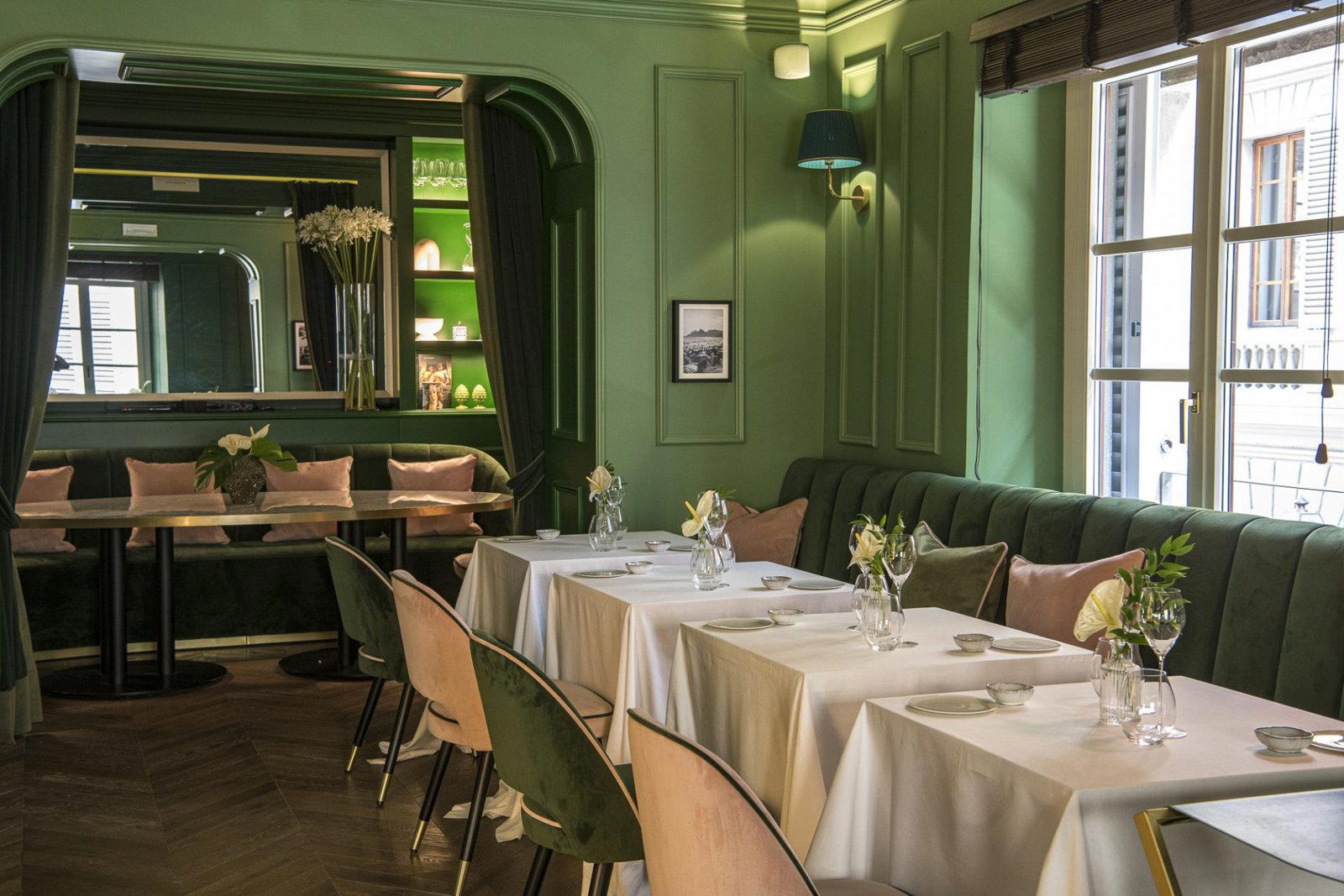
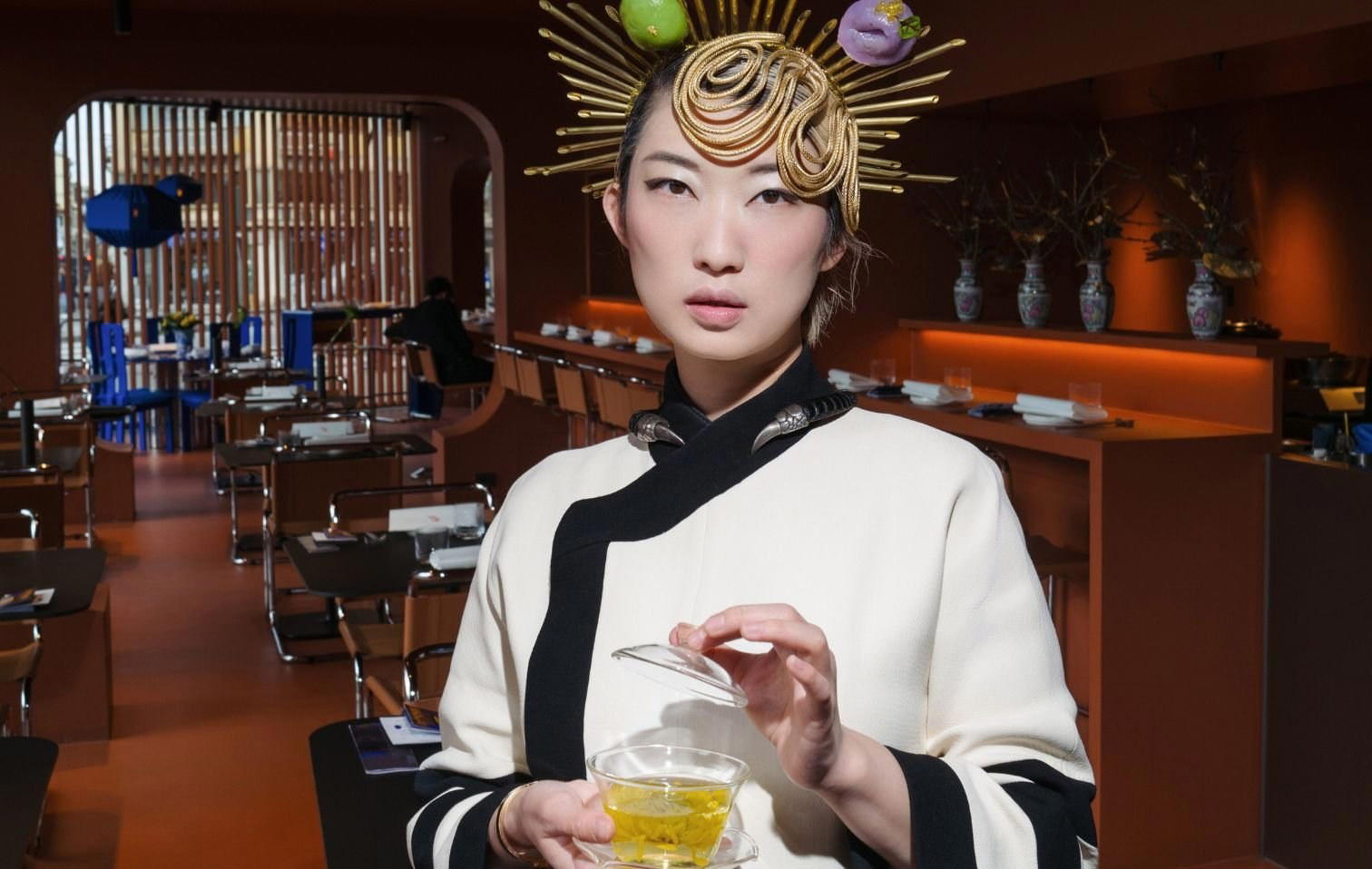
The room's brown tones and blue accents signal the same cross-cultural ambition as the cooking. Among Florence's Michelin-recognised restaurants, it occupies a clearly distinct position: the city's only Chinese-led contemporary kitchen in that tier.

Pearl is the En Primeur Club membership app, where members save venues, book tables and use the concierge.

A Room That Telegraphs the Menu
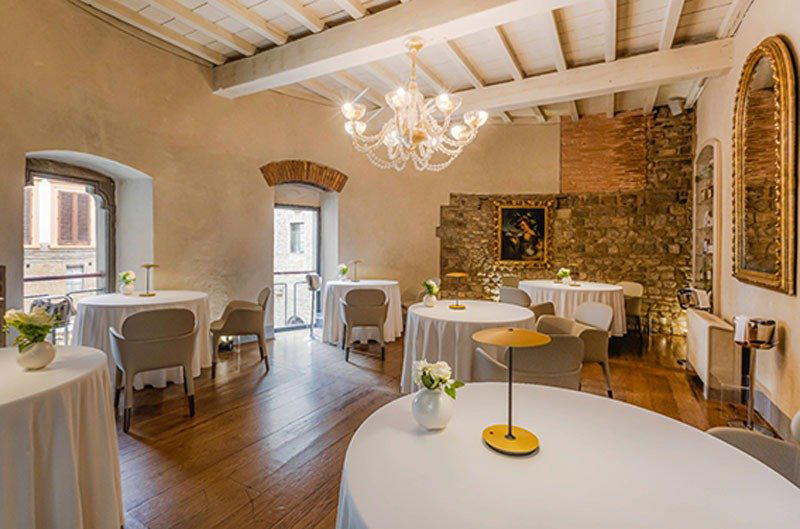
The dining room at Il Gusto di Xinge works as a kind of preview. The interior runs in brown tones that the Michelin inspector likens to a teapot, punctuated by dashes of blue and modern leather chairs. It is a deliberate aesthetic: composed, warm, and just foreign enough to Florence to signal that what arrives at the table will not follow the expected Tuscan arc.
Florence's Michelin-recognised dining is, with very few exceptions, an Italian conversation. Enoteca Pinchiorri holds three stars with a Franco-Italian canon built over decades. Santa Elisabetta operates from inside a medieval tower with two stars and a creative Italian identity. Atto di Vito Mollica, Borgo San Jacopo, and Gucci Osteria da Massimo Bottura all orbit modern Italian frameworks, even when they push against them. Il Gusto di Xinge does not orbit that framework at all. Its Michelin Plate in both 2024 and 2025 makes it the only Chinese-led kitchen in the city's current Michelin-recognised tier, which is itself an editorial statement about what the guide considers worth noting in Florence.
How the Menu Is Structured
The architecture of the menu here is the clearest indicator of what the kitchen is attempting. Rather than choosing a single lane, Chinese regional, or Franco-Italian fusion, or generic pan-Asian contemporary, the menu holds all three in tension simultaneously. Dim sum appears alongside dishes that absorb French technique and Italian product. That is a structurally ambitious position: it requires the kitchen to be credible in formats (dim sum) where Florentine diners have almost no local reference point for calibration, while also producing food that can be read against the city's exacting Italian standard.
This kind of hybrid menu architecture is more common in cities with large Chinese-origin populations and embedded cross-cultural dining histories, Hong Kong, Singapore, London, or Paris, where the traffic between Chinese and European kitchens has been running for generations. Willow in Singapore and Banyan in Istanbul represent the Asian Contemporary category in contexts where that cultural negotiation is better understood. Florence, by contrast, offers almost no peer comparison. The kitchen here is operating without a local reference class.
The Michelin inspector's specifically recommended dish is the Dream of Red Chambers preparation: lychee-shaped balls filled with shrimp and melted cheese. The name references the 18th-century Chinese novel of the same name, one of the four classical works of Chinese literature, and the form is a deliberate visual and textual citation. The construction itself, shrimp and melted cheese inside a lychee-shaped shell, reads as a deliberate intersection of Chinese aesthetics, French dairy technique, and Italian ingredient logic. That a single dish carries this much layered intention tells you something about how the kitchen thinks about the menu as a whole: each plate is positioned to mean something beyond its immediate flavour profile. Osteria Francescana in Modena, Le Calandre in Rubano, Piazza Duomo in Alba, Enrico Bartolini in Milan, and Dal Pescatore in RunateAtelier Moessmer Norbert Niederkofler in Brunico introduces Alpine complexity, but the frame remains European. Il Gusto di Xinge is doing something structurally different from almost every restaurant in the Italian Michelin landscape: it is using Chinese cooking as the primary language and folding in European influences as secondary vocabulary, rather than the reverse.
At the €€ price tier, this is also a restaurant that makes itself accessible at a point where most of Florence's Michelin-recognised tables operate at €€€€. The comparison venues in this city, Enoteca Pinchiorri, Santa Elisabetta, Borgo San Jacopo, Gucci Osteria, and Il Palagio, all sit in the leading pricing bracket. Il Gusto di Xinge holds its Michelin recognition at a considerably lower price point, which positions it as the entry point into Florence's acknowledged dining tier for a different kind of evening. For those building a broader Florence stay, our full Florence hotels guide covers the city's accommodation options across price points and neighbourhoods, while our Florence bars guide maps the cocktail and wine bar scene for before or after. If the cross-cultural menu here opens an appetite for more of the city's table, our full Florence restaurants guide covers the range from three-star Italian to neighbourhood trattorias. The city's wine culture has its own geography, covered in our Florence wineries guide, and for programming beyond the table, our Florence experiences guide is the place to start.
That consistency, combined with back-to-back Michelin Plate recognition, indicates a restaurant that has found its footing in an environment that offers it almost no category precedent. Booking in advance is advisable, particularly for weekends, given the limited number of comparable options in the city for this style of cooking.
Frequently asked questions
Is Il Gusto di Xinge Michelin-listed?
Il Gusto di Xinge has received recognition including: The dining room at this restaurant is decorated in brown tones reminiscent of a teapot, brightened here and there by dashes of blue and modern leather chairs. The Chinese chef serves cuisine from his native country (including dim sum), whil….
Is Il Gusto di Xinge expensive?
Pricing at Il Gusto di Xinge is listed as €€.
What do people recommend at Il Gusto di Xinge?
The Michelin inspector specifically calls out the Dream of Red Chambers dish: lychee-shaped balls filled with shrimp and melted cheese, a recipe drawn from the classical Chinese novel of the same name. The dim sum selection is also a reference point, sitting alongside preparations that draw on French and Italian technique. At the €€ price range, the kitchen delivers a format you will not find replicated elsewhere in Florence's restaurant scene.
What style of cooking does Il Gusto di Xinge do?
Fast Comparison
A quick peer reference to anchor this venue in its category.
| Venue | Cuisine | Price | Awards | Notes |
|---|---|---|---|---|
| Il Gusto di XingeThis venue (the venue you are viewing) | Creative Chinese Fusion Dim Sum | $100–150 | Michelin Plate | Not listed |
| Enoteca Pinchiorri | Contemporary Italian Fine Dining | $200–300 | 3 Michelin Stars · World's 50 Best #32 | Italian - French, Italian Contemporary |
| Santa Elisabetta | Modern Italian Fine Dining with Seafood Focus | $200–300 | 2 Michelin Stars · La Liste Top Restaurants | Italian, Creative |
| Borgo San Jacopo | Michelin-starred Modern Tuscan & Italian Fine Dining | $150–200 | 1 Michelin Star · Falstaff Restaurant - 94 Falstaff Points | Italian, Modern Cuisine |
| Gucci Osteria da Massimo Bottura | Contemporary Italian with Japanese and Mexican Influences | $200–300 | 1 Michelin Star · Wine Spectator Best of Award of Excellence | Modern Italian, Italian Contemporary |
| Il Palagio | Modern Tuscan Fine Dining | $100–150 | 1 Michelin Star · Star Wine List | Italian Contemporary |
Recognition history
Dated appearances from independent guides and award organizations, with the underlying list record or original source where available.
Michelin Plate
Michelin
Full recognition history (3 entries)
Michelin Plate
Michelin
Michelin Plate
Michelin