
Our verdict
Ranked #256 in Opinionated About Dining's Casual Europe list for 2025, Il Gusto della Nebbia brings Chinese noodle tradition to Milan's Porta Volta neighbourhood under chef Lampo Wu. In a city where the fine-dining conversation rarely strays from Italian tasting menus, this address occupies a distinct position: a seriously regarded casual counter for regional Chinese cooking, open six days a week for both lunch and dinner.

Pearl is the En Primeur Club membership app, where members save venues, book tables and use the concierge.
The menu
What to order
- Century egg
- Chongqing noodles
- Noodles with pancetta ragù
A Different Kind of Milan Address
Milan's restaurant conversation defaults quickly to tasting menus: the three-Michelin-star precision of Enrico Bartolini, the formal Italian contemporary rooms of Andrea Aprea and Seta, or the gallery-set theatre of Cracco in Galleria. Against that backdrop, a Chinese noodle restaurant in the quiet residential stretch of Via Nino Bonnet, in the Porta Volta district, operates in an entirely different register. Il Gusto della Nebbia, the name translates loosely as "the taste of the fog", sits in a part of the city where the pace drops and the signage gets smaller. That quality of quiet is part of the context. You arrive expecting something modest and find something considered.
For the broader picture of where to eat and stay across the city, our full Milan restaurants guide, hotels guide, bars guide, wineries guide, and experiences guide cover the full range.
Regional Chinese Cooking in a City That Rarely Does It Well
European Chinatowns have historically compressed dozens of distinct regional traditions into a single, simplified output shaped by what mid-century immigrant communities could source and what local customers would accept. That compression is starting to loosen in a handful of European cities, with practitioners focused on the distinctions that actually matter: the fermented heat of Hunan, the numbing spice of Sichuan, the delicacy of Shanghainese soup dumplings, the clean stock work of Cantonese congee. Milan has been slower to develop this kind of specificity than London or Paris, which makes the serious critical attention paid to Il Gusto della Nebbia more significant.
The focus here is noodles, a format that sits at the intersection of several regional Chinese traditions. The craft of hand-pulled noodle making (la mian) traces its most rigorous lineage to Lanzhou in Gansu province, where the daily discipline of hand-pulling dough to consistent thickness is treated as close to a technical discipline as any kitchen skill. Separately, Sichuan dan dan noodles carry a street-food history that belies their complexity: the balance of sesame paste, chilli oil, preserved vegetables, and ground pork is a calibration exercise, not a recipe. Wonton noodle soup, as practised in the Cantonese tradition, demands a stock that is clean, resonant, and built over time. Each of these traditions is specific. A restaurant that holds itself to their standards, rather than approximating them for a general audience, occupies a different position in its city.
The OAD Signal and What It Means
Opinionated About Dining publishes one of the few serious critical lists focused on casual European dining, compiled from a network of experienced diners rather than professional inspectors. A ranking of #483 in 2024 rising to #256 in 2025 is not a minor fluctuation. That 227-place improvement in a single year is the kind of upward movement that reflects either a significant change in the kitchen's output or a growing density of informed visits from the OAD network. In either reading, it marks Il Gusto della Nebbia as a place the serious casual-dining community is paying attention to.
For context, the OAD Casual Europe list operates in a different critical register from the Michelin guide. Michelin's European presence favours format and service codes that lean toward the formal; OAD's casual list actively weights the kind of cooking that doesn't translate easily into white-tablecloth settings. A high casual ranking in OAD is, in some respects, a harder signal to manufacture than a Bib Gourmand, because it relies on repeat visits from diners who track this category specifically.
Winter in Milan: When This Kind of Cooking Earns Its Place
Milan's winters are genuinely cold and genuinely foggy, and the name Il Gusto della Nebbia, the taste of the fog, reads differently in January than it does in September. The city's peak season for this type of venue runs December through February, when the appetite for broth-based, warming, hand-made noodle work aligns naturally with conditions outside. A bowl of long-cooked noodles in clear pork or chicken stock with hand-pulled strands is the kind of thing that earns its reputation on a grey Tuesday lunchtime when the canal district is wrapped in low cloud. That seasonal logic partly explains the winter peak in search and visit traffic for addresses in this category.
The hours support that rhythm. Il Gusto della Nebbia is open Tuesday through Sunday, 12pm to 3pm for lunch and 7pm to 11:30pm for dinner, with Monday closed. The double service across six days is a relatively demanding schedule for a restaurant of this type, and the consistent hours suggest demand is holding across both sittings.
Chef Lampo Wu and the Wider Scene
Chinese-heritage chefs working in European cities with serious regional focus rather than adaptation-for-market are a small cohort. The critical attention they attract tends to concentrate on a handful of addresses per city, and those addresses become reference points for the broader conversation about whether European cities can sustain genuinely regional Chinese cooking at a high level. In Milan, Il Gusto della Nebbia under Lampo Wu occupies that position.
This is a different kind of seriousness from what you find at the top of the Italian fine-dining hierarchy. The discipline at play at Osteria Francescana in Modena, Le Calandre in Rubano, or Piazza Duomo in Alba is expressed through prix fixe architecture and extensive kitchen brigades. The discipline in a noodle-focused kitchen is more compressed: a smaller menu, a tighter technical range, and a clarity of purpose that leaves less room to hide. In that sense it has more in common with the focused, ingredient-driven casual seriousness you find at addresses like Verso Capitaneo than with the city's tasting-menu tier.
Across Europe, the restaurants that have successfully made the case for regional Chinese cooking at the casual level share a few structural features: they resist the breadth of a menu designed to cover all bases, they price honestly, and they build their reputation through repeat visits rather than occasion dining. The OAD casual list is, in effect, a directory of exactly that kind of address. Il Gusto della Nebbia's position on it, and its trajectory within it, places it in credible company alongside some of the more serious casual addresses on the continent.
Planning Your Visit
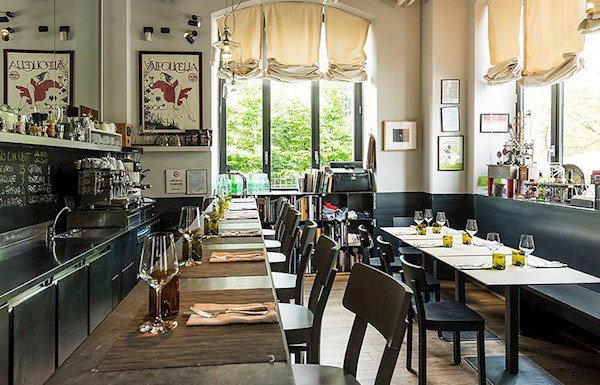
The restaurant is at Via Nino Bonnet 11, in Milan's 20154 postcode, within the Porta Volta area northwest of the historic centre. The neighbourhood is accessible by public transport, though it sits outside the high-traffic tourist corridors. The OAD ranking will have generated additional informed traffic in 2025. No booking method is confirmed in available data, so checking directly through the venue's local listings is recommended. Dress code and seat count are not published; given the casual OAD classification and the noodle-house format, expect a relaxed room without a formal dress expectation.
Frequently asked questions
What do regulars order at Il Gusto della Nebbia?
At-a-Glance Comparison
| Venue | Cuisine | Price | Awards | Notes |
|---|---|---|---|---|
| Il Gusto della NebbiaThis venue (the venue you are viewing) | Modern Sichuan (Chongqing) Chinese | $50–100 | Not listed | Not listed |
| Enrico Bartolini | Modern Italian Fine Dining | $300–500 | 3 Michelin Stars · World's 50 Best #85 | Creative |
| Cracco in Galleria | Modern Italian Fine Dining | $150–200 | 1 Michelin Star · World's 50 Best #33 | Modern Cuisine |
| Andrea Aprea | Modern Italian Fine Dining | $200–300 | 2 Michelin Stars · La Liste Top Restaurants | Modern Italian, Italian Contemporary |
| Seta | Modern Italian Fine Dining | $150–200 | 2 Michelin Stars · La Liste Top Restaurants | Modern Italian |
| Contraste | Modern Italian Fine Dining | $150–200 | 1 Michelin Star · La Liste Top Restaurants | Progressive Italian, Modern Cuisine |
Recognition history
Dated appearances from independent guides and award organizations, with the underlying list record or original source where available.
Opinionated About Dining Casual in Europe Recommended
Opinionated About Dining
Full recognition history (3 entries)
Opinionated About Dining Casual in Europe Ranked #256
Opinionated About Dining
Opinionated About Dining Casual in Europe Ranked #483
Opinionated About Dining
Continue exploring
More in Milan
Restaurants in Milan
All restaurants in Milan →
Bars in Milan
All bars in Milan →

Details
- Cozy
- Elegant
- Modern
- Intimate
- Date Night
- Special Occasion
- Open Kitchen
- Extensive Wine List
- A La Carte
- Vegetarian Friendly
Current opening hours
- Monday
- Closed
- Tuesday
- 12–3 PM, 7–11:30 PM
- Wednesday
- 12–3 PM, 7–11:30 PM
- Thursday
- 12–3 PM, 7–11:30 PM
- Friday
- 12–3 PM, 7–11:30 PM
- Saturday
- 12–3 PM, 7–11:30 PM
- Sunday
- 12–3 PM, 7–11:30 PM
Hours can change for holidays and private events. Hours as of .
Cozy and welcoming atmosphere with nice lighting, chill but polished service, and a wine list featuring bubbles, whites, reds, and oranges.