
Tabelog 100 #73
Our verdict
Yokohama’s iekei ramen culture is built on density, speed, and a direct line between counter cooking and commuter appetite. Iekei Sohonzan Yoshimura Ya sits at the center of that conversation, with Tabelog 100 Ramen Kanagawa selections in 2024 and 2025 and a compact format that keeps the focus on ramen rather than ceremony.

Pearl is the En Primeur Club membership app, where members save venues, book tables and use the concierge.
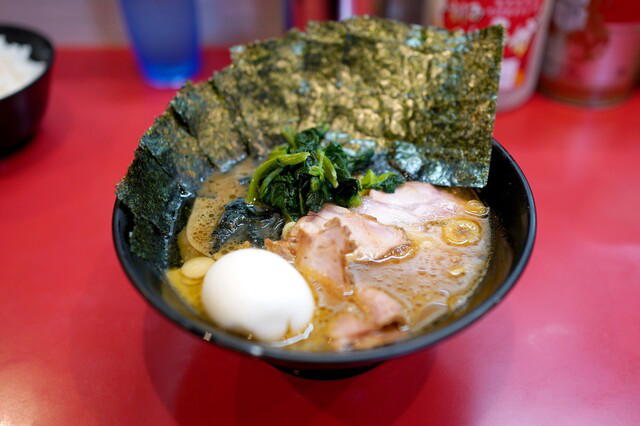
Approach a serious Yokohama ramen room and the first signal is rhythm, not décor: tickets moving, seats turning, steam rising, and a counter culture that treats hesitation as wasted heat. Iekei Sohonzan Yoshimura Ya is a Yokohama ramen venue, and its appeal is direct and practical: a substantial bowl, a focused counter, and a customer rhythm built around speed, heat, and repeat appetite. That ramen-shop language is everyday local food literacy, not visitor flourish.
Iekei Sohonzan Yoshimura Ya belongs to Yokohama’s ramen conversation rather than a newer wave built around tasting-menu polish. Its relevance comes from cultural position as much as scorekeeping: recognition in Tabelog’s ramen listings for 2025, with a 3.76 score, places it in a competitive field where ramen is judged by repeat use, not occasion dining. In Yokohama, that matters. The city’s ramen identity is part of its daily appetite.
Yokohama's iekei style is built for intensity, not delicacy
Iekei sits apart from lighter ramen styles and from the broader noodle trends spread through urban Japan. Its appeal is structural: a forceful bowl, firm eating pace, and seasoning that is meant to stand up to richness. The point is not kaiseki-style refinement, but control, consistency, and the pleasure of a ramen meal that can carry a late lunch, a quick stop, or a train-day detour without making the diner slow down.
That is why Yokohama ramen comparisons mislead when they treat every bowl as one category. Baron Noodle and Yokohama Chuka Soba Ishin Shoten Honten operate in the same city, but belong to a different decision set when the craving is iekei. Sapporo Soup Curry Ananda shows how Yokohama’s casual dining map reaches beyond noodles at approachable spend levels. The useful question is not which counter outranks the others, but which tradition the meal should satisfy.
For a Yokohama food itinerary, this ramen stop changes the rest of the day. A bowl in this style has enough weight to pair better with walking, shopping, or a later drink than with another heavy meal immediately after. The city’s range helps: other Yokohama dining rooms move between varied casual formats without needing one signature district to explain it.
The counter format keeps judgment close to the bowl
Ramen criticism in Japan rewards precision unlike luxury dining. There is no long wine pairing to soften a weak center, no elaborate room to distract from texture, and no multi-course arc to reframe a misfire. The counter compresses the verdict into minutes: noodles either hold, broth either carries depth without fatigue, and the final third either remains persuasive or becomes work.
The structure keeps the experience in practical ramen mode. It is functional scale: built for turnover, proximity to the cooking line, and a direct relationship between order and bowl. The ramen-shop bargain is clear enough: democratic access, with patience as currency. The atmosphere points to a casual tradition rather than the frictionless hospitality model now common in higher-spend dining.
That matters for visitors spending much of a Japan trip chasing Michelin counters or luxury hotel restaurants. Yokohama ramen culture rewards another skill: reading pace, ordering decisively, and knowing that an acclaimed bowl can sit in the JPY 1,000 - JPY 1,999 range. TRATTORIA FRANCO and Napule Yokohama takashimaya ten show other parts of the city’s dining lane, but ramen’s power is its compression of identity and value: quick, serious, and culturally specific at once.
How to place it inside a Yokohama itinerary
Iekei Sohonzan Yoshimura Ya is strongest as a Yokohama-specific meal, not a generic ramen checkbox. Other Japanese cities have their own dining tempos, but Yokohama gives iekei an especially clear local frame. A traveler who eats only sushi, tempura, and wagyu in Japan misses how everyday urban cooking shapes local taste. This is that story in bowl form.
The Yokohama setting makes the stop easy to fold into a city day rather than a specialist pilgrimage. Treat ramen as the anchor and build outward: coffee or shopping before, a walk after, and a lighter dinner unless appetite argues otherwise. Broader planning rails include and Our full Yokohama experiences guide, though ramen remains the sharper cultural lens here.
It also helps to place this meal within a wider Japan itinerary. Nearby cities and regional trips will have their own dining tempos, from coastal day-trip meals to dense urban counters and casual curry or rice-based formats. Even outside Japan, Japanese food formats travel widely, though iekei makes far more sense when read in Yokohama first.
The editorial case is clear: this is not luxury dining, and luxury cues miss the point. The value lies in a Yokohama ramen tradition, Tabelog recognition, and a format that keeps attention on the bowl. For travelers who want Yokohama to taste distinct from Tokyo, that is the reason to make room for it.
Frequently asked questions
Where exactly is Iekei Sohonzan Yoshimura Ya?
Yokohama.
What should I budget for a meal at Iekei Sohonzan Yoshimura Ya?
Pricing at Iekei Sohonzan Yoshimura Ya is listed as JPY 1,000 - JPY 1,999 JPY 1,000 - JPY 1,999.
What days is Iekei Sohonzan Yoshimura Ya closed?
Specific closing-day information is not provided here for Iekei Sohonzan Yoshimura Ya.
What is Iekei Sohonzan Yoshimura Ya known for?
Iekei Sohonzan Yoshimura Ya is known as a ramen venue in Yokohama, with Tabelog Hyakumeiten recognition listed for 2025.
Booking and Cost Snapshot
Comparable venues for context, by category and price tier.
| Venue | Cuisine | Price | Awards | Notes |
|---|---|---|---|---|
| Iekei Sohonzan Yoshimura YaThis venue (the venue you are viewing) | Iekei ramen (Yokohama-style pork and soy sauce ramen) | $10–20 | Tabelog 100 #73 | Not listed |
| つけめん 頑者 新横浜ラーメン博物館店 | Tsukemen (Dipping Ramen) | $1–10 | Not listed | Shin-Yokohama, Tsukemen (Dipping Ramen) |
| Yokohama Iekei Ramen Kachidoki Ya | Yokohama Iekei Ramen Shop | $10–20 | Tabelog 100 #12 | Naka, Yokohama Iekei Ramen Shop |
| Ramen Jiro Nakayama ekimae ten | Jiro-style Ramen | $1–10 | Tabelog 100 #43 | Midori, Jiro-style Ramen |
| Ramen Hoshijirushi | Classic shoyu ramen shop | $10–20 | Tabelog 100 #35 | Kanagawa, Classic shoyu ramen shop |
| Sari Sari Curry | Pakistani-style Japanese curry set | $10–20 | Tabelog 100 #20 | Kanagawa, Pakistani-style Japanese curry set |
Recognition history
Dated appearances from independent guides and award organizations, with the underlying list record or original source where available.
Tabelog 100 #73 · No. 73
Tabelog · Tabelog 100 - Ramen - KANAGAWA - 2025
Continue exploring
More in Yokohama
Restaurants in Yokohama
All restaurants in Yokohama →

Bars in Yokohama
Browse all →


Details
- Lively
- Well Known
- Solo
- Casual Hangout
- Late Night
- Standalone
- Beer Program
- A La Carte
- Counter Dining
- Beer
Current opening hours
- Monday
- Closed
- Tuesday
- 11 AM–8 PM
- Wednesday
- 11 AM–8 PM
- Thursday
- 11 AM–8 PM
- Friday
- 11 AM–8 PM
- Saturday
- 11 AM–8 PM
- Sunday
- 11 AM–8 PM
Hours can change for holidays and private events. Hours as of .
Busy, no-frills ramen shop atmosphere with counter-focused seating over two floors, bright functional lighting, and a constant flow of customers that gives it an energetic, canteen-like feel rather than a leisurely dining room.