
Tabelog 100 #17
Our verdict
Ichiban Ichiban is a Machida ramen and tsukemen counter with 12 counter seats and repeated selection in Tabelog’s Ramen TOKYO 100 from 2018 through 2025. Its appeal sits in the Tokyo ramen category where small rooms, counter service, and tight specialization matter as much as the bowl itself.

Pearl is the En Primeur Club membership app, where members save venues, book tables and use the concierge.
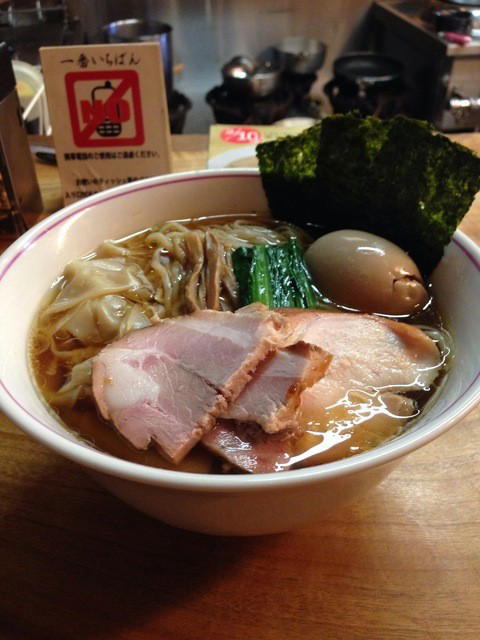
The menu
What to order
- Special Chuka Soba
- Ajitama Chuka Soba
- Won Ton Men
- Chicken Chashu Men
- Pork Chashu Men
Tokyo’s ramen rooms often move at a different tempo from the city’s more formal dining corridors: direct pacing, steam, practical ordering habits in many shops, and focus over lingering. Ichiban Ichiban belongs in that broader conversation. The key detail is not grand design but category: a ramen- and tsukemen-focused venue that places the meal inside Tokyo’s classic noodle-shop contract, concentrating attention on the bowl and the kitchen’s rhythm.
That focus matters in Tokyo, where local dining identities can be as compelling as the city’s famous destination restaurants. Ramen here is not merely a prelude to more formal meals; it is often the point of the trip, especially for a shop recognised in a crowded Tokyo ramen field. Ichiban Ichiban appears in the Tabelog Hyakumeiten context for 2025, placing it within a competitive category rather than as an anonymous everyday stop.
A focused counter in the Tokyo ramen tradition
Tokyo ramen culture rewards specialization. Many ramen rooms move quickly, keep service direct, and make technique part of the experience. The counter is a familiar architecture in serious ramen shops because it can collapse dining room and kitchen into one working line. For Ichiban Ichiban, the relevant editorial signal is concentration. This is not a place to judge by the standards of privacy, courses, or wine service; it is best read through the ramen and tsukemen categories in which it is listed.
The listed categories are ramen and tsukemen, a pairing that says much about Tokyo’s noodle economy. Ramen integrates broth, noodles, tare, aroma oil, and toppings in one bowl; tsukemen separates noodles and dipping broth, sharpening texture and concentration. Shops working across both formats compete where noodle quality and broth structure matter more than interior drama. The format needs little spectacle because the category already creates its own theatre: focus, repetition, and the precision of a meal built around noodles and broth.
Tokyo ramen remains one of the city’s great value categories, even with serious recognition. The comparison helps in broad terms: some Tokyo dining rooms sit in much higher spending bands, while other everyday specialists remain closer to Ichiban Ichiban’s modest budget. That gap explains how ramen can attract obsessive destination dining without behaving like luxury dining: the spend stays modest while the stakes, for enthusiasts, remain high.
Tokyo gives the bowl a different kind of context
Tokyo ramen is often sorted by neighbourhood mythology: station-area counters, late-night bowls, and tightly focused shops across the city’s dining map. Ichiban Ichiban should be read within Tokyo’s wider ramen field rather than reduced to a tourist-route stop. A ramen shop with Tabelog Hyakumeiten recognition signals differently from an unrecognised listing in the same broad category.
That recognition is useful because ramen discovery in Tokyo can become noise. Lists, queues, social media clips, and local tips create too many claims and too little hierarchy. Tabelog Hyakumeiten recognition gives Ichiban Ichiban visible placement in an unusually dense category. Its Tabelog score is 3.81, a meaningful number in Japan because scores above the mid-threes can indicate serious local approval, especially in heavily reviewed categories.
The straightforward ramen format also suits the category. Ramen is democratic even when the cooking is serious: solo diners, pairs of friends, and small groups can share the same style of focused meal without ceremony. The modern Tokyo ramen room is often functional rather than theatrical, and that restraint can be part of the appeal. The design language of the category is practical, not careless; a focused noodle stop can feel more disciplined than a larger dining room trying to be atmospheric.
For readers mapping Tokyo, the contrast is instructive. Other Tokyo dining rooms belong to different traditions, where pacing, heat, repetition, or hospitality define the meal. Other everyday Japanese categories build cult followings through familiarity and specialization. Visual concepts, fish-led formats, grilled formats, and curry rooms all point to different Tokyo modes. Ichiban Ichiban sits quieter: a narrow category, a modest budget, and clear recognition within the ramen and tsukemen field.
How to read it against Tokyo's wider dining map
Judge a ramen-focused venue not by whether it behaves like a high-end restaurant, but by whether its format, recognition, and city context create a reason to cross town. It does not need tasting-menu pacing, chef biography, or spectacle. Here, the case rests on Tokyo context, ramen and tsukemen specialization, a JPY 1,000 to JPY 1,999 budget, and Tabelog Hyakumeiten recognition in 2025.
That is not a universal recommendation for every Tokyo itinerary. Travellers based elsewhere in the city must decide whether a dedicated ramen stop fits the day. For ramen-focused readers, the detour can make sense precisely because Tokyo rewards highly specific food missions. For a first Tokyo trip built around hotels, bars, museums, and one or two marquee meals, any specialist noodle stop requires more planning than a restaurant chosen simply for convenience.
Tokyo rewards this calibration. The city includes luxury counters, casual curry rooms, neighborhood izakaya, dessert cafés, and noodle shops that command attention without expensive fit-out. The wider Japan and international map adds useful contrasts too: other dining rooms in Japan and beyond show how focused, modest-format restaurants can sit beside more elaborate destinations on the same editorial map.
The editorial case is compact but persuasive: a Tokyo ramen and tsukemen venue, modest listed budget, and recognition in a crowded Tokyo field. Ichiban Ichiban is less about grand design than category discipline. The room gives the category what it needs: focus, directness, and little distraction from the work of the bowl.
Pricing, Compared
Comparable venues for orientation by cuisine and category.
| Venue | Cuisine | Price | Awards | Notes |
|---|---|---|---|---|
| Ichiban IchibanThis venue (the venue you are viewing) | Ramen & Tsukemen Shop | $10–20 | Tabelog 100 #17 | Not listed |
| Shio Ramen Shinka 2nd | Modern Shio Ramen Shop | $10–20 | Tabelog 100 #20 | Machida, Modern Shio Ramen Shop |
| Chuka Soba Hirai | Ramen & Tsukemen Shop | $10–20 | Tabelog 100 #77 | Fuchu, Ramen & Tsukemen Shop |
| Chuka Soba Waka TOKYO | Modern Tokyo ramen & tsukemen | $10–20 | Tabelog 100 #78 | Shinagawa, Modern Tokyo ramen & tsukemen |
| Curry Rice Senmon Ten Brother | Japanese Curry Counter | $10–20 | Tabelog 100 #39 | Shinjuku, Japanese Curry Counter |
| Hagakure | Udon and curry udon izakaya | $10–20 | Tabelog 100 #26 | Minato, Udon and curry udon izakaya |
Recognition history
Dated appearances from independent guides and award organizations, with the underlying list record or original source where available.
Tabelog 100 #17 · No. 17
Tabelog · Tabelog 100 - Ramen - TOKYO - 2025
Continue exploring
More in Tokyo
Restaurants in Tokyo
All restaurants in Tokyo →

Bars in Tokyo
All bars in Tokyo →


Hotels in Tokyo
All hotels in Tokyo →

Wineries in Tokyo
Browse all →
Details
- Cozy
- Solo
- Casual Hangout
- Family
- After Work
- Standalone
- A La Carte
- Counter Dining
A compact, counter-only ramen shop with non-smoking, relaxed seating that still feels lively and bustling at peak times, drawing queues of local students and ramen fans.