
Icchan Honten belongs to Hiroshima’s serious okonomiyaki circuit: compact, counter-led, and recognized in Tabelog’s Okonomiyaki 100 selections for 2019, 2024, and 2025. Its appeal is not luxury polish but ingredient logic, griddle discipline, and the city’s layered approach to cabbage, noodles, batter, sauce, and heat.
Pearl is the En Primeur Club membership app — saves, bookings, and concierge access live there. Same editors, same standards.
- Address
- Japan, 〒732-0052 Hiroshima, Higashi Ward, Hikarimachi, 1 Chome−6−30 吉岡ビル
- Phone
- +81825676776
- Website
- okonomiyaki-icchan.com
 Saves & bookings on Pearl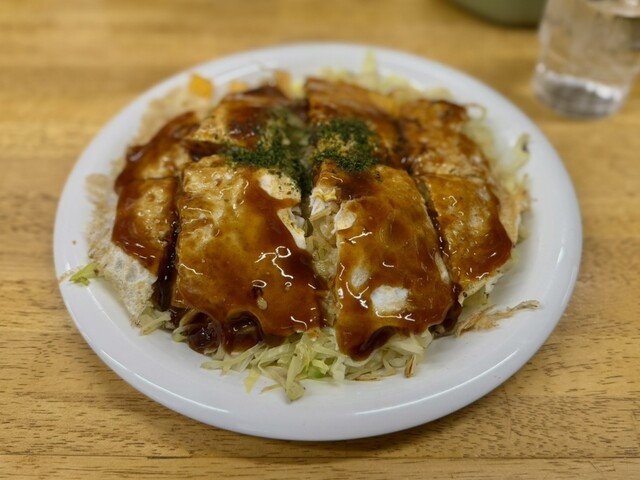
Hiroshima okonomiyaki announces itself before the plate lands: the flat hiss of the iron, the turn of noodles against steel, the sweet-savoury smell of sauce catching heat, and the choreography of a small room built around the griddle. This is not Kansai-style batter folded into a thick pancake. Hiroshima’s version is architectural, stacked in layers, with cabbage doing real structural work and noodles shifting the dish from snack to meal. Icchan Honten sits inside that tradition rather than above it, a 19-seat shop where the point is close-range cooking, quick turnover, and a style of eating that belongs as much to station-area workers as to visiting food obsessives.
The sourcing conversation around okonomiyaki is usually less romantic than in sushi or kaiseki, but it matters just as much. Cabbage has to soften without disappearing, noodles need enough resilience to survive the griddle, and sauce must bind rather than drown. Hiroshima-style okonomiyaki depends on ordinary ingredients handled with narrow tolerances. That is why the city’s serious shops are judged less by novelty than by proportion, heat management, and whether each layer keeps its place under pressure.
Hiroshima okonomiyaki is a construction problem, not a pancake
The useful distinction for travellers is method. In Osaka, okonomiyaki often reads as batter-forward and mixed before it reaches the grill. In Hiroshima, the cook builds upward: a thin base, a heavy load of cabbage, pork or other additions depending on the order, noodles, egg, and sauce. The dish reflects a port city’s appetite for filling, affordable food, but the better versions avoid heaviness through sequencing. Steam softens the cabbage, the griddle firms the noodles, and the final sauce layer gives the dish its public face.
That structure explains why counter seating matters. Watching the build is not theatre added for tourists; it is how the dish reveals its standard. A shop with four seats in front of the hot plate and additional counter seating gives diners a direct view of timing and compression. The difference between a tidy stack and a collapsed one is measured in seconds and hand pressure, not in luxury ingredients. For a city where okonomiyaki is civic food rather than an occasional treat, those small technical differences carry weight.
Recognition helps separate the serious everyday places from the merely convenient ones. Icchan Honten has been selected for Tabelog’s Okonomiyaki 100 in 2019, 2024, and 2025, and carries a Tabelog score of 3.68. In a category where local loyalty can be intense and national tourists often arrive with pre-set names in mind, repeat selection signals consistency within a narrow field. It does not turn a griddle shop into fine dining, and that is exactly the point. The format’s credibility comes from repetition, not ceremony.
Where ingredient restraint beats menu theatrics
Hiroshima’s okonomiyaki scene has room for several registers. Some restaurants lean into larger rooms and predictable station convenience; Denkou Sekka Ekie hiroshima ten, for example, occupies the travel-friendly end of the category with a JPY 1,000 to JPY 1,999 spending range. Masaru and Tatsu sit in a modest local bracket, while Chinese Sai Kichijitsu belongs to a different dining economy altogether, listed around JPY 10,000 to JPY 14,999. The useful comparison is not prestige but purpose: okonomiyaki rewards shops that keep the ingredient chain short and the cooking sequence disciplined.
That restraint is why the drink list is secondary but not irrelevant. Sake, shochu, and cocktails are available, yet the food’s centre of gravity remains the griddle. This is not a pairing-driven room in the manner of a modern creative restaurant such as Akai (Creative Cuisine), nor a city institution built around bakery culture like ANDERSEN. It belongs to the working grammar of Hiroshima eating: hot iron, quick decisions, and a dish whose value comes from balance rather than elaboration.
The category also explains the room’s democratic range. Okonomiyaki shops in Hiroshima often serve solo diners, friends, and families with equal ease because the dish scales without turning formal. Icchan Honten is listed as family friendly, solo dining friendly, and suitable for friends, with children welcome. That breadth is not a soft lifestyle detail; it reflects how okonomiyaki functions in the city. The same dish can cover a lone lunch, a casual dinner, or a parent-and-child meal without requiring a change in format.
How to read this stop within a Hiroshima food day
For travellers building a Hiroshima itinerary, the smarter move is to treat okonomiyaki as a benchmark rather than a throwaway lunch. Pairing it with more polished meals gives the city sharper contrast: Bishu Bikou Hamai for a different register of Japanese dining, CHILAN for a contemporary room, or Butter Cake no Nagasaki Do when the day calls for a regional sweet rather than another full meal. The broader city edit sits in Our full Hiroshima restaurants guide, with parallel planning in Our full Hiroshima hotels guide, Our full Hiroshima bars guide, Our full Hiroshima wineries guide, and Our full Hiroshima experiences guide.
Seen against Japan’s wider casual-dining map, Hiroshima okonomiyaki belongs to the same national conversation as other tightly focused formats: sukiyaki in Kamakura at -Grilled beef Sukiyaki- KAMAKURA TANUKIAN 鎌倉 たぬき庵 in Kamakura, charcoal-led tuna in Tokyo at. 鮪と炭火焼き うお炭 秋葉原店 in Tokyo, café culture in Kansai at.cafe in Osaka, regional cooking in Kyushu at.know in Kumamoto, Vietnamese cooking in Kanagawa at (Shoku) Vietnam in Kawasaki, and curry specialization in Hokkaido at [Curry Senmon Ten] Maruyama Kyoju. in Sapporo. Even overseas, the appeal of focused Japanese formats travels through places such as Jōdo Saké Bar in Los Angeles and Onigiri Time in Pasadena. The lesson is consistent: narrow menus can say more about a place than broad ones.
The critical case for Icchan Honten is therefore not that it reinvents Hiroshima okonomiyaki. It is that it respects the dish’s ingredient economy: cabbage, noodles, batter, egg, sauce, and heat arranged in a sequence that leaves little room for disguise. In a city full of okonomiyaki counters, that discipline is the standard worth chasing.
How It Stacks Up
Nearby venues at a similar price tier for orientation.
| Venue | Cuisine | Price | Notes |
|---|---|---|---|
| Icchan HontenThis venue — the venue you are viewing | Hiroshima-Style Okonomiyaki | $ | Not listed |
| Yagenbori Hassho | Hiroshima-style okonomiyaki | $ | Naka |
| Kanransha | Hiroshima-Style Okonomiyaki | $ | Naka |
| Denkou Sekka Ekie hiroshima ten | Hiroshima-style okonomiyaki & teppanyaki | $ | Minami |
| Itsukaichi Hassho | Hiroshima-style Okonomiyaki | $ | Saeki |
| Denko Sekka (電光石火) | Hiroshima-style Okonomiyaki | $$ | Hiroshima Station area |
Recognition history
Dated appearances from independent guides and award organizations, with the underlying list record or original source where available.
Tabelog 100 #72 · No. 72
Tabelog · Tabelog 100 - Okonomiyaki - 2025
Continue exploring
More in Hiroshima
Restaurants in Hiroshima
Browse all →
Bars in Hiroshima
Browse all →
At a Glance
- Classic
- Cozy
- Well Known
- Family
- Casual Hangout
- Group Dining
- Solo
- Open Kitchen
- Standalone
- Beer Program
- Local Sourcing
- Street Scene
Current opening hours
- Monday
- Closed
- Tuesday
- Closed
- Wednesday
- 11 AM–2:15 PM, 5–8:30 PM
- Thursday
- 11 AM–2:15 PM, 5–8:30 PM
- Friday
- 11 AM–2:15 PM, 5–8:30 PM
- Saturday
- 11 AM–2:15 PM, 5–8:30 PM
- Sunday
- 11 AM–2:15 PM, 5–8:30 PM
Hours can change for holidays and private events. Last verified .
Casual, compact, and neighborhood-oriented, with counter and table seating centered on hot-plate cooking and a traditional Hiroshima okonomiyaki feel.