
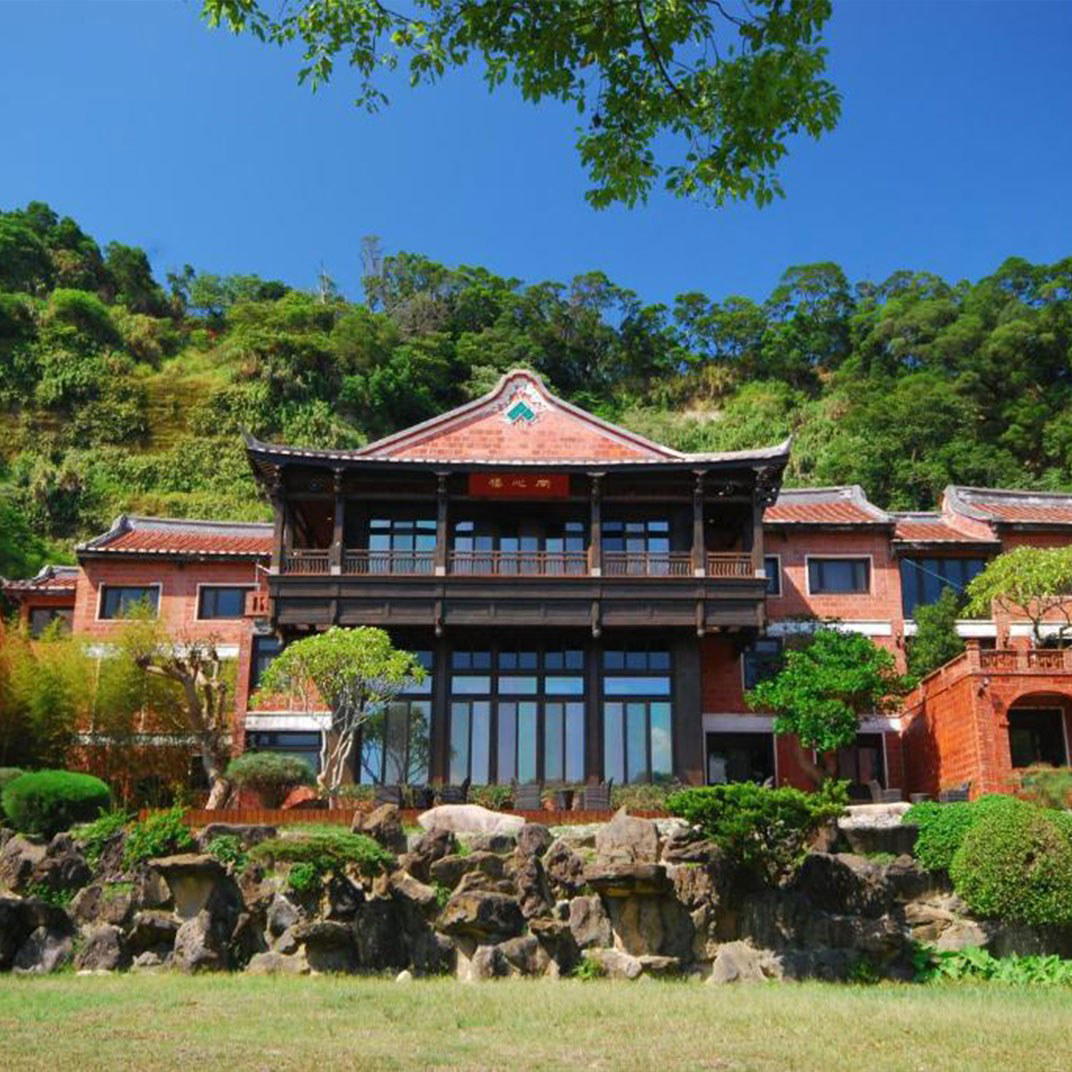
A century-old Hakkanese farmhouse in Zhudong Township, Hung Chin operates without a fixed menu, sourcing produce from small nearby farms to cook whatever the season offers. The owner-chef's stir-fries carry the kind of wok hei that only comes from long practice and high heat. Booking is recommended, and calling ahead to check availability is part of the ritual.
Pearl is the En Primeur Club membership app — saves, bookings, and concierge access live there. Same editors, same standards.
- Address
- 312, Section 3, Kehu Road, Zhudong Township
- Phone
- +886 3 571 8181
- Directions
- Get directions
 Saves & bookings on Pearl
Where the Building and the Food Share the Same Age
Approaching a century-old farmhouse on Section 3 of Kehu Road in Zhudong Township, the architecture announces the meal before you've crossed the threshold. The structure belongs to an older Taiwan: wooden beams worn smooth, proportions that predate commercial development, a material vocabulary of stone and timber that newer restaurants spend serious money trying to approximate. In the broader context of Taiwanese dining, where heritage properties are increasingly co-opted as backdrops for contemporary tasting menus, Hung Chin is a Hakka restaurant. The building and the cooking operate at the same register: unpretentious, seasonal, and rooted in a culinary tradition that long predates the island's current dining moment.
Hsinchu County has a Hakka identity that sets it apart from Taipei's restaurant culture and from the coastal seafood traditions of the west. The Hakka people, who settled the inland hill country in large numbers, developed a cuisine shaped by preservation, economy, and agricultural rhythm. At its core are techniques that extend shelf life, fermented vegetables, dried meats, salt-preserved ingredients, and a repertoire of stir-fries and braises that extract maximum flavour from modest cuts and seasonal produce. Hung Chin works inside that tradition with the confidence of someone who has cooked the same dishes long enough to stop thinking about them consciously.
The Logic of No Fixed Menu
Taiwan's current critical conversation is largely preoccupied with venues like JL Studio in Taichung and logy in Taipei, where the tasting menu format, precise plating, and international sourcing define the experience. Hung Chin is structured around entirely different logic. There is no set menu. What appears on the table depends on what the owner-chef sourced from small farms nearby that week, what the season permits, and what you called ahead to pre-order. This is not a marketing positioning; it is the operational reality of cooking from proximity rather than from a fixed programme.
Calling ahead serves two functions: it tells you what is available, and it allows the kitchen to prepare for specific requests. This pre-ordering practice is common across Taiwan's countryside restaurants, particularly those serving Hakka cuisine, where labour-intensive dishes, braised pork belly, salt-baked meats, preserved vegetable stir-fries, need time and advance preparation. Visitors accustomed to walk-in flexibility at urban restaurants should treat the phone call as part of the experience, not an inconvenience. The reward is a meal that reflects genuine availability rather than a curated illusion of it. For more on the wider dining picture in the county, see our full Hsinchu County restaurants guide.
Wok Hei as a Benchmark
The stir-fries at the restaurant are cited consistently as the core of the meal. The language used to describe them carries a specific technical credential: wok hei, the breath of the wok, a quality produced by high heat, rapid movement, and a cast-iron or carbon-steel surface seasoned over years of use. Achieving it reliably requires equipment that reaches temperatures domestic stoves cannot, and a physical fluency that comes from repetition. Every ingredient is cooked to retain its texture while absorbing the flavour concentration that only that kind of heat can generate. The result is food that reads as Hakkanese not just in its ingredient list but in its structural character: assertive, mineral, without ornament.
This distinguishes the restaurant from a different tier of Hakka restaurants that have moved toward lighter preparations and presentation-conscious plating in response to urban dining trends. The wok work here prioritises flavour development over visual refinement, which is a meaningful editorial distinction in a period when many regional kitchens are adjusting their cooking to meet the expectations of food-photography culture. At restaurants like GEN in Kaohsiung or Zhu Xin Ju in Tainan, the tension between regional authenticity and contemporary presentation is actively negotiated. The restaurant does not appear to be negotiating.
Farm Sourcing as a Structural Commitment
The kitchen sources from small nearby farms, which in Zhudong Township means operating within one of Taiwan's more agriculturally active areas. Hsinchu County's inland zones produce vegetables, rice, and livestock under conditions that differ substantially from the industrial-scale supply chains serving city restaurants. Sourcing locally at this scale is a supply constraint that directly shapes what the kitchen can offer. It also creates a direct connection between agricultural seasonality and the plate, which is the underlying reason the menu cannot be fixed. The food changes because the farms change what they produce.
This model has analogues elsewhere in Taiwan's countryside dining scene. Restaurants like Akame in Wutai Township and Volando Urai Spring Spa & Resort in Wulai District have built international reputations on the same foundational logic: proximity to source, seasonal constraint, and indigenous or regional culinary identity. The restaurant operates at a lower profile and without the international recognition those venues have accumulated, but the structural commitment is equivalent. Other Hsinchu County venues worth considering alongside it include Ang Gu, Bebu, Chuan Fu, Firoo, and Geng Ye Yue Mei, each mapping a distinct point on the county's dining range.
Planning a Visit
The restaurant sits at 312, Section 3, Kehu Road, Zhudong Township, Hsinchu County. Zhudong is accessible by train from Hsinchu Station via the Neiwan Line, though the farmhouse location on Kehu Road will likely require a taxi or private vehicle for the final approach. Booking is recommended, and calling ahead is not optional if you want to confirm what is being cooked and pre-order specific dishes. No website is listed, so the phone call is the primary interface with the kitchen. The absence of an online presence is itself a signal about the operating register of this restaurant.
Side-by-Side Snapshot
Comparable venues nearby, for context on price, style, and recognition.
| Venue | Cuisine | Price | Awards | Notes |
|---|---|---|---|---|
| Hung ChinThis venue — the venue you are viewing | Hakka Cuisine | $$ | Bib Gourmand | Not listed |
| Zhudong Fried Sparerib Noodle (Zhudong) | Traditional Taiwanese Fried Sparerib Noodles | $ | Michelin Plate | Zhudong Town |
| é´»éé£å | Traditional Taiwanese Noodles & Comfort Food | $$ | Not listed | Zhudong |
| Bebu | Hakka | $$ | Bib Gourmand | Beipu Township |
| Shou Wu EAT | Traditional Hakka Home-Style Cooking | $$ | Bib Gourmand | Zhubei City |
| MoonMoonFood (Qingdao East Road) | Healthy Taiwanese Home-Style | $$ | Bib Gourmand | Liming |
Recognition history
Dated appearances from independent guides and award organizations, with the underlying list record or original source where available.
Michelin Bib Gourmand
Michelin

At a Glance
- Family
- Casual Hangout
Current opening hours
- Monday
- 11:30 AM–2 PM, 5–8 PM
- Tuesday
- Closed
- Wednesday
- 11:30 AM–2 PM, 5–8 PM
- Thursday
- 11:30 AM–2 PM, 5–8 PM
- Friday
- 11:30 AM–2 PM, 5–8 PM
- Saturday
- 11:30 AM–2 PM, 5–8 PM
- Sunday
- 11:30 AM–2 PM, 5–8 PM
Hours can change for holidays and private events. Last verified .