
Michelin Bib Gourmand
Our verdict
A Wenzhou-native-run restaurant on Dongsanhuan South Road that has spent over a decade serving coastal Zhejiang seafood to Beijing diners who know to look past the tourist circuit. Live fish tanks at the entrance set the sourcing standard: you choose, they cook. The food is direct and ingredient-led, with mud snails in scallion oil and pork tripe soup among the dishes that have built its following.

Pearl is the En Primeur Club membership app, where members save venues, book tables and use the concierge.
The menu
What to order
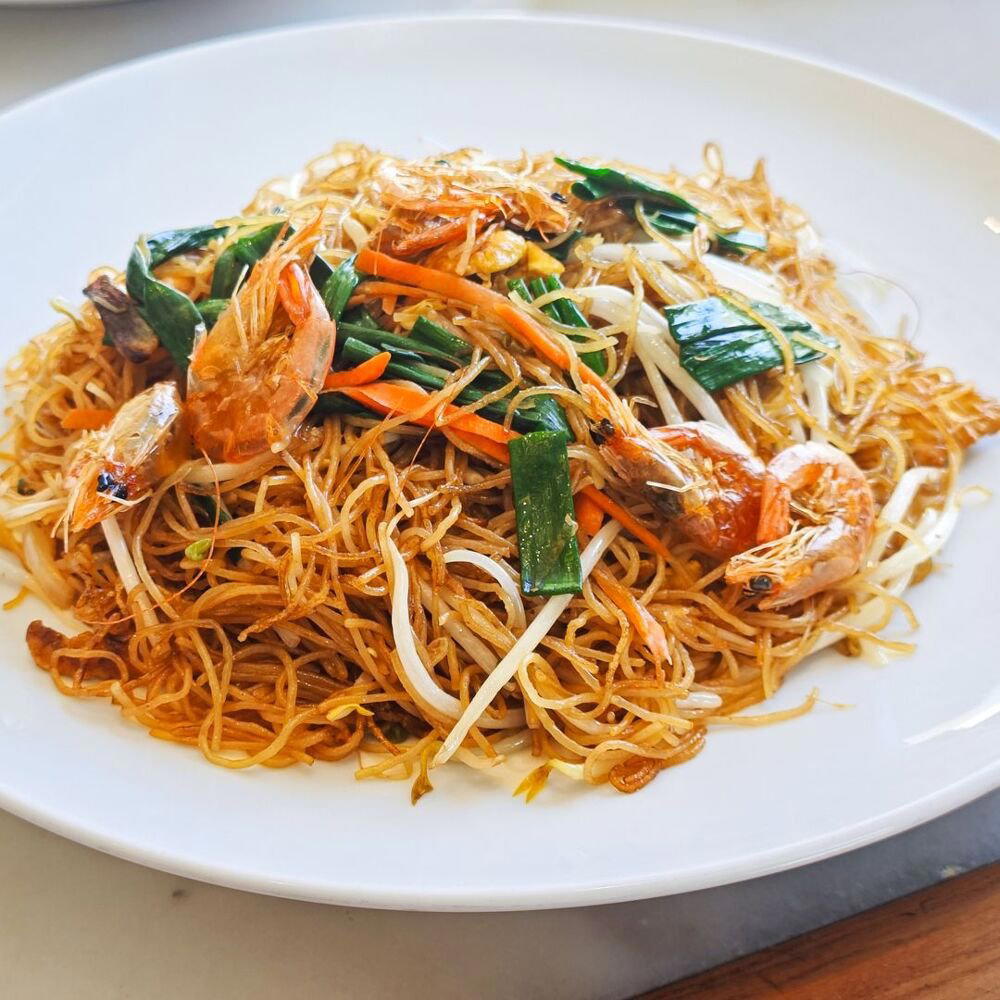
- Mud snails in scallion oil
- Gingery pork tripe soup with egg omelette
Coastal Zhejiang in the Middle of Beijing
Beijing's restaurant scene has long been dominated by its own imperial grain-and-meat traditions and by the high-spend Cantonese and Shanghainese houses that followed the commercial expansion of Chaoyang. Wenzhou cuisine occupies a quieter lane. It belongs to the broader eastern Zhejiang coastal tradition, where the sourcing of seafood matters more than the technique applied to it, and where freshness is a non-negotiable rather than a selling point. Hua Sheng Feng on Dongsanhuan South Road has operated inside that tradition for over a decade, making it one of the longer-running Wenzhou specialists in a city where regional coastal cooking rarely holds territory for long.
The restaurant sits on a stretch of Chaoyang that reads as functional rather than fashionable: commercial towers, wide roads, the kind of block that attracts regulars rather than first-time explorers. Walking in, the signal is immediate. Live fish tanks line the entrance, and the protocol is the same as it has been since the place opened: you identify what you want to eat from what is swimming in front of you, and then you ask the staff how leading to have it cooked. That interaction, low on ceremony and high on practical knowledge, defines the experience from the start.
The Logic of the Live Tank
The live fish tank is the most honest sourcing statement a seafood restaurant can make. It removes the ambiguity of "fresh" as a marketing word and replaces it with something the diner can verify directly. In a landlocked northern city like Beijing, that transparency carries particular weight. Eastern coastal provinces, Zhejiang included, built their seafood reputations on supply chains that move quickly from tidal waters to table. Replicating that in Beijing, where the nearest coastal catch is hundreds of kilometres away, requires consistent logistics and a supply relationship that takes time to establish. A decade of operation suggests those relationships are in place.
Comparison with peer restaurants in Beijing's Zhejiang and coastal Chinese category is instructive. Xin Rong Ji on Xinyuan South Road operates in the Taizhou coastal tradition at the ¥¥¥¥ price tier, serving a clientele that expects polished service alongside high-grade ingredients. Chao Shang Chao in Chaoyang does the same for Chao Zhou cooking. Hua Sheng Feng positions itself differently: the emphasis is on ingredient quality over service formality, and the price point reflects that. The food bears comparison with these houses on sourcing credentials, but the room and the format belong to a different register entirely.
What the Kitchen Does With What You Choose
Wenzhou cooking sits within the Zhe cuisine family, one of the eight classical Chinese culinary traditions, and it is characterised by a light hand with seasoning, a preference for steaming and quick stir-frying over heavy saucing, and a deep reliance on the quality of the primary ingredient. Complicated preparations would obscure what the kitchen is actually working with. The restraint here is structural, not accidental.
The mud snails in scallion oil illustrate the point. The dish requires snails of genuine freshness: anything short of that and the velvety interior texture collapses into something rubbery. The scallion oil brings aroma without weight, leaving the snail's own flavour as the primary experience. The pork tripe soup with ginger and egg omelette follows the same logic: ginger as a functional counterpoint to the tripe rather than a masking agent, the omelette adding body without turning the soup heavy. Neither dish requires a long description because neither dish requires much interpretation. They are well-made versions of what they are.
Across eastern China, this kind of direct ingredient-forward cooking appears in very different contexts. Ru Yuan in Hangzhou operates within a similarly restrained Zhejiang idiom at a higher price tier. 102 House in Shanghai and Xin Rong Ji in Chengdu both demonstrate how coastal eastern Chinese cooking travels to other major Chinese cities without losing coherence. The question in each case is whether the sourcing holds up. At Hua Sheng Feng, the tanks answer that question before you sit down.
Where It Sits in Beijing's Dining Picture
Chaoyang's dining scene has stratified considerably over the past decade. At the leading end, high-investment tasting-menu restaurants and flagship outposts of established Chinese groups compete for business-expense and special-occasion spending. Lamdre, Jingji, and King's Joy each occupy premium positions in their respective categories. Hua Sheng Feng operates in the tier below that, where the draw is not format or prestige but reliability of produce and cooking that assumes you are there to eat rather than to be impressed by the setting.
That tier is where regional cooking in Beijing tends to do its most durable work. A Wenzhou-native operator, running a restaurant for over ten years in a city where he is not from, serving dishes that require a steady supply of live coastal seafood: the longevity is its own credential. Restaurants in this category close when the sourcing gets difficult or when the local clientele moves on. Ten-plus years suggests neither has happened.
For visitors building a broader picture of Chinese regional seafood cooking, the comparison points extend beyond Beijing. Chef Tam's Seasons in Macau, Imperial Treasure Fine Chinese Cuisine in Guangzhou, and Dai Yuet Heen in Nanjing all work within the tradition of ingredient-led Chinese seafood at varying price points. Internationally, the sourcing-first philosophy finds parallels at places like Le Bernardin in New York City, where the fish is always the argument. The context is entirely different, but the underlying logic is the same.
Planning a Visit
The restaurant is located at 13-3 Dongsanhuan South Road in Chaoyang, accessible by the Third Ring Road and within reach of Chaoyang's central business district. The format suits groups more than solo dining; sharing a selection of tank-chosen seafood alongside a soup dish makes better use of the range on offer. For context on where this fits within the wider city, see our full Beijing restaurants guide, as well as our full Beijing hotels guide, our full Beijing bars guide, our full Beijing wineries guide, and our full Beijing experiences guide.
Frequently asked questions
Is Hua Sheng Feng (Dongsanhuan South Road) Michelin-listed?
Hua Sheng Feng (Dongsanhuan South Road) has received recognition including: A Wenzhou native opened this joint over 10 years ago to serve authentic dishes from his hometown. Without complicated preparations and fancy plating, the food appeals with absolute freshness. Pick your favourite seafood from the live fish t….
What's the address for Hua Sheng Feng (Dongsanhuan South Road)?
Hua Sheng Feng (Dongsanhuan South Road) is located at 13-3 Dongsanhuan South Road, Chaoyang, Beijing.
What's the best thing to order at Hua Sheng Feng (Dongsanhuan South Road)?
Two dishes stand out from documented accounts: the mud snails in scallion oil, described as crisp and velvety, and the gingery pork tripe soup with egg omelette, which carries heat without tipping into aggression. Beyond those, the live fish tanks at the entrance are the practical starting point, select your seafood there and ask the staff which preparation method suits each species.
How hard is it to get a table at Hua Sheng Feng (Dongsanhuan South Road)?
Reservation data isn't published, but the restaurant has been running for over a decade on Dongsanhuan South Road in Chaoyang, which suggests a settled local following rather than a hype-driven queue. Visiting mid-week or outside peak dinner hours (7–9 pm) is a reasonable precaution for a restaurant of this type and neighbourhood footprint.
What has Hua Sheng Feng (Dongsanhuan South Road) built its reputation on?
The restaurant was founded by a Wenzhou native with the specific intent of serving hometown dishes in Beijing, a regional proposition that sits apart from the capital's dominant Cantonese and imperial traditions. Its reputation rests on sourcing credibility (live tanks rather than chilled displays) and on the light, product-focused approach that defines Zhe cuisine, one of the eight classical Chinese culinary traditions, applied without elaborate plating.
Can Hua Sheng Feng (Dongsanhuan South Road) adjust for dietary needs?
No specific dietary accommodation policy is documented. Wenzhou cooking is seafood-forward by tradition, which limits options for guests avoiding fish and shellfish. Guests with specific requirements should check the venue's official channels before visiting; a phone number is not publicly listed, so arriving early or visiting in person to discuss is advisable.
Comparable Spots, Quickly
Comparable venues nearby, for context on price, style, and recognition.
| Venue | Cuisine | Price | Awards | Notes |
|---|---|---|---|---|
| Hua Sheng Feng (Dongsanhuan South Road)This venue (the venue you are viewing) | Zhejiang Wenzhou Cuisine | Not listed | Michelin Bib Gourmand | Not listed |
| Zhong | Huaiyang Cuisine | Not listed | Michelin Bib Gourmand | Beijingzhan |
| Qiantang Garden | Authentic Ningbo and Hangzhou Seafood | Not listed | Michelin Bib Gourmand | Shuangyushu |
| My Soup | Cantonese Soup House | $10–20 | Michelin Bib Gourmand | Chaoyang |
| Fujian Restaurant | Authentic Fujian Cuisine | $20–30 | Michelin Plate | Dongcheng |
| No. 69 Fangzhuanchang Zhajiangmian (Fangzhuanchang Hutong) | Traditional Beijing Zhajiangmian | $1–10 | Michelin Bib Gourmand | Dianmen |
Recognition history
Dated appearances from independent guides and award organizations, with the underlying list record or original source where available.
Michelin Bib Gourmand
Michelin
Continue exploring
More in Beijing
Restaurants in Beijing
All restaurants in Beijing →
Bars in Beijing
All bars in Beijing →

Details
- Classic
- Family
- Open Kitchen
- A La Carte