Huí Huí
.png)
A coastal village bistro in Ruifang District that opened in 2023, Huí Huí pairs a zero-waste kitchen philosophy with a French-leaning menu shaped by strong Asian influences. Dishes rotate frequently, with combinations like Shandong roast chicken alongside grilled pickled cucumber appearing alongside a well-curated natural wine list. The rustic-modern interior and quiet seaside setting make it one of the more distinctive dining rooms in New Taipei's outer districts.
 Discover on Pearl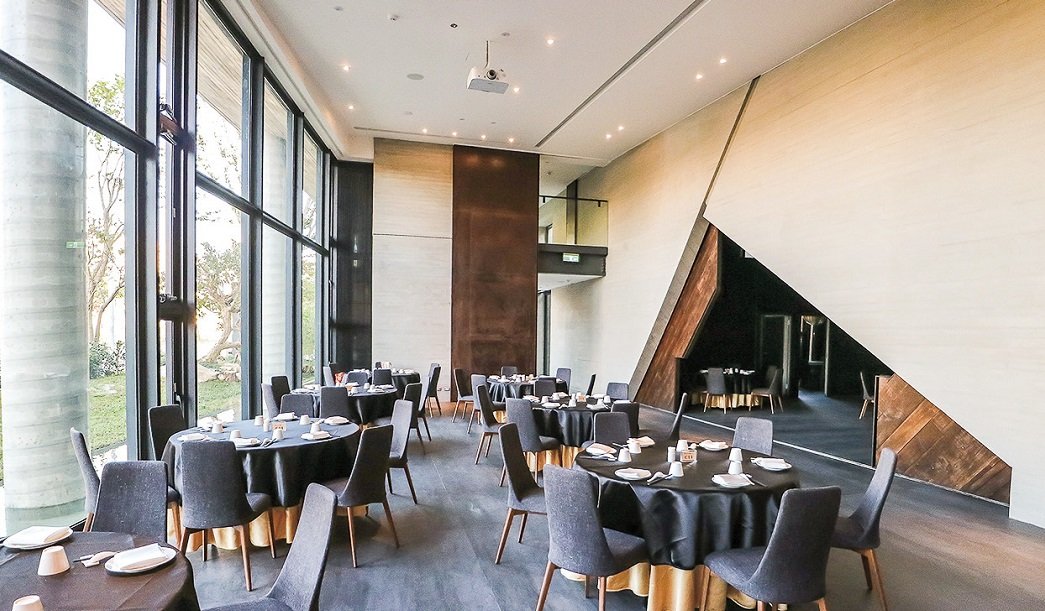
A Room That Sets the Terms
Ruifang District sits at the eastern edge of New Taipei, where the city's urban sprawl gives way to fishing villages and mountain-backed coastline. The dining culture here runs toward seafood stalls and traditional Taiwanese snacks: places like A Gan Yi Taro Balls and A-ba's Taro Ball represent the area's default register. Against that backdrop, the interior of Huí Huí reads as a deliberate statement. The bistro, which opened in 2023 along Dongding Road in a quiet village by the sea, works in rustic materials while reaching for something more considered: exposed textures, unhurried layout, a room that signals informality without sacrificing intention.
That particular combination, the cosy bistro shell housing a technically ambitious kitchen, has become a recognizable format across Taiwan's independent restaurant scene. Logy in Taipei and JL Studio in Taichung each occupy a different register of that format, operating in more urban settings with higher public profiles. What Huí Huí demonstrates is that the format travels to smaller, more peripheral locations without losing coherence, provided the room is built around a clear culinary idea rather than around scenery alone.
The shortlist, unlocked.
Hard-to-book tables, cellar releases, and concierge-planned trips.
Get Exclusive Access →Interior Logic: Rustic Frame, Modern Intention
The design category that Huí Huí occupies has a specific vocabulary: raw or reclaimed surfaces, natural light prioritized over theatrical lighting, seating arranged to encourage conversation rather than to impress with scale. In village locations across coastal Asia, this approach has become a way for independent operators to acknowledge their setting without being consumed by it. The room at Huí Huí follows that logic, described consistently as rustic yet refreshingly modern, which in practice means the physical materials evoke place while the spatial arrangement does not defer to nostalgia.
This matters because the menu itself operates in a similar tension. French culinary structure anchors the kitchen, but Asian ingredient traditions and techniques shape individual dishes, and the two registers are not kept at a polite distance from each other. A room that felt purely folkloric or purely modernist would undercut that balance. The current interior sits in the gap between the two, which is the correct place for this kind of cooking to land.
For context within New Taipei's broader dining geography, the contrast with spots like Amajia or BAK KUT PAN is instructive. Those venues operate within well-established culinary idioms, where the room's job is to support a familiar format. Huí Huí's interior has to do more: it needs to make the cultural logic of a French-Asian bistro in a Taiwanese coastal village feel earned rather than arbitrary. On the evidence, it manages this.
The Kitchen's Working Method
Across Taiwan's serious independent restaurants, a recurring commitment to local sourcing has moved from point of difference to baseline expectation. What distinguishes Huí Huí's approach is the zero-waste framing layered on leading of that: a kitchen philosophy that treats the supply chain as a constraint shaping the menu rather than as a marketing position. This is a meaningful distinction. Zero-waste cooking disciplines the kitchen to work with whole animals, less-favored cuts, and seasonal abundance, and that discipline tends to produce more inventive menus than kitchens operating with open-ended sourcing options.
The French menu with strong Asian influences changes frequently, which is consistent with this ethos. Dishes cited in available records include Shandong roast chicken with grilled pickled cucumber, and fried lamb tripe with purple cabbage in coriander sauce. These combinations carry specific cultural weight: Shandong roast chicken references northern Chinese culinary tradition; lamb tripe places the kitchen in conversation with both Taiwanese offal cooking and French bistro charcuterie. Neither dish tries to smooth the cultural seams into something homogenous. They sit alongside each other as evidence of a kitchen thinking across traditions rather than synthesizing them into a single digestible statement.
This approach has parallels elsewhere in Taiwan's current restaurant moment. Akame in Wutai Township operates in a similarly peripheral location with a kitchen that draws on indigenous Paiwan ingredients and technique within a fine-dining structure. GEN in Kaohsiung and Zhu Xin Ju in Tainan represent other nodes in the same broader pattern: regional restaurants working with local sourcing and cross-cultural technique at a level of seriousness that has historically been concentrated in Taipei. The geographic spread of this ambition is one of the more significant shifts in Taiwanese dining over the past five years.
Natural Wine in a Coastal Village
The natural wine list at Huí Huí is described as well-curated, which in context carries specific meaning. Natural wine has become a reliable signal in independent restaurants operating at this level of intention: it aligns with zero-waste and local-sourcing commitments philosophically, and it tends to attract an operator who is engaged with the full dining experience rather than treating the beverage program as secondary. In Taiwan's restaurant scene, natural wine lists of genuine depth remain relatively concentrated in Taipei's central districts. Finding a considered program in Ruifang District, positioned alongside a rotating kitchen menu, suggests the operation is built around a coherent set of priorities rather than assembled from separate parts.
For wine-focused visitors to New Taipei, the full New Taipei wineries guide covers the regional picture in more detail, and the New Taipei bars guide maps the broader drinks scene across the city's districts.
Getting There and Planning Your Visit
Huí Huí is located at 155-4 Dongding Road in Ruifang District, a part of New Taipei that most international visitors pass through en route to the nearby Jiufen historic area or the Jinguashi heritage sites. The bistro opened in 2023, making it a recent addition to a district better known for heritage tourism than for destination dining. Because the menu changes frequently and the format is a small village bistro rather than a large-capacity operation, visiting without a reservation carries real risk, particularly on weekends when the area draws significant day-trip traffic from Taipei. The restaurant does not list booking details in public records currently available, so direct contact through the venue is advisable before planning a specific trip.
Given the location, Huí Huí works well as part of a wider Ruifang day or a longer eastern New Taipei itinerary. The full New Taipei restaurants guide covers the range of dining across the city's districts, from the waterfront areas to the mountain townships. For accommodation planning, the New Taipei hotels guide maps the options across the city, and the New Taipei experiences guide covers the broader cultural and activity picture for the region. Other notable New Taipei dining worth considering includes Chi Yuan, which represents a different register of the city's independent restaurant scene.
For a wider frame on Taiwan's current restaurant moment, Volando Urai Spring Spa and Resort in Wulai District offers a resort-dining counterpoint to the village bistro format Huí Huí occupies. Internationally, the French bistro tradition from which Huí Huí draws its structural vocabulary is visible at very different scales in places like Le Bernardin in New York City and Emeril's in New Orleans, both of which demonstrate how French-trained kitchens adapt to local ingredient cultures, which is precisely the question Huí Huí is answering in its own context.
The shortlist, unlocked.
Hard-to-book tables, cellar releases, and concierge-planned trips.
Get Exclusive Access →Frequently Asked Questions
Standing Among Peers
A quick peer snapshot; use it as orientation, not a full ranking.
| Venue | Awards | Cuisine | Notes |
|---|---|---|---|
| Huí Huí | Opened in 2023, this cosy bistro in a quiet village by the sea sports a rustic y… | This venue | |
| A Gan Yi Taro Balls | |||
| A-ba's Taro Ball | |||
| Amajia | |||
| BAK KUT PAN | |||
| Chi Yuan |
Need a table?
Our members enjoy priority alerts and concierge-led booking support for the world's most difficult tables.
Get Exclusive AccessThe shortlist, unlocked.
Hard-to-book tables, cellar releases, and concierge-planned trips.
Get Exclusive Access →