
Tabelog 100 #64
Our verdict
Housen Dou Honten places Kyoto wagashi in its quieter northern register: take-out focused, modestly priced, and tied to the city’s long habit of treating sweets as seasonal craft rather than dessert alone. Its 2023 selection for Tabelog 100 Japanese traditional sweets / Japanese sweets cafe WEST gives it a useful trust signal in a category where reputation often travels by local habit rather than dining-room spectacle.

Pearl is the En Primeur Club membership app, where members save venues, book tables and use the concierge.
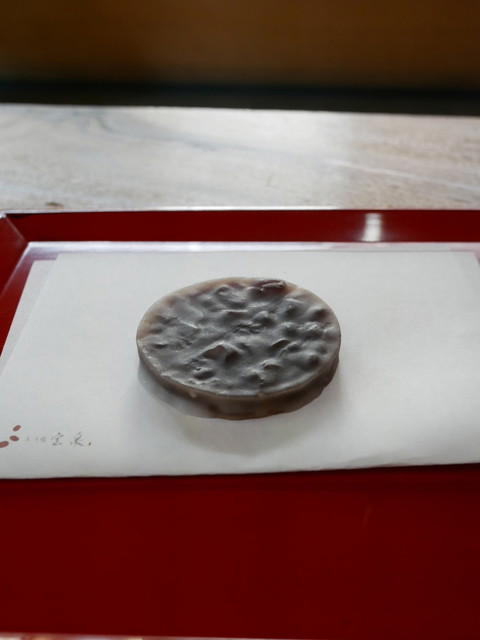
The menu
What to order
- Tanba black soybean wagashi
- Dainagon azuki sweets
- Zenzai
Kyoto changes the tempo of traditional sweets. Away from the idea of the city as only a restaurant crawl, it can feel like a sequence of tea-minded stops, small counters, and careful purchases where wagashi is bought for a specific hour. Housen Dou Honten belongs to that register: a Japanese traditional sweets address in Kyoto, with appeal rooted in the city’s discipline of season, gift-giving, and restraint.
That matters because wagashi in Kyoto is not an after-lunch extra. It grew around tea culture, temple calendars, household entertaining, and formal exchanges of seasonal objects. The city’s sweets shops read almost like micro-regions: some serve visitors moving through Kyoto, some operate as tea-minded stops, and others function as local purveyors for residents who know what they came to collect. Housen Dou Honten sits within that tradition, with a low published price band that keeps focus on purchase, timing, and occasion rather than dining-room theatre.
Kyoto's wagashi culture rewards precision over spectacle
Kyoto’s food culture is not concentrated only in formal dining rooms and counter-led meals. Wagashi carries equal cultural weight in a smaller frame. The craft depends on proportion, seasonality, and the relationship between sweetness and bitter tea; the setting can be modest while expectations are exacting. A shop recognized in the 2023 Tabelog Hyakumeiten field for Japanese traditional sweets is being measured inside that specialist category, not against restaurants with wine lists, multi-course pacing, or chef-led tasting menus.
The category also sits apart from Kyoto’s casual dining map. Visitors might compare everyday meal stops and cafés by meal function; wagashi works differently. It is often a planned stop between larger moments in the day, a domestic purchase, or a gift chosen for timing and presentation. That makes the format more than logistics. It places the experience in the older rhythm of Kyoto food shopping, where a counter transaction can carry as much cultural meaning as a table reservation.
Within EP Club’s Kyoto coverage, this is a different lens from other Kyoto dining rooms, city-centre crowd pleasers, or more design-led formats elsewhere in the city. Those addresses answer where to eat; a wagashi counter answers when and why to buy. For related Kyoto sweets traditions, the point is the same: a single sweet can attach itself deeply to place, custom, and ritual without needing the architecture of a full meal.
The focused format keeps the attention on season and use
Housen Dou Honten’s practical strength is its narrowness. The listed category is Japanese traditional sweets, and spend sits in the lowest published band, - JPY 999 View spending breakdown. In a city where premium dining can require advance planning and serious budget, this specialist stop offers different access: not casual in craft, but low-friction in use. It suits travellers who know Kyoto’s food culture is built as much from small, repeated customs as from formal meals.
The appeal points to a local pattern: wagashi shops serve multiple audiences at once. Customers may be buying for tea, for a host, or for the simple pleasure of a seasonal sweet taken elsewhere. That range is part of the category’s durability. The product can be ceremonial without making every purchase feel ceremonial.
Comparisons calibrate expectations. Cafe Verdi, Mitama Ya, Saryo Housen, aoi, and CLIMA are useful reference points only insofar as they show how varied Kyoto itineraries can become. The target here is not necessarily a long sit-down pause. It is a compact specialist stop in the wagashi field. Against wider Kyoto dining, placing Housen Dou Honten beside other Kyoto names underlines how plural the city’s eating map has become.
For travellers building a broader itinerary, pair a sweets stop with the pacing of a Kyoto day rather than force it into a dinner plan. Our full Kyoto restaurants guide maps the city’s dining range, while Our full Kyoto hotels guide, Our full Kyoto bars guide, Our full Kyoto wineries guide, and Our full Kyoto experiences guide place that stop inside a fuller day rather than an isolated detour.
How to read its place in a wider Japan itinerary
The value of a Kyoto wagashi address sharpens against Japan’s other casual formats. Elsewhere, casual dining may anchor appetite around hot dishes, seafood, grill culture, coffee, or contemporary café routines. Kyoto wagashi sits on another axis: smaller, older, and more bound to season and presentation than to appetite alone.
That contrast extends beyond Japan. In other cities, Japanese forms can appear through migration, comfort-food specialization, bar culture, or quick-service formats. Housen Dou Honten is useful because it remains anchored in Kyoto’s terms: small-format, culturally legible, and recognized within a specialist sweets category rather than amplified into a destination restaurant narrative.
The editorial read is simple. Kyoto rewards visitors who leave space for categories that do not behave like restaurants. Wagashi is one. Here, the signal is not a chef biography, tasting counter, or dramatic room; it is a sweets tradition compact enough for a short stop, yet deep enough to explain why Kyoto’s food culture cannot be understood through dinner reservations alone.
Frequently asked questions
Is Housen Dou Honten more mid-range or high-end?
Pricing at Housen Dou Honten is listed as - JPY 999 View spending breakdown.
Where do I go for Housen Dou Honten?
Kyoto.
What are the opening hours for Housen Dou Honten?
Check directly with Housen Dou Honten for current opening hours before visiting.
What is Housen Dou Honten known for?
Housen Dou Honten is known for Japanese traditional sweets in Kyoto.
Price and Positioning
Comparable venues in the metro at similar price points.
| Venue | Cuisine | Price | Awards | Notes |
|---|---|---|---|---|
| Housen Dou HontenThis venue (the venue you are viewing) | Japanese Sweets / Wagashi | $1–10 | Tabelog 100 #64 | Not listed |
| Ramen Jiro Kyoto ten | Jiro-style ramen | $10–20 | Tabelog 100 #70 | Sakyō, Jiro-style ramen |
| GOKKEI Ichijouji honten | Ultra-rich chicken paitan ramen | $10–20 | Tabelog 100 #79 | Sakyō, Ultra-rich chicken paitan ramen |
| Onkashi Tsukasa Shioyoshiken | Traditional Kyoto Wagashi (Japanese confectionery) | $10–20 | Tabelog 100 #91 | Kamigyō, Traditional Kyoto Wagashi (Japanese confectionery) |
| Shinjuku Menya Fuuka | Kyoto ramen and tsukemen | $10–20 | Tabelog 100 #78 | Shimogyō, Kyoto ramen and tsukemen |
| Men Dokoro Toritani | Kyoto chicken ramen | $10–20 | Tabelog 100 #31 | Ukyō, Kyoto chicken ramen |
Recognition history
Dated appearances from independent guides and award organizations, with the underlying list record or original source where available.
Tabelog 100 #64 · No. 64
Tabelog · Tabelog 100 - Japanese traditional sweets / Japanese sweets cafe - WEST - 2023
Continue exploring
More in Kyoto
Restaurants in Kyoto
All restaurants in Kyoto →

Bars in Kyoto
All bars in Kyoto →



Hotels in Kyoto
All hotels in Kyoto →




Wineries in Kyoto
Browse all →
Details
- Quiet
- Classic
- Cozy
- Solo
- Family
- Casual Hangout
- Standalone
- Historic Building
- Local Sourcing
- Garden
- A La Carte
- Tea
- Vegetarian Friendly
Current opening hours
- Monday
- 10 AM–5 PM
- Tuesday
- 10 AM–5 PM
- Wednesday
- 10 AM–5 PM
- Thursday
- 10 AM–5 PM
- Friday
- 10 AM–5 PM
- Saturday
- 10 AM–5 PM
- Sunday
- Closed
Hours can change for holidays and private events. Last verified .
A traditional Japanese sweets shop with a calm, refined Kyoto atmosphere focused on ingredient quality and handcrafted wagashi.