
Tabelog 100 #50
Our verdict
Houraku sits in Shimabara’s everyday-dining register, where cafeteria cooking, champon and ramen carry more local meaning than ceremony. Its selection for Tabelog 100 - Diner - 2026 puts a small, low-priced house restaurant into a national conversation about Japan’s shokudo culture, especially the Kyushu habit of treating noodles as a full regional meal rather than a quick stopgap.

Pearl is the En Primeur Club membership app — saves, bookings, and concierge access live there. Same editors, same standards.
- Address
- 3961-1 Kakinokimachi, Shimabara, Nagasaki 855-0066, Japan
- Phone
- +81 957-64-2021
- Hours
- Mon–Wed 11 AM–2 PM, 5–7 PMThu ClosedFri–Sun 11 AM–2 PM, 5–7 PM
- Website
- tabelog.com
- Directions
- Get directions
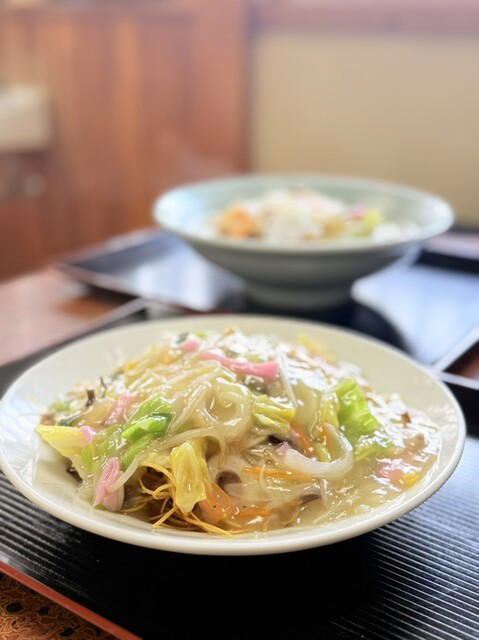
Approaching Houraku in Shimabara changes the expectations before a bowl reaches the table. The city sits within Nagasaki’s broader coastal and volcanic food culture, a setting often associated with practical everyday cooking: warm bowls, vegetables, seafood routes across the prefecture, and noodle dishes designed for workers, families and friends rather than ceremony. Houraku belongs to that register. It is not framed here as a chef-counter performance or a destination tasting menu; it is best read through its listed categories, where the seriousness lies in cafeteria cooking, champon noodle soup, ramen and the local appetite for filling bowls.
That matters because Shimabara is not competing with Tokyo’s reservation economy. Its dining identity can be closer to Kyushu’s working restaurants, where a short menu category can carry a city’s habits more clearly than a long dégustation. Cafeteria cooking, champon noodle soup and ramen place Houraku in a specific lane: accessible, filling, and shaped by the produce-and-seafood logic of Nagasaki rather than by luxury signals. The 2026 Tabelog recognition gives the room a national marker, but the useful reading is not prestige for its own sake. It shows how Japan’s everyday dining category can reward a regional restaurant for consistency in a format that affluent travelers often underread.
Champon, ramen and the Kyushu shokudo as a sourcing story
Nagasaki champon is not just a noodle type; it is a record of port-city eating. The dish developed around Chinese influence, Japanese pantry habits and the need to turn vegetables, noodles and broth into a complete meal. In Shimabara, that tradition lands differently from the polished versions served in major-city department stores. The point is not ornament. The point is a bowl that makes sense in a coastal prefecture where vegetables, seafood culture and wheat noodles have long shared the table.
Houraku’s listed categories, cafeteria, champon noodle soup and ramen, place it inside that everyday taxonomy. In Japan, a shokudo-style meal can be more revealing than a formal restaurant because it exposes what a city eats when nobody is performing for visitors. The format also changes how sourcing should be read. A premium restaurant may name farms and vessels; an everyday diner more often expresses place through recurring local preference: the vegetables that belong in the pot, the broth weight that suits the region, the noodle style that regulars accept without explanation.
The comparison within Shimabara is useful. A Burgers Cafe sits in a similar everyday register but points toward a different appetite, casual comfort rather than Nagasaki noodle culture. ペシコ signals a separate, more contemporary dining conversation. Houraku is the more traditional read of the city: a cafeteria category, a practical menu language, and a style rooted in Kyushu’s bowls rather than in restaurant theatrics.
The category changes the rhythm of a meal
Category is part of the editorial value here. This is not presented as a large formal dining room built around ceremony, but as a cafeteria-style address where the pace is defined by everyday meals. That practical end of Japanese casual dining often suits solo diners, friends and small groups more naturally than anyone looking for a staged occasion. The experience stays close to the public shokudo model rather than a controlled dining salon.
The Tabelog score of 3.59 and 2026 recognition provide the trust signal, but they should be read in the right category. This is not a Michelin-style claim about luxury technique. It is recognition inside the everyday dining field, where affordability, regular use and regional comfort carry weight. That distinction is why the restaurant is useful for travelers who want to understand Shimabara through meals rather than only through sightseeing. A JPY 1,000 - JPY 1,999 listing that earns national diner recognition says something about the city’s standards for ordinary food.
There is also a practical cultural point. Houraku should be approached as a regional everyday restaurant rather than as a highly managed urban hospitality product. Those details do not diminish the restaurant; they locate it. Rural and regional Japan often moves at a different hospitality tempo from central Tokyo or Osaka, and a local cafeteria-style meal can feel less scripted as a result. The trade-off is clear: fewer luxury cues, more direct contact with the kind of dining room category that serves everyday appetite first.
How to place it in a Shimabara itinerary
For a food-focused trip, Houraku makes sense as part of a broader Shimabara day rather than as a solitary trophy meal. The surrounding city rewards slower movement: local history, spring-water culture, and the broader Nagasaki landscape all frame why warm, filling noodle dishes feel native here. Travelers building a local dining map should start with our full Shimabara restaurants guide, then use our full Shimabara hotels guide, our full Shimabara bars guide, our full Shimabara wineries guide and our full Shimabara experiences guide to understand the city beyond one meal.
Japan’s casual-restaurant spectrum is wide, and Houraku occupies a specific point on it. For contrast, other dining in Shimabara can take the conversation toward contemporary cooking, destination meals or casual comfort, while unnamed regional restaurants elsewhere in Japan show how beef, seafood, cafe culture, curry, meat restaurants and burger formats each carry their own local grammar. Across the Pacific, Japanese food categories also change when they leave Japan. Houraku’s value is the opposite: it keeps the reader inside a regional Japanese grammar, where a bowl of noodles can explain a city without needing spectacle.
Frequently asked questions
Would Houraku be comfortable with kids?
For families, Houraku reads as a casual stop rather than a formal dining room: it has a cafeteria, champon noodle soup and ramen profile, with lunch budget listed at JPY 1,000 - JPY 1,999. The location is Shimabara.
Is Houraku better for a quiet night or a lively one?
Houraku suits a quiet meal more than a lively one. Its cafeteria, champon noodle soup and ramen categories, along with its 2026 Tabelog recognition, point to a focused local place rather than a late-night scene.
Is Houraku expensive?
Pricing at Houraku is listed as JPY 1,000 - JPY 1,999 View spending breakdown.
What are Houraku's hours?
Specific opening hours are not provided here. For current details, contact Houraku directly at +81-957-64-2021.
In Context: Similar Options
Comparable venues by cuisine and price in the same metro.
| Venue | Cuisine | Price | Awards | Notes |
|---|---|---|---|---|
| HourakuThis venue — the venue you are viewing | Homestyle Chinese / Cafeteria | $10–20 | Tabelog 100 #50 | Not listed |
| A Burgers Cafe | American Burgers | $10–20 | Tabelog 100 #32 | Honkojicho |
| ペシコ | Sato-hama Gastronomy | $200–300 | Tabelog Silver #104 | Shimabara |
| 北口亭 | Numazu Gyoza | Not listed | Not listed | 杉崎町 |
| Tim Ho Wan (添好運) | Authentic Cantonese Dim Sum | $20–30 | Not listed | Chiyoda (Hibiya) |
| 中華ダイニング なおじ | Authentic Chinese | Not listed | Not listed | 平良西里 |
Recognition history
Dated appearances from independent guides and award organizations, with the underlying list record or original source where available.
Tabelog 100 #50 · No. 50
Tabelog · Tabelog 100 - Diner - 2026
Continue exploring
More in Shimabara
Restaurants in Shimabara
Browse all →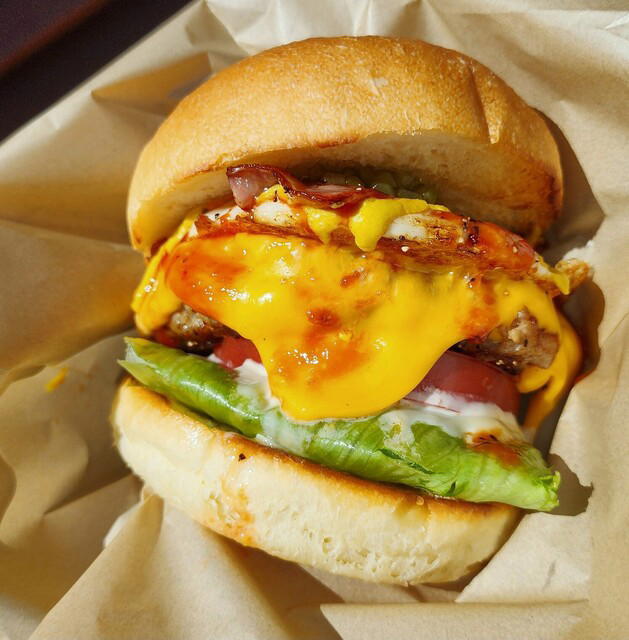
Bars in Shimabara
Browse all →
Details
- Classic
- Cozy
- Solo
- Casual Hangout
- Standalone
- A La Carte
Current opening hours
- Monday
- 11 AM–2 PM, 5–7 PM
- Tuesday
- 11 AM–2 PM, 5–7 PM
- Wednesday
- 11 AM–2 PM, 5–7 PM
- Thursday
- Closed
- Friday
- 11 AM–2 PM, 5–7 PM
- Saturday
- 11 AM–2 PM, 5–7 PM
- Sunday
- 11 AM–2 PM, 5–7 PM
Hours can change for holidays and private events. Last verified .
Unpretentious and homestyle, with a small house-restaurant feel that reads as casual and local.