
Honkaku Teuchi Udon Tomosaku is a Kurashiki udon address for diners who care about handwork more than spectacle. Its 2024 Tabelog 100 Udon WEST selection, handmade-noodle format, oden side category, and house-restaurant setting place it in the regional craft tier rather than the polished destination-dining bracket.
Pearl is the En Primeur Club membership app — saves, bookings, and concierge access live there. Same editors, same standards.
- Address
- 26-1 Futago, Kurashiki, Okayama 701-0115, Japan
- Phone
- +81 86-463-1555
- Website
- tabelog.com
- Directions
- Get directions
 Saves & bookings on Pearl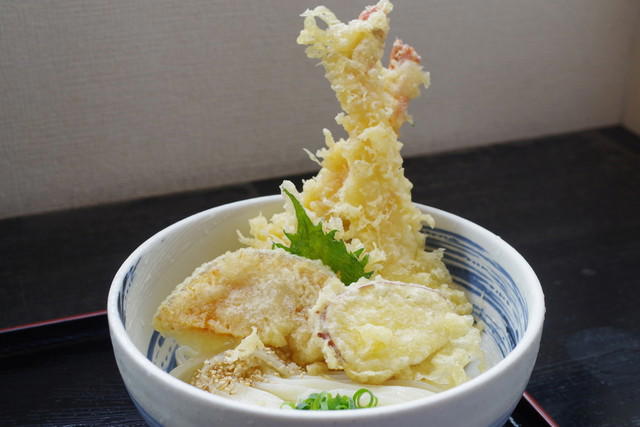
Approaching a house-style udon restaurant in Futago, the signal is routine, not gloss: cars, families, counter seats, table seats, and a kitchen built around dough. Kurashiki’s food culture is often read through the Bikan Historical Quarter, coffee houses, machiya cafés, and preserved merchant-town aesthetics, but everyday eating has another rhythm. Udon is lunch food, child-friendly food, road-trip food, and, at its serious end, a test of flour, water, salt, kneading, resting, cutting, and timing.
Honkaku Teuchi Udon Tomosaku sits at that serious end without abandoning udon’s ordinary grammar. “Honkaku teuchi” means proper handmade udon. In western Japan, where nearby Kagawa’s Sanuki influence is never far away, udon is judged less by ornament than noodle character. Broth, toppings, and sides matter, but the noodle carries the argument. A fully handmade shop also has a ceiling: holiday demand can exceed supply.
Handmade udon as a regional craft, not a luxury performance
Japan’s noodle culture splits between mass convenience and specialist repetition. Ramen rewards innovation, branding, and late-night appetite; soba has buckwheat aroma and seasonal restraint. Udon is more democratic, making serious versions harder to hide behind ceremony. The difference is texture, cut, and tempo. Handmade udon must feel made, not merely cooked, without becoming precious or too slow for daily food.
That is why the 2024 Tabelog 100 Udon WEST selection matters. It covers a competitive udon region, placing the restaurant among category specialists rather than fine-dining rooms. A Tabelog score of 3.64 reinforces the point: not a luxury signal, but a category signal. The peer group is not Kurashiki’s formal dinner addresses, but western Japan’s noodle shops where craft shows in format and demand.
Udon’s sourcing question begins with flour, even when origin is not foregrounded. Wheat noodles are deceptively plain; poor sourcing or careless handling leaves nowhere to hide. Salt affects structure, hydration chew, resting elasticity, and cutting how noodles take broth. Oden alongside udon places the meal in a practical Kansai-western Japan frame: hot, simmered accompaniments supporting, not competing with, the noodle. Sake and shochu are offered, but the logic remains daytime and food-led.
Kurashiki rewards this specificity. Visitors often cluster around the canal area and treat meals as extensions of the historic streetscape. That contrasts with Machiya Kissa Miyake Shoten and Kurashiki Coffee Kan, where café culture and preserved architecture are part of the appeal. Udon in Futago is less scenic, more functional. The reward is not a photogenic merchant-house pause, but a clearer look at how the region eats when a handmade staple is the main event.
Where it sits in Kurashiki's dining map
Kurashiki’s restaurant scene is broader than its postcard image. Kappa and Kashiwaya Kobayashi show the city’s Japanese dining range; PIZZERIA La Cenetta shows casual international cooking in local eating patterns. Honkaku Teuchi Udon Tomosaku occupies a narrower lane: inexpensive, daytime-oriented, no-frills craft cooking with enough recognition to draw diners beyond the immediate neighbourhood.
The room supports that reading. Forty-six seats, including counter and table seating, make it larger than a tiny specialist counter but modest enough for handmade production to shape the day. Tatami seating and a non-smoking room keep it family-accessible, while no private rooms or private-use positioning keeps the experience public and casual. This is not occasion dining; it is throughput, repetition, and a product that can run out when demand is high.
For travellers, the distinction helps. A Kurashiki day can split between heritage-quarter wandering, coffee, and a focused meal outside the central tourist loop. The city’s planning pages frame those choices: Our full Kurashiki restaurants guide covers the dining spread, while Our full Kurashiki hotels guide, Our full Kurashiki bars guide, Our full Kurashiki wineries guide, and Our full Kurashiki experiences guide place the meal inside a fuller itinerary.
Compared with destination restaurants defined by chef biography, course structure, or cellar depth, the udon specialist asks a simpler editorial question: does the format respect ingredient and craft enough to justify the detour? For the right diner, yes. Handmade noodle process, Tabelog 100 Udon WEST 2024 recognition, category focus, and holiday sell-out risk all point to value in production discipline rather than decoration.
How to read the meal before you go
Approach this as a regional craft stop, not a flexible all-day dining option. Handmade noodles impose limits, and lunch demand in Japan often compresses into a short window. Families are expected, but the experience is not loose or endlessly accommodating. Arrive ready for a focused, casual meal where the kitchen’s main responsibility is noodle quality, not lingering service theater.
That separates it from many export-friendly Japanese food narratives. Overseas, udon is often soft-edged comfort food. In western Japan, especially near Kagawa’s udon orbit, it can be exacting: firmness, pull, thickness, and broth balance form the grammar. A bowl can be inexpensive and still deserve serious attention. The craft is not luxury ingredients layered on top; it is making wheat and water behave precisely at scale.
For readers mapping Japanese regional eating beyond Kurashiki, contrasts sit far outside Okayama: beef-focused cooking at -Grilled beef Sukiyaki- KAMAKURA TANUKIAN 鎌倉 たぬき庵 in Kamakura, charcoal and tuna formats at. 鮪と炭火焼き うお炭 秋葉原店 in Tokyo, café culture at.cafe in Osaka, contemporary dining at.know in Kumamoto, Vietnamese cooking in Kanagawa at (Shoku) Vietnam in Kawasaki, curry specialization at [Curry Senmon Ten] Maruyama Kyoju. in Sapporo, sake-bar dining at Jōdo Saké Bar in Los Angeles, and rice-ball minimalism at Onigiri Time in Pasadena. Each category clarifies the same point: Japanese casual food is not lesser because it is inexpensive; it becomes serious when repetition, sourcing, and technique lead.
Honkaku Teuchi Udon Tomosaku is a pointed Kurashiki choice for diners who want the city beyond preserved streets and souvenir pacing. The draw is handmade udon as everyday craft with enough external recognition to make the detour rational. Go for noodle discipline, regional context, and local dining that needs no polish to make its case.
Snapshot
Nearby venues at a similar price tier for orientation.
| Venue | Cuisine | Price | Notes |
|---|---|---|---|
| Honkaku Teuchi Udon Tomosaku | Authentic Handmade Udon & Oden | $ | Nakasho |
| カツカレーの店 KAPPA | カツカレー専門洋食 | $ | 倉敷えびす通り商店街 |
| はしまや | Southern Italian with Local Japanese Influences | $$$ | Oku-Kurashiki |
| Kurashiki Coffee Kan | Traditional Japanese kissaten coffeehouse | $ | Kurashiki Bikan Historical Quarter |
| PIZZERIA La Cenetta | Italian Pizza | $$ | Kurashiki |
| Machiya Kissa Miyake Shoten | Seasonal Japanese Machiya Café | $$ | Kurashiki Bikan Historical Quarter |
Recognition history
Dated appearances from independent guides and award organizations, with the underlying list record or original source where available.
Tabelog 100 #33 · No. 33
Tabelog · Tabelog 100 - Udon - WEST - 2024
Continue exploring
More in Kurashiki
Restaurants in Kurashiki
Browse all →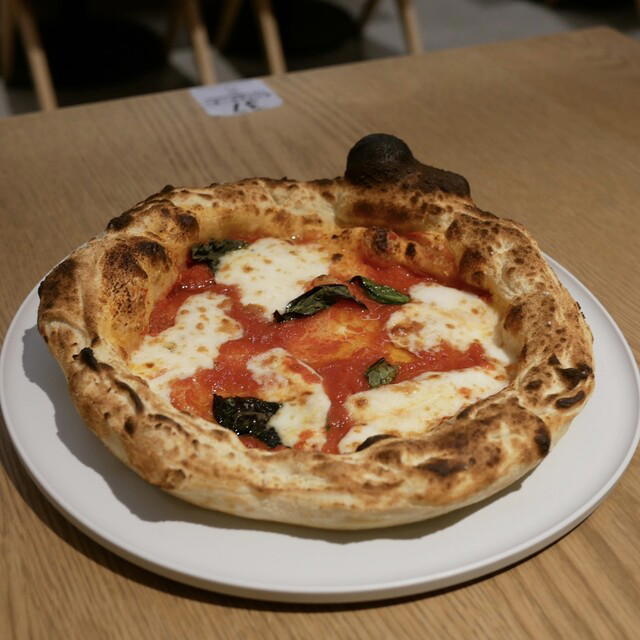
Bars in Kurashiki
Browse all →

At a Glance
- Cozy
- Classic
- Lively
- Solo
- Family
- Casual Hangout
- After Work
- Group Dining
- Standalone
Current opening hours
- Monday
- Closed
- Tuesday
- 11 AM–3 PM
- Wednesday
- 11 AM–3 PM
- Thursday
- 11 AM–3 PM
- Friday
- 11 AM–3 PM
- Saturday
- 11 AM–3 PM
- Sunday
- 11 AM–3 PM
Hours can change for holidays and private events. Last verified .
Casual, family-friendly house-style restaurant with a relaxed, spacious feel, counter and table seating, tatami area, and a simple focus on handmade udon rather than design frills.