
Tabelog 100 #54
Our verdict
Asakusa’s yakiniku scene is built for groups, smoke, grill timing, and a less formal kind of Tokyo meat culture than Ginza counters or hotel dining rooms. Hon to Saya belongs to that tradition, with Tabelog 100 Yakiniku Tokyo 2025 recognition and a large, table-led format that suits friends and families as much as serious beef-focused diners.

Pearl is the En Primeur Club membership app, where members save venues, book tables and use the concierge.
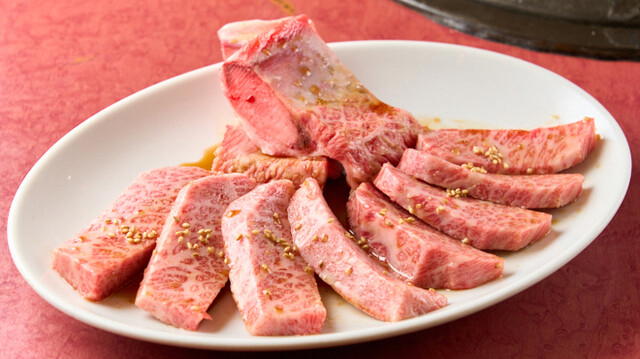
The menu
What to order
- Ittogai Assortment (whole‑cow assorted cuts)
- A5 Kuroge Wagyu platters
- Charcoal‑grilled horumon (offal)
- Bacon rice bowl
Approaching the grill tables of Tokyo, the mood changes from sightseeing to something more local and practical: coats over chair backs, groups negotiating orders, and the steady rhythm of food meeting heat. Tokyo’s yakiniku culture is not built around ceremony in the way some counter-led or tasting-menu rooms are. It is social, smoky, pace-driven, and democratic, with the table controlling the final seconds of cooking. Hon to Saya sits squarely in that lineage, a Tokyo address where the appeal is less about hushed luxury than about the shared grammar of grilling, offal, sauces, drinks, and timing.
That matters in Tokyo because the city carries many different dining identities, from formal destination rooms to restaurants that reward appetite and regularity rather than performance. Asakusa Imahan Kokusai dori honten represents another established local dining reference; yakiniku rooms answer with a looser, grill-at-the-table register. Compared with Ryuen, another Tokyo dining address, Hon to Saya reads as a communal proposition, closer to a gathering place than a narrow specialist counter.
Tokyo yakiniku as group ritual, not chef theatre
Yakiniku in Tokyo has absorbed barbecue culture, Japanese grilling habits, and the city’s habit of turning casual formats into precision systems. The diner is not passive. Heat management, order sequencing, and the division between leaner items, richer items, tripe, and drinking food shape the meal. In that context, the experience changes according to the group at the table. The format can handle families, friends, and larger parties without abandoning the basic intimacy of a shared grill, adding a recognisably Japanese layer to a style often associated with fast turnover and urban noise.
The Tabelog Hyakumeiten 2025 selection gives the restaurant a useful external signal in a category where overseas visitors often struggle to separate serious local addresses from tourist-facing barbecue. Its Tabelog score of 3.71 places it in a competitive band where consistency matters more than novelty. The recognition is notable because it points to standing within a Tokyo category that is crowded, price-sensitive, and unforgiving about grilling and handling.
The menu categories point beyond simple grilling. Yakiniku, tripe, and suppon place the restaurant inside a broader Japanese taste for texture and collagen-rich preparations, not just familiar barbecue choices. That combination says something about contemporary Tokyo yakiniku: the format has kept its group-dining informality while becoming more flexible in how people order around the grill.
Where it fits in a Tokyo meat itinerary
For visitors building a Tokyo dining week, the useful comparison is not with omakase or French tasting menus. It is with other forms of meat culture and other participatory dining rooms. Some restaurants offer staff-guided ceremony; others reduce the meal to counter pacing; yakiniku gives control back to the table. Hon to Saya is strongest for diners who want that participatory style in Tokyo rather than a sleek, chef-led room.
Asakusa Naniwaya reflects another side of Tokyo dining; Asakusa Imahan Kokusai dori honten reflects a more formal local reference point. Hon to Saya occupies a practical middle ground: substantial enough for a planned dinner, informal enough for mixed groups, and local enough to make sense within a broader Tokyo itinerary. Its listed budget is Dinner: JPY 5,000 - JPY 5,999; Lunch: JPY 4,000 - JPY 4,999, which helps set expectations before booking.
There is a practical editorial caveat. A convivial grill format does not mean the meal should be treated casually. Yakiniku rewards punctuality, especially when reservations are involved, because grill tables turn according to group timing rather than solo counter pacing. In a category where table occupancy is tied to equipment, ventilation, and staff flow, it is sensible to plan the evening with care.
How to read the room before choosing it
The decision point is clear. Choose this style of restaurant for sociability, appetite, and a Tokyo dining tradition that values hands-on cooking. Do not choose it expecting the quiet choreography of a chef-led tasting menu. The better mental model is a serious grill house with enough recognition to justify planning ahead and enough Tokyo character to feel rooted in the city.
For a broader food map, use Our full Tokyo restaurants guide. Travellers pairing dinner with a longer stay can cross-reference Our full Tokyo hotels guide, while drink-led evenings sit in Our full Tokyo bars guide. Tokyo category browsing also includes Our full Tokyo wineries guide and Our full Tokyo experiences guide.
Other listings worth scanning across the network include additional Tokyo dining rooms, casual cafes, curry specialists, sake bars, and neighbourhood restaurants in Japan and beyond.
At a Glance
Comparable venues for orientation by cuisine and category.
| Venue | Cuisine | Price | Awards | Notes |
|---|---|---|---|---|
| Hon to SayaThis venue (the venue you are viewing) | Traditional Charcoal Yakiniku | $50–100 | Tabelog 100 #54 | Not listed |
| Ryuen | Creative Modern Chinese | $150–200 | Michelin Plate · Tabelog 100 #46 | Japanese |
| Asakusa Imahan Kokusai dori honten | Traditional Wagyu Sukiyaki & Shabu-shabu | $100–150 | Tabelog 100 #24 | JPY 15,000 - JPY 19,999 JPY 5,000 - JPY 5,999 View spending breakdown |
| Sushi Ken | Traditional Edo-style Sushi | $100–150 | Black Pearl 1 Diamond | Not listed |
| Asakusa Naniwaya | Traditional Japanese taiyaki & kakigori café | $10–20 | Tabelog 100 #54 | JPY 1,000 - JPY 1,999 JPY 1,000 - JPY 1,999 View spending breakdown |
Recognition history
Dated appearances from independent guides and award organizations, with the underlying list record or original source where available.
Tabelog 100 #54 · No. 54
Tabelog · Tabelog 100 - Yakiniku - TOKYO - 2025
Continue exploring
More in Tokyo
Restaurants in Tokyo
All restaurants in Tokyo →











Details
- Lively
- Cozy
- Classic
- Energetic
- Date Night
- Group Dining
- Family
- Celebration
- Casual Hangout
- After Work
- Standalone
- Sake Program
- Beer Program
- A La Carte
- Family Style
- Sake
- Beer
- Shochu
- Wine
Current opening hours
- Monday
- 12–3 PM, 5–11 PM
- Tuesday
- 12–3 PM, 5–11 PM
- Wednesday
- 12–3 PM, 5–11 PM
- Thursday
- 12–3 PM, 5–11 PM
- Friday
- 12–3 PM, 5–11 PM
- Saturday
- 12–3 PM, 5–11 PM
- Sunday
- 12–3 PM, 5–11 PM
Hours can change for holidays and private events. Hours as of .
Bustling, smoky charcoal‑grill atmosphere in a traditional tatami house space, with close‑set tables, warm lighting, and the feel of an old‑school local institution packed with couples, families, and groups.