Himitsu Ramen
Our verdict
The address places it in the dense inner city, walkable from Rådhuspladsen, where Japanese noodle formats have found an audience among diners who want something precise and warming outside the fine-dining circuit.

Pearl is the En Primeur Club membership app — saves, bookings, and concierge access live there. Same editors, same standards.
The menu
What to order
- Build-Your-Own Ramen
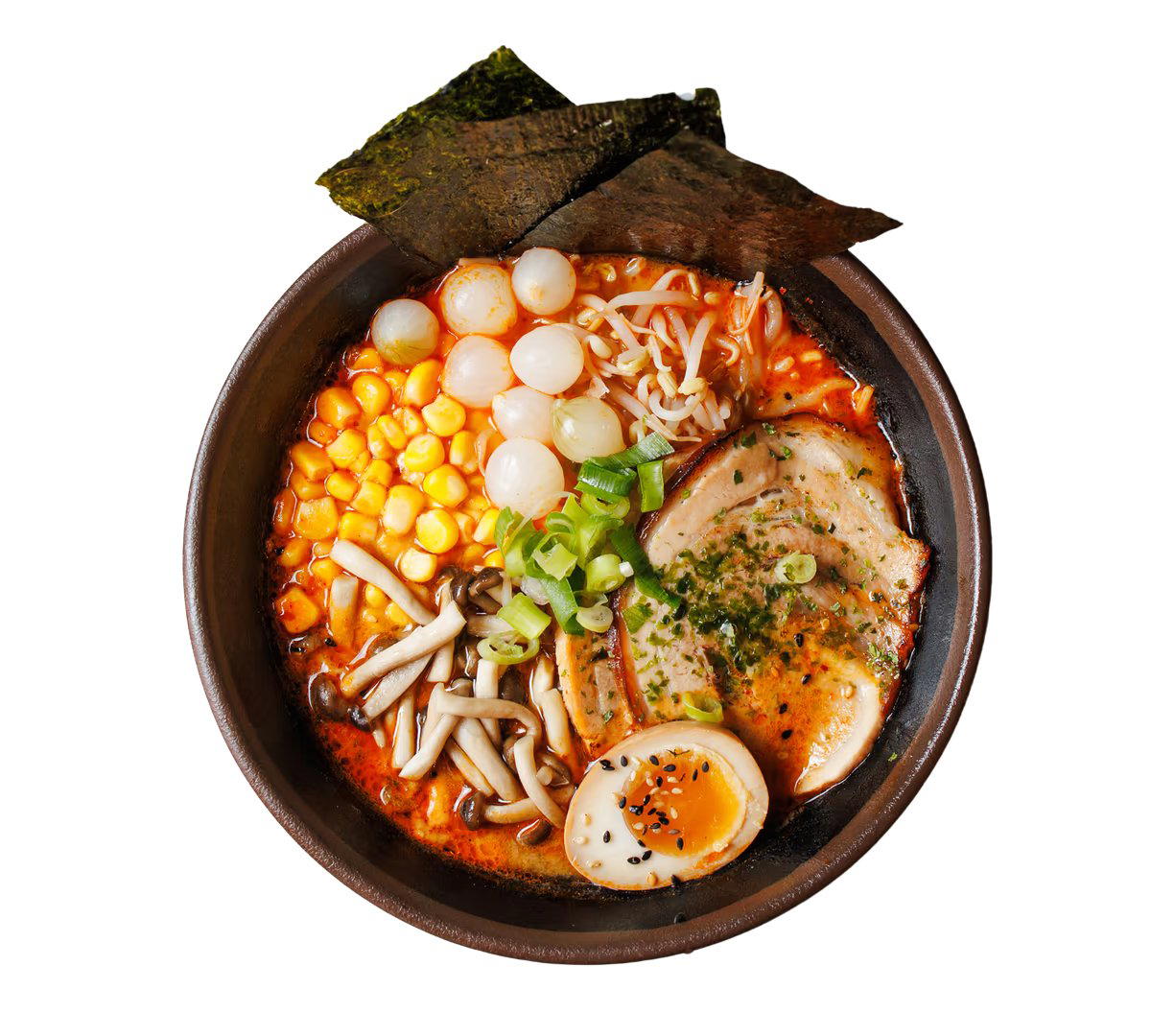
- Spicy Miso Ramen
- Vegetarian Ramen
Ramen in a Nordic Capital: Where Japanese Bowl Culture Meets Copenhagen's Food Conscience
Copenhagen's dining identity has been shaped for two decades by the New Nordic movement, a framework built on hyper-local sourcing, seasonal restraint, and ethical supply chains. That ethos, refined at houses like Geranium and originally codified at Noma, has filtered down through the city's food culture in ways that go well beyond the fine-dining tier. Even casual formats in Copenhagen operate under pressure to articulate where ingredients come from and why. Ramen shops are no exception. When a Japanese noodle format lands in a city this attuned to provenance and waste reduction, the conversation around what goes into a bowl — the bones, the fat, the fermentation time, the soy — takes on a dimension it might not carry in other European capitals. The area is dense, walkable, and populated by a mix of wine bars, specialty coffee shops, and small-format kitchens. It is not the neighbourhood where Copenhagen's Michelin-decorated restaurants cluster, but it is the kind of street where a serious bowl shop can build a regular clientele without competing for the same tables as Alchemist or Koan.
The Sustainability Lens on Broth Culture
Ramen is, at its structural core, a waste-reduction format. A properly made tonkotsu or chicken paitan broth requires long extraction from bones and connective tissue that would otherwise be discarded, converting low-value cuts into a liquid of real depth. In Japan, this practical efficiency has always been part of ramen's appeal as an affordable, nourishing street format. In Copenhagen, where restaurant culture has spent years developing frameworks for nose-to-tail cooking and zero-waste kitchens, that same logic resonates differently: it reads as intentional rather than economical.
The city's engagement with ethical sourcing runs from the Michelin level down to casual formats. Kadeau built its reputation on Bornholm island produce and preservation techniques; Jordnær in Gentofte emphasises Scandinavian waters and seasonal availability. The same sourcing conversation reaches into bowl formats: what breed of pork, from which farm, raised on what feed, slaughtered at what weight. These are not abstract questions in a city where diners have been trained to ask them. A ramen kitchen operating in Copenhagen is operating in an environment where the tare, the fat, the noodle flour, and the toppings are all potentially legible as sourcing decisions.
Fermentation, too, connects Japanese ramen traditions to Nordic food culture in ways that feel less like fusion and more like parallel development. Koji, miso, and soy-based tares share structural DNA with the lacto-fermented vegetables and aged dairy products that have long featured in Scandinavian kitchens. A miso ramen in Copenhagen is not an exotic import: it is a bowl built around a fermentation logic that the city's food culture already understands. It is a working street in the inner city, which means the primary audience is likely a mix of office workers at lunch, local residents, and visitors staying in the central accommodation belt near Strøget. That catchment area rewards a format that delivers consistency at volume: a tight menu, reliable broth quality, and efficient service that can handle a lunch wave without compromising the bowl.
For visitors building a Copenhagen itinerary that spans the full dining register, Himitsu Ramen offers an entry point into the city's casual eating culture that sits well outside the tasting-menu circuit. The broader Danish dining scene extends far beyond Copenhagen, with serious cooking at Frederikshøj in Aarhus, Henne Kirkeby Kro in Henne, Alimentum in Aalborg, ARO in Odense, Domæne in Herning, Dragsholm Slot Gourmet in Hørve, Frederiksminde in Præstø, LYST in Vejle, and MOTA in Nykøbing Sjælland, but within the capital itself, the casual register fills a genuine gap between the tasting-menu tier and the open-sandwich lunch tradition.
Ramen's Position in Copenhagen's Japanese Food Moment
Copenhagen has developed a coherent relationship with Japanese cooking techniques over the past decade, partly through the influence of the New Nordic movement's own interest in Japanese precision and fermentation. The kaiseki-informed structure of Koan represents one end of that spectrum. Ramen sits at the opposite end: democratic, fast, priced for regular eating rather than occasion dining. Between those poles, the city has absorbed izakaya formats, Japanese whisky bars, and katsu specialists. Ramen's place in that ecosystem is well established in Tokyo and Osaka, and cities with strong Japanese food cultures internationally, from New York (where Le Bernardin and Atomix represent the fine-dining tier above a deep casual bench) to London and Sydney, have seen serious ramen shops emerge as anchor venues in their own right.
Copenhagen's ramen scene remains smaller than those cities, which means individual shops carry more weight in defining what the format means locally. Our full Copenhagen restaurants guide maps the broader dining picture across all price tiers and neighbourhood zones. For visitors sequencing a day around the inner city, the location works logically as a lunch stop between morning museum visits near Ny Carlsberg Glyptotek and an afternoon in the Latinerkvarteret.
Frequently asked questions
Can I bring kids to Himitsu Ramen?
Ramen as a format is generally family-compatible — bowls are filling, the menu tends to be focused, and service is typically counter or casual table style. Himitsu Ramen's inner-city address at Rådhusstræde 13 is accessible on foot from central Copenhagen, which removes the logistical friction of getting across town with children.
What's the vibe at Himitsu Ramen?
The address in Copenhagen's inner city, a short walk from City Hall Square, places the restaurant in a quieter pedestrian corridor rather than a high-traffic tourist strip. Ramen shops in this format tend toward informal, counter-driven energy — the focus is on the bowl, not the room. Expect a pace that suits a lunch stop or an early dinner rather than a long evening table.
How does Himitsu Ramen fit into Copenhagen's wider Japanese food scene?
Copenhagen has developed a coherent relationship with Japanese cooking over the past decade, driven in part by a New Nordic tradition that shares an emphasis on restraint, fermentation, and technique. A dedicated ramen counter at Rådhusstræde 13 sits within that broader moment, offering a format — broth-based, ingredient-led, counter-served — that resonates with how the city's dining culture has evolved. It represents the consolidation of Japanese bowl culture as a permanent fixture in the Danish capital rather than a passing trend.
What should I eat at Himitsu Ramen?
Copenhagen's Japanese restaurant scene has increasingly engaged with technique-led broth work — long-extracted stocks and considered toppings — so the menu is likely built around a small number of ramen styles done with consistency. Arriving with an open brief and ordering what the kitchen emphasises that day is a reasonable approach at a focused ramen counter.
Where is Himitsu Ramen located?
Himitsu Ramen is located at Rådhusstræde 13, 1466 København, Denmark, Copenhagen.
Do I need a reservation for Himitsu Ramen?
Ramen counters in Copenhagen's inner city can fill quickly at lunch and early evening, particularly when the format is tight and seating is limited. Walking in during off-peak hours is the lower-risk option; checking the restaurant's social channels before visiting will give the clearest picture of current practice.
What's the defining dish or idea at Himitsu Ramen?
The name 'Himitsu' translates from Japanese as 'secret,' which signals an intention toward specificity rather than broad coverage. In Copenhagen's food context, where sourcing and technique carry considerable weight, a ramen kitchen operating in the inner city is likely positioning around broth depth and ingredient provenance rather than volume. The defining idea appears to be a focused bowl format in a city that has absorbed Japanese culinary discipline through its own New Nordic framework.
Cuisine and Credentials
Comparable venues nearby, for context on price, style, and recognition.
| Venue | Cuisine | Price | Awards | Notes |
|---|---|---|---|---|
| Himitsu RamenThis venue — the venue you are viewing | Plant-Based Ramen | $20–30 | Not listed | Not listed |
| Aotori & Akaton | Traditional Japanese Yakitori | Not listed | Michelin Plate | Østerbro |
| Ramen to Bíiru Vesterbro | Japanese Ramen with Craft Beer | $20–30 | Not listed | Vesterbro-Kongens Enghave |
| Mæxico City | Mexican Taqueria | $20–30 | Not listed | Indre By |
| El Meson | Authentic Spanish Tapas | $20–30 | Not listed | Indre By |
| Aamanns Deli & Takeaway | Østerbro | Modern Danish Smørrebrød | $20–30 | Not listed | Indre By |