Himalayan Kitchen
Himalayan Kitchen on Penge Lane brings the cooking traditions of Nepal and the broader Himalayan region to south-east London, a part of the city where this cuisine operates largely outside the central dining circuit. The address in SE20 positions it within a neighbourhood that rewards the detour, and the kitchen draws on a culinary heritage that remains underrepresented across the capital's wider restaurant scene.
Pearl is the En Primeur Club membership app — saves, bookings, and concierge access live there. Same editors, same standards.
- Address
- 17 Penge Ln, London SE20 7DU, United Kingdom
- Phone
- +442086767899
- Website
- himalayankitchen.co.uk
- Directions
- Get directions
 Saves & bookings on Pearl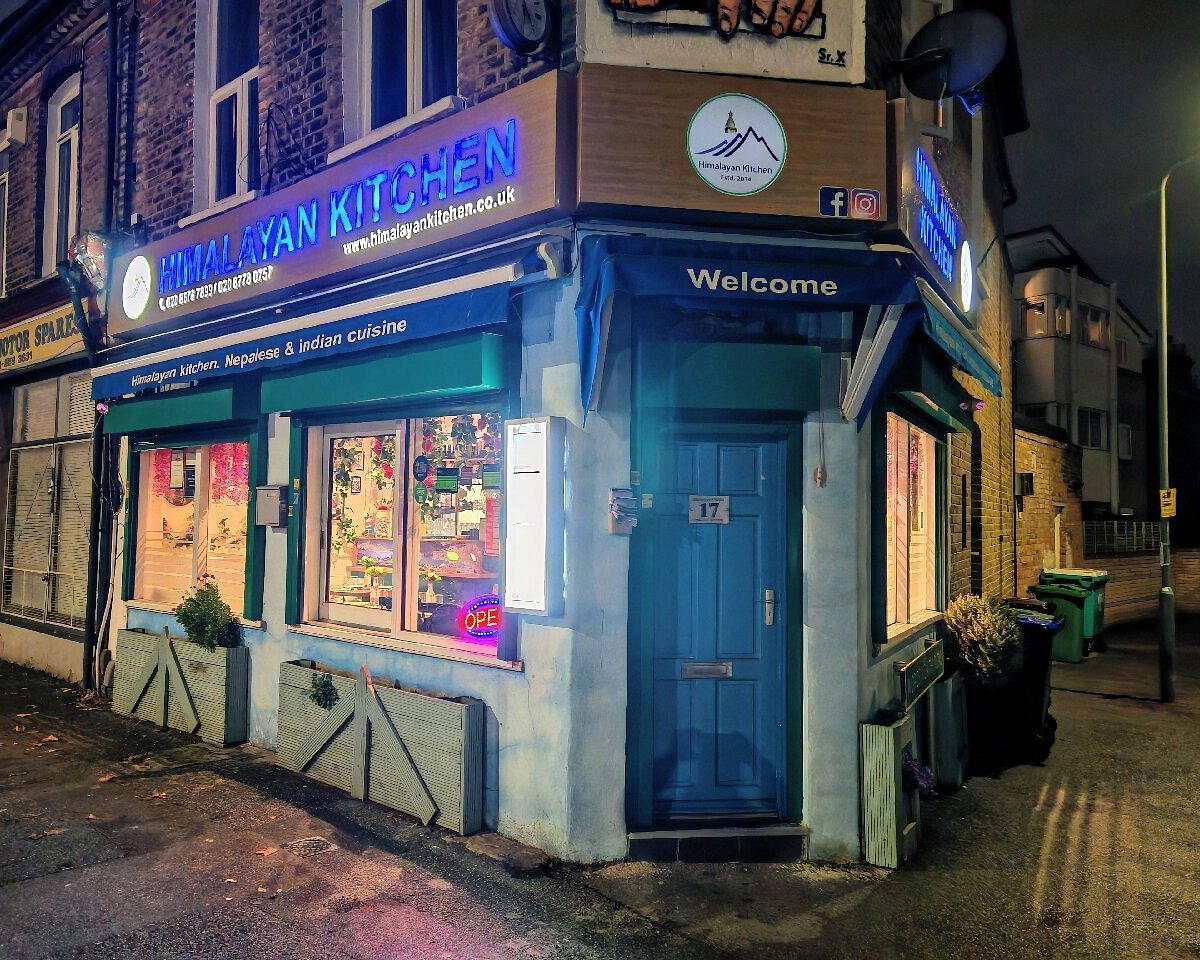
South-East London and the Case for the Detour
Penge is not a neighbourhood that appears on most London dining maps. Himalayan Kitchen is a casual Nepalese and Indian Curry House in Penge, London, serving diners at 17 Penge Ln. It sits south-east of the river, beyond the orbital pull of Brixton and Peckham, in a stretch of the city where restaurant culture tends toward the functional rather than the destination-driven. That context matters when thinking about Himalayan Kitchen, because a Nepali and Himalayan kitchen operating at 17 Penge Lane is doing something the central London circuit largely does not: serving a regional culinary tradition that sits almost entirely outside the city's Michelin-starred and press-heavy tier. Compared to the concentration of high-profile kitchens in Mayfair and Notting Hill, where addresses like CORE by Clare Smyth and The Ledbury compete for the same well-documented audience, SE20 operates on a different logic entirely. The draw here is neighbourhood specificity, not neighbourhood cachet.
That distinction shapes the experience before you arrive. That physical remove is part of what defines the restaurant's character.
Himalayan Cooking and What It Means in London
Himalayan and Nepali cuisine occupies a narrow lane in London's South Asian restaurant geography. The broader category, Indian, Bangladeshi, Sri Lankan, Pakistani, is well-represented across the capital, from the Brick Lane corridor to the Southall stretch of the Western Avenue. Nepali cooking, however, operates in a smaller register. Its flavour profile draws on some shared ingredients with North Indian cooking, cumin, turmeric, coriander, but the technique and dish structure differ. Dal bhat, the rice and lentil combination that functions as a daily staple across Nepal, carries a different texture and proportion logic than the curries more familiar to British diners. Momos, the steamed or fried dumplings with Tibetan and Chinese influence, reflect the cultural transit routes of a landlocked country bordered by two enormous culinary traditions.
London has seen sporadic growth in Himalayan restaurant openings over the past decade, but the category remains thin relative to its South Asian neighbours. That thinness is partly geographic and partly commercial, given the competitive intensity of London's South Asian dining market. The restaurant, in this context, is operating in a real gap rather than a crowded field. For the broader conversation about London's South Asian restaurant range, venues like Opheem in Birmingham represent how South Asian fine dining has evolved in other UK cities, though the comparison illustrates a different ambition and price point.
What the SE20 Address Signals About the Experience
Restaurants that establish themselves in outer-London postcodes without the support of tourism foot traffic or a destination dining reputation are, by necessity, community-anchored. The economics of Penge Lane do not allow for the average spend of a Mayfair room. This matters practically: the meal at the restaurant is priced at about $18 per person, making it a different category of experience from the ££££ tier occupied by Sketch's Lecture Room and Library or Dinner by Heston Blumenthal. The value proposition is different, not lesser.
For diners accustomed to destination restaurants in the UK, the kind that require planning around Waterside Inn in Bray, Le Manoir aux Quat'Saisons in Oxford, or L'Enclume in Cartmel, the restaurant operates on the opposite axis: it is a neighbourhood kitchen that happens to serve a cuisine with genuine regional specificity. The comparison to Moor Hall in Aughton or Gidleigh Park in Chagford is not relevant in terms of format or ambition, but it contextualises the broader point: London's most interesting eating is not always in the rooms generating particularly column inches.
Placing Himalayan Kitchen in London's Wider Restaurant Range
London's restaurant conversation concentrates heavily on a relatively small number of postcodes and price brackets. The dining press orbits W1, SW1, and EC1; the critical infrastructure, guides, social media, food media, amplifies venues that are already visible to a media-connected audience. Restaurants in SE20 do not typically enter that circuit. This is a visibility signal, and the two are not the same thing.
For context on how specialist and category-defining kitchens operate outside the mainstream, it is worth noting that venues like hide and fox in Saltwood, Midsummer House in Cambridge, and Restaurant Andrew Fairlie in Auchterarder demonstrate that serious cooking can anchor itself in locations that require deliberate travel. The motivation differs, those are destination rooms with significant critical profiles, but the underlying logic of seeking out something geographically inconvenient because of what is on the plate is the same logic that would bring a diner to Penge Lane. Globally, the model of the specialist neighbourhood kitchen appears in cities like New York, where rooms such as Atomix and Le Bernardin sit at the fine-dining end of that spectrum, while the mid-tier and ethnic specialist tier quietly does its most important work in quieter postcodes.
Also worth considering in this city context: the parallel fine-dining tier represented by Restaurant Gordon Ramsay and Hand and Flowers in Marlow occupies a completely different planning horizon and spend level. Understanding where the restaurant sits relative to those rooms is as useful as knowing what it is.
Know Before You Go
- Address: 17 Penge Lane, London SE20 7DU, United Kingdom
- Cuisine: Himalayan / Nepali
- Getting there: Penge East or Anerley stations (Overground) are the nearest rail options; allow 35 to 40 minutes from central London
- Price level: Consistent with a neighbourhood restaurant in SE20; substantially below the central London fine-dining tier
- Phone / website: Check the restaurant directly for current contact details
- momo dumplings
- chicken chettinad
- saag aloo
- paneer jalfrezi
- masu aloo
- garlicky Goan fish curry
- biryani
Similar Picks
Comparable venues nearby, for context on price, style, and recognition.
| Venue | Cuisine | Price | Notes |
|---|---|---|---|
| Himalayan KitchenThis venue — the venue you are viewing | Nepalese & Indian Curry House | $$ | Not listed |
| Tamila Kings Cross | Modern South Indian | $$ | King's Cross |
| Postbox | Modern Indian with Goan influences | $$ | Castelnau |
| Regency Club | Indian-Kenyan Fusion Grill | $$ | Queensbury |
| Kricket Brixton | Modern Indian Small Plates | $$ | Brixton |
| Indian Moment | Authentic Indian Curry House | $$ | Battersea |


At a Glance
- Cozy
- Intimate
- Casual Hangout
- Family
- Group Dining
- Standalone
- Local Sourcing
Current opening hours
- Monday
- Closed
- Tuesday
- 5–10 PM
- Wednesday
- 5–10 PM
- Thursday
- 5–10 PM
- Friday
- 5–10 PM
- Saturday
- 5–10 PM
- Sunday
- 5–10 PM
Hours can change for holidays and private events. Last verified .
Warm, welcoming family atmosphere with no-frills decor; described as a local asset with genuine hospitality and friendly service from family members.