Regency Club
Regency Club occupies a distinct position among Edgware's dining addresses, drawing locals and north London residents who favour neighbourhood-rooted hospitality over central London theatrics. Located at Queensbury Station Parade, it represents a category of London dining that operates largely outside the critical spotlight yet sustains loyal regulars across years of service. For those planning a visit, the surrounding area rewards early arrival and unhurried exploration.
Pearl is the En Primeur Club membership app — saves, bookings, and concierge access live there. Same editors, same standards.
- Address
- 18-21 Queensbury Station Parade, Edgware HA8 5NR, United Kingdom
- Phone
- +44 20 8952 6300
- Website
- regencyclub.co.uk
- Directions
- Get directions
 Saves & bookings on Pearl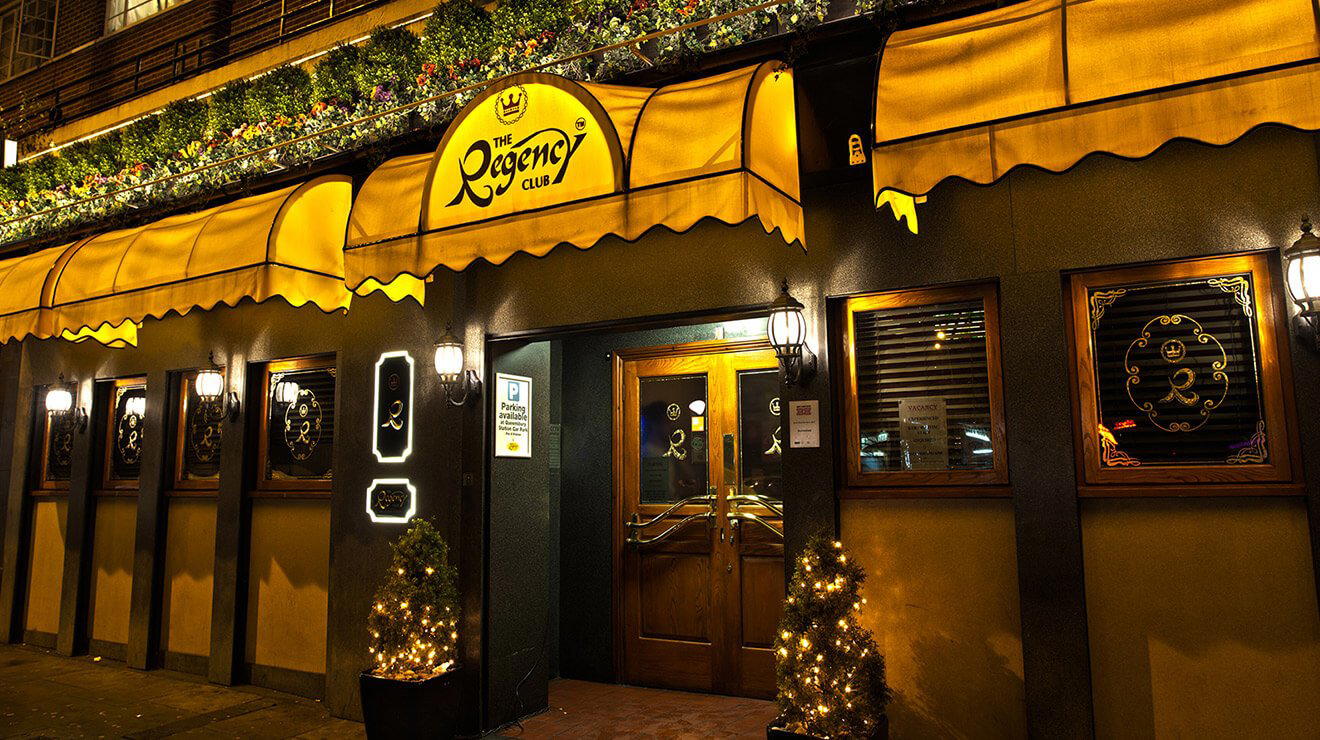
North London Dining Beyond the Critical Radius
London's restaurant conversation concentrates heavily within Zone 1 and 2 postcodes, where Michelin inspectors, food press, and expense-account diners converge. The result is a tier of destination restaurants, CORE by Clare Smyth, The Ledbury, Sketch, The Lecture Room and Library, that attract international diners and command bookings months in advance. But London also sustains a parallel dining economy in its outer boroughs: neighbourhood restaurants that build their reputation through repeat custom rather than critical acclaim, and whose longevity is measured in years of local service rather than award cycles. Regency Club, at Queensbury Station Parade in Edgware, operates within that outer-London register.
Edgware's Place in London's Dining Geography
Edgware sits at the northern terminus of the Northern line, a corridor that runs from the financial district through Camden and Golders Green before reaching Barnet and Harrow. The area's dining character reflects its demographics: a dense mix of South Asian, Middle Eastern, and British-Jewish communities whose food preferences have shaped the high street over several decades. This is a neighbourhood where a restaurant's staying power depends on community trust, not press cycles. A venue that has held a consistent address in Edgware has done so by earning the confidence of local residents who eat out regularly and have many alternatives within walking distance of the station.
That context matters when assessing Regency Club's position. Unlike Dinner by Heston Blumenthal or Restaurant Gordon Ramsay, which compete in a global tier of destination dining, a venue at this address competes for the loyalty of regulars who could just as easily choose one of several dozen alternatives within a short radius. Sustaining that loyalty over time is a different discipline.
The Evolution of Neighbourhood Dining in Outer London
London's outer-borough restaurant scene has changed considerably over the past fifteen years. A combination of rising central London rents, the broader casualisation of dining, and a post-pandemic re-evaluation of neighbourhood hospitality has pushed both chefs and diners toward addresses outside the traditional dining zones. Areas that once operated as purely utilitarian eating destinations, feeding a local population with a fixed set of expectations, have seen incremental upgrades in cooking quality, room investment, and service standards.
The pattern visible in areas like Wembley, Harrow, and Edgware reflects a broader shift: restaurants that began as direct community dining rooms have, over successive reinventions, moved toward formats that would not look out of place in Zone 2. The trajectory is rarely linear. A venue may pivot toward a more refined offering as the neighbourhood's income profile changes or as ownership changes hands. Regency Club's address at Queensbury Station Parade places it within this evolving zone, where the expectations of local diners have risen alongside the general improvement of outer-London hospitality.
For comparison, consider how the outer-London dining circuit now connects to national reference points. Destinations like The Fat Duck in Bray, L'Enclume in Cartmel, or Moor Hall in Aughton attract diners willing to travel significant distances for a specific experience. Outer-London venues occupy a different logic: they are chosen because they are close, because they are known, and because the friction of booking, no three-month waits, no dress code anxiety, no central London pricing, is low. That accessibility is the offer.
What the Address Signals
Queensbury Station Parade is a shopping parade anchored around Queensbury tube station, serving a dense residential catchment. Restaurants in parade settings like this tend to operate across lunch and dinner, often with extended weekend hours to serve families and groups. The format that survives in these settings is typically one that can accommodate both a quick midweek meal and a longer celebratory occasion, birthdays, family gatherings, office events, without the operational friction that a more formal venue would impose.
This is a meaningful distinction from the central London fine dining circuit, where a venue's format is often dictated by a single strong creative vision. At this address, flexibility and reliability are likely to matter more than conceptual coherence. The diner arriving at Queensbury Station Parade is not, in most cases, making a destination decision of the kind that leads someone to book a table at Gidleigh Park in Chagford or Le Manoir aux Quat' Saisons. They are choosing a familiar address for a specific occasion, and the venue's longevity depends on not disappointing that expectation.
That dynamic plays out across London's outer boroughs in ways that rarely make the food press but are visible in the tenure of the venues themselves. A restaurant that has maintained the same address for a decade in a competitive neighbourhood like Edgware has done something demonstrably difficult.
Planning Your Visit
For international reference points that illustrate how neighbourhood dining scales against destination formats, Le Bernardin in New York City and Atomix in New York City represent the opposite end of the planning spectrum: high-demand counters where booking logistics dominate the pre-visit experience. Hand and Flowers in Marlow occupies a middle ground, a decorated destination that retains a pub-rooted accessibility.
Same-City Peers
Comparable venues nearby, for context on price, style, and recognition.
| Venue | Cuisine | Price | Notes |
|---|---|---|---|
| Regency ClubThis venue — the venue you are viewing | Indian-Kenyan Fusion Grill | $$ | Not listed |
| Memories of India Kensington | Traditional Indian Curry House | $$ | South Kensington |
| Chapati Club | Modern Indian Comfort Food | $$ | East Acton |
| Annapurna | Indian & Nepalese Curry House | $$ | Turnham Green |
| Masala Zone Soho | Authentic Indian Street Food & Thalis | $$ | Soho |
| Dishoom King's Cross | Bombay Comfort Food | $$ | King's Cross |
At a Glance
- Lively
- Cozy
- Energetic
- Group Dining
- Casual Hangout
- After Work
- Historic Building
- Beer Program
Current opening hours
- Monday
- 6–10 PM
- Tuesday
- 12–3 PM, 6–10 PM
- Wednesday
- 12–3 PM, 6–10 PM
- Thursday
- 6–10 PM
- Friday
- 12–3 PM, 6–10:30 PM
- Saturday
- 12–10:30 PM
- Sunday
- 12–10 PM
Hours can change for holidays and private events. Last verified .