
Hikizan Tashizan places Nagoya yakitori in a serious counter-dining frame: compact, reservation-only, and selected for Tabelog Yakitori EAST 100 in 2023, 2024, and 2025. The Ikeshita address, 10 counter seats, no-smoking room, and dinner pricing in the JPY 10,000 to JPY 14,999 band put it closer to destination yakitori than casual skewers.
Pearl is the En Primeur Club membership app — saves, bookings, and concierge access live there. Same editors, same standards.
- Address
- Japan, 〒464-0848 Aichi, Nagoya, Chikusa Ward, Haruoka, 1 Chome−5−13 コンフォール池下
- Phone
- +81 52-763-8633
- Website
- instagram.com
 Saves & bookings on Pearl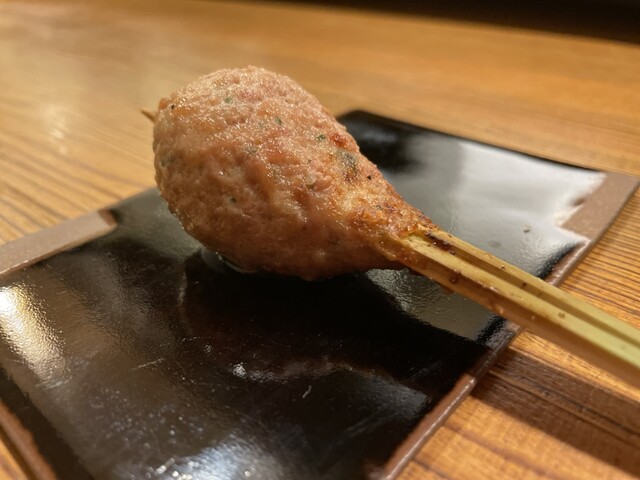
Ikeshita is not the Nagoya district first-time visitors usually circle for dinner, which is part of the point. The city’s sharper eating often sits away from station-front hotel gravity, in compact rooms where the counter does what a large dining room cannot. Hikizan Tashizan belongs to that small-format Nagoya category: yakitori as a seated course experience, not a loose run of skewers, with the cooking line close enough to make timing, heat, and pacing the evening’s drama.
In Japan, serious yakitori has moved beyond the old binary of casual beer food versus rarefied kaiseki. The stronger counters are judged by sourcing, charcoal control, seasoning restraint, and the order in which cuts arrive. Recognition matters because yakitori is a craft of repetition, not spectacle. Selection for Tabelog Yakitori EAST 100 in 2023, 2024, and 2025 places Hikizan Tashizan in a national conversation about specialist chicken cookery, not just Nagoya neighborhood dining.
A 10-seat counter in Ikeshita, with yakitori treated as a course format
The room’s scale is the first clue. Ten counter seats build the format around proximity: grill, cook, guest, and plate in one narrow line. That differs from izakaya yakitori, where energy comes from volume and table ordering around drinking. Here the appeal is discipline. The counter makes small changes visible, from cut sequence to the pause between rounds, and gives solo diners a credible place rather than leaving them to feel like a spare part.
That structure explains the pricing tier. Dinner at JPY 10,000 to JPY 14,999 sits above everyday skewers and below Nagoya’s luxury end, where comparison venues such as Housa Saryo occupy a higher bracket. Ikeshita also has less expensive neighborhood options, including KOBOYA Ikeshita ten and Tonkatsu Tsuchimoto, but they answer different needs. The relevant choice is whether the evening should be a focused counter meal built around one craft, or a broader meal with more flexibility and less ceremony.
For a wider Nagoya itinerary, the distinction matters. The city’s dining identity is often flattened into miso katsu, hitsumabushi, kishimen, and station-area convenience. Those dishes are part of the grammar, but Nagoya’s stronger restaurant culture also includes intimate specialist rooms in residential or semi-residential pockets. Ikeshita, on the Higashiyama Subway Line, fits that pattern: close enough to fold into a central stay, removed enough to feel deliberate.
Why repeated Tabelog recognition carries weight for yakitori
Awards in yakitori do not work exactly as they do in fine dining. There is less room for architectural theater or menu manifesto. The craft is narrower and more exposed: chicken, fire, salt or tare, sequence, and the chef’s ability to keep each round distinct. Repeat recognition therefore has particular value. Tabelog Yakitori EAST 100 selection in 2023, 2024, and 2025 signals consistency in a category where small technical lapses are easy to notice and hard to disguise.
The EAST scope matters too. It pulls Nagoya into a field not limited to Aichi, raising the competitive context beyond local affection. A Tabelog score of 3.78 further confirms sustained approval from a demanding Japanese restaurant audience. Scores on that platform move conservatively, especially for small specialist counters, so the number reads as a trust marker rather than decoration.
The counter-only setup sharpens the trade-off. There are no private rooms, no private-use framing, and no smoking. Payment is structured for credit cards; electronic money and QR code payments sit outside the format. Family suitability is narrow: children must be able to sit through a course meal. That is not hostility, but the result of a room whose rhythm depends on attention and pacing.
Compared with central Nagoya hotel dining or larger rooms, this is a more demanding booking decision. It rewards diners who want a contained meal and understand why yakitori deserves the seriousness often granted to sushi or tempura. It is less useful for groups seeking breadth, late changes, or a night built around conversation more than cooking.
How to place it in a Nagoya eating plan
Hikizan Tashizan works well as the focused dinner in a Nagoya stay, especially if the rest of the trip covers the city’s comfort-food canon. It is not for a loose first night with uncertain timing. The better fit is a planned evening when the table is the activity, the counter is the view, and the point is to see how a specialist kitchen handles a narrow repertoire under scrutiny.
The address in Haruoka, Chikusa Ward, puts the restaurant outside the tourist-heavy orbit but within reach. For travelers near Sakae, Nagoya Station, or Fushimi, Ikeshita adds a useful neighborhood layer. It also pairs with Our full Nagoya restaurants guide, and with planning beyond meals through Our full Nagoya hotels guide, Our full Nagoya bars guide, Our full Nagoya wineries guide, and Our full Nagoya experiences guide.
Within EP Club’s Japan coverage, the restaurant contrasts with other tightly defined restaurants and casual-specialist formats: 1022, 451, Aaron, Alan., and All Day Dining Montmartre. Broader Japan planning can also draw contrasts with -Grilled beef Sukiyaki- KAMAKURA TANUKIAN 鎌倉 たぬき庵 in Kamakura. 鮪と炭火焼き うお炭 秋葉原店 in Tokyo.cafe in Osaka.know in Kumamoto, (Shoku) Vietnam in Kawasaki, and [Curry Senmon Ten] Maruyama Kyoju. in Sapporo. For Japanese drinking and comfort-food culture outside Japan, Jōdo Saké Bar in Los Angeles and Onigiri Time in Pasadena offer another reference point.
The editorial case is clear: Nagoya yakitori for diners who value repetition, constraint, and recognition within a specialist category. Repeated Tabelog Yakitori EAST 100 selections supply the external validation; the counter format explains why it matters. In a city often reduced to hearty regional staples, the restaurant gives a quieter reading of Nagoya dining: smaller, more precise, and best understood one seat at a time.
Price and Positioning
Comparable venues to anchor price and recognition.
| Venue | Cuisine | Price | Notes |
|---|---|---|---|
| Hikizan TashizanThis venue — the venue you are viewing | Chikusa, Modern Yakitori Counter | $$$ | Not listed |
| Yadorigi | Kita, Casual Edomae Sushi Counter | $$$ | Not listed |
| Masaka | Not listed | $$$ | Naka, Traditional Yakiniku (Japanese BBQ) |
| Chisouan Hijiri | Higashi, Traditional Kyoto-style kaiseki | $$$ | Not listed |
| Tempura Yokoi | Moriyama, Traditional Tempura Restaurant | $$$ | Not listed |
| Sen Kame | Naka, Traditional Yakitori & Izakaya | $$$ | Not listed |
Recognition history
Dated appearances from independent guides and award organizations, with the underlying list record or original source where available.
Tabelog 100 #40 · No. 40
Tabelog · Tabelog 100 - Yakitori - EAST - 2025
Continue exploring
More in Nagoya
Restaurants in Nagoya
Browse all →
At a Glance
- Intimate
- Date Night
- Solo
- After Work
- Special Occasion
- Chefs Counter
- Open Kitchen
- Standalone
- Sake Program
- Beer Program
Current opening hours
- Monday
- 6–11 PM
- Tuesday
- 6–11 PM
- Wednesday
- 6–11 PM
- Thursday
- 6–11 PM
- Friday
- 6–11 PM
- Saturday
- 6–11 PM
- Sunday
- Closed
Hours can change for holidays and private events. Last verified .
An intimate, counter-focused space with only about a dozen seats, hidden in a quiet alley near Ikeshita Station; the atmosphere is calm and focused on the grill, giving a refined yet relaxed feel suited to solo diners and small parties.