
Tabelog Bronze #107
Our verdict
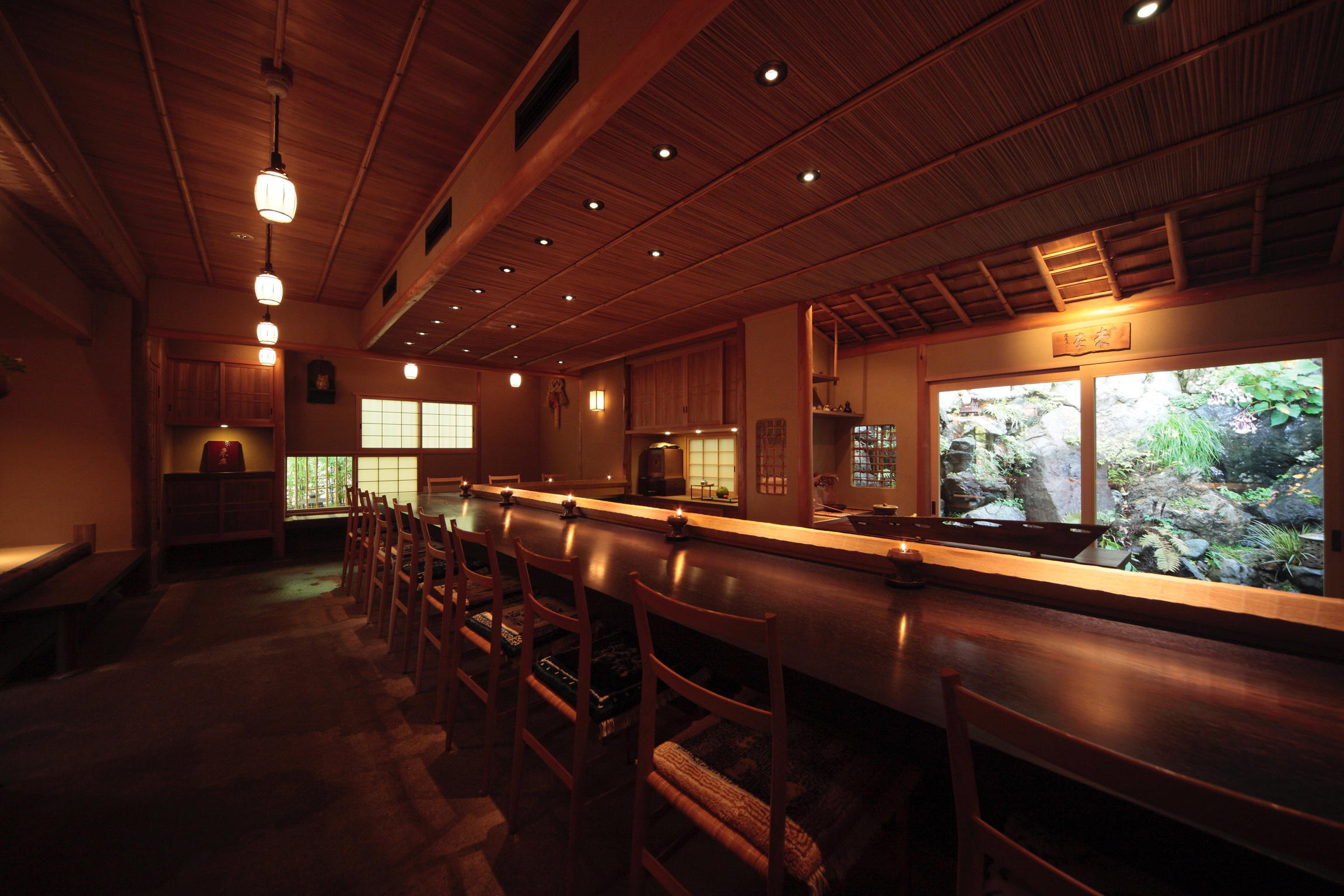
A 12-seat counter in Kyoto's Okazaki district, Higashiyama Ogata has held Tabelog Bronze recognition every year from 2023 through 2026 and appears in the Tabelog Japanese Cuisine WEST 100 for both 2023 and 2025. Dinner runs JPY 30,000–39,999 by listed price, though reviewer-reported spending trends considerably higher. Reservations are essential and the room is available for full private hire up to 20 guests.

Pearl is the En Primeur Club membership app, where members save venues, book tables and use the concierge.
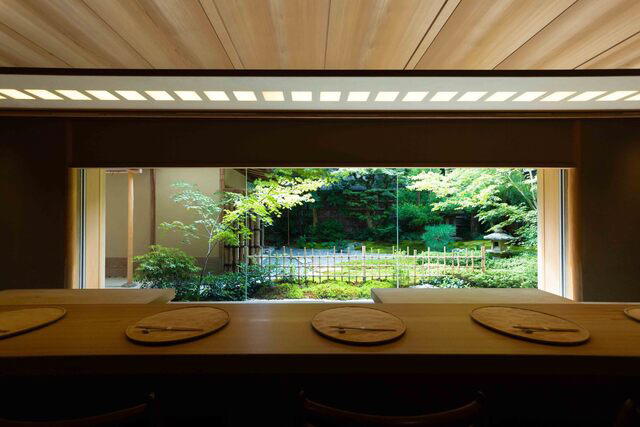
Where Okazaki Ends and the Meal Begins
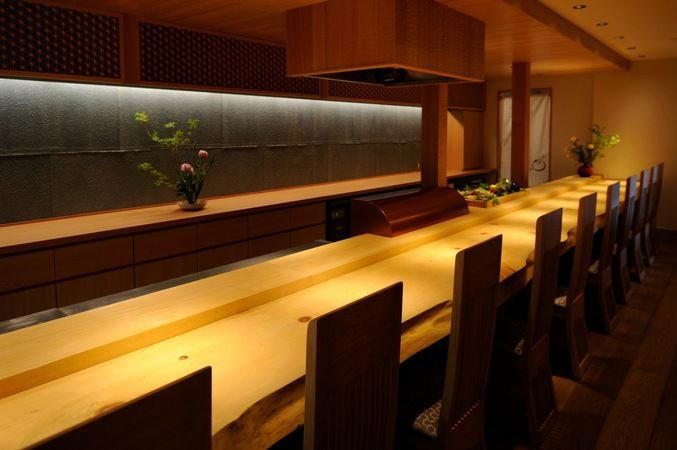
The stretch of Sakyo Ward that runs east from Heian Shrine toward the Higashiyama foothills has a particular quality at dusk: the crowds that fill Nanzenji and the Okazaki museum corridor thin out, and the neighbourhood settles into a quieter register. Twelve seats. Two seatings per evening. Closed Tuesdays. The physical proposition is one of compression: Kyoto's kaiseki tradition at its most concentrated.
That compression is worth contextualising against the wider field. Kyoto carries more high-end Japanese dining per capita than almost any other city in the world, and the competition at the JPY 30,000-and-above tier is severe. Gion Sasaki (Kaiseki, Japanese) operates with three Michelin stars; Hyotei (Kaiseki, Japanese) carries two. Ifuki and Kyokaiseki Kichisen hold two Michelin stars each at comparable price points.
The Structure of an Evening Here
Kaiseki, at the price point Higashiyama Ogata occupies, is less a menu category than a narrative contract. The meal moves through a fixed sequence: a light opening course to establish register, soup to set temperature and season, a series of small preparations that build in intensity, a fish course that typically represents the technical centre of gravity, then a gradual descent toward rice and pickles that closes the arc. In Kyoto kaiseki, that emphasis has historical roots: the city's landlocked geography historically made premium fish a marker of resources and craft, and its preparation remains a point of distinction across the top tier.
The drink programme reflects a similar seriousness of purpose. Sake, shochu, and wine are all listed, with the record specifying that the kitchen is "particular about" each of the first two and attentive to the wine selection as well. A sommelier is available. BYO is permitted. That combination, a in-house list plus the flexibility to bring something personal, is relatively uncommon at this price point and gives the table options that most comparable counters do not. The pairing possibilities across a long evening, whether tracking nihonshu from aperitif through the fish sequence or threading a white Burgundy or aged sake through the later courses, are left to the diner's own architecture.
The structure of the evening itself is divided: seatings run 16:00–18:30 and 19:00–21:30, Monday and Wednesday through Sunday. The earlier sitting has a different quality in the Okazaki light than the later one, the neighbourhood transitions from afternoon foot traffic to evening stillness across those two hours, and for a counter with a beautiful-view designation, that window matters. Neither seating is inherently superior; they frame the same meal differently.
The Ogata Name and What It Implies
Restaurant's full name situates it within the broader Ogata lineage, described in the Tabelog record as "a new frontier" for the Ogata restaurant group. That framing matters less for brand identification than for what it signals about the kitchen's training culture and the standards it has been built to meet. Opening in September 2021, Higashiyama Ogata is relatively young by the standards of Kyoto's established Japanese dining scene, where venues like Isshisoden Nakamura (Japanese) carry histories measured in generations. The pace at which it accumulated consecutive Tabelog recognition is, in that context, worth noting: four years of operation, four Bronze awards, two appearances in the Tabelog 100.
For international visitors calibrating where Higashiyama Ogata sits relative to other premium Japanese counters across Japan, useful reference points exist in the EP Club network. Harutaka in Tokyo represents the northern capital's approach to high-commitment Japanese counter dining; HAJIME in Osaka operates at a different register entirely, blending French technique with Japanese product. akordu in Nara offers a related but distinct angle on Kansai-region premium dining. Higashiyama Ogata, by contrast, operates without apparent crossover ambition: it is Japanese cuisine, fish-focused, sake-attentive, kaiseki-structured, Kyoto-rooted.
What the Numbers Actually Mean
The listed dinner price of JPY 30,000–39,999 represents the menu's stated range. Reviewer-reported average spend, however, runs JPY 80,000–99,999, a gap that in this context almost certainly reflects beverage pairing, service additions, and the compound effect of a sake programme described as a point of genuine emphasis. At high-end Kyoto counters generally, the listed food price and the real cost of a complete evening diverge considerably once you factor in a full drink pairing, and Higashiyama Ogata's data suggests that dynamic is in play here. Visitors planning around budget should treat JPY 80,000 per person as a more realistic baseline for a fully experienced evening.
Payments are accepted via major credit cards, Visa, Mastercard, JCB, Amex, Diners, but electronic money and QR-code payments are not accepted. There is no parking available at the venue. The address is approximately 531 metres from Higashiyama station, making it walkable from either that station or from Keage on the Tozai line, which places Heian Shrine and the Okazaki museum complex within direct walking distance for visitors building a longer Kyoto day around the dinner.
Private Hire and Group Configuration
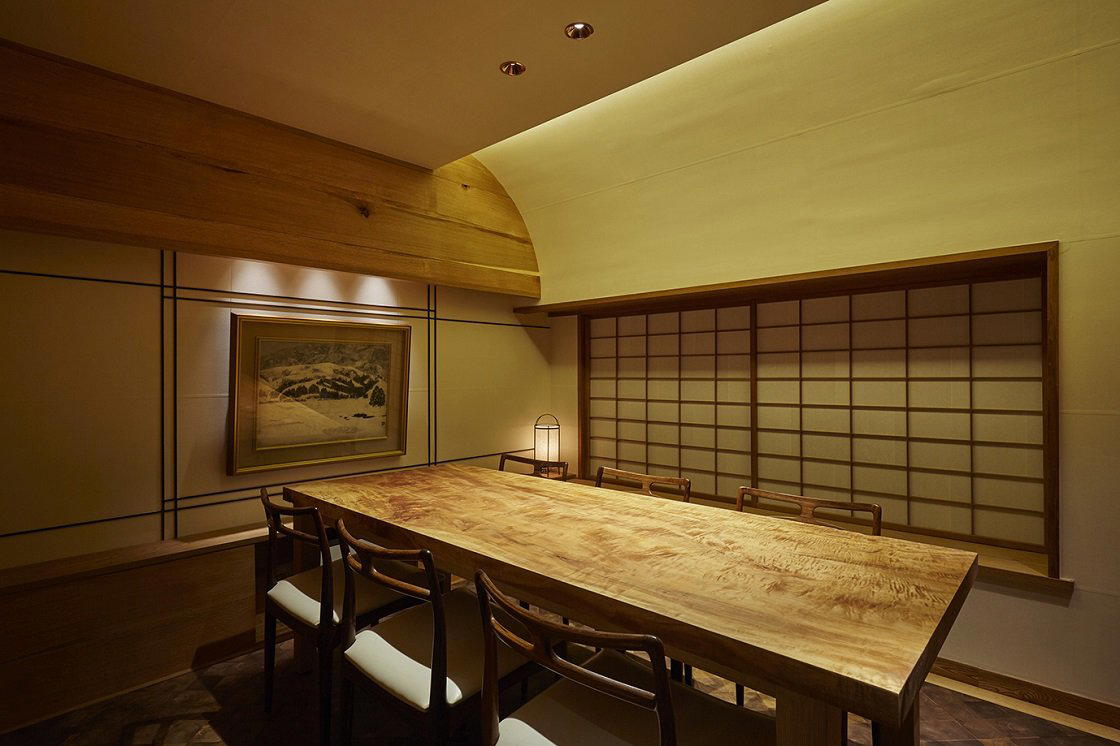
The 12-seat counter format is the primary configuration, but the record notes that private use is available for groups of up to 20 people. That capacity, larger than the standard seating count, suggests a flexible spatial arrangement that can accommodate a private event at a scale slightly beyond the counter's normal footprint. There are no private rooms listed, so private hire implies exclusive use of the full space. For corporate dinners, celebration meals, or a small group wanting the counter entirely to themselves, the option exists, though advance coordination will be necessary.
For those building a broader Kyoto itinerary, EP Club has detailed coverage across categories: see our full Kyoto restaurants guide, our full Kyoto hotels guide, our full Kyoto bars guide, our full Kyoto wineries guide, and our full Kyoto experiences guide. Other Kyoto counter options worth considering include Mitsuyasu and Gion Kawaguchi. Beyond the Kansai region, the EP Club network extends to Goh in Fukuoka, 1000 in Yokohama, 6 in Okinawa, Beppu Hirokado in Oita, and as far as Cocoro in Auckland for Japanese cuisine outside Japan.
Planning Your Visit
Higashiyama Ogata is reservation-only, reachable by phone at +81-75-771-0011. The kitchen runs six days a week with two seatings nightly, closing Tuesdays. Given the 12-seat counter and the consistent Tabelog recognition over four consecutive years, lead time on bookings is a practical consideration, reserving well in advance of any specific travel date is advisable. The venue is entirely non-smoking.
Frequently Asked Questions
- What is the atmosphere like at Higashiyama Ogata?
- Higashiyama Ogata occupies a 12-seat counter in Kyoto's Okazaki district, operating as part of the Ogata restaurant group's expansion into the Higashiyama area. The venue is listed as a relaxing counter space with a beautiful view, entirely non-smoking, and positioned at the JPY 30,000–39,999 price range for dinner. Tabelog Bronze recognition runs consecutively from 2023 through 2026, placing it among the documented top tier of Japanese cuisine in western Japan.
- What is the signature dish at Higashiyama Ogata?
- No specific signature dish is available in the venue's data record. The kitchen describes itself as "particular about fish," which in the context of a Kyoto kaiseki counter at this price point suggests the fish courses occupy a central position in the progression.
Style and Standing
Comparable venues nearby, for context on price, style, and recognition.
| Venue | Cuisine | Price | Awards | Notes |
|---|---|---|---|---|
| Higashiyama OgataThis venue (the venue you are viewing) | Modern Kaiseki | $200–300 | Tabelog Bronze #107 | Not listed |
| Gion Sushi Tadayasu | Traditional Edomae Omakase Sushi | $150–200 | Tabelog 100 #1 | Higashiyama |
| 安久 | Kyoto Kaiseki Kappo | $300–500 | Not listed | Gion |
| Shunseki Suzue | Kaiseki | $300–500 | Tabelog Bronze #411 | Sakyō |
| 寿し 祇園 松田屋 | Edomae Omakase Sushi | $200–300 | Not listed | Higashiyama |
| 萬寿寺はくらん | Japanese with Nagasaki Gotō influences | $150–200 | Not listed | 下京区 |
Recognition history
Dated appearances from independent guides and award organizations, with the underlying list record or original source where available.
Tabelog Bronze #107
Tabelog
Full recognition history (2 entries)
Tabelog 100 #3 · No. 3
Tabelog · Tabelog 100 - Japanese cuisine - WEST - 2025
Continue exploring
More in Kyoto
Restaurants in Kyoto
All restaurants in Kyoto →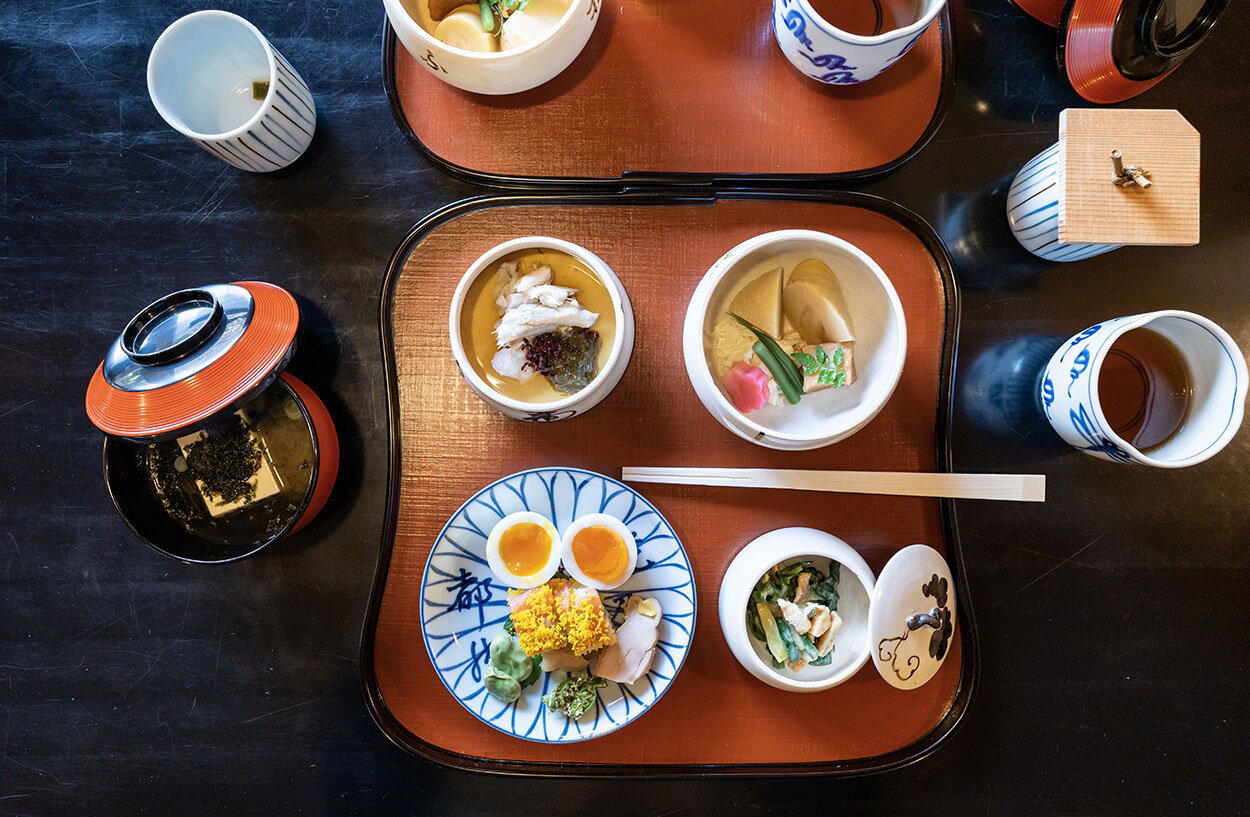
Bars in Kyoto
All bars in Kyoto →
Hotels in Kyoto
All hotels in Kyoto →
Wineries in Kyoto
Browse all →
Details
- Elegant
- Quiet
- Intimate
- Sophisticated
- Minimalist
- Special Occasion
- Celebration
- Chefs Counter
- Garden
- Sake Program
- Garden
- Omakase
- Tasting Menu
- Sake Program
Current opening hours
- Monday
- 4–10 PM
- Tuesday
- Closed
- Wednesday
- 4–10 PM
- Thursday
- 4–10 PM
- Friday
- 4–10 PM
- Saturday
- 4–10 PM
- Sunday
- 4–10 PM
Hours can change for holidays and private events. Hours as of .
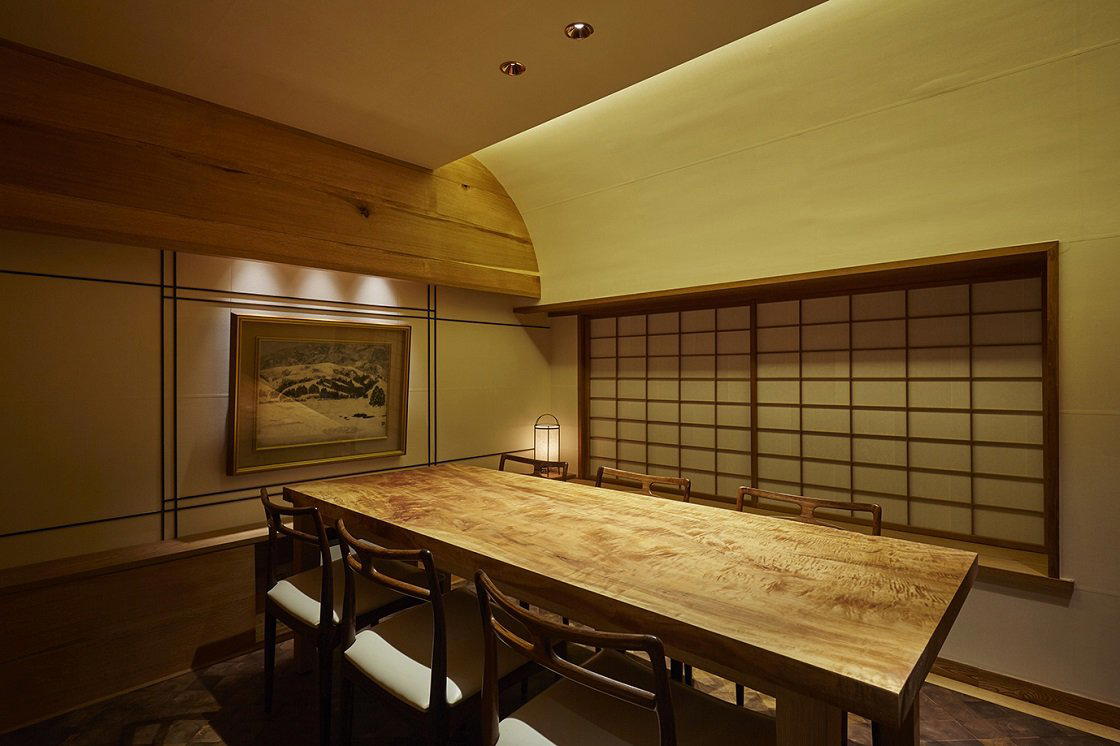
Sophisticated Sukiya-style architecture with relaxing space, beautiful garden views, and an airy, luxurious atmosphere.