Hải Ký Mì Gia

Our verdict
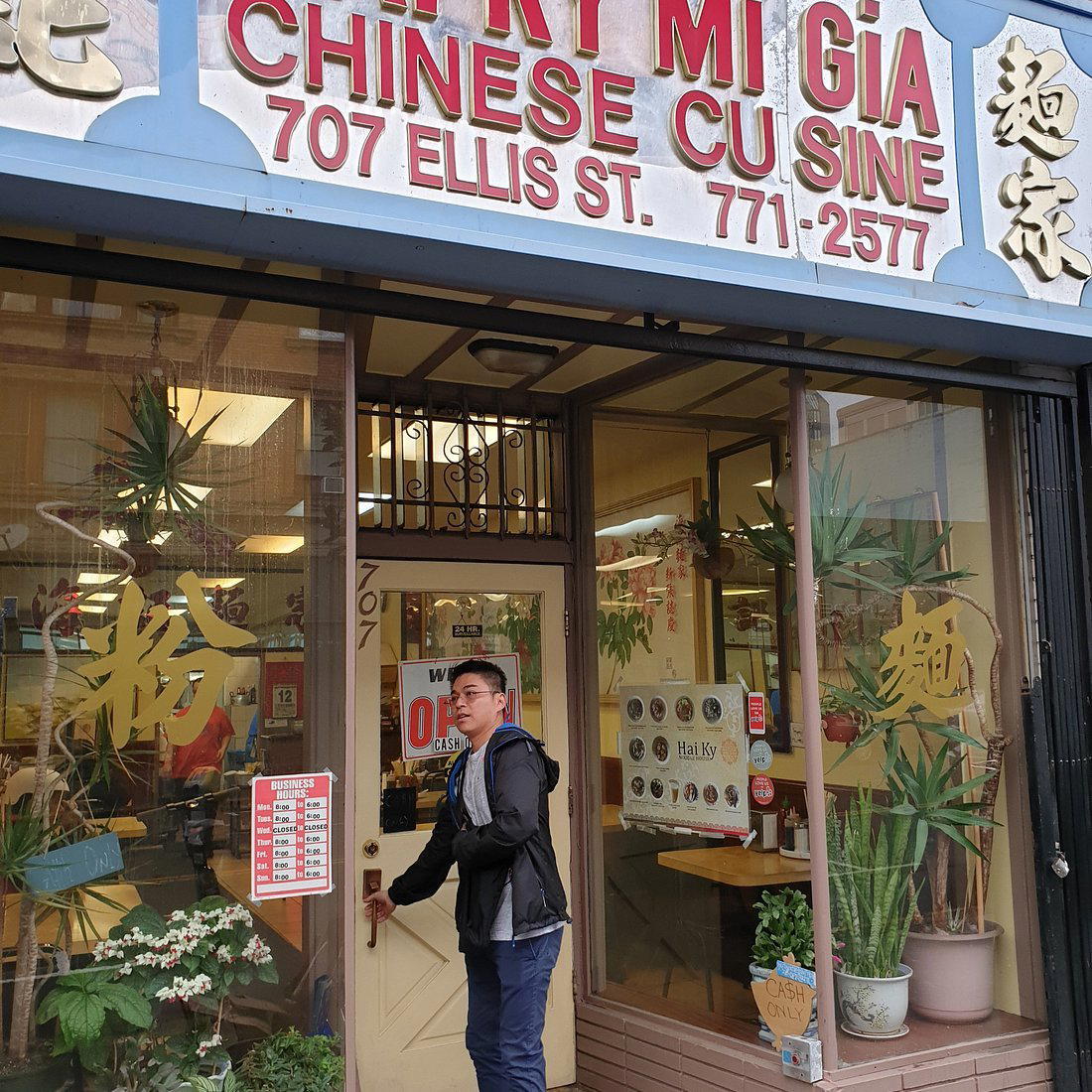
Among San Francisco's Tenderloin noodle houses, Hải Ký Mì Gia at 707 Ellis Street occupies a particular niche: Vietnamese-Chinese wonton and egg noodle cooking in a neighborhood where the genre runs deep. Where the city's fine-dining circuit trends toward Michelin ceremony and tasting menus, this is counter-culture dining in the older sense, built on broth, hand-pulled dough, and a loyal local following that predates food media's interest in the block.

Pearl is the En Primeur Club membership app, where members save venues, book tables and use the concierge.
Tenderloin Noodle Culture and Where Hải Ký Mì Gia Sits Within It
San Francisco's Tenderloin has long operated as a kind of parallel dining city. While the neighborhoods generating the most critical attention, SoMa's Benu, Pacific Heights and Atelier Crenn, and the Ferry Building corridor, built their reputations on tasting menus, sourced proteins, and sommelier programs, Ellis Street and its surrounding blocks kept a different economy running: wonton broths, roast duck on hooks, noodles pulled or pressed to order, and checks that rarely required much deliberation. Hải Ký Mì Gia at 707 Ellis Street belongs to that second tradition, the Vietnamese-Chinese mì gia format that arrived in San Francisco with Southeast Asian immigrant communities and has held its ground against every hospitality trend since.
The genre itself is worth understanding before the venue. Mì gia, loosely translated as egg noodle house, is a form of casual noodle dining with Chinese Cantonese roots that traveled through Vietnam's Chợ Lớn district and arrived in American cities like San Francisco, Houston, and San Jose as refugee and immigrant communities rebuilt. The cooking centers on alkaline egg noodles, typically served in a clear or slightly cloudy pork-and-shrimp broth, topped with wontons, char siu, roast meats, or seafood. The discipline is in the broth and the noodle texture: both require consistent sourcing and daily production in ways that most fast-casual formats cannot replicate. Across the city, you can find versions of this format ranging from perfunctory to precise, and the difference almost always comes down to ingredient sourcing decisions made well before service begins.
Ingredient Sourcing as the Defining Variable
In a noodle format this stripped back, sourcing is not a marketing position. It is the dish. The wonton skin's thickness, the shrimp paste's salinity, the fat content of the char siu, the alkalinity of the noodle, and the depth of the broth are all downstream of supply chain decisions that happen hours or days before a bowl reaches the table. This is why the leading mì gia operations in cities like San Francisco tend to be small, owner-operated, and resistant to scaling: each component requires a relationship with a specific butcher, noodle maker, or wet market supplier that larger restaurant groups rarely maintain.
This sourcing logic places Hải Ký Mì Gia in a different competitive frame than the restaurants most visitors use as San Francisco reference points. The $$$$ tasting menu restaurants, Lazy Bear, Quince, or Saison, and farm-to-table operations like Single Thread Farm in Healdsburg or Blue Hill at Stone Barns in Tarrytown, source prominently because sourcing is part of the guest-facing narrative. In mì gia cooking, the sourcing happens quietly and the result speaks without annotation. The bowl either has the right broth depth or it does not. The wonton skin either holds its texture through the broth or it collapses. No menu copy bridges that gap.
The Physical Environment and What It Communicates
The Tenderloin is not a neighborhood that performs for visitors, and its leading noodle houses do not either. Approaching 707 Ellis, the context is direct urban: a block that mixes residential SROs, small grocers, and the kind of low-margin food operations that run on volume, efficiency, and repeat customers rather than occasion dining. Inside, the room is likely to prioritize function over atmosphere, a pattern consistent across the genre in San Francisco, Houston, and Los Angeles, where the overhead model demands turnover and the cooking demands attention rather than décor investment.
That physical plainness is not a liability in this format. It is a signal. The restaurants in this tier that invest heavily in interior design are often compensating for something. The ones that look like they have been in operation for decades typically have been, and the room shows it honestly. For a reader calibrated to the ceremony of, say, The French Laundry in Napa or The Inn at Little Washington, the adjustment is less about compromise than about reading different vocabulary. The hospitality here is expressed through the bowl, not the welcome sequence.
San Francisco's Immigrant Noodle Tradition in a National Frame
Across American cities, Vietnamese-Chinese noodle houses occupy a category that food media has been slowly recognizing for its technical seriousness. Pho and banh mi captured earlier attention. The mì gia format, with its Cantonese-inflected broth work and wonton construction, is a more specific and arguably more demanding genre. Cities like Houston, with its large Vietnamese-Chinese diaspora community, have well-documented versions of this tradition. San Francisco's Tenderloin and Richmond District hold their own cluster, less publicized but operating with comparable depth.
Internationally, the reference points for this kind of cooking sit in Hong Kong's dai pai dong stalls, Chợ Lớn's market noodle shops, and the egg noodle counters that serious food travelers seek out in contrast to a city's headline restaurants. A reader who has made time for 8 1/2 Otto e Mezzo Bombana in Hong Kong alongside the city's market noodle culture understands this kind of vertical range. The same logic applies in San Francisco: a complete picture of what the city offers requires moving across price tiers and dining formats, not just tracking Michelin stars.
For those building a broader American dining itinerary that includes Le Bernardin in New York City, Alinea in Chicago, Providence in Los Angeles, or Addison in San Diego, the Tenderloin noodle tradition represents the other pole of American culinary seriousness: high technical standards, no ceremony, and a direct relationship between kitchen craft and what arrives at the table. Venues like Emeril's in New Orleans, Bacchanalia in Atlanta, or Atomix in New York City each anchor their respective cities at the fine-dining tier; places like Hải Ký Mì Gia anchor a different register that matters just as much to understanding where a food city actually is.
For a fuller orientation to San Francisco's dining range, our full San Francisco restaurants guide maps the city across price tiers, neighborhoods, and cuisine traditions.
Know Before You Go
Address: 707 Ellis St, San Francisco, CA 94109
Neighborhood: Tenderloin
Format: Vietnamese-Chinese egg noodle house (mì gia)
Price tier: Budget to low-mid; the format is not designed for occasion spending
Booking: Walk-in expected for this format; no advance reservation system documented
Leading time: Lunch service and early evening tend to be the peak window for freshest broth; confirm current hours directly before visiting
Phone / Website: at time of writing; verify via Google Maps before travel
Frequently asked questions
Is Hải Ký Mì Gia child-friendly?
The format at 707 Ellis St is well-suited to families. Noodle houses in this tradition operate with short wait times for food and no formal service ritual, which makes the environment practical for children. The menu centers on approachable bowl formats rather than complex tasting progressions.
Is Hải Ký Mì Gia better for a quiet night or a lively one?
The room runs at the ambient energy of a working noodle house, which means steady table turnover and a communal dining floor rather than intimate seating. Come for the food, not the occasion.
How does Hải Ký Mì Gia fit into San Francisco's Vietnamese-Chinese noodle house tradition?
San Francisco's Tenderloin has maintained one of the most concentrated Vietnamese-Chinese dining corridors in the United States since the post-1975 immigration wave reshaped the neighborhood. Hải Ký Mì Gia at 707 Ellis St operates within that specific lineage, a format rooted in Cantonese-influenced Vietnamese noodle craft that food media has been slow to document despite its technical seriousness. Within the city, it represents a category of cooking that has persisted largely outside critical attention and tourist circuits.
What's the best thing to order at Hải Ký Mì Gia?
In the Vietnamese-Chinese noodle house tradition that Hải Ký Mì Gia represents, the wonton noodle soup is the benchmark preparation, the dish against which the kitchen's sourcing and technique are most legible. The quality of the wonton skin and the clarity of the broth are the two variables that separate serious operators in San Francisco's Tenderloin from serviceable ones. Order it first.
The Minimal Set
Comparable venues nearby, for context on price, style, and recognition.
| Venue | Cuisine | Price | Notes |
|---|---|---|---|
| Hải Ký Mì GiaThis venue (the venue you are viewing) | Traditional Teochew Noodles | $10–20 | Not listed |
| Go Duck Yourself | Cantonese Roast Duck BBQ | $20–30 | Bernal Heights, Cantonese Roast Duck BBQ |
| Village Tea House | Chinese Dumplings & Dim Sum | $20–30 | SoMa, Chinese Dumplings & Dim Sum |
| Henry's Hunan Restaurant | Authentic Hunan Chinese | $20–30 | Financial District/South Beach, Authentic Hunan Chinese |
| SO | Cantonese Seafood and Dim Sum | Not listed | South San Francisco, Cantonese Seafood and Dim Sum |
| Crystal Jade | Cantonese Jiang Nan | Not listed | Financial District, Cantonese Jiang Nan |
Recognition history
Dated appearances from independent guides and award organizations, with the underlying list record or original source where available.
Opinionated About Dining Cheap Eats in North America Recommended
Opinionated About Dining
Continue exploring
More in San Francisco
Restaurants in San Francisco
All restaurants in San Francisco →
Bars in San Francisco
All bars in San Francisco →

Details
- Classic
- Cozy
- Casual Hangout
- A La Carte
Current opening hours
- Monday
- 9 AM–6 PM
- Tuesday
- Closed
- Wednesday
- Closed
- Thursday
- 9 AM–6 PM
- Friday
- 9 AM–6 PM
- Saturday
- 9 AM–6 PM
- Sunday
- 9 AM–6 PM
Hours can change for holidays and private events. Hours as of .
Casual family-run noodle shop with self-service sauces and generous portions.